600+ Types of Flowers A To Z (With Names and Pictures)
Types Of Flowers By Names (A-Z) Types Of Flowers By Color Types Of Flowers By Season Types Of Flowers By Blooming Time 600+ Types of Flowers No. Flower Name No.…

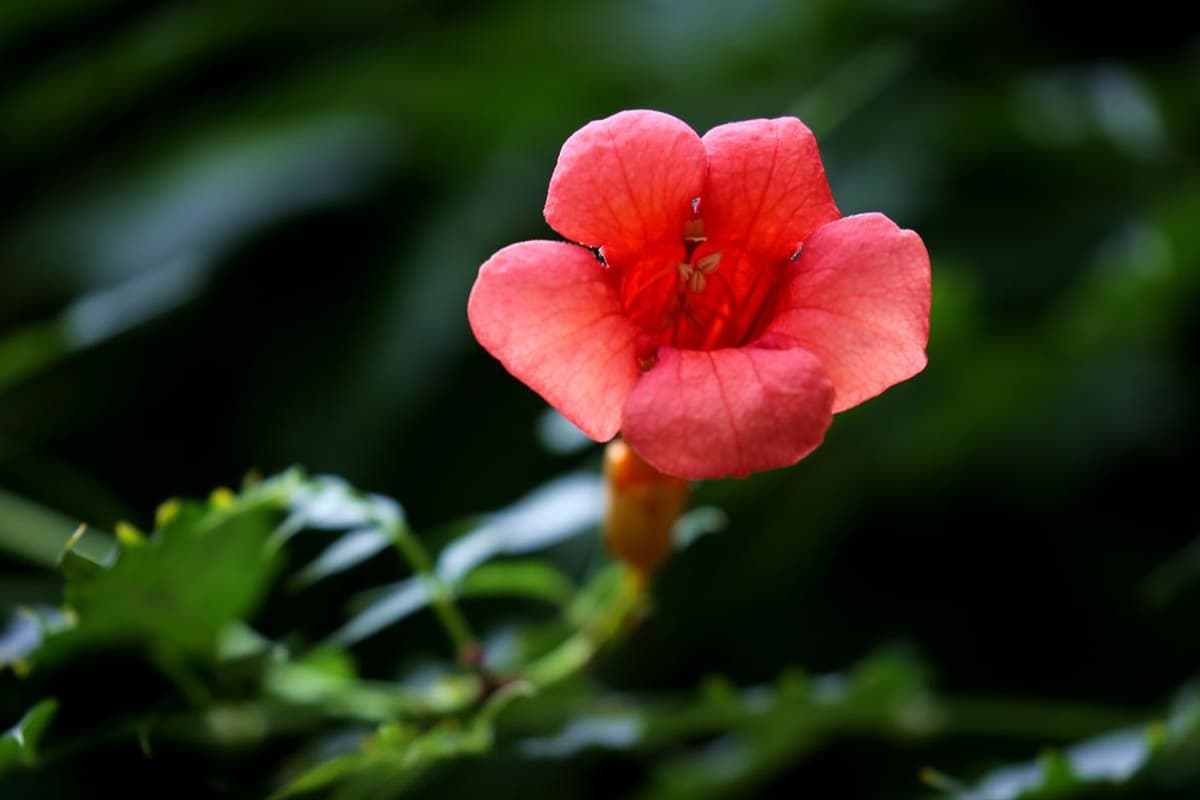
The Campsis grandiflora, also known as Chinese trumpet vine, dragon claw, red lotus, golden bell, dog intestine, wall flower, abortion flower, and vine flower, is a deciduous climbing vine.
It has a woody stem with peeling bark and an ashy-brown color, using its aerial roots to attach itself to other objects. Its leaves are opposite, forming odd-pinnate compound leaves with loosely arranged terminal short conical inflorescences.
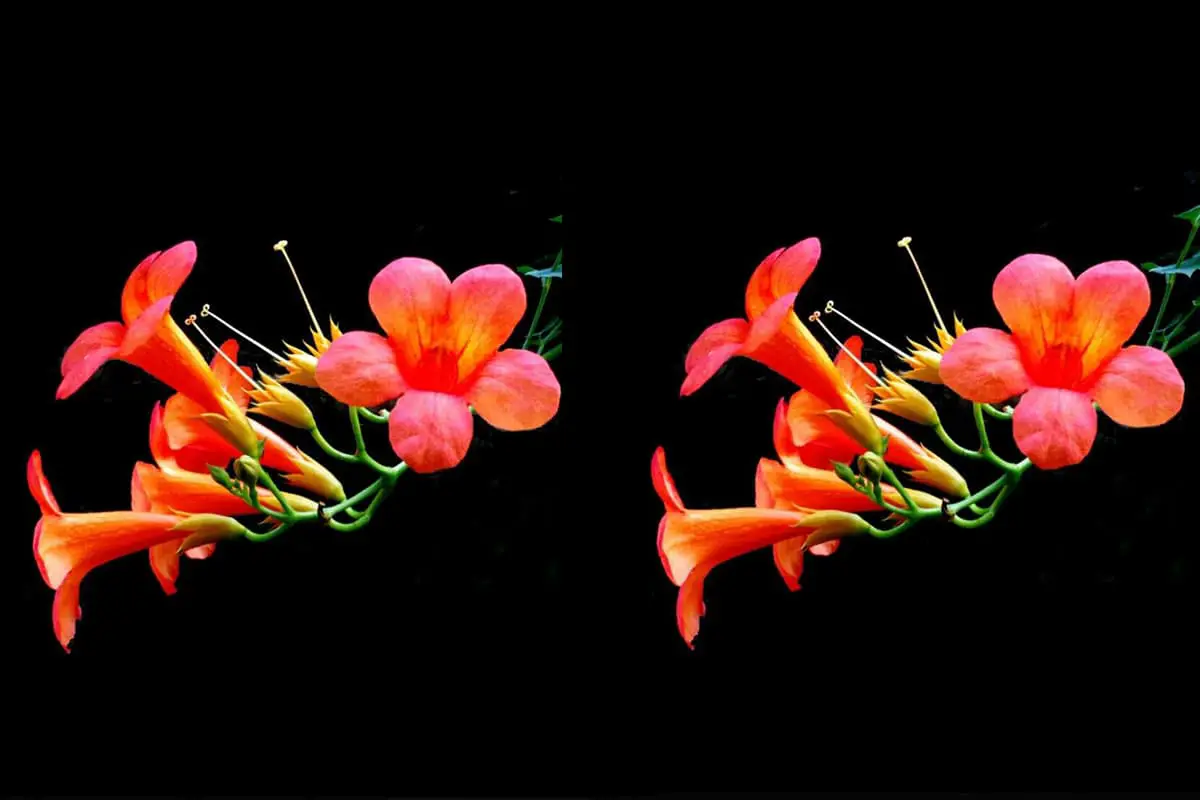
The flower calyx is bell-shaped, with the inner surface of the flower corolla being bright red and the outer surface orange-yellow. The stamen is attached near the base of the corolla tube, with the filament being linear and slender.
The anthers are yellow, with an individual character shape; the pistil is linear, with a flat top; the fruit is blunt at the end. It blooms from May to August, with dry branches full of twists and turns, dense green leaves, large and bright flowers, and a long flowering period.
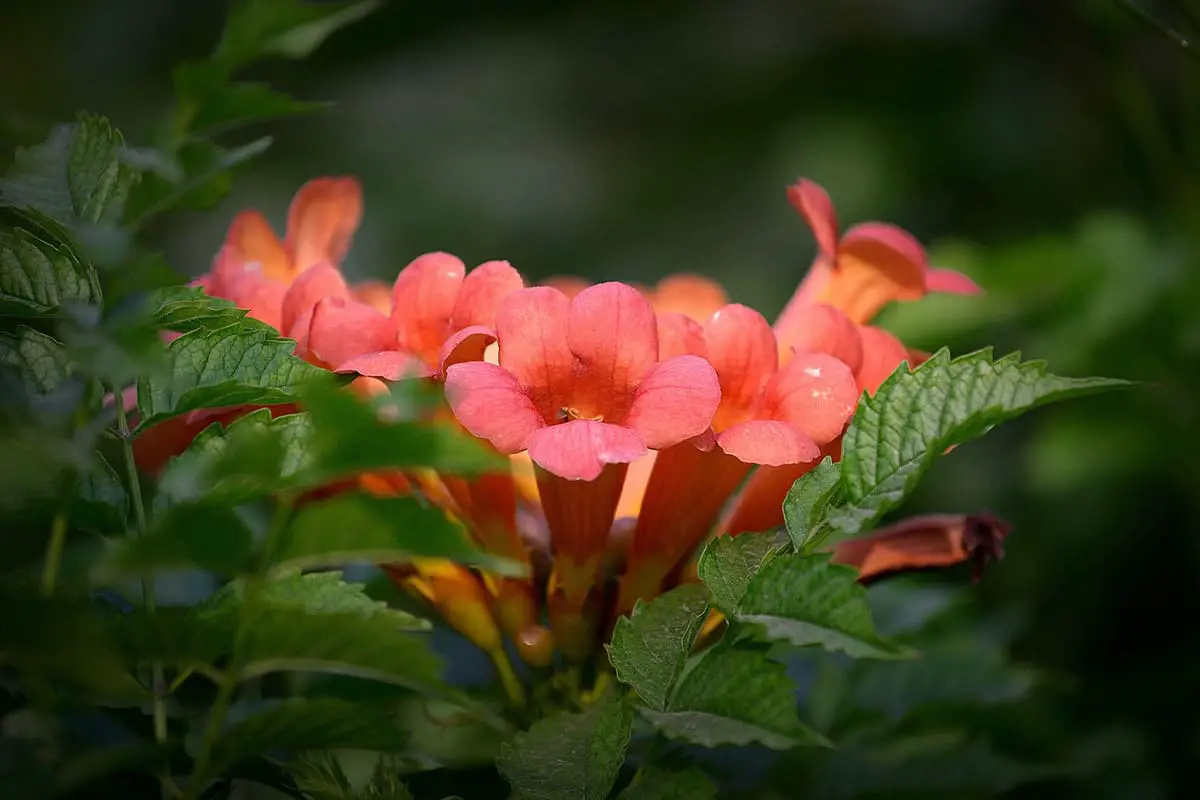
It is a great greenery material for gardens, pavilions, and flower gates. It is also suitable for climbing walls, dead trees, and stone walls, and is particularly striking when adorned in rockery gaps with its colorful flowers. With pruning and other cultivation measures, it can also be grown as a shrub for ornamental purposes.
Climbing vine; the stem is woody, with peeling bark and an ashy-brown color, using its aerial roots to attach itself to other objects.
The leaves are opposite, forming odd-pinnate compound leaves; the leaflets are 7-9, ovate to ovate-lanceolate, tapering at the tip, with a broad wedge-shaped base, unequal on both sides, 3-6(-9) cm long, 1.5-3(-5) cm wide, with 6-7 pairs of lateral veins, glabrous on both surfaces, with coarse serrated edges; the leaf axis is 4-13 cm long; the petiole is 5(-10) mm long.
Loosely arranged terminal short conical inflorescence, the axis is 15-20 cm long. The calyx is bell-shaped, 3 cm long, divided to the middle, with lanceolate lobes, about 1.5 cm long.
The inner surface of the corolla is bright red, the outer surface is orange-yellow, about 5 cm long, with semi-circular lobes. The stamen is attached near the base of the corolla tube, the filament is linear and slender, 2-2.5 cm long, the anthers are yellow, with an individual character shape.
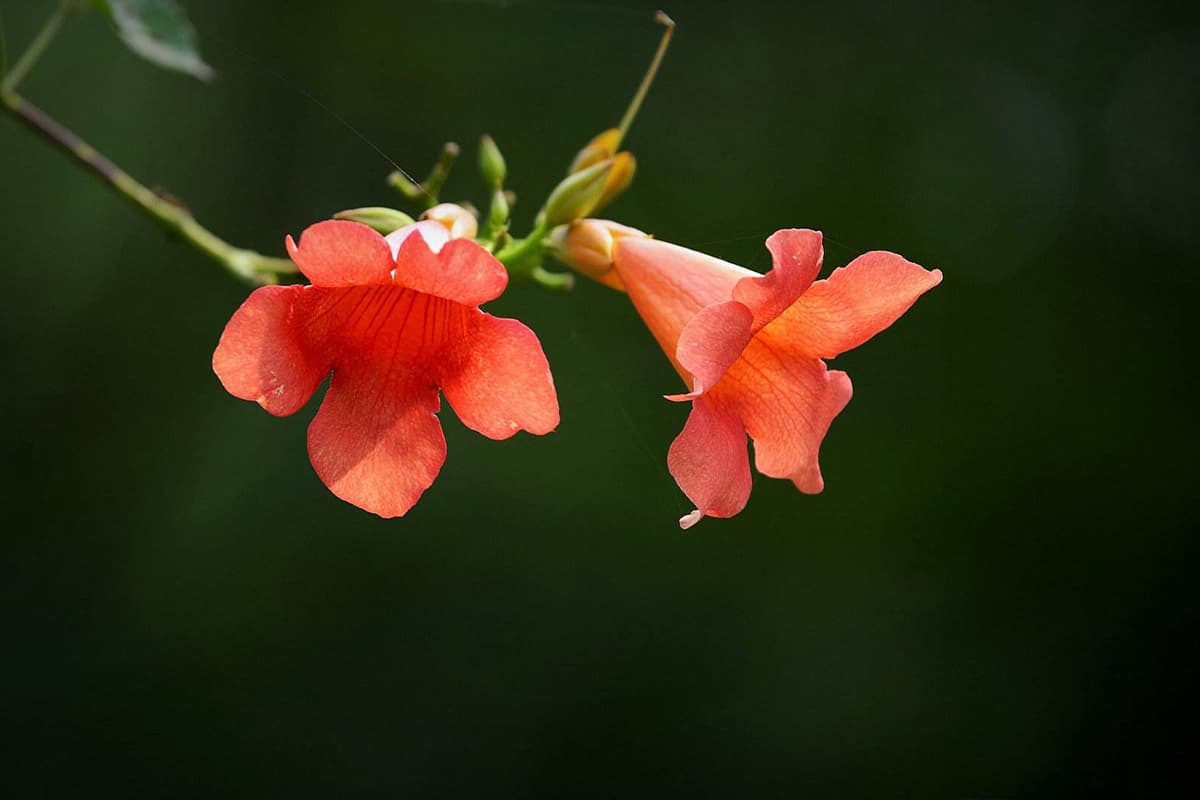
The style is linear, about 3 cm long, the stigma is flat, 2-lobed. The fruit is blunt at the end. It blooms from May to August.
Campsis grandiflora likes plenty of sunlight, but it can also tolerate semi-shade. It is adaptable, cold-tolerant, drought-tolerant, thin-tolerant, and has few pests and diseases, but it is not suitable in scorching sun or without sunlight.
It prefers well-drained, loose, neutral soil, and dislikes acid soil. It dislikes waterlogging and humidity, and generally does not require much watering. Campsis grandiflora requires fertile soil with good drainage.
It does not like heavy fertilization, excessive fertilization should be avoided as it affects blooming. It is relatively tolerant to wet conditions and has a certain ability to tolerate salinity and alkalinity.
It is cultivated in Japan, Vietnam, India, and western Pakistan.
Flower (Morning Glory): Sweet and sour in taste, cold in nature. It invigorates the blood, dispels stasis, cools the blood, and dispels wind. It is used for menstrual blockage, postpartum breast swelling, skin rash and redness, skin itch, and acne.
Root (Purple Wisteria): Bitter in taste, cool in nature. It invigorates the blood, dispels stasis, detoxifies, and reduces swelling. It is used for rheumatic pain, sprains, fractures, dislocations, and vomiting and diarrhea.
Stem and Leaves: Bitter in taste, neutral in nature. They cool the blood and dispel stasis. They are used for blood-heat, skin itch, dermatitis, numbness in hands and feet, and throat swelling and pain.
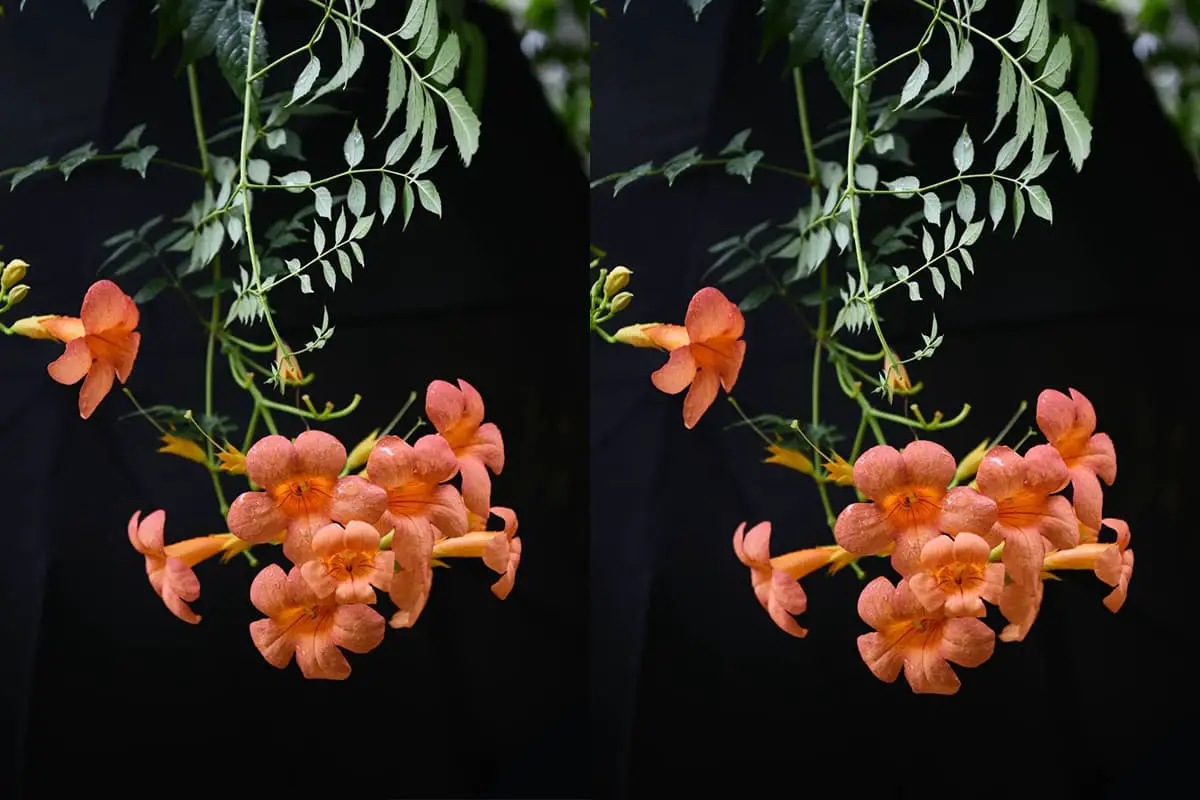
The dry branches are twisted and full of character, the leaves are lush and cover like a canopy, the flowers are large and brightly colored, and the flowering period is long. It is a great choice for trellises and flower doors in gardens.
It is suitable for climbing on walls, dead trees, and stone walls. It looks stunning when adorned among rockeries with its abundant and colorful flowers.
After pruning and training, it can be grown as a bush for viewing. It requires minimal management, has strong adaptability, and is an ideal material for urban vertical greening.
The main pests and diseases of Morning Glory are gray spot disease, powdery mildew, root-knot nematode disease, frost moth, large bagworm, and aphids.
Control Method: Spray with a 1500 times diluted solution of 50% carbendazim wettable powder.
Control Method: They often occur during the growth period. Spray with a 1200 times diluted solution of 40% Oxidation Le Fruit emulsion oil.
Control Method: They can harm the plant during dry and hot periods in spring and autumn. When discovered, spray with a 500-800 times diluted solution of 40% Le Fruit.
The flower language of Morning Glory is “reputation.
Morning Glory symbolizes maternal love, often grouped with holly and primrose into a bouquet to present to mothers, expressing love for them.

Peggie was once a high school mathematics teacher, but she set aside her chalkboard and textbooks to follow her lifelong passion for flowers. After years of dedication and learning, she not only established a thriving flower shop but also founded this blog, “Flowers Library”. If you have any questions or wish to learn more about flowers, feel free to contact Peggie.
 English
  العربية
  Bahasa Indonesia
  Deutsch
  Français
  Italiano
  Nederlands
  Português
  Русский
  日本語
日本語