600+ Types of Flowers A To Z (With Names and Pictures)
Types Of Flowers By Names (A-Z) Types Of Flowers By Color Types Of Flowers By Season Types Of Flowers By Blooming Time 600+ Types of Flowers No. Flower Name No.…

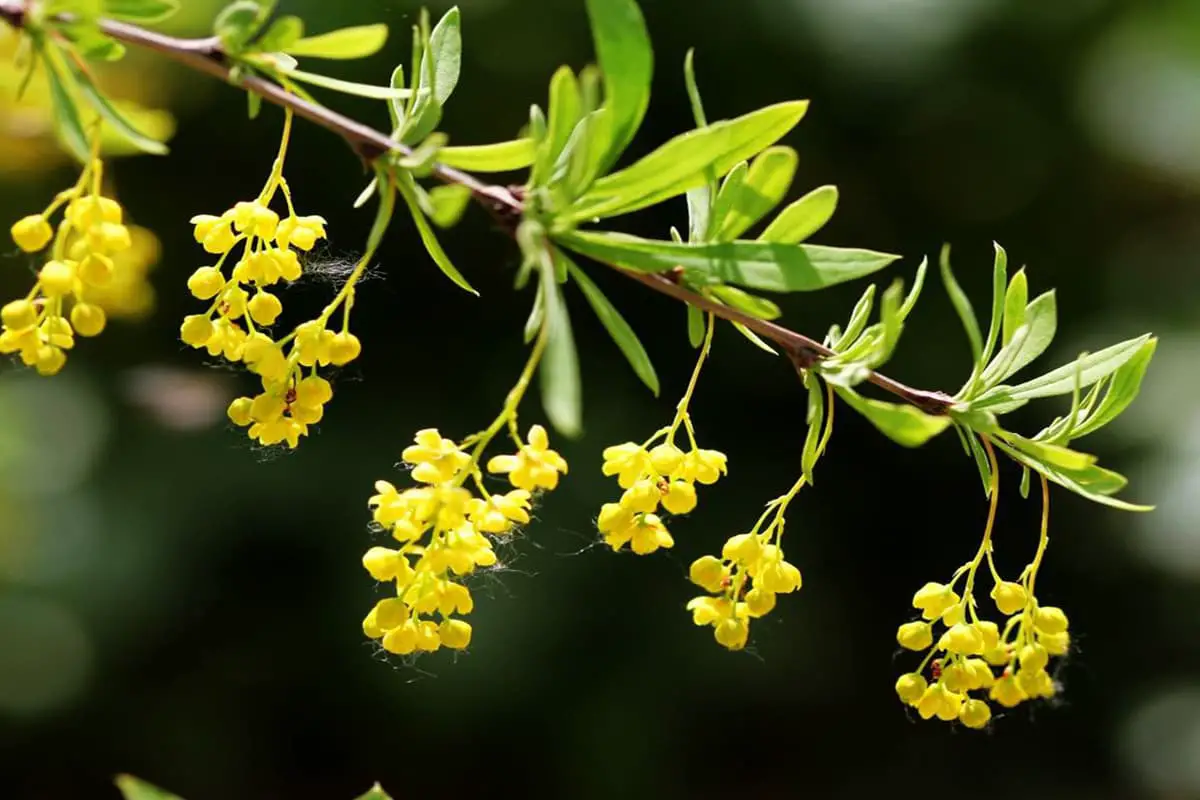
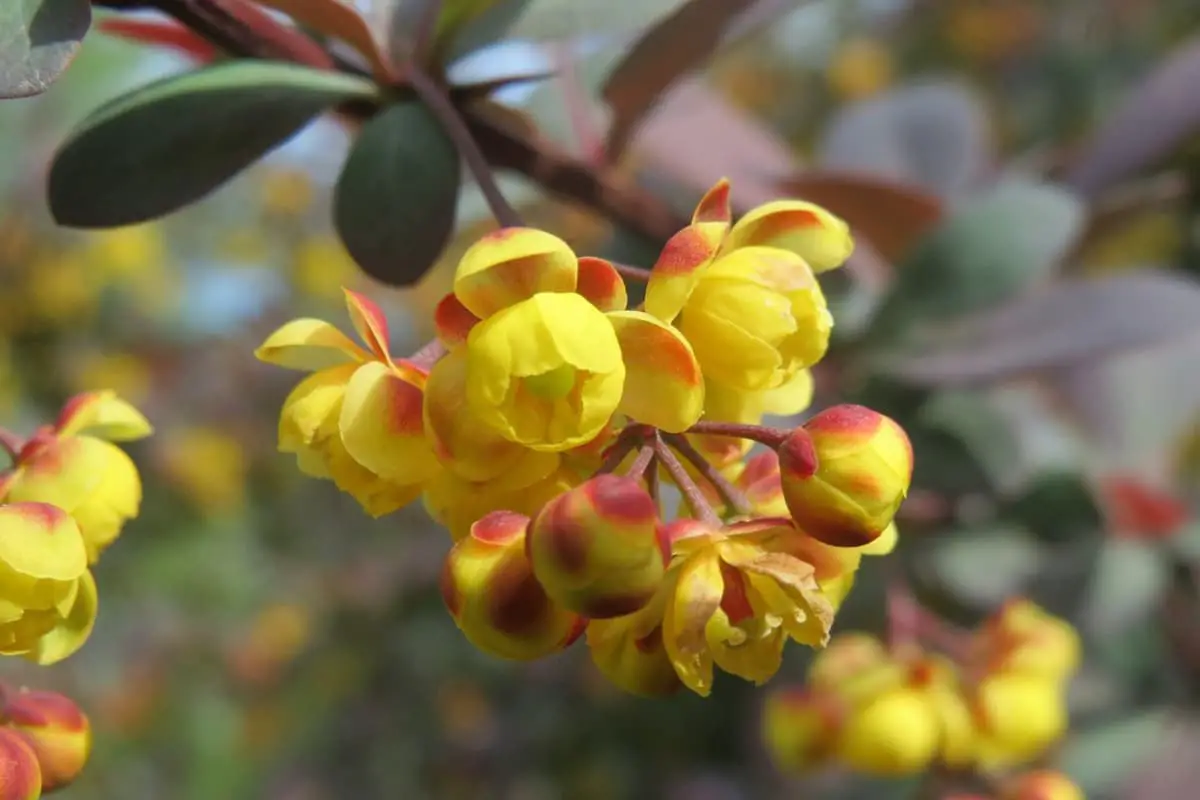
Berberis thunbergii, commonly known as Japanese barberry, clusters with yellow flowers in the spring and abundant red berries in the fall. It is suitable for planting in lawns, by ponds, near rocks, along walls, and under trees.
Its foliage, flowers, and fruit are all visually appealing, making it an excellent choice for a hedge. The Japanese barberry can also be potted for ornamental purposes. It is an excellent material for flower hedges and for decorating rocks.
The Japanese barberry has dense branches, a rounded shape, yellow flowers in the spring, and red berries in the fall. Its leaves turn purple-red in late autumn, and its fruit does not fall off in the winter, making it a great ornamental plant for flowers, fruit, and leaves.
It is suitable for solitary planting, cluster planting, or as a hedge in gardens. Its fruit branches can be put in a vase, and its roots and stems can be used for medicinal purposes.
It can clear heat and dampness, purge fire and detoxify, and has antibacterial and anti-inflammatory effects. It is native to Japan, but is also found in the Qinling region of China.
Japanese barberry is not demanding in terms of light requirements, enjoying both sun and shade. It prefers a cool, damp climate, and is resistant to cold and drought.
It dislikes waterlogged conditions, and is not particular about soil, although it grows best in fertile, well-drained sandy soil. It has strong germination power and tolerates pruning well.
The leaves of the Japanese barberry come in green, purple, gold, red, and other colors. Depending on the variety and intensity of sunlight, they display different colors.
The leaves of the purple Japanese barberry are bright red in early spring, turn dark red in summer, and become purple-red in autumn.
Japanese barberry’s vibrant colors can create a passionate and joyous atmosphere. It has a long color viewing period, and both solitary and cluster planting produce good color effects.
The berries of the Japanese barberry are oval and come in bright red and purple-black depending on the variety. The red Japanese barberry not only has brightly colored fruit, but it can also be full of berries after the leaves fall in winter, enriching the color changes in winter gardens and having a prominent beautifying effect.
Some red Japanese barberries have unusually shaped roots, winding or folding, or spiraling, or with thick root tubers, making them irresistible.
Paired with delicate miniature (or small) pots, according to the shape characteristics of the bonsai, whether it be root lifting, slanting planting, hanging planting, or combination planting, they can all create pleasing miniature landscapes.
During the seedling stage of the Japanese barberry, precautions should be taken against seedling blight.
Measures such as early sowing, high ridge nursery, soil disinfection, and spraying 5% polyoxin every 10 days when the seeds germinate and emerge from the soil (spray three times consecutively) can achieve good prevention.
Other diseases and pests are rare, and no harm has been seen.
In mid-November before winter, water is frozen, and then the soil is buried for cold protection.
Japanese barberry is prone to powdery mildew, especially when planted in large areas and in poorly ventilated conditions.
Once this disease is discovered, the leaves should be immediately sprayed with a 1000-fold diluted solution of triazolone. Generally, it should be sprayed once a week, continuously for 2-3 times for a cure.
Through the above measures, the seedling height of Japanese barberry can reach 20 to 25 centimeters in the first year, with a robust seedling rate of over 80%.
Although a high germination rate can be achieved by sowing, there will be trait segregation after sowing, that is, not all the leaves of the seedlings after sowing are purple, there are also green ones, and there is a size difference.
Therefore, choosing purebred Japanese barberry seeds is crucial.

Peggie was once a high school mathematics teacher, but she set aside her chalkboard and textbooks to follow her lifelong passion for flowers. After years of dedication and learning, she not only established a thriving flower shop but also founded this blog, “Flowers Library”. If you have any questions or wish to learn more about flowers, feel free to contact Peggie.
 English
  العربية
  Bahasa Indonesia
  Deutsch
  Français
  Italiano
  Nederlands
  Português
  Русский
  日本語
日本語