600+ Types of Flowers A To Z (With Names and Pictures)
Types Of Flowers By Names (A-Z) Types Of Flowers By Color Types Of Flowers By Season Types Of Flowers By Blooming Time 600+ Types of Flowers No. Flower Name No.…

The Aster hispidus, also known as Dog Whisker Flower, is a plant belonging to the Asteraceae family and the Ionactis genus. It is a biennial or occasionally perennial herb with a spindle-shaped taproot.
The stem can reach a height of 30-50, sometimes up to 150 centimeters. The leaves are thin, covered with sparse hairs or sometimes hairless on both sides, with sparsely hairy margins, and prominent midveins and lateral veins.
The flower heads are approximately 3-5 centimeters in diameter, arranged singly at the tips of branches in an umbrella-like fashion.
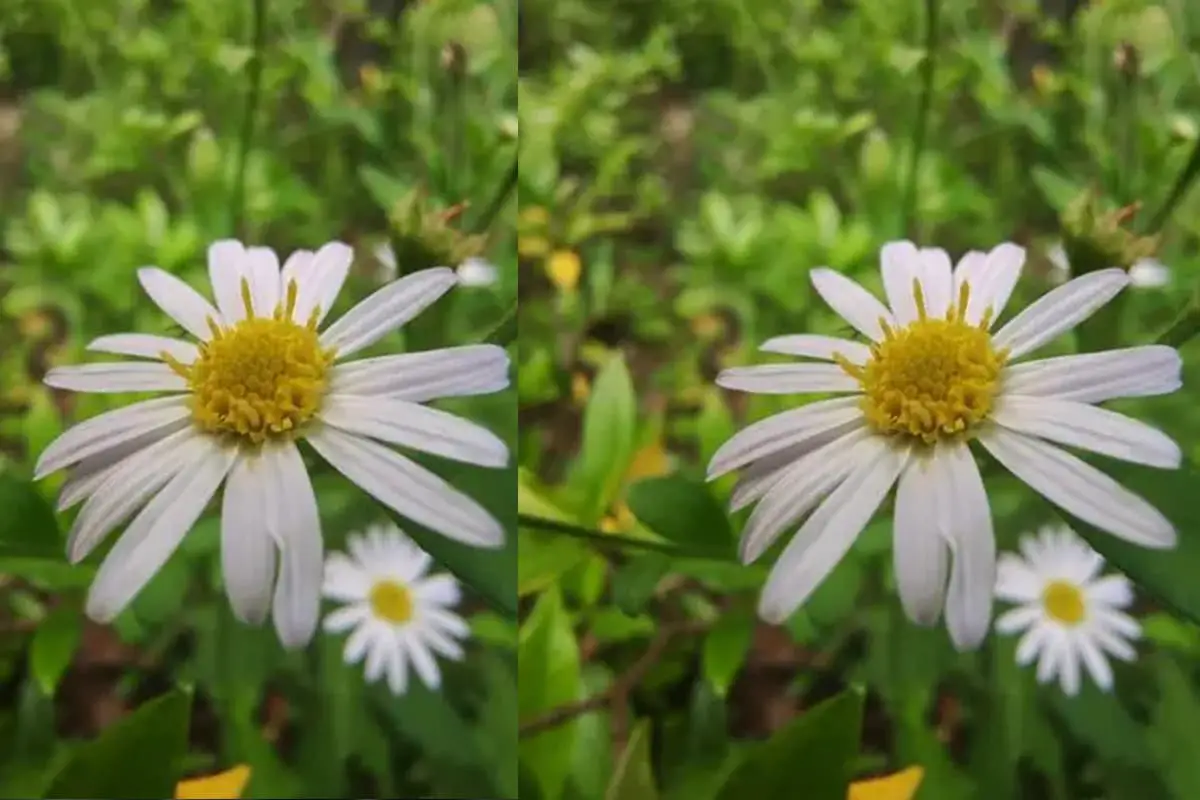
There are around 30 ray florets, with a tube length of 2 millimeters, and 5-7 millimeters for the corolla of the tubular florets, with a tube length of 1.5-2 millimeters.
A biennial or occasionally perennial herb with a spindle-shaped taproot. The stem can reach a height of 30-50 centimeters, sometimes several stems grow together, covered with upwardly curved or spreading coarse hairs.
The lower leaves wither during the flowering period, are inversely ovate, 4-13 centimeters long, 0.5-1.5 centimeters wide, gradually narrowing into petioles, with blunt or round tips, and entire margins or sparse teeth.
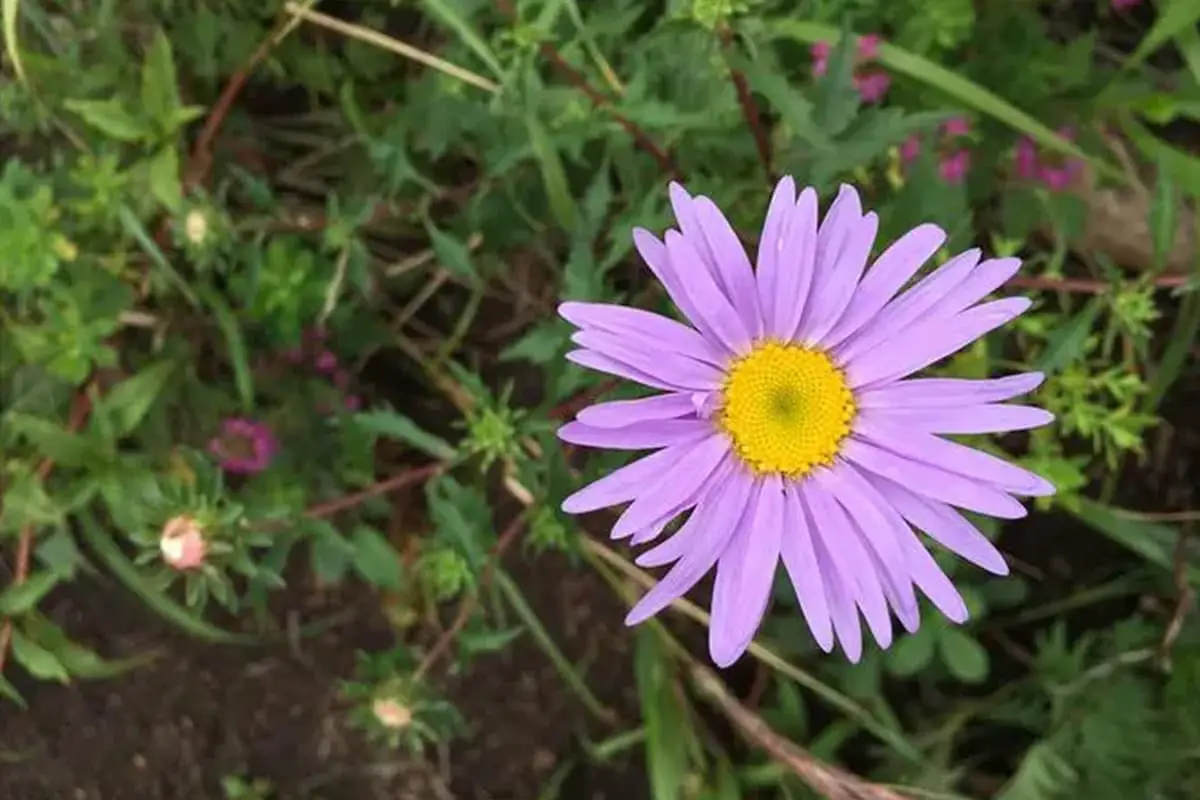
The middle leaves are broadly lanceolate or linear, 3-7 centimeters long, 0.3-1.5 centimeters wide, often with entire margins, and the upper leaves are small and linear.
All leaves are thin, sparsely hairy or hairless on both sides, with sparsely hairy margins, and prominent midveins and lateral veins.
The flower heads are approximately 3-5 centimeters in diameter, arranged singly at the tips of branches in an umbrella-like fashion.
The involucre is hemispherical, 7-10 millimeters long and 10-20 millimeters in diameter, with 2 layers of involucral bracts that are nearly equal in length, linear-lanceolate, 1 millimeter wide, herbaceous, or the inner ones are rhombic-lanceolate and membranous at the base and margins, with some upwardly curved coarse hairs on the back and margins, often with glandular spots.
There are around 30 ray florets, with a tube length of 2 millimeters; the ray florets are pale red or white, linear-rectangular, 12-20 millimeters long, and 2.5-4 millimeters wide.
The corolla of the tubular florets is 5-7 millimeters long, with a tube length of 1.5-2 millimeters, and the lobes are 1 or 1.5 millimeters long.
The fruit is inversely ovate, flattened, 2.5-3 millimeters long, 1.5 millimeters wide, with fine marginal ribs, covered in dense hairs.
The pappus in the ray florets is very short, white, membranous, or partially reddish, rough-hairy; in the tubular florets, it is rough-hairy, initially white and later reddish, nearly equal in length to the corolla. It flowers from July to September and bears fruit from August to September.
The Dog Whisker Flower prefers shade and is tolerant of cold and drought, moderately resistant to wet conditions, and can thrive in poor soil. It grows in wastelands, along roadsides, on the edges of forests, and in grasslands at altitudes of up to 2400 meters.
It is found in various provinces in northern, northwestern, and northeastern China. It also occurs in Mongolia, Russia (Siberia and the Far East), North Korea, and Japan.
Seeds can be sown in spring, summer, or autumn, and they typically germinate in about 7-10 days when the temperature is between 21-24°C. It is best to sow them with a thin layer of soil, but they can also grow without being covered with soil.
When the temperature is above 15°C, they can start flowering in about 20 days. After germination, because the seedlings are extremely delicate, they need to be kept at a relatively high temperature to produce thicker, fleshy branches and leaves.
At this stage, the young seedlings can be transplanted directly, with 2-5 plants per pot, and they have a high survival rate and rapid growth. The natural flowering period is from May to November.
1 Bitter, cool.
2 Clears heat, reduces swelling. It is used to treat sores and snakebites.
3 External use: Appropriate amount, mashed and applied.
The flowers are a sight to behold. They have small, white petals that open up abundantly. The flowers are numerous, have a long flowering period, and come in bright colors. The yellow centers of the flowers resemble small eyes scattered among them.
The plant has a somewhat tall and loose growth habit, creating a charming wildflower effect when grown in clusters. It can be planted in groups or as individual specimens in flower beds, gardens, and courtyard green spaces, serving as a background material or standalone planting.

Peggie was once a high school mathematics teacher, but she set aside her chalkboard and textbooks to follow her lifelong passion for flowers. After years of dedication and learning, she not only established a thriving flower shop but also founded this blog, “Flowers Library”. If you have any questions or wish to learn more about flowers, feel free to contact Peggie.
 English
  العربية
  Bahasa Indonesia
  Deutsch
  Français
  Italiano
  Nederlands
  Português
  Русский
  日本語
日本語