Iris Tectorum: The Ultimate Guide
Iris (scientific name: Iris tectorum Maxim.) is a perennial herb of the Iridaceae family and the genus Iris. It is also known by various names such as Lao Gua Suan,…

Physostegia virginiana belongs to the mint family and is a perennial herbaceous plant. It can grow up to 3 feet tall.
The stems are clustered and erect, square in cross-section, with lanceolate leaves that are bright green and serrated along the edges. The spike-like inflorescences are terminal, with flowers in shades of pink, white, and pale purple.
The arrangement of flowers on the inflorescence resembles that of sesame seeds, though denser, hence its colloquial name “Sesame Flower.” It blooms from August to October.
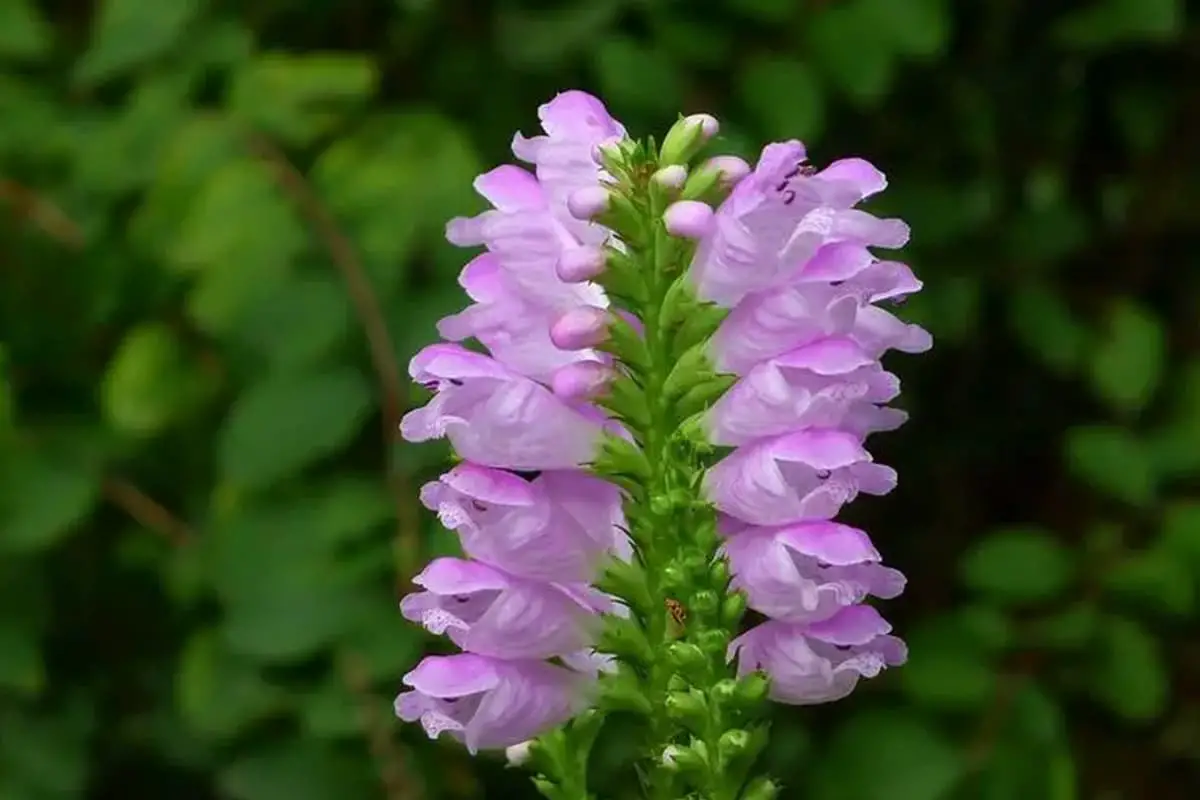
Native to North America, the Obedient Dragonhead thrives in warm climates, is cold-hardy, drought-tolerant, and adaptable to various soil conditions.
This plant can be effectively used to beautify sunny areas such as street green spaces and residential community gardens, where it creates a very appealing visual effect.
Obedient Dragonhead is a perennial herb reaching about 40 inches in height, with upright, clustered, square stems. It has creeping rhizomes underground. The leaves are bright green, lanceolate, and up to 5 inches long, with pointed tips and sharp teeth along the edges.
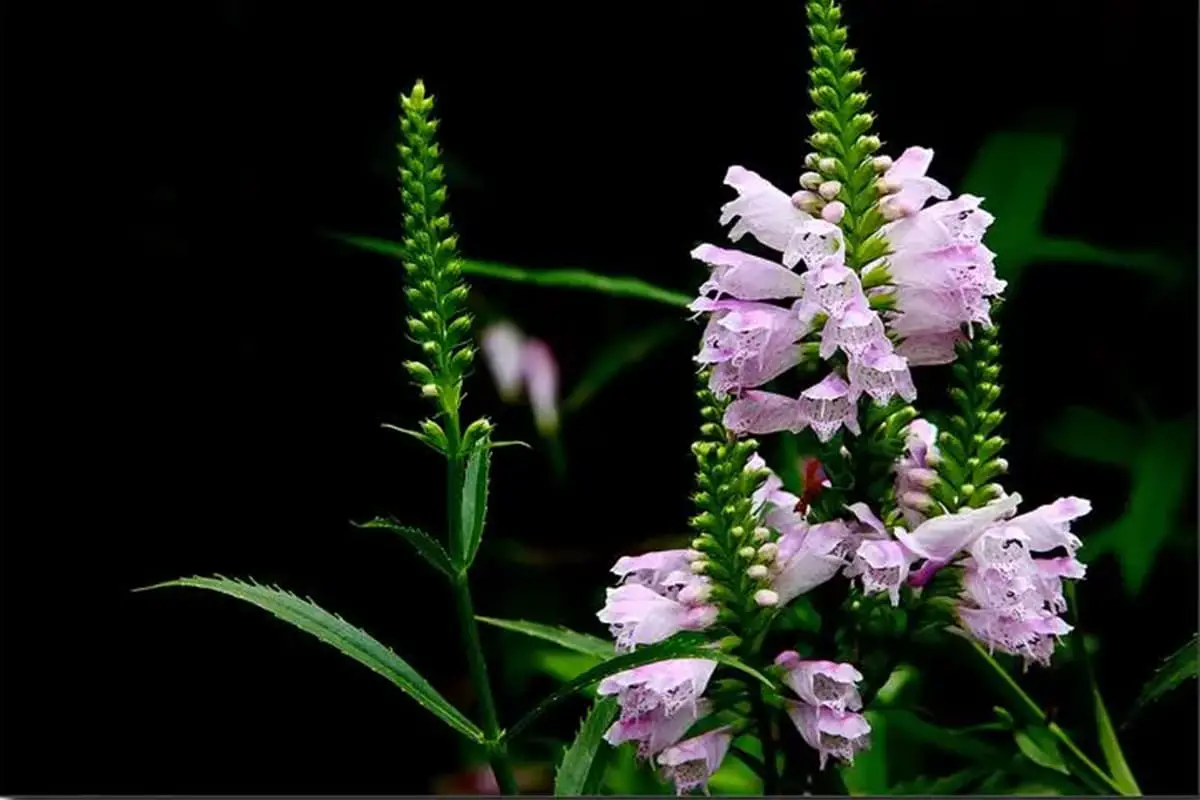
The spike-like inflorescences are terminal and can be up to 12 inches long, with small, lip-shaped flowers. The corolla tube is about 1 inch long, with flowers in pink or pale purple, blooming from July to September.
Originally from North America, Obedient Dragonhead prefers warm, sunny conditions, and loose, fertile, well-drained sandy loam soil. It is cold-hardy, drought-tolerant, and adaptable.
It has well-developed upright rhizomes underground. After flowering, the plant’s above-ground parts wither, but the rhizomes underground sprout new shoots that develop into new plants.
Preparing the seedbed: In the cold regions of northern China, seedbeds are typically prepared in early March within greenhouses or polytunnels. These beds are made 5.6 meters long, 1.2 meters wide, and 25-30 centimeters high.
The surface of the bed is loosened, crumbled, and leveled, then left to bask in the sun for several days. Afterward, the soil is disinfected with a solution of potassium permanganate.
Sowing and Seedling Management: Scatter the seeds of the Snapdragon over the seedbed, followed by an appropriate amount of Furadan, and cover with a layer of sand soil about twice the diameter of the seeds.
Maintain moisture in the seedbed, and with temperatures between 16-21°C, seedlings should emerge in 6-7 days. When the seedlings have developed 3-4 true leaves, they can be separated and transplanted.
Divide plants every two years, typically achieving a reproduction ratio of 1:3-5 in fertile soil, and 1:5-8 in very fertile soil. Perform division in early spring, from April to May.
Dig up 2-3-year-old plants, divide into 8-10 sections, each with 1-2 buds. Plant in holes spaced 8 inches apart in all directions, at a depth of 8 inches.
Add base fertilizer to the hole, cover lightly with fine soil, then plant the seedlings. After planting, cover with 1.5-2 inches of soil, compact it, and water thoroughly.
As the Obedient Dragonhead has a long growing period, it requires a substantial amount of base fertilizer. Following the peak blooming period, apply organic and compound fertilizers.
During the growing season, loosen the soil and weed 2-3 times from spring to summer, and apply diluted mature human manure liquid monthly from March to June.
A phosphorous fertilizer application before flowering can enhance flower quality. Water as needed, particularly during the hot summer months, to keep the soil moist.
When growth is slow, apply nitrogen fertilizer; from bud differentiation to flowering, apply phosphorus fertilizer.
Fertilize lightly and frequently, every 15 days with a nitrogen, phosphorus, and potassium compound fertilizer to promote large and abundant flowers. Generally, the plant will bloom when it has around 10 sets of leaves. For earlier blooming, forced cultivation can be applied.
To encourage a bushy growth and increase the number of flowering branches, pinch the plant when it has 4-5 leaves.
After pinching, apply a light fertilizer to promote the growth of lateral buds. When the lateral buds grow 2-2.5 inches tall, pinch them again.
After 2-3 pinching sessions, each plant can have 4-6 side branches, resulting in a fuller shape, reduced plant height, and a more uniform appearance.
Leaf Spot Disease: Leaf spot is a common affliction of the false dragonhead, primarily targeting the leaves. When infected, the foliage of the false dragonhead exhibits irregular round spots of varying sizes, with diameters ranging from 1 to 5 millimeters.
Initially, the spots are dark brown, later turning deep brown, with the center becoming grayish-white and the edges dark brown. When numerous spots are present, the leaves can wither and die.
Control Methods:
Bacterial Wilt: In the early stages, green lesions appear on the stems, later turning into black streaks. Leaves wilt suddenly from the top down, with lower, older leaves drooping.
They may recover in the evening, but within 3-5 days, the entire plant turns a wilted green and dies.
Infected plants are stunted compared to healthy ones, with the vascular bundles in the roots and stems turning brown and eventually hollowing out, accompanied by the oozing of bacterial slime from within the stem, which hardens into shiny black granules.
Infected leaves show dark green stripes along the veins, sometimes forming a network pattern. When held up to the light, the center of the leaf appears greasy, and the veins on the underside are raised yellow and wave-like, becoming more twisted towards the edges.
Bacterial wilt in false dragonhead mainly overwinters and spreads through infected seeds and plant debris. The disease often breaks out after heavy rain followed by sunny weather and can occur throughout the growing season.
Control Methods: Treat with a 750-gram per hectare solution of 20% Oxadixyl wettable powder or a 750-gram per hectare solution of 50% Carbendazim wettable powder mixed with 750 kilograms of water per hectare for spraying.
If the infection is widespread, using a drenching method with the solution can be more effective. Early infection can be managed effectively by drenching the roots with a 3000-fold dilution of Green Heng No. 1.
Borer Moths: From June to August, larvae feed on the roots and base of the stems of irises, resulting in poor growth and, in severe cases, plant death.
Control Methods: Mix 40% Dimethoate with organic fertilizer for soil application to reduce adult laying eggs. If larvae damage is noticed, apply a 1000-fold dilution of 40% Dimethoate or an 800-fold dilution of Dichlorvos directly to the root area to poison the larvae.
Aphids: They primarily appear in May, initially affecting the leaves and then sucking sap from the flower buds, causing the buds to become stunted and drop off easily.
Control Methods: Aphids can be effectively managed with lime sulfur mixture, 40% Dimethoate emulsifiable concentrate, 50% Malathion, 50% Pirimicarb wettable powder, 50% Methyl parathion, or tobacco lime water.
Ground Cover: False dragonhead is primarily used as a ground cover in landscaping, suitable for mass planting, flower beds, and borders, or alongside roads, in sparse forests, on lawns, or on slopes. It provides an appealing view and is also an important cut flower material.
Green Space Planting: The false dragonhead has a long blooming period and its leaves sprout early in spring, creating an attractive green foliage. It is heat-tolerant and cold-resistant, adapts well to various conditions, and is easy to manage, making it ideal for city parks and squares.
Landscape Pairing: The neatly shaped leaves and vibrant colors of the false dragonhead make it perfect for pot cultivation or for planting in flower beds and borders.
Its palette of cool colors, including pinks and whites, pairs beautifully with the warm hues of perennial flowers like goldenrod ‘Goldilocks’, red-hot poker ‘Ruby’, and yellow stonecrop. This combination enhances the unique charm of perennial herbaceous flowers.

Peggie was once a high school mathematics teacher, but she set aside her chalkboard and textbooks to follow her lifelong passion for flowers. After years of dedication and learning, she not only established a thriving flower shop but also founded this blog, “Flowers Library”. If you have any questions or wish to learn more about flowers, feel free to contact Peggie.
 English
  العربية
  Bahasa Indonesia
  Deutsch
  Français
  Italiano
  Nederlands
  Português
  Русский
  日本語
日本語