600+ Types of Flowers A To Z (With Names and Pictures)
Types Of Flowers By Names (A-Z) Types Of Flowers By Color Types Of Flowers By Season Types Of Flowers By Blooming Time 600+ Types of Flowers No. Flower Name No.…

The Echinacea purpurea, a member of the genus Echinacea, is a perennial herb commonly known as the Purple Coneflower, and also referred to as the Purple Echinacea or Purple Cone Daisy.
This species of the Asteraceae family is a wildflower valued for its striking resemblance to pine cones in its capitulum inflorescences.
Its shape bears some similarity to the common daisy, with large, brightly colored flowers that are aesthetically pleasing and highly ornamental.
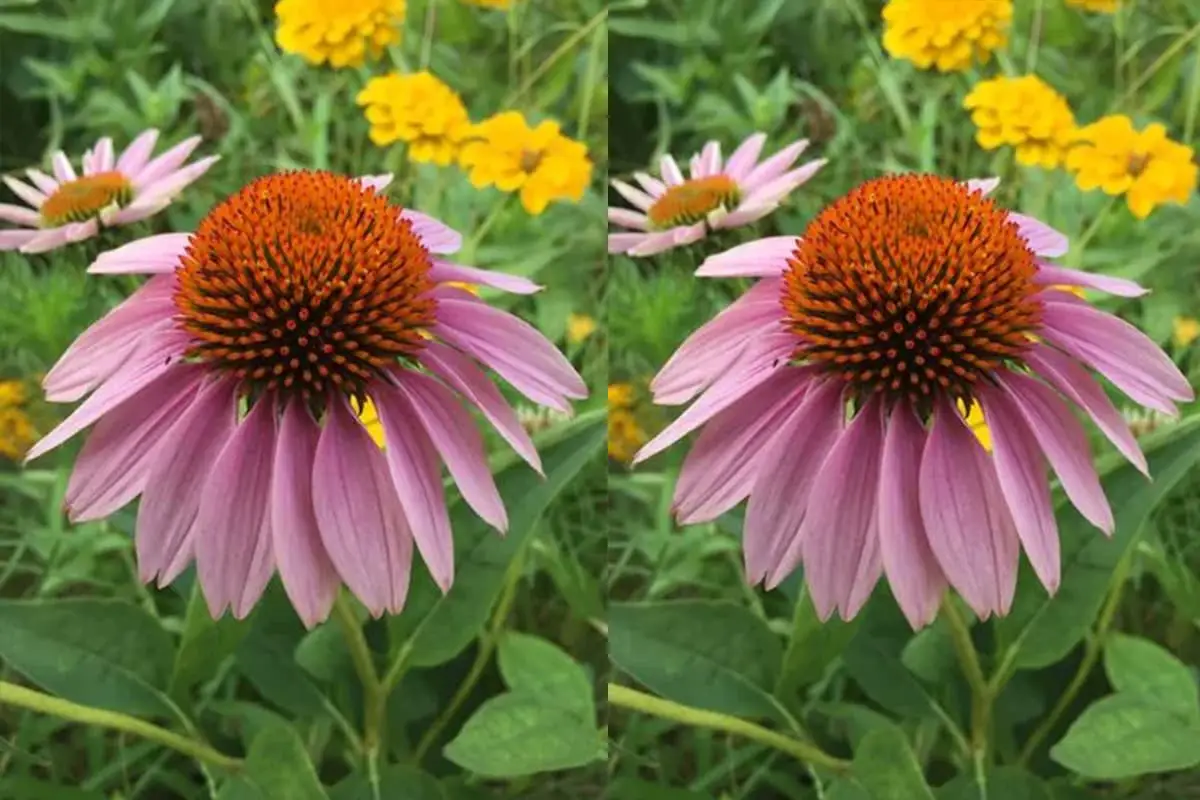
It is an indispensable variety for gardens, parks, urban green spaces, street beautification, and festive floral arrangements, widely cultivated across the nation. The coneflower plants grow to a height of 60-120 centimeters, with strong, upright flower stems.
The large, solitary capitulum blooms at the end of branches, with flower heads 8-13 centimeters in diameter, featuring an unusual and interesting shape.
The central part protrudes into a spherical shape topped with tubular orange-yellow flowers, surrounded by ray florets that come in red, pink, bi-colored, and white variations.
Through cultivation, it flowers in May and October, with a flowering period of 1-2 months; it is native to North America and cultivated worldwide.
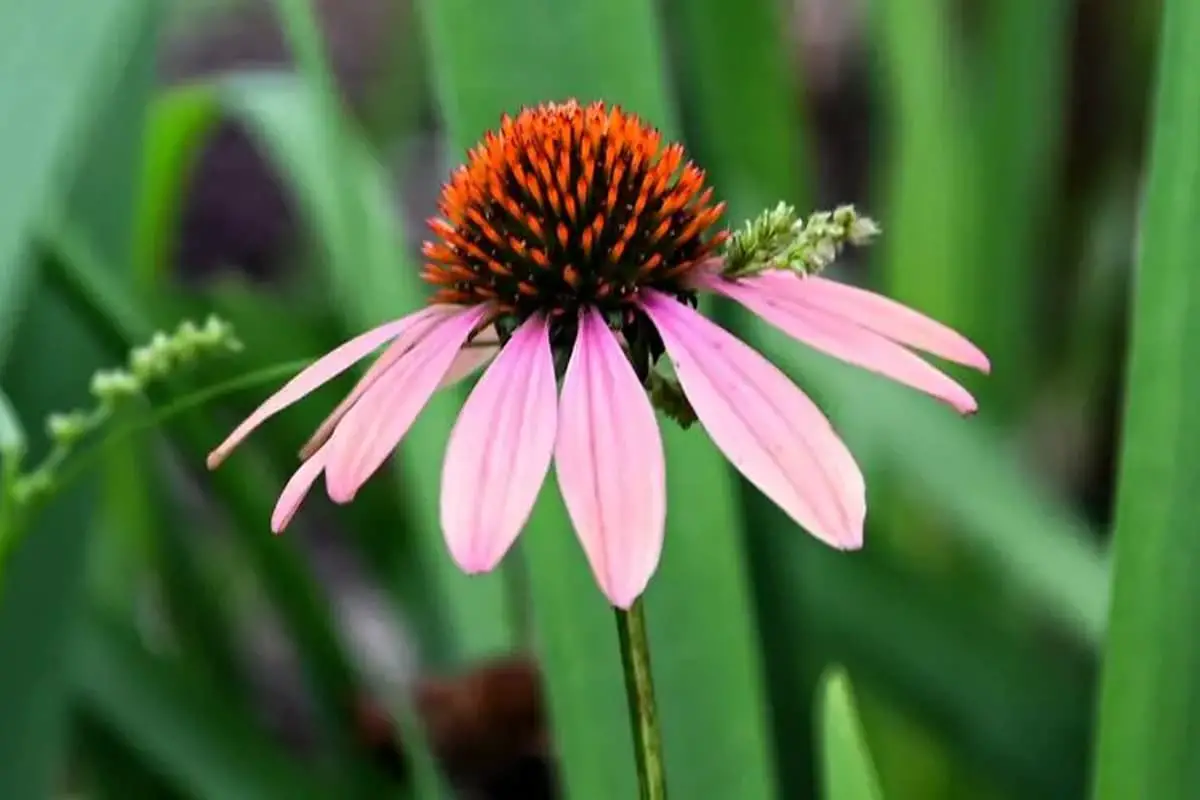
Echinacea purpurea is a perennial herbs with a height of 50-150 cm, the entire plant covered with coarse hair, and an erect stem. The basal leaves are ovate or triangular, while the stem leaves are ovate-lanceolate, with leaf bases that slightly clasp the stem.
The solitary capitulum flower heads, sometimes clustered, can reach up to 10cm in diameter, with purplish-red ray florets and orange-yellow tubular flowers blooming from June to July.
The Coneflower plant stands tall between 60-120 centimeters, with robust flower stems and large capitulum inflorescences at the branch tips.
The blooms are sizable, with diameters ranging between 8-13 centimeters, and a unique floral arrangement. The central part forms a spherical bulge, dotted with orange-yellow tubular flowers, encircled by ray florets in shades of red, pink, mixed colors, and white.
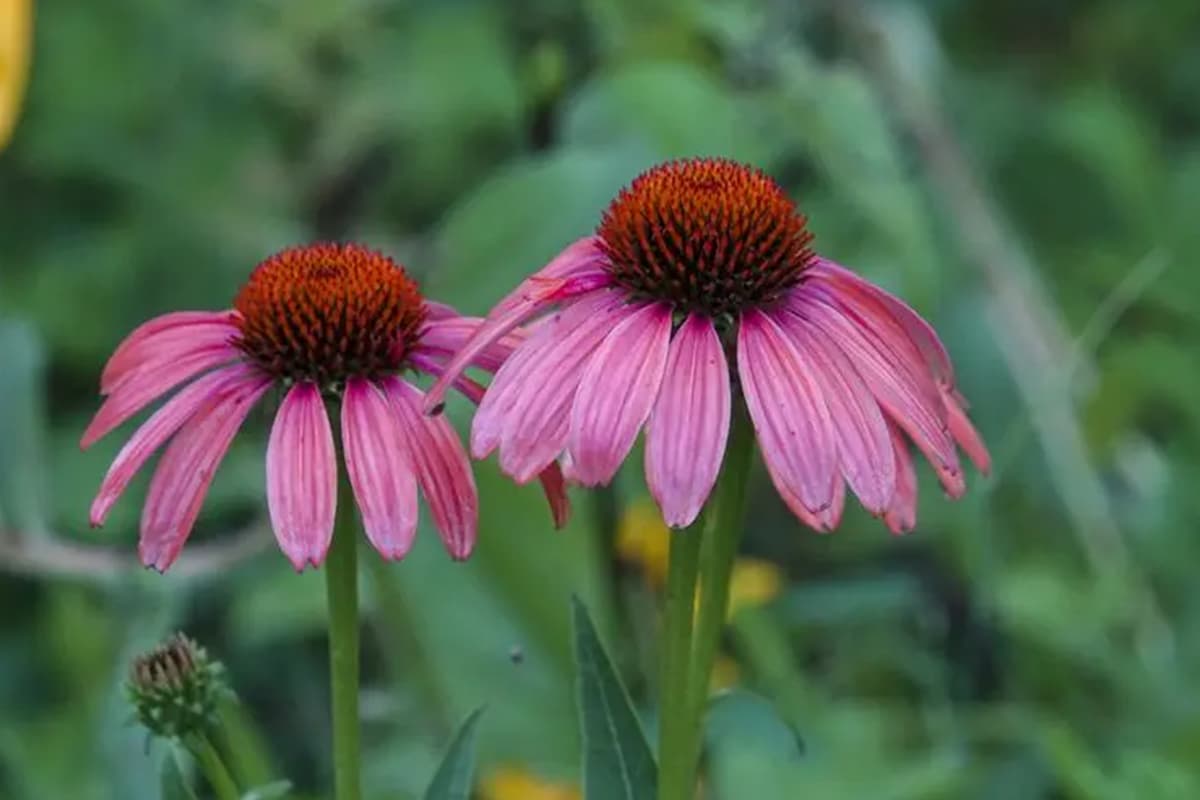
After being cultivated, it can flower in May and October, with a blooming period lasting 1-2 months. Coneflower seeds mature in late October, with a hard outer shell and light brown color.
The plant thrives in warm conditions, exhibiting hardiness and cold resistance. It prefers full sunlight and tolerates drought well.
It is not particular about soil types but grows best in deep, fertile soil rich in humus, which results in larger and more vividly colored flowers. It can propagate through self-seeding.
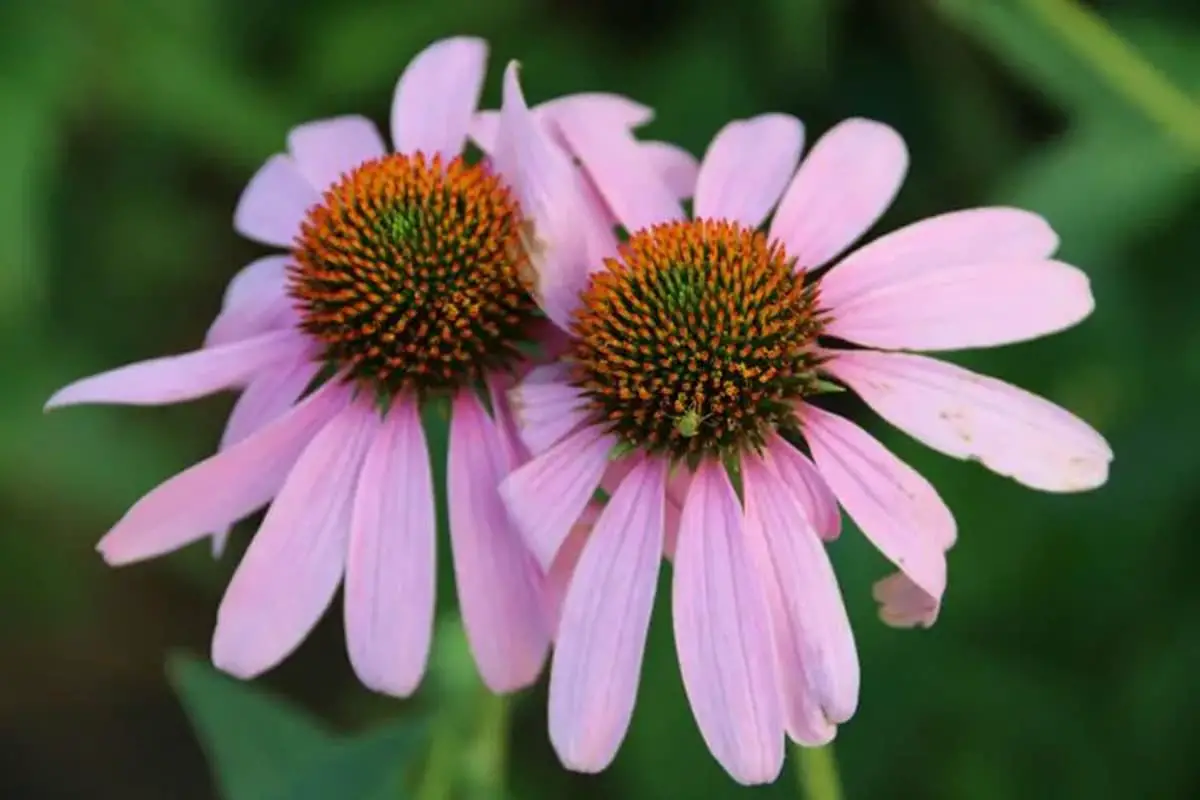
It is distributed throughout North America and extensively cultivated around the world.
These plants are found in a variety of habitats, including slopes, hills, plains, farmlands, and wastelands. They are also present in Central Asia and Siberia within the former Soviet Union, Mongolia, and Iran.
Additionally, the Purple Coneflower is found in Europe, Russia, and various regions of Central Asia.
Echinacea purpurea possesses strong resistance to pests and diseases, resulting in minimal infestations. Nevertheless, proactive measures should be taken to mitigate the following issues:
Also known as black stem disease, root rot in Echinacea purpurea causes wilting of leaves on the upper plant, leading to complete desiccation of the foliage and, in severe cases, browning of the roots until the plant perishes.
To combat this disease, a common treatment involves the application of a 40% dazomet wettable powder solution diluted at a ratio of 1:1000, either by spraying or drenching the affected plants.
This should be done once every 3-5 days, with a total of 2-3 applications generally sufficing.
When Echinacea purpurea contracts yellow leaf disease, the leaves turn yellow, sometimes curling, and the plant’s growth slows down, resulting in stunted plants and deformed, discolored blooms.
A characteristic of this disease is that symptoms appear in the second year following initial infection.
Preemptive treatment is recommended, typically involving spraying a 50% thiophanate-methyl wettable powder diluted at a ratio of 1:500 or a 75% chlorothalonil wettable powder at a ratio of 1:600, applied every 7-10 days, with a series of 2-3 treatments.
When most of the diseased plant turns yellow and withers, it should be promptly uprooted and destroyed en masse to prevent further spread.
The cabbage looper feeds on the leaves of Echinacea purpurea, causing holes and impairing the plant’s growth and development.
Upon detection, control can be achieved by spraying with a 2.5% lambda-cyhalothrin emulsion diluted at a ratio of 1:1000, applied once every 7 days for generally 2-3 applications.
In the United States and Europe, Echinacea purpurea is widely utilized and commonly believed to enhance immunity.
It contains a variety of active ingredients that can stimulate the vitality of immune cells such as leukocytes, thus boosting the body’s natural immune response.
Echinacea purpurea is ideal for background planting or as a component of flower borders and slope plantings, and it also serves as a cut flower.
Potted Echinacea purpurea: The potting soil should be a loose, fertile mix or cultivation soil. Depending on the size of the pot, 3-5 seedlings may be planted per pot.
During the initial growth phase, pinching once to encourage branching is beneficial. It is advisable to replace the plants annually.
Watering should be moderate, especially during the humid monsoon season when water application must be carefully controlled. During the growth period, diluted liquid fertilizer should be applied to promote growth.
Once flower buds form, fertilize weekly, followed by a light watering to prevent fertilizer from accumulating on the plant. For rain protection, cultivation is typically done in a greenhouse with good ventilation and ample sunlight.
The minimum temperature should not fall below 10°C (50°F), and shading may be necessary during hot summers.
Indolence.

Peggie was once a high school mathematics teacher, but she set aside her chalkboard and textbooks to follow her lifelong passion for flowers. After years of dedication and learning, she not only established a thriving flower shop but also founded this blog, “Flowers Library”. If you have any questions or wish to learn more about flowers, feel free to contact Peggie.
 English
 العربية
 Bahasa Indonesia
 Deutsch
 Français
 Italiano
 Nederlands
 Português
 Русский
 日本語