600+ Types of Flowers A To Z (With Names and Pictures)
Types Of Flowers By Names (A-Z) Types Of Flowers By Color Types Of Flowers By Season Types Of Flowers By Blooming Time 600+ Types of Flowers No. Flower Name No.…

The Cymbidium faberi Rolfe, a terrestrial herbaceous plant from the orchid family, is characterized by its inconspicuous pseudobulbs, 5-8 strap-shaped leaves with a strong upright habit, clear leaf veins, and edges often with coarse serrations.
Its peduncle emerges from the axil of the outermost leaf at the base of the leaf cluster, bearing a raceme with 5-11 or more flowers. The floral bracts are linear-lanceolate, with the lowest one longer than the ovary.
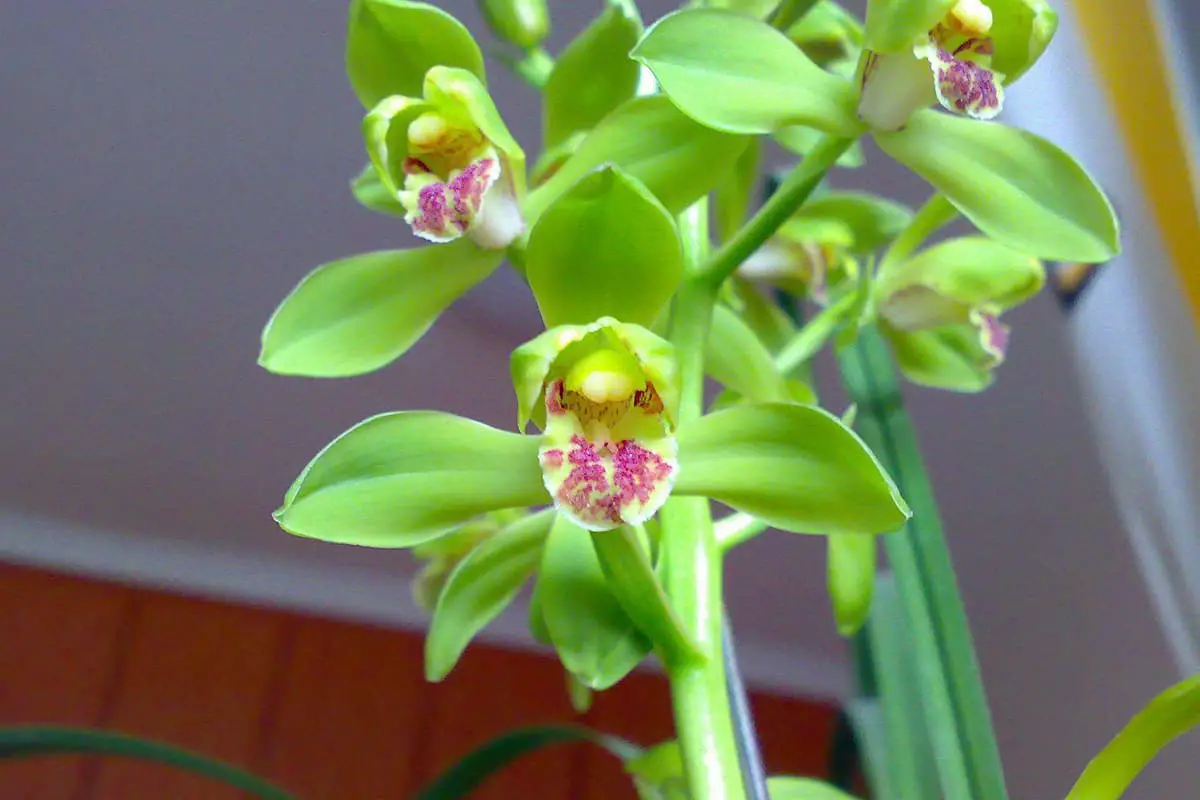
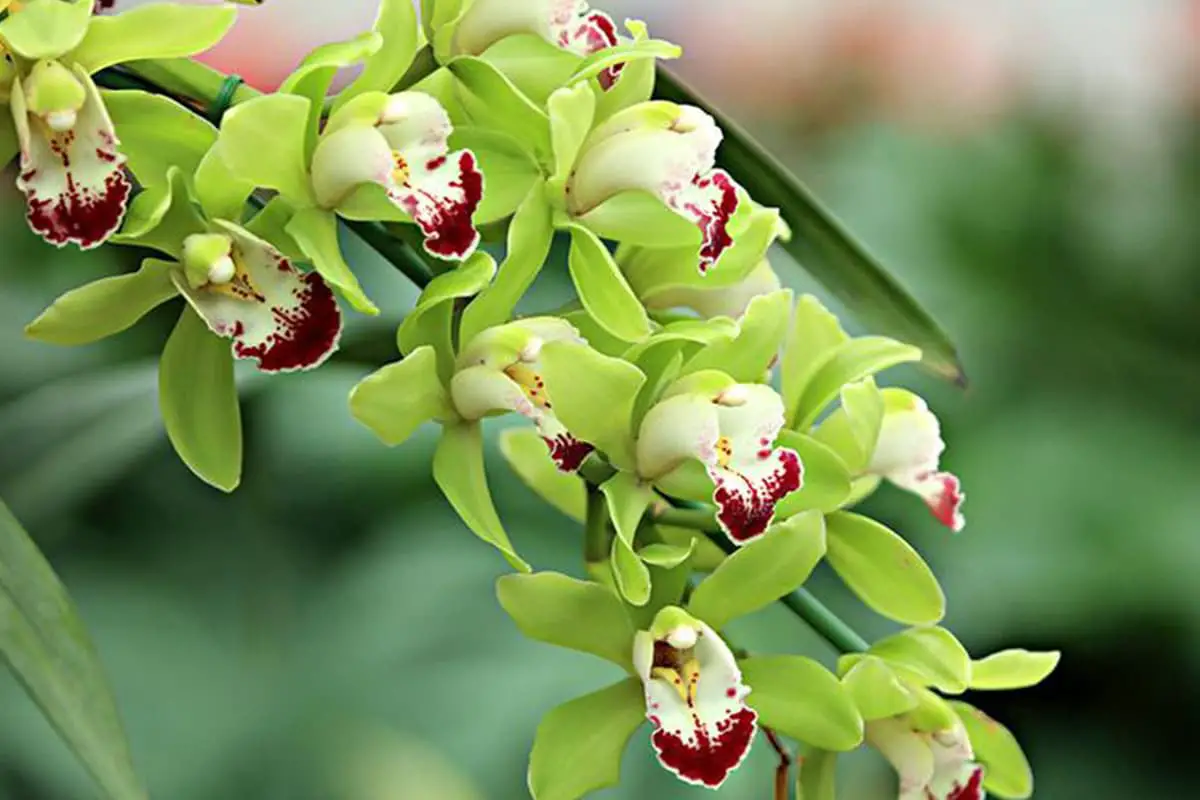
The flowers are usually light yellow-green, with a purplish-red blotch on the lip and a fragrant aroma. The petals and sepals are similar, often slightly shorter and wider.
The lip is long oval-ovate, the column is slightly curved forward, with narrow wings on both sides. There are four pollinia in two pairs, broad ovate. The capsule is nearly narrow-elliptical.
It blooms from March to May, and thrives in well-drained, illuminated places with an altitude of 700-3000 meters. It is found in most parts of China, as well as in Nepal and northern India. The Cymbidium faberi is often used as a potted plant for ornamental purposes.
The leaves of Cymbidium faberi are highly distinctive and variable in form, ranging from upright to sloping or hanging. Typically dark green in color, new leaves have a rough surface texture. Each plant usually produces 6-8 leaves, though some may have as few as 3-4 or as many as 12. The leaves are characterized by:
Plant height generally ranges from 40-80 cm, with some specimens under 25 cm or over 100 cm. The unique leaf structure contributes to the plant’s drought tolerance, flood resistance, and ability to withstand strong winds at high altitudes.
Cymbidium faberi roots are thicker than those of related species, typically 5-6mm in diameter and 40-50mm in length. Key features include:
The stem of Cymbidium faberi sprouts from a small, flat pseudobulb at the base of the mother plant. Unlike some related species, it lacks leafless scales underneath. The growth process involves:
Cymbidium faberi is a multi-flowered species with the following characteristics:
Cymbidium faberi is native to:
It thrives in:
The species is popular as an ornamental potted plant, blooming from March to May. Its unique adaptations to high-altitude environments, including its leaf structure and root system, make it a resilient and versatile orchid species.
The Cymbidium orchid typically has 5-9 leaves, most commonly 6-7, with a length of 25-80 cm and a width of about 1 cm. These leaves are strongly upright, contributing to the plant’s distinctive appearance.
The growth cycle of Cymbidium orchids is characterized by specific seasonal patterns. New leaf buds emerge from early May to early June, with autumn buds sprouting from late July to mid-August. About 20 days after the emergence of new leaf buds, there’s a slow growth period. The leaf expansion phase occurs from mid-June to late July, followed by the leaf elongation period from July to October. The plant enters dormancy from November to February of the following year.
For successful cultivation, it’s crucial to grow Cymbidium orchids in groups of at least 3 plants, as fewer may struggle to survive. Each individual plant requires approximately 3 years from initial emergence to reach full maturity.
The flowering process of Cymbidium orchids is equally intricate. Flower buds emerge between September and early October, growing to about 2-3 cm before entering a dormancy period of around 5 months at 5°C. This dormancy is essential for the development of their fragrant blooms. The primary flowering period extends from late March to late April, with some late-blooming varieties flowering in early May.
Cymbidium orchids thrive in specific environmental conditions. The optimal growth temperature range is 15-25°C, with tolerance for summer highs up to 38°C and winter lows down to -5°C. For reproductive growth, temperatures between 10-20°C are ideal. Among Chinese native orchids, Cymbidiums are known for their exceptional cold and heat tolerance.
These orchids prefer air humidity levels between 60-75%. During the winter dormancy, humidity should not drop below 50%, while during the active growing season, it should be maintained between 70-80%.
Water management is critical for Cymbidium orchids. Despite having small pseudobulbs that require consistently moist potting media, they are the most drought-tolerant among Chinese native orchids. Their thick, long roots have significant water retention capacity, allowing them to withstand short periods of drought (up to 4 days). Preserving healthy roots is paramount in Cymbidium cultivation.
The adage “not dry in autumn, not wet in winter” is particularly relevant for Cymbidiums. To prevent leaf scorching in dry autumn conditions, increasing air humidity is essential.
Light is a crucial factor in Cymbidium growth. These orchids are notably light-loving compared to other Chinese native orchids. They require about 60% shade during peak summer sunlight, but generally don’t need shading in other seasons.
Cymbidium orchids should be grown in deep pots to accommodate their typically unbranched roots. When selecting plants, look for specimens with long, thin roots, tight pseudobulb sheaths, colorful sand rings, and needle-like leaf sheaths. Healthy plants usually produce 5-12 flowers per inflorescence, with some exceptional varieties producing up to 18.
Cymbidiums from Jiangsu and Zhejiang provinces are often considered superior, while newer varieties are being developed in Henan, Hubei, and Shaanxi provinces.
In summary, Cymbidium orchids prefer bright light but dislike extreme darkness, thrive in well-ventilated conditions, require loose, well-draining soil, perform best when grown in groups, and prefer regular, dilute fertilization rather than strong, infrequent feedings. Understanding and providing these specific growing conditions is key to successful Cymbidium orchid cultivation.
The primary method of propagation for Cattleya orchids is division. It’s recommended to select robust plants that have been growing for 2-3 years, with optimal division times being March-April or September-October annually.
The growing medium should be loose, nutrient-rich, well-aerated, and well-draining. It should be free from pests and pollutants, and avoid being overheated, dry, or waterlogged. The ideal pH range is 5.5 to 6.5. Prior to use, the substrate should be sun-sterilized or chemically treated.
Division process:
White Silk Disease (Pythium or Rhizoctonia):
This fungal disease commonly affects crowded or young plants in hot, humid conditions.
Symptoms include white mycelium on roots and leaves, with white (early stage) or light brown (late stage) fungal bodies at the base of roots and stems. Infected leaves detach easily.
Control: Apply fungicides such as 50% Iprodione (1:1000 dilution), 50% Thiophanate-methyl (1:3000 dilution), or 75% Chlorothalonil (1:1000 dilution). Cease watering for 5-7 days post-treatment. Remove and destroy infected plant material, and treat nearby plants preventatively.
Anthracnose (Colletotrichum):
This fungal disease can occur year-round but is most severe in hot, humid conditions, especially in mature plants with poor air circulation.
Symptoms begin as small, discolored spots on leaves, which enlarge and darken. Advanced stages show sunken, blackish-brown lesions with concentric rings of dark fruiting bodies.
Control: Apply 25% Difenoconazole (1:2500 dilution) or 50% Mancozeb (1:6000 dilution). Remove infected leaves and apply concentrated fungicide to cut surfaces. Balance potassium fertilization and fungicide use.
Soft Rot (Erwinia):
This bacterial disease thrives in humid, high-temperature environments, primarily affecting leaves, causing browning and rot. Severe cases can be fatal.
Control: Improve ventilation and regulate temperature and humidity. Promptly remove and destroy infected tissue. Sterilize tools and avoid leaf damage. Apply 77% Streptomycin sulfate (1:800 dilution) or 72% Agricultural Streptomycin (1:4000 dilution) every 7-10 days, for 1-2 applications.
Cattleya orchids are prized for their upright growth habit, striking flower stems, and large, vibrant blooms. They excel as potted plants for indoor displays, balconies, and windowsills, adding elegance and luxury to any space.
When grouped in large arrangements, they make impressive focal points in hotels, shopping centers, transportation hubs, and public spaces. The majestic stature and magnificent flowers of Cattleyas have earned them a devoted following among orchid enthusiasts and collectors.
While Cattleyas are primarily cultivated for ornamental purposes, some traditional medicinal uses have been recorded:
Seedlings: Known as “grass pine tendons” or “black water pine tendons” in some traditional practices, they have been used to treat coughs, parasitic infections, and head lice.
Root Bark: Described as bitter, sweet, and warm in nature, with slight toxicity. Traditional uses include moistening the lungs, alleviating coughs, and as an antiparasitic. It has been employed for chronic coughs, roundworm infections, and head lice (typically as a topical wash).
Note: These traditional medicinal uses are not scientifically validated, and Cattleyas are not commonly used in modern herbal medicine. Always consult a qualified healthcare professional before using any plant for medicinal purposes.

Peggie was once a high school mathematics teacher, but she set aside her chalkboard and textbooks to follow her lifelong passion for flowers. After years of dedication and learning, she not only established a thriving flower shop but also founded this blog, “Flowers Library”. If you have any questions or wish to learn more about flowers, feel free to contact Peggie.
 English
  العربية
  Bahasa Indonesia
  Deutsch
  Français
  Italiano
  Nederlands
  Português
  Русский
  日本語
日本語