600+ Types of Flowers A To Z (With Names and Pictures)
Types Of Flowers By Names (A-Z) Types Of Flowers By Color Types Of Flowers By Season Types Of Flowers By Blooming Time 600+ Types of Flowers No. Flower Name No.…

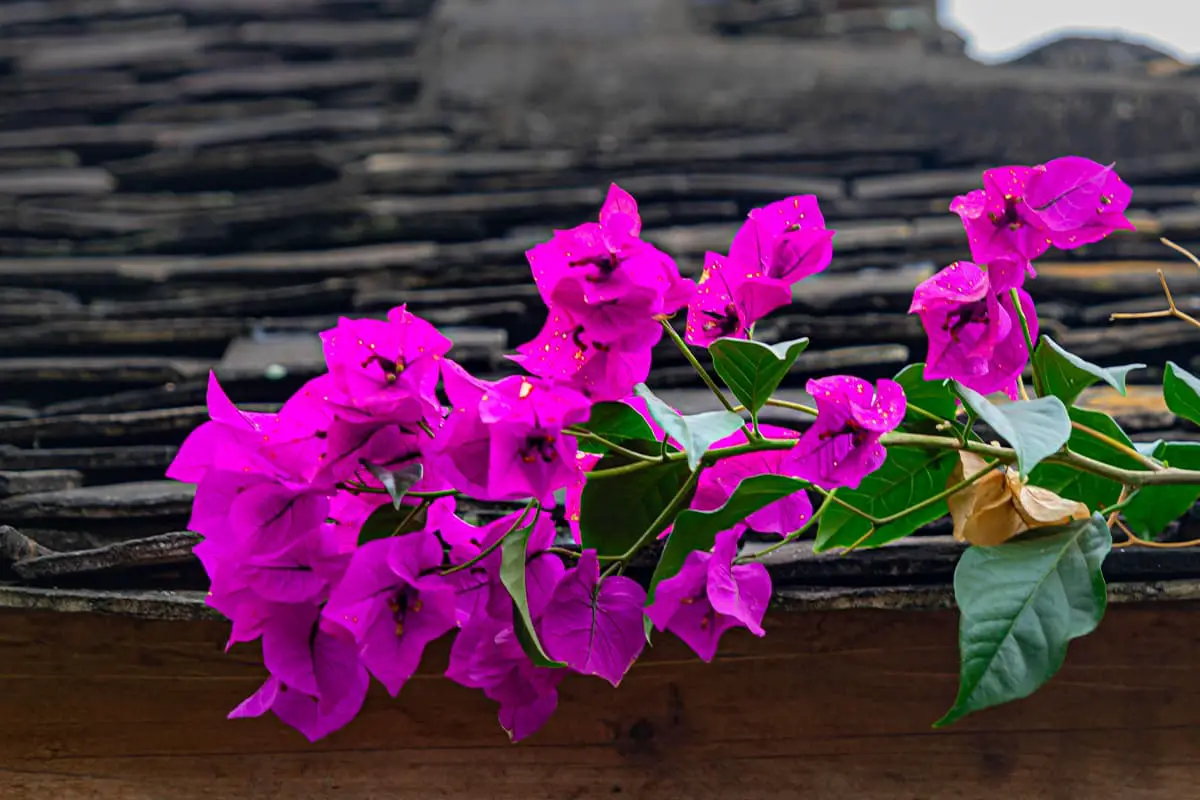
The Bougainvillea spectabilis, also known as Leaf Flower, belongs to the Nyctaginaceae family. This woody vine-like shrub has curved thorns and is densely covered in velvety hair.
It earned its name, Leaf Flower, due to its leaf-like appearance. Its blooming period extends from November to June of the following year.
During the transition from winter to spring, its vibrant purple and red bracts bloom, exuding a sense of exuberance and warmth, thus earning it another name, Spring Red.
Originally from Brazil in South America, it was introduced to Europe in the 1930s. The Bougainvillea spectabilis thrives in warm, humid environments with ample sunlight and is not frost-tolerant.
In China, it can be grown outdoors year-round in the south, while it requires potting and greenhouse cultivation in other regions. Well-drained sandy loam is the most suitable soil for it.
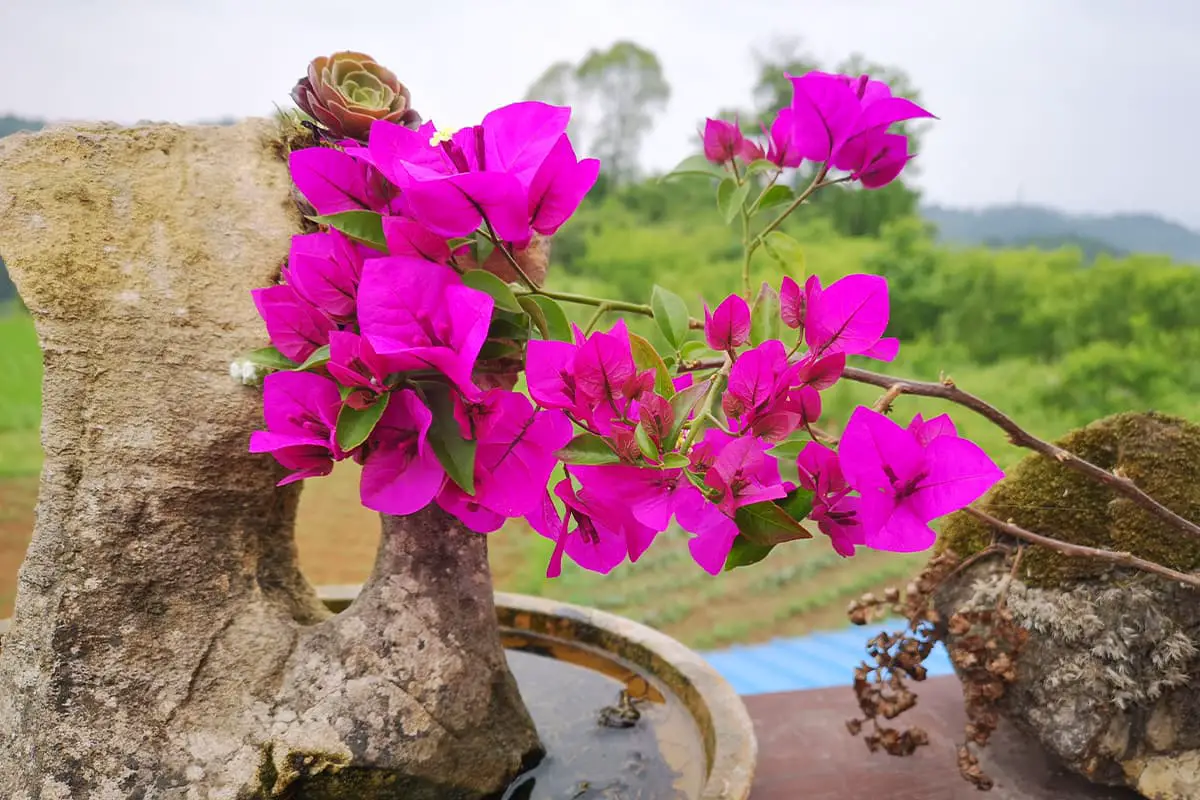
This species is a vine-like shrub. Its branches and leaves are densely covered in soft hair with downward-bending thorns in the axils. The leaves are ovate or elliptic with a rounded base and a stalk.
The inflorescences are axillary or terminal, the bracts are elliptic-ovate, with a round to heart-shaped base, 2.5-6.5 cm long, 1.5-4 cm wide, dark red or light purple-red.
The corolla tube is narrow, 1.6-2.4 cm long, green, densely covered in soft hair, with 5-6 lobes at the top, spreading out, yellow, 3.5-5 mm long. There are usually 8 stamens, and the ovary has a stalk.
The fruit is 1-1.5 cm long, densely covered in hair. The flowering period is during winter and spring.
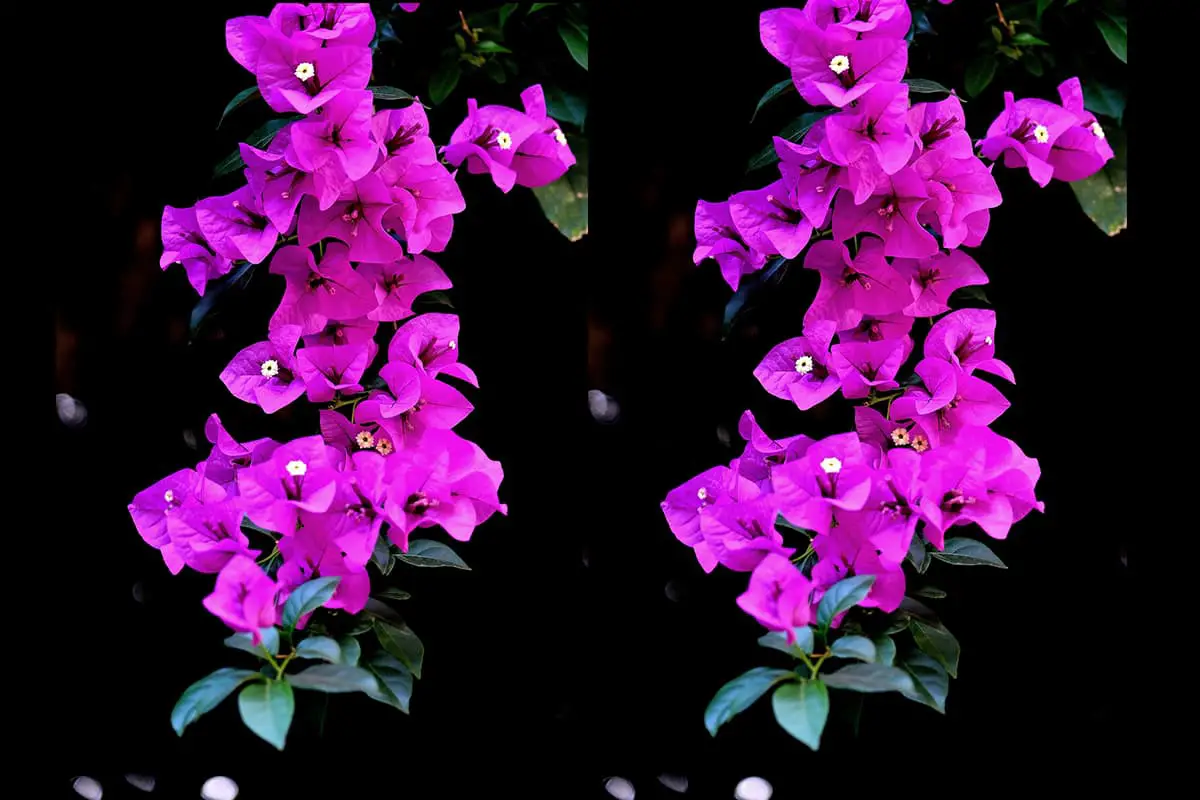
Native to tropical America, it is cultivated in southern China for ornamental purposes.
It prefers a warm, humid climate with plenty of sunlight. It is not frost-tolerant but can withstand poor soil, drought, alkaline conditions, and pruning. It has a vigorous growth habit, loves water but does not tolerate waterlogging.
It requires ample light, and in the Yangtze River basin and regions to the north, it needs to be potted and cared for. It is not demanding about the soil, but grows vigorously in fertile, loose, well-drained sandy loam.
Insufficient light exposure can affect its blooming; the optimal growth temperature is between 20-30°C.
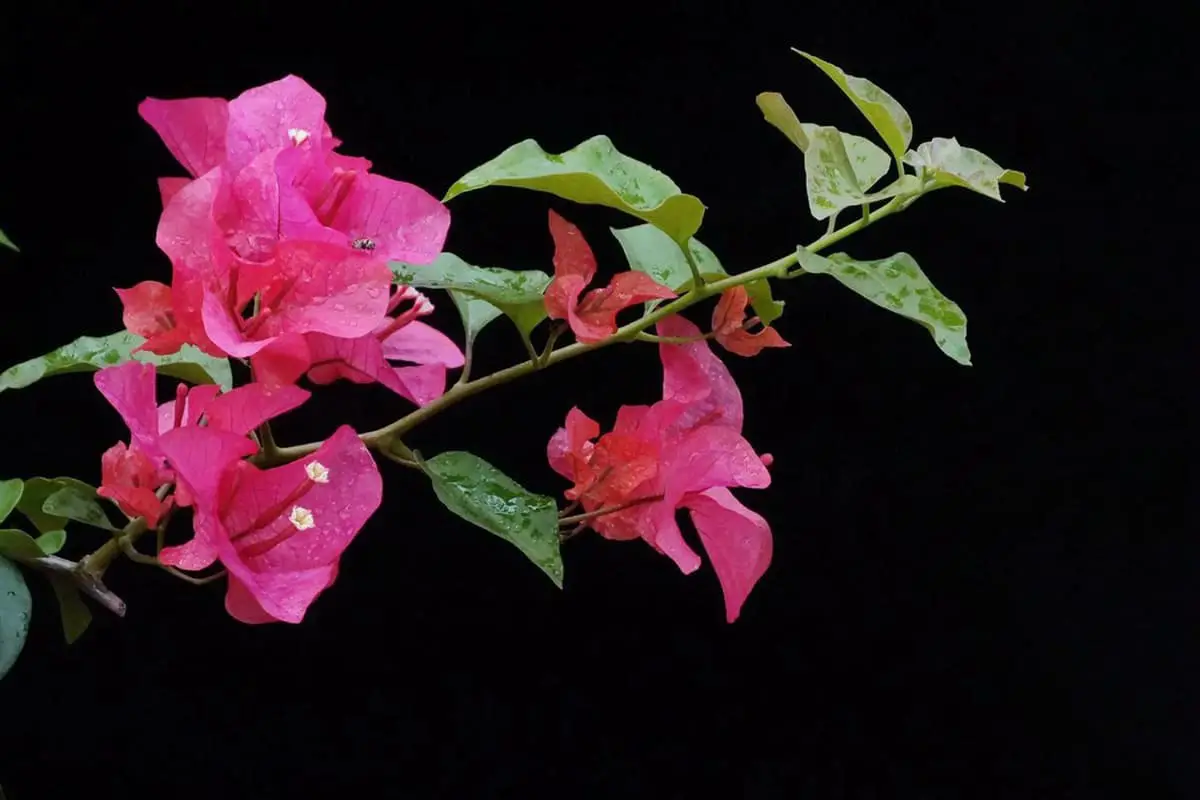
The ideal time for layering is from early May to mid-June each year.
For layering, select a robust branch from the Bougainvillea plant that is thicker than a chopstick. Two points to consider when choosing a branch: First, it should be easily cut or sawed off from the mother plant once it has rooted.
Second, the upper part of the branch should have 2 to 3 thin branches, with a certain number of leaves for photosynthesis to produce organic nutrients for root growth.
Once you’ve selected the branch, make a ring cut on the branch at the estimated center of the nutrient pot using a small knife, removing a ring of bark and exposing the wood. The depth should reach the xylem, and the length should be approximately 0.7 to 1 cm.
Depending on the thickness of the selected branch, choose a black soft nutrient pot with a diameter of about 10 to 15 cm. Cut one side of the pot from top to bottom, the length of the cut depends on the height at which the branch is inserted into the pot.
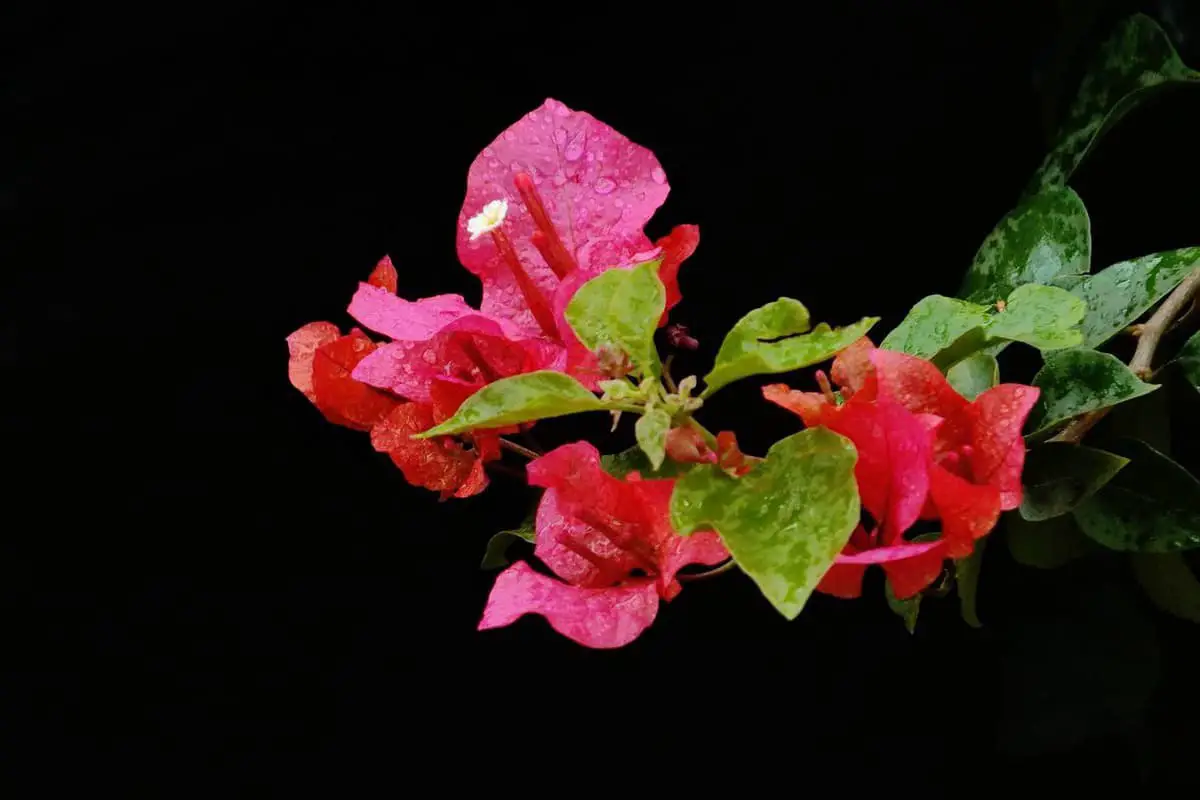
Then, cut 5 to 7 small holes around the bottom of the pot for drainage and observation. Put the nutrient pot on the branch so that the ring-cut part of the branch is located at the upper third and in the center of the pot.
Stabilize the pot with a wooden tripod or another method (such as placing another nutrient pot filled with soil under the pot). Tie up the cut of the original nutrient pot with thin wire.
Fill it with moderately moist soil, preferably a mixture of garden soil and rotted leaf soil. Ensure the lower part of the branch is filled in solidly with no gaps, and slightly compact the soil. Finally, water thoroughly.
After layering, maintain the moisture of the soil in the nutrient pot. Depending on the weather, water thoroughly every 2 to 3 days.
After about 25 days, you’ll notice a few tender white roots protruding from a couple of the smaller holes at the base of the pot, indicating that the layering has been successful and the branch has rooted. Wait another 5 to 7 days for the roots to grow a bit more before transplanting.
For transplantation and subsequent care, avoid watering for 2 to 3 days before you plan to transplant, so the soil in the nutrient pot hardens and does not scatter during the transplant, separating the new roots from the soil and affecting survival and growth.
When transplanting, first cut or saw off the branch close to the nutrient pot. Carefully remove the pot, then transplant the plant into a prepared flower pot.
The potting soil should be a mixture of garden soil, rotted leaf soil, or rock mountain soil, and it’s best to mix in some fermented vegetable or bean cake compost as a base fertilizer.
After transplanting, tie the plant to a wooden stick for stability. Water thoroughly. If the sunlight is too strong, keep the flower pot in the shade for 1 to 2 days before moving it to a sunny balcony, and manage it as usual.
Because this propagation method produces many new roots on the original branch, and a lot of soil is carried along during transplantation, the plant is barely affected after transplanting, ensuring fast survival and growth. By September to October of the same year, it can bloom abundantly and last for a long time.
The Bougainvillea has some resistance to sulfur dioxide, making it an excellent environmental greening plant.
The focal point of the Bougainvillea is the bracts, which resemble leaves with flowers in the middle, hence the name “leaf flower.”
The Bougainvillea is vigorous, with unique flower shapes and vibrant, varied colors that are particularly eye-catching when blooming. Especially in winter, when the vibrant bracts bloom indoors, they display a radiant, passionate charm that people love.
It is the national flower of Zambia. In southern China, it is often used for courtyard greening, as a hedge, trellis plant, flower bed, or flower belt, each with its unique style. The cut flower arrangement has its unique charm.
The flowers of Bougainvillea can be used medicinally, with detoxifying, heat-clearing, and blood-regulating effects. It is somewhat effective in treating irregular menstruation and boils in women.

Peggie was once a high school mathematics teacher, but she set aside her chalkboard and textbooks to follow her lifelong passion for flowers. After years of dedication and learning, she not only established a thriving flower shop but also founded this blog, “Flowers Library”. If you have any questions or wish to learn more about flowers, feel free to contact Peggie.
 English
  العربية
  Bahasa Indonesia
  Deutsch
  Français
  Italiano
  Nederlands
  Português
  Русский
  日本語
日本語