600+ Types of Flowers A To Z (With Names and Pictures)
Types Of Flowers By Names (A-Z) Types Of Flowers By Color Types Of Flowers By Season Types Of Flowers By Blooming Time 600+ Types of Flowers No. Flower Name No.…

Zephyranthes candida, also known as Swamp Lily or Fairy Lily, is a perennial herbaceous plant belonging to the Amaryllidaceae family. It features egg-shaped bulbs about 1 inch in diameter with a distinct neck, ranging from 1 to 2 inches in length.
The leaves are narrow, linear, succulent, and bright green, growing 8 to 12 inches long and 0.08 to 0.16 inches wide.
Originally from South America, it is cultivated in various regions of China. It thrives in full sun to partial shade and is commonly used as edging for flower beds, planted en masse on green lawns, ideally as ground cover in partially shaded forest areas, or along garden paths.
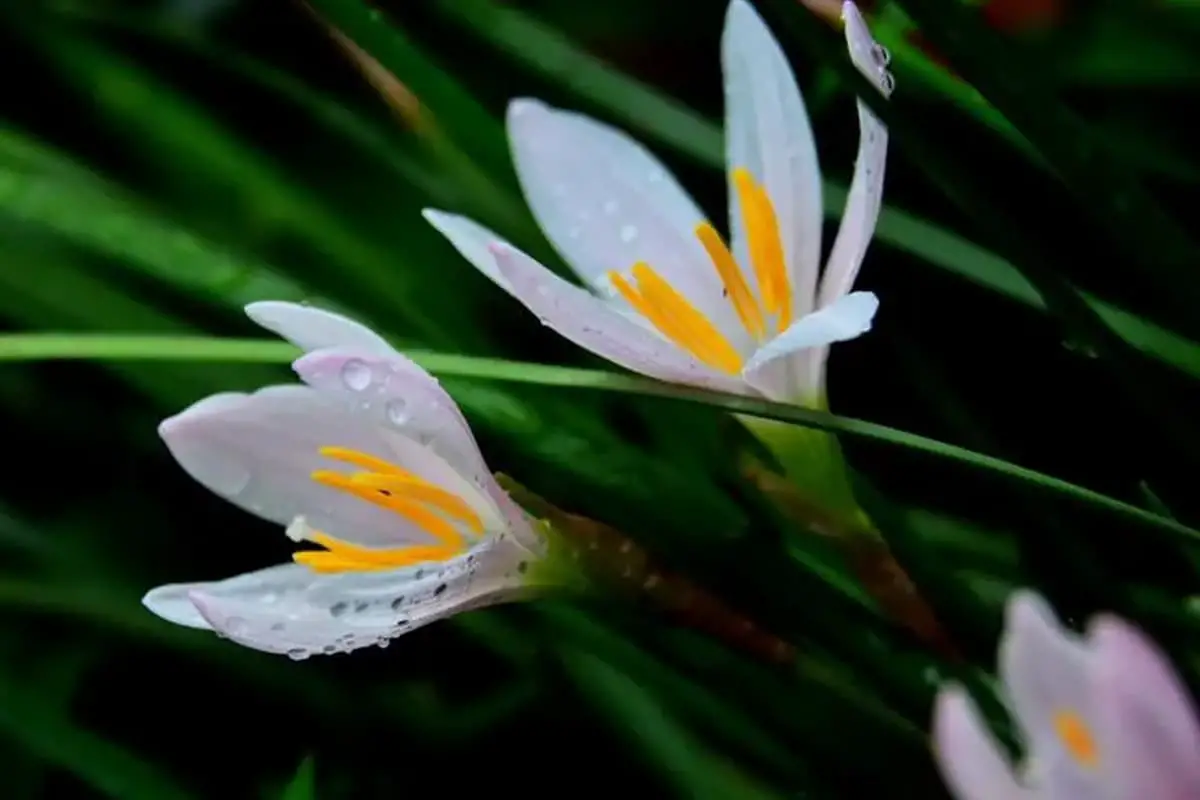
The perennial herb grows from an egg-shaped bulb, approximately 1 inch in diameter with a clear neck that is 1 to 2 inches long. The leaves are narrow and linear, thick, and shiny green, measuring 8 to 12 inches in length and 0.08 to 0.16 inches in width.
The flower stem is hollow, and the bloom is solitary at the top of the stem, supported by a spathe with a brownish-red tinge that splits into two at the top.
The pedicel is about 0.4 inches long; the flowers are white, often with a light pink tinge on the outside. The tepals, six in total, are 1.2 to 2 inches long, blunt or with a short point at the tip, and about 0.4 inches wide, often with tiny scales near the throat.
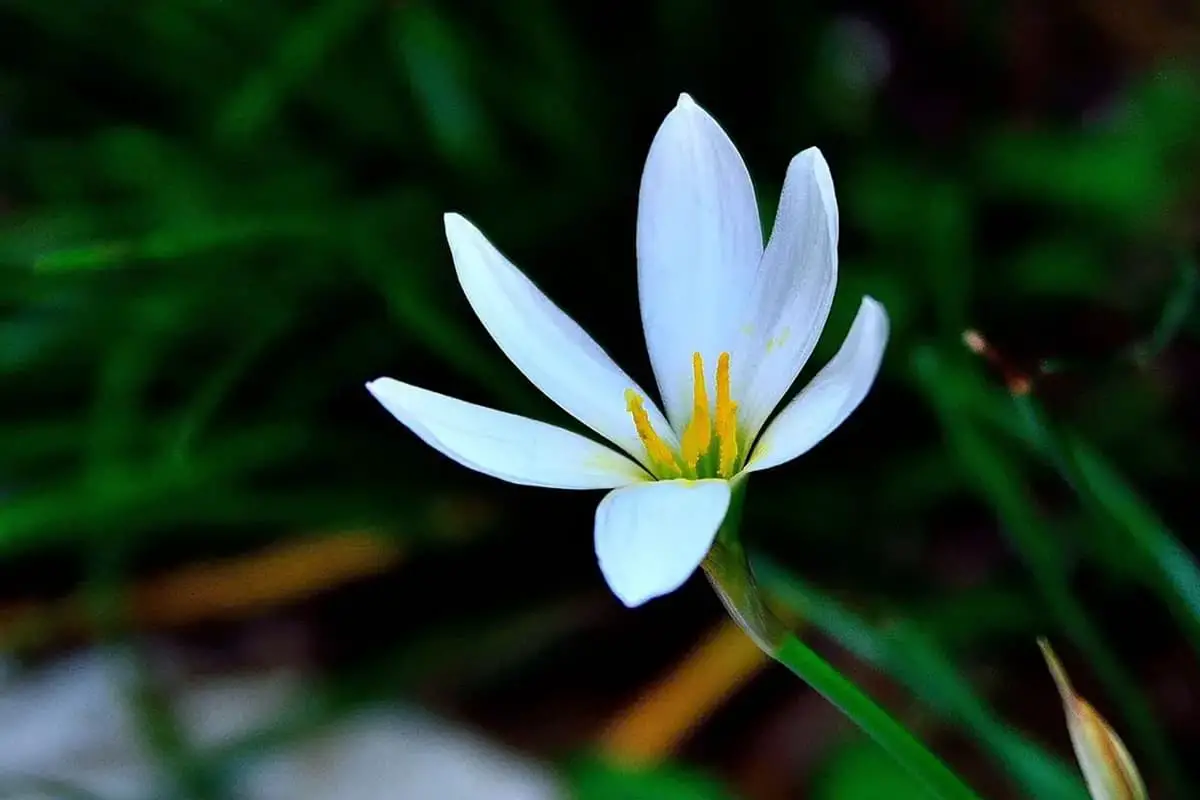
There are six stamens, about half the length of the tepals; the pistil is slender, with a stigma that is not noticeably three-lobed.
The capsule is nearly spherical, about 0.5 inches in diameter, splitting into three parts; the seeds are black and flat.
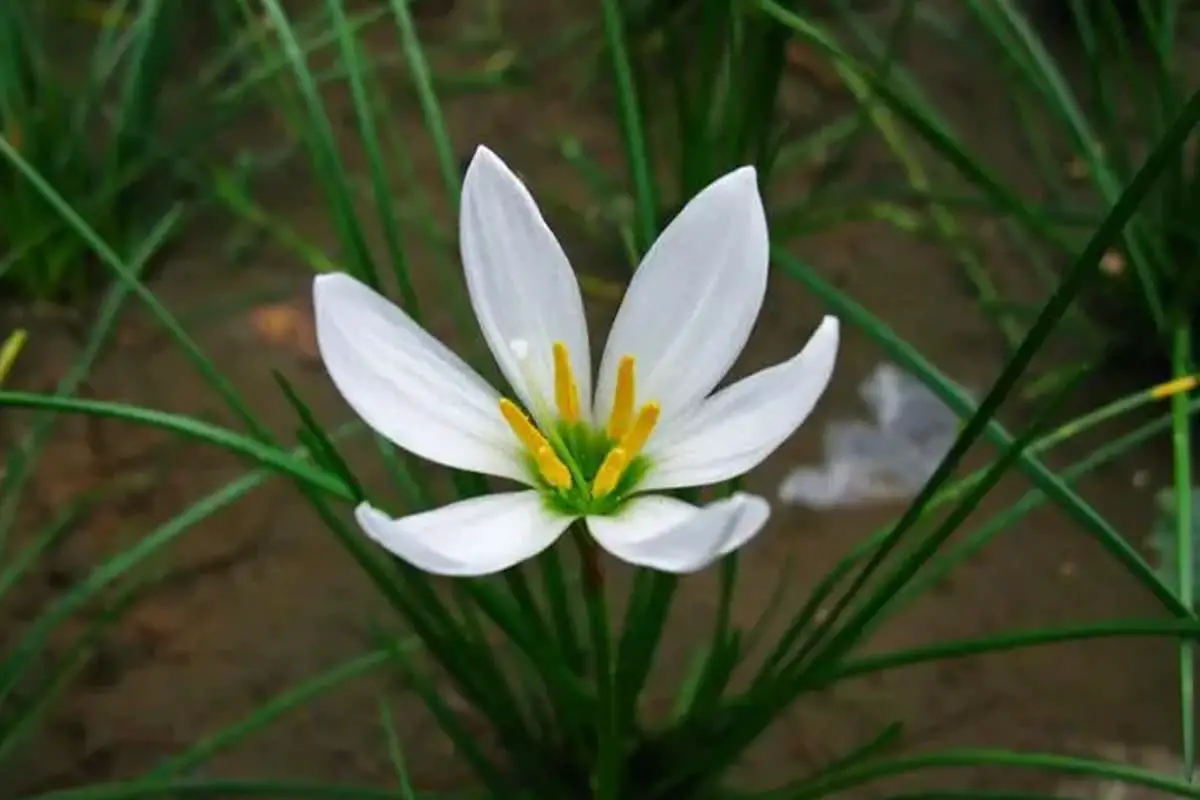
Zephyranthes candida
Leek Lily
Division should be carried out in the early spring as the soil thaws.
Division Method
Remove the mother plant from its pot, shake off excess soil, separate the roots as much as possible, and use a sharp knife to split it into two or more plants.
Each division should have a substantial root system, and the leaves should be trimmed appropriately to facilitate survival.
Potting and Disinfection
Soak the divided plants in a solution of fungicide diluted to 1500 times strength for five minutes, then let them dry before potting. You can also water the roots with the fungicide solution immediately after potting.
Post-Division Care
Water the newly potted divisions thoroughly. Since the plant’s root system has been significantly damaged and its ability to absorb water is weak, it may take 3-4 weeks to recover and grow new roots.
Therefore, for the first 3-4 weeks after division, water sparingly to prevent root rot. The transpiration of the leaves is unaffected, so to maintain leaf moisture balance, mist the leaves 1-3 times daily (more often in high temperatures, less or not at all in cooler conditions).
Do not fertilize during this period. After division, be mindful of strong sunlight; it’s best to keep the plants in a shaded nursery.
Seed Collection
Approximately 20 days after flowering, the seeds of the White Rain Lily will be ripe. It’s important to collect them promptly since they can germinate on the plant itself due to the change in seasons.
These plants prefer cooler temperatures, and the ideal temperature for sowing is between 59-68°F, so sowing is often done in mid to late September.
Sowing
Place the seeds individually on the surface of the substrate and cover them with about 0.4 inches of the substrate.
Then place the pots in water so that it reaches about half to two-thirds of the pot’s height, allowing the water to slowly seep through from below. Plant the seeds at equal distances of about 1.2 inches from each other.
After sowing, cover with substrate to a depth of two to three times the size of the seed. Once covered, mist the surface with a spray bottle. When the soil in the pot starts to dry, water it lightly, taking care not to displace the seeds with a strong water stream.
Temperature
Zephyranthes candida thrives in warm climates but does not fare well in the hot and humid conditions of summer (above 35°C with relative humidity over 80%); it has strict winter temperature requirements, ceasing growth below 10°C and unable to overwinter safely in frost.
Water and Fertilizer
Favoring full sunlight but also tolerating partial shade, Zephyranthes candida requires a warm and moist environment, thriving in sandy loam soil rich in humus with good drainage. When preparing the field, apply a sufficient base fertilizer.
During the growing season, keep the soil moist and apply diluted cake fertilizer water 2-3 times a year for robust growth and abundant flowering.
For pot cultivation, use loose, fertile potting soil with good drainage, made from a blend of leaf mold or peat, garden soil, and river sand. Ensure adequate watering to maintain soil moisture, avoiding waterlogging.
Spray water on the foliage to increase humidity during dry weather, preventing leaf tips from turning yellow. During the peak growth season, apply a diluted liquid fertilizer every two weeks.
Pests are the main threat to Zephyranthes candida, such as the Spodoptera exigua, which primarily damages Zephyranthes candida, Hippeastrum, and Lycoris.
Although its consumption of the above-ground stems does not kill the plant, the growth is significantly weakened.
Control Methods
Turn the soil in winter or early spring to remove overwintering pupae, reducing pest population. When larvae appear, spray with 1500 times diluted Methomyl, Lesbon, or 800 times diluted Phoxim emulsion oil, targeting the early morning or evening when the larvae are active, for effective control.
The whole plant with bulbs is used as a folk remedy, believed to soothe the liver, calm the heart, and suppress wind to induce tranquility. It is primarily used to treat pediatric convulsions and epilepsy.
Zephyranthes candida contains alkaloids such as lycorine, multi-flower narcissus alkaloids, and nierine. The petals contain narcissin.
Consumption of Zephyranthes candida is not recommended without medical guidance, as ingesting the bulb can cause vomiting, diarrhea, drowsiness, and weakness.
With its low stature, evergreen nature, abundant flowers, and long blooming period, Zephyranthes candida’s lush white blossoms rise above the leaves, set against the green foliage, presenting a stunning beauty that imparts a cool and comfortable sensation.
It is suitable for undergrowth, borders, or semi-shaded areas as a ground cover in gardens, as well as for edging flower beds and paths. Planted in clusters on lawns, it can form a dotted flower lawn and is also suitable for potting indoors.
Flower Language: First love, pure love.
There are only two types of pure love in the world: one is first love, and the other is the enduring love that accompanies you to old age, sharing every moment together. Zephyranthes candida, with its pristine white flowers, embodies this pure love.
Native to South America, Zephyranthes candida is cultivated in warm regions, including Central, Eastern, Southern, and Southwestern China.
Zephyranthes candida prefers fertile soil, abundant sunlight, tolerates partial shade and low moisture, and thrives in fertile soil with a hint of clay and good drainage.
It is relatively cold-hardy, remaining evergreen in the Yangtze River basin and surviving for extended periods below 0°C. It can withstand brief exposures to temperatures around -10°C but may succumb to prolonged cold.
Zephyranthes candida easily propagates by natural bulblet division, with propagation by division being straightforward. Cultivation should account for proper cold protection during winter.

Peggie was once a high school mathematics teacher, but she set aside her chalkboard and textbooks to follow her lifelong passion for flowers. After years of dedication and learning, she not only established a thriving flower shop but also founded this blog, “Flowers Library”. If you have any questions or wish to learn more about flowers, feel free to contact Peggie.
 English
  العربية
  Bahasa Indonesia
  Deutsch
  Français
  Italiano
  Nederlands
  Português
  Русский
  日本語
日本語