Calla Lilies: Basics, Types, Growth & Care
Zantedeschia aethiopica, also known as Calla Lily, Arum Lily, and Water Lily, is a perennial robust herb in the family Araceae. The plant features a tuberous stem and somewhat thick,…

The Zantedeschia hybrida, a member of the Araceae family, encompasses all varieties and hybrids within the genus Zantedeschia, excluding the white-flowered species. This perennial plant is characterized by robust, fleshy rhizomes and bright green, smooth-edged basal leaves.
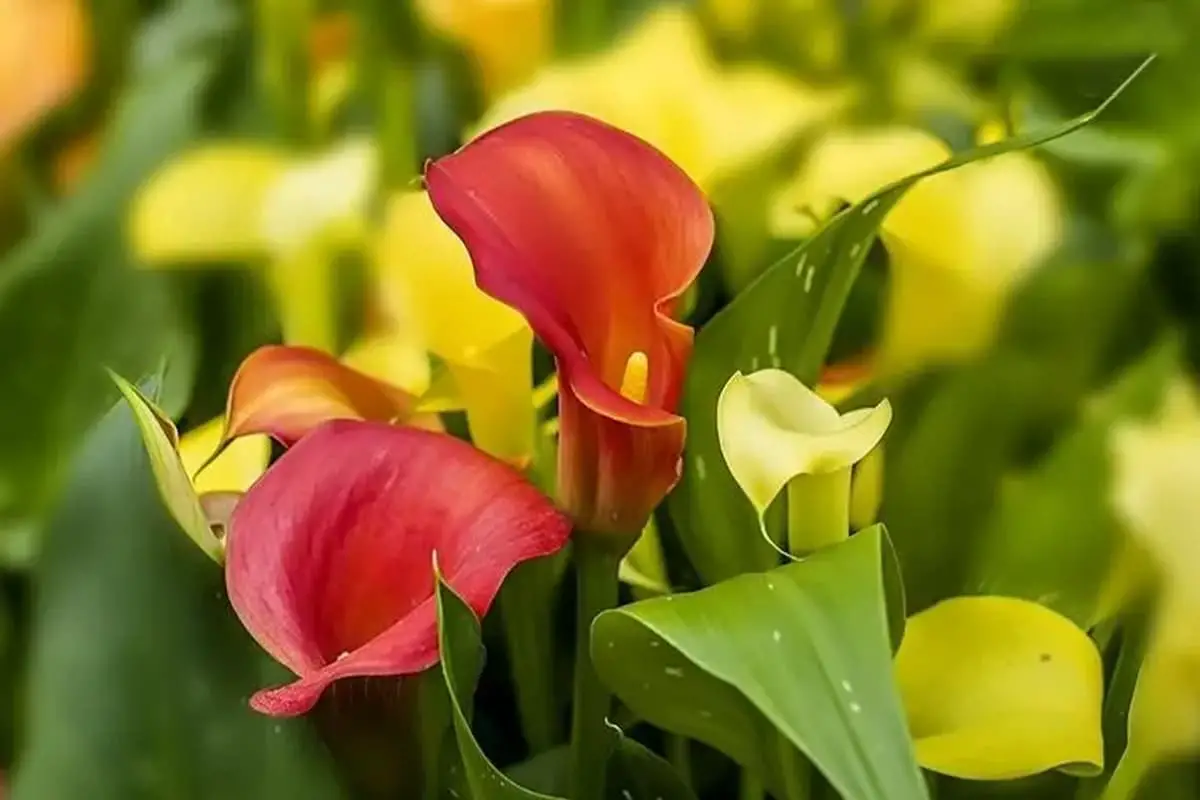
The plant’s most striking feature is its inflorescence, consisting of a spadix—a fleshy spike of bright yellow flowers—surrounded by a spathe-like bract resembling a horse’s hoof. These spathes come in a diverse range of colors, including white, yellow, pink, red, and purple, among others.
Zantedeschia hybrida typically reaches peak bloom between March and April, with numerous varieties available. The plant develops a well-established, sturdy root system, rooting at the nodes.
Native to Central and Southern Africa, the Calla Lily has gained widespread popularity in Europe, America, Japan, and other regions. Since its introduction to the Chinese market in the 1980s, its distinctive flower shape and rich color palette have made it a favorite for floral arrangements, including bouquets, baskets, wreaths, and vase displays.
Dwarf and small-flowered cultivars are particularly popular for container gardening, adorning steps, window sills, balconies, and mirrors. They are also well-suited for garden plantings, especially near ponds or rock gardens.
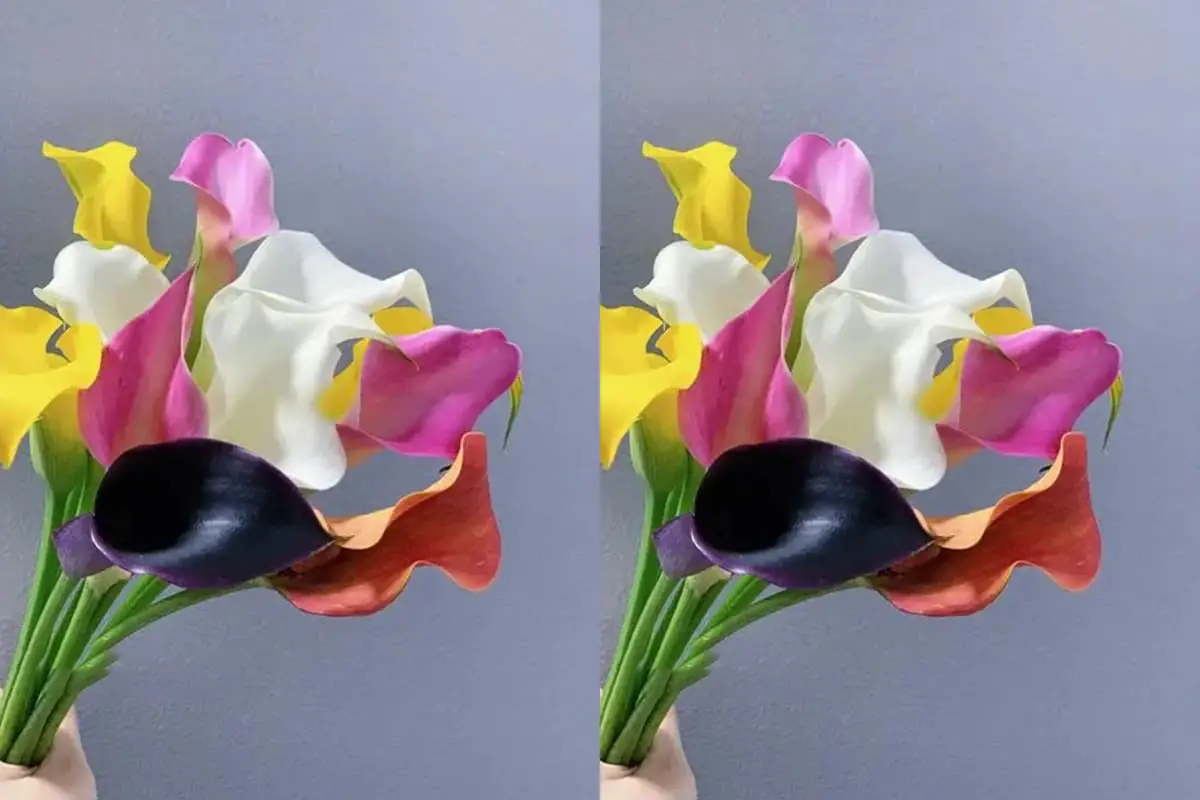
Zantedeschia hybrida is drought-tolerant, with a vegetative body consisting of tubers and bulbs. This distinguishes it from the white Calla Lily (Zantedeschia aethiopica), which propagates through rhizomes. The leaves are basal with long petioles, arrow or halberd-shaped, featuring sharp tips and smooth edges. Some varieties exhibit leaves with transparent spots.
The spathes display a wide range of vibrant colors, including golden yellow, orange-yellow, purplish-red, and pink, depending on the specific cultivar.

Calla Lilies thrive in warm, moist conditions with adequate light. They prefer loose, well-drained, fertile, or slightly clayey soils. In North China, the plant typically enters dormancy during summer, requiring no watering and should be kept in a dry place with gentle light.
Optimal growth occurs at temperatures between 18–23°C (64–73°F). The plant can flower normally at night temperatures above 10°C (50°F) but prefers temperatures below 16°C (61°F). While it can tolerate temperatures as low as 4°C (39°F), exposure to temperatures above 25°C (77°F) or below 5°C (41°F) can induce dormancy. At 0°C (32°F), the bulbs are at risk of freezing.
Calla Lilies require protection from direct summer sunlight and have specific water requirements to avoid both drought and waterlogging.
The Calla Lily is indigenous to the riverbanks and marshlands of Southern Africa.
The primary pests affecting Zantedeschia hybrida are thrips and aphids, with the latter being particularly important to control due to their ability to transmit viruses. Insecticides such as imidacloprid and pyrethroids are commonly used for management.
Bacterial soft rot is the main disease concern, thriving at around 25°C (77°F). Prevention is crucial, as the disease is difficult to control once established. Key preventive measures include using sterile planting material, maintaining strict sanitation in the production area, utilizing sterile media, and enhancing greenhouse ventilation.
Prophylactic treatments with fungicides (2000-fold dilution) every two weeks are advisable. Strengthening plant resistance through environmental control and proper water and fertilizer management is also important. Any diseased plants should be promptly removed, and agricultural streptomycin sprays can be used as a treatment.
Zantedeschia hybrida is highly valued in the cut flower industry due to its elongated, flexible stems and unique flower shape. Its versatility in floral design allows for various creative applications in floral art pieces, making it a popular choice for both professional florists and home gardeners alike.

Peggie was once a high school mathematics teacher, but she set aside her chalkboard and textbooks to follow her lifelong passion for flowers. After years of dedication and learning, she not only established a thriving flower shop but also founded this blog, “Flowers Library”. If you have any questions or wish to learn more about flowers, feel free to contact Peggie.
 English
  العربية
  Bahasa Indonesia
  Deutsch
  Français
  Italiano
  Nederlands
  Português
  Русский
  日本語
日本語