Iris Tectorum: The Ultimate Guide
Iris (scientific name: Iris tectorum Maxim.) is a perennial herb of the Iridaceae family and the genus Iris. It is also known by various names such as Lao Gua Suan,…

The White Arum Lily, Zantedeschia albomaculata, belongs to the Araceae family and the Zantedeschia genus. Its leaves are lanceolate with white blotches on both surfaces, exhibiting delicate and numerous side veins.
The male and female flower structures are roughly of equal length, slender, and lack a floral column. Its berries are flat, spherical, and green, with a fruiting period in August and a blooming season from December to June of the following year.
Named for its pristine white flower bracts resembling horse hooves, it is commonly referred to as the Horse Hoof Lily.
The White Arum Lily is a popular variety of the Arum Lily. Native to southern South Africa, it thrives in warm and humid environments. It is drought-sensitive, entering dormancy during hot summer weather.
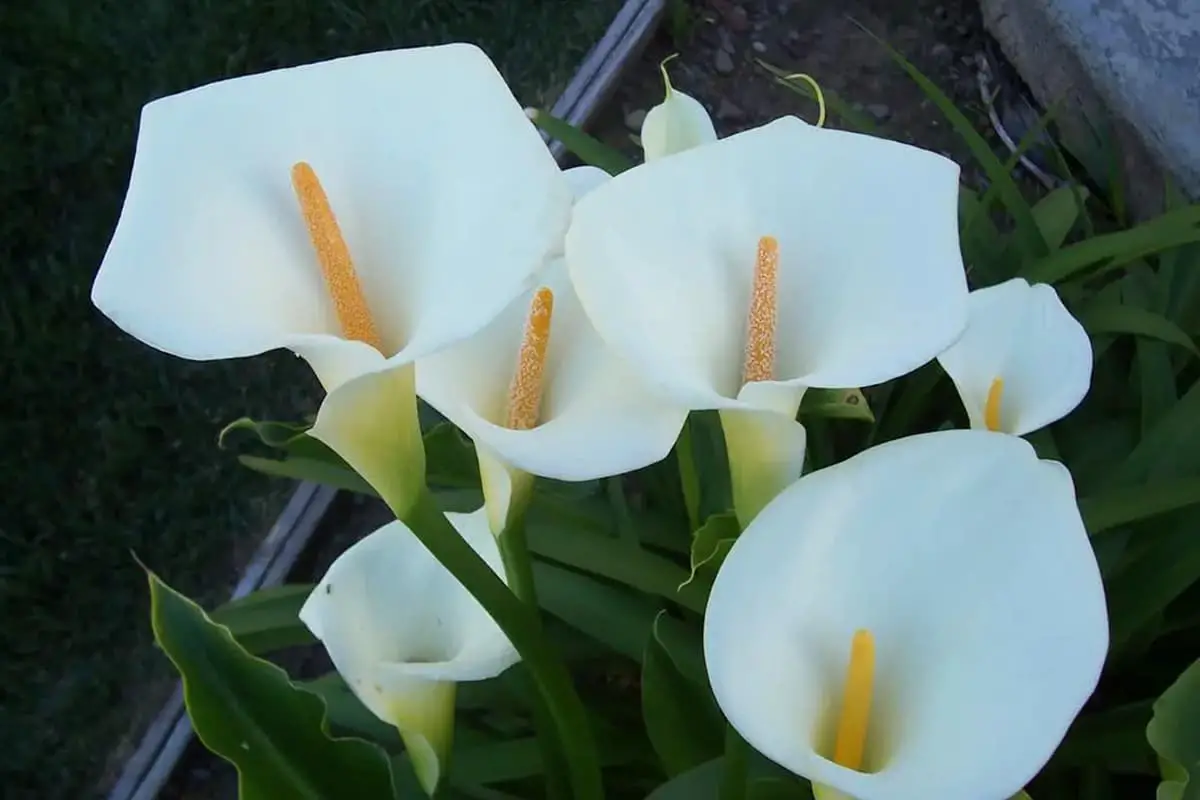
In winter, it requires ample sunlight and prefers fertile soil that’s rich in organic matter, slightly sticky, and well-draining. The Arum Lily can be propagated through seeds and division.
The White Arum Lily has medicinal properties that are effective for cooling and detoxifying. Applying a paste made from its fresh stems can treat burns.
Similarly, using the mashed stems on wounds can prevent tetanus. Its extended blooming period makes it an ideal plant for decorating living rooms and studies, and it’s a preferred choice for cut flowers and floral arrangements.
In Chinese culture, the white flowers of the Arum Lily symbolize mourning and are often used in funerals and tomb sweeping ceremonies.
The Arum Lily, under the Araceae family, is a perennial herb with tuberous roots. It has a leaf stalk measuring between 45-100 cm in length and 1-2 cm in thickness. The leaf blade ranges from 20-40 cm in length and 7.5-10 cm in width, slightly drooping.
The berries are flat, spherical, green, and about 1.3 cm in diameter, containing 1-2 seeds per chamber. The pristine white flower bracts, resembling horse hooves, give it its distinctive name.
The White Arum Lily is sensitive to both extreme cold and hot temperatures. During high temperatures, the above-ground parts wither, and the underground stems enter dormancy. In colder regions, they typically go dormant during the winter months.
Given appropriate temperatures, the Arum Lily can bloom year-round. Greenhouse cultivation in northern regions sees it blooming from November to the following May. As cut flowers, they remain vibrant for 15-20 days in winter and 7-10 days in summer.
The White Arum Lily, a common variety of the Arum Lily, is indigenous to southern South Africa and cultivated in Kunming, China.
The White Arum Lily favors warm and humid conditions, can’t tolerate drought, and goes dormant in high summer temperatures. During winter, it requires ample sunlight and prefers fertile, loose soil rich in organic matter and slightly sticky.
The White Arum Lily can be propagated through seeds and division.
After the main flowering period or dormancy, robust mother plants are dug up and divided into 2-3 clusters based on size and bud count, then replanted. With proper care, these divisions can bloom within three months.
After division, smaller tubers can be separated and cultivated in open ground for 1-2 years before they bloom. If planted in specialized cultivation mediums, most tuberlets can flower within the year.
For tissue culture propagation, young leaves and tubers with buds are used. Cultivation conditions include a light intensity of 1000-1500lx for 12-16 hours and a temperature of 15-25°C.
Seeding is another method, though natural seed production is low, making seeds harder to obtain. Seeds are harvested immediately after maturation and sown.
With optimal care, the seedlings can develop into blooming bulbs in two years.
Due to its long-lasting blooms, the White Arum Lily is a top choice for decorating living spaces and studies, making it an ideal cut flower and component for floral arrangements.
The White Arum Lily, known for its cooling and detoxifying properties, can be used as a remedy. Mashed fresh stems, when applied externally, can treat burns and prevent tetanus on wounds.
The White Arum Lily is celebrated for its elegant beauty. In Chinese floriculture, it symbolizes unwavering loyalty and eternal unity.
Additionally, its white flowers signify mourning and are commonly used for funeral and tomb-sweeping ceremonies in China.

Peggie was once a high school mathematics teacher, but she set aside her chalkboard and textbooks to follow her lifelong passion for flowers. After years of dedication and learning, she not only established a thriving flower shop but also founded this blog, “Flowers Library”. If you have any questions or wish to learn more about flowers, feel free to contact Peggie.
 English
  العربية
  Bahasa Indonesia
  Deutsch
  Français
  Italiano
  Nederlands
  Português
  Русский
  日本語
日本語