The Kalanchoe, also known as Winter Pot Kalanchoe, is a perennial succulent herb, standing 10-30 centimeters tall. Its stems are erect, with single leaves growing in pairs. The leaves are elliptical, with blunt teeth on the edges.
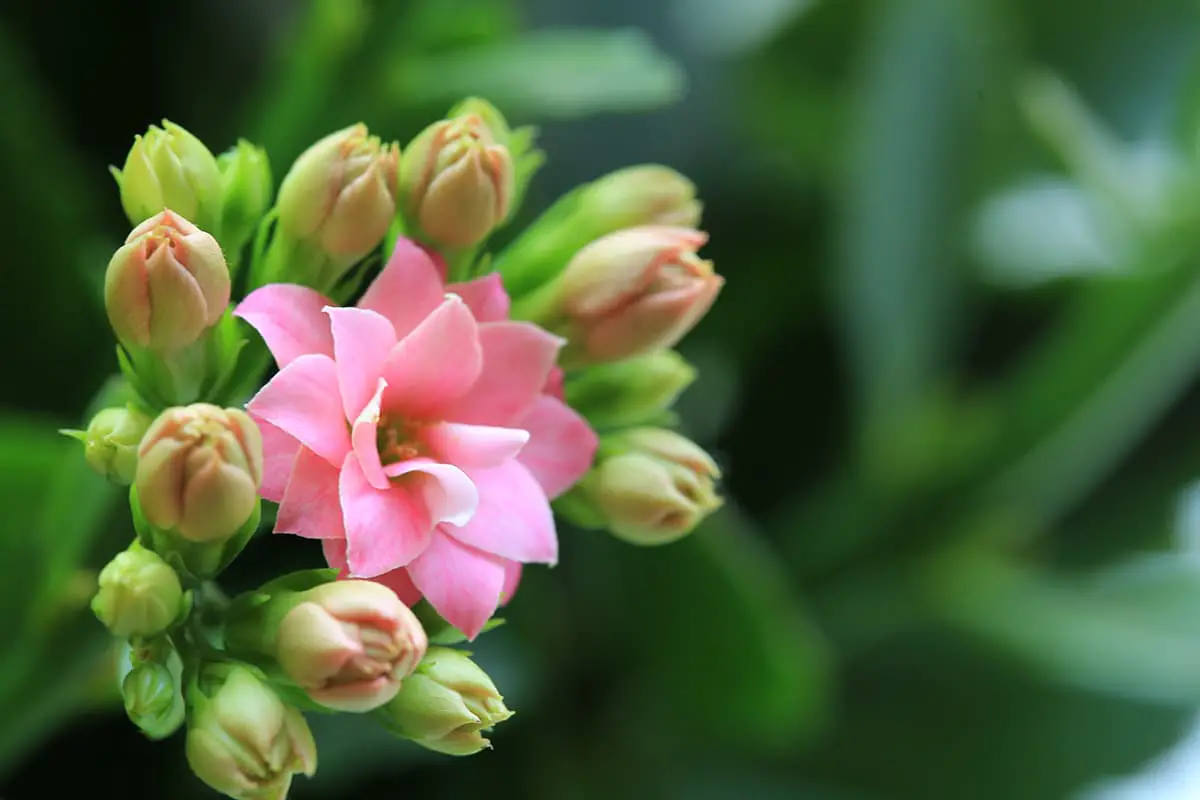
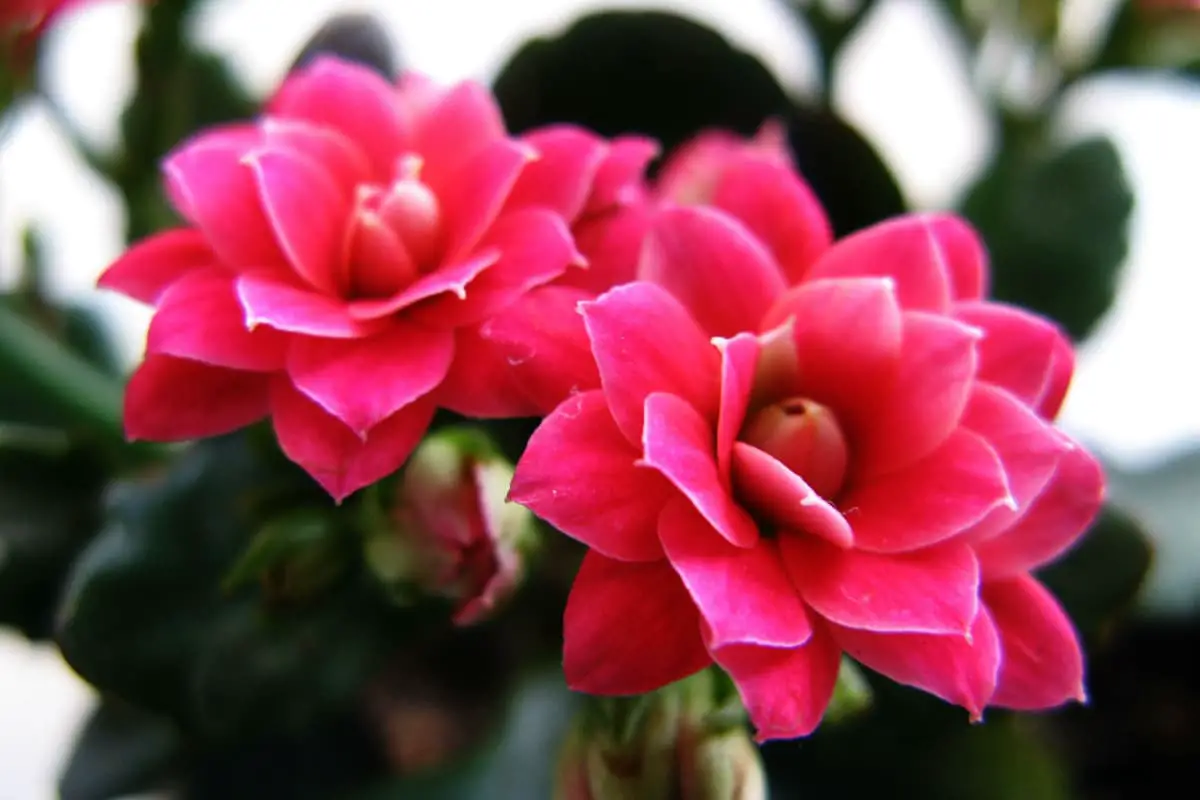
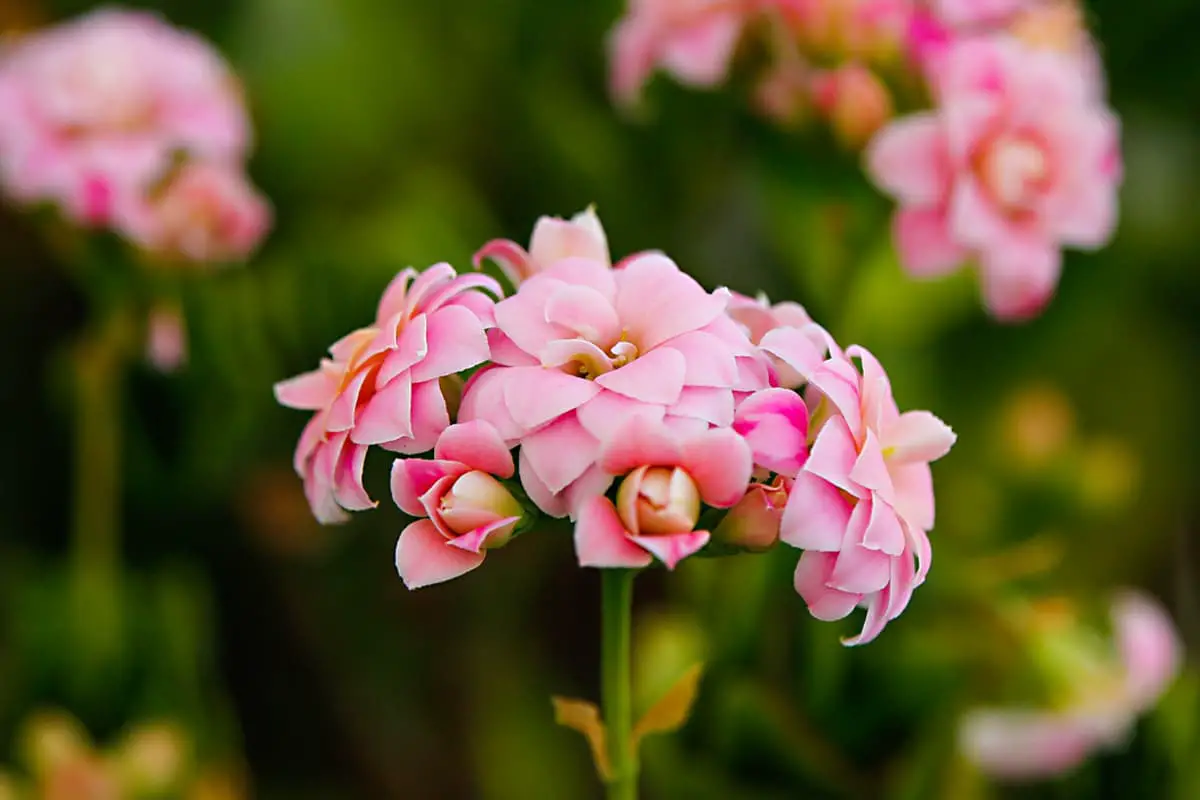
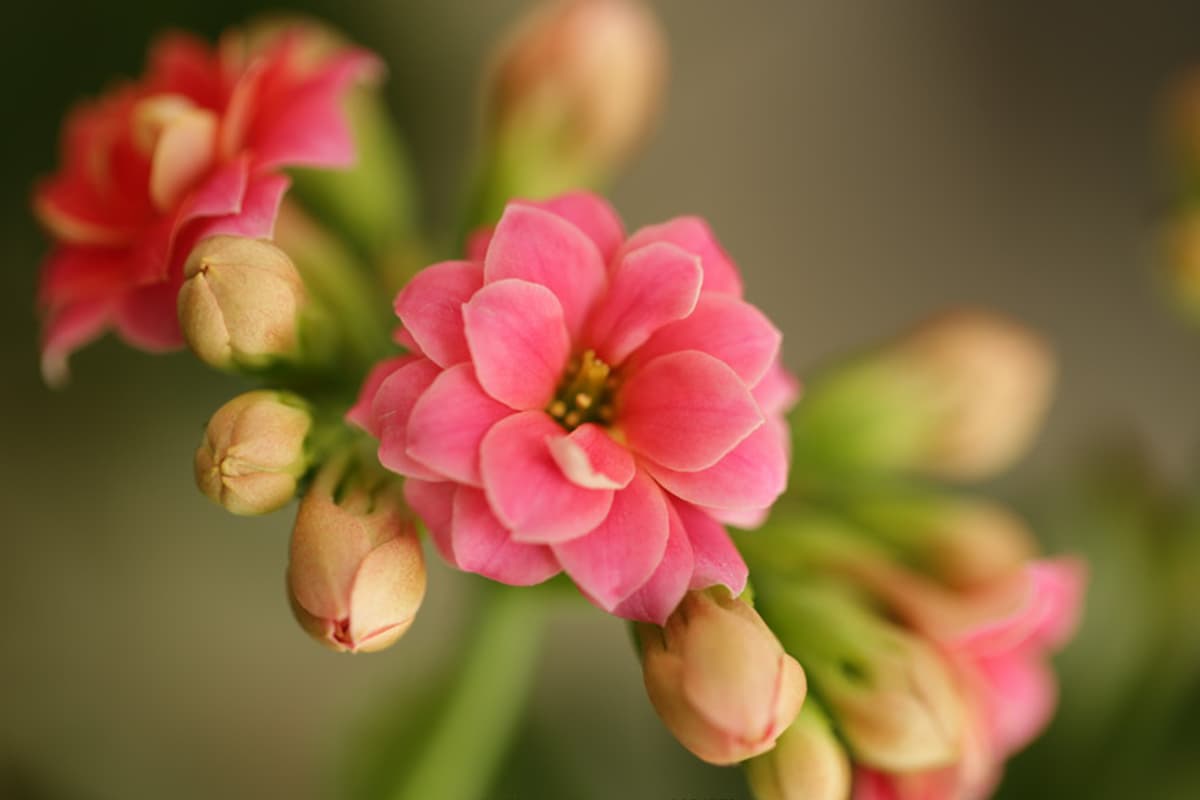
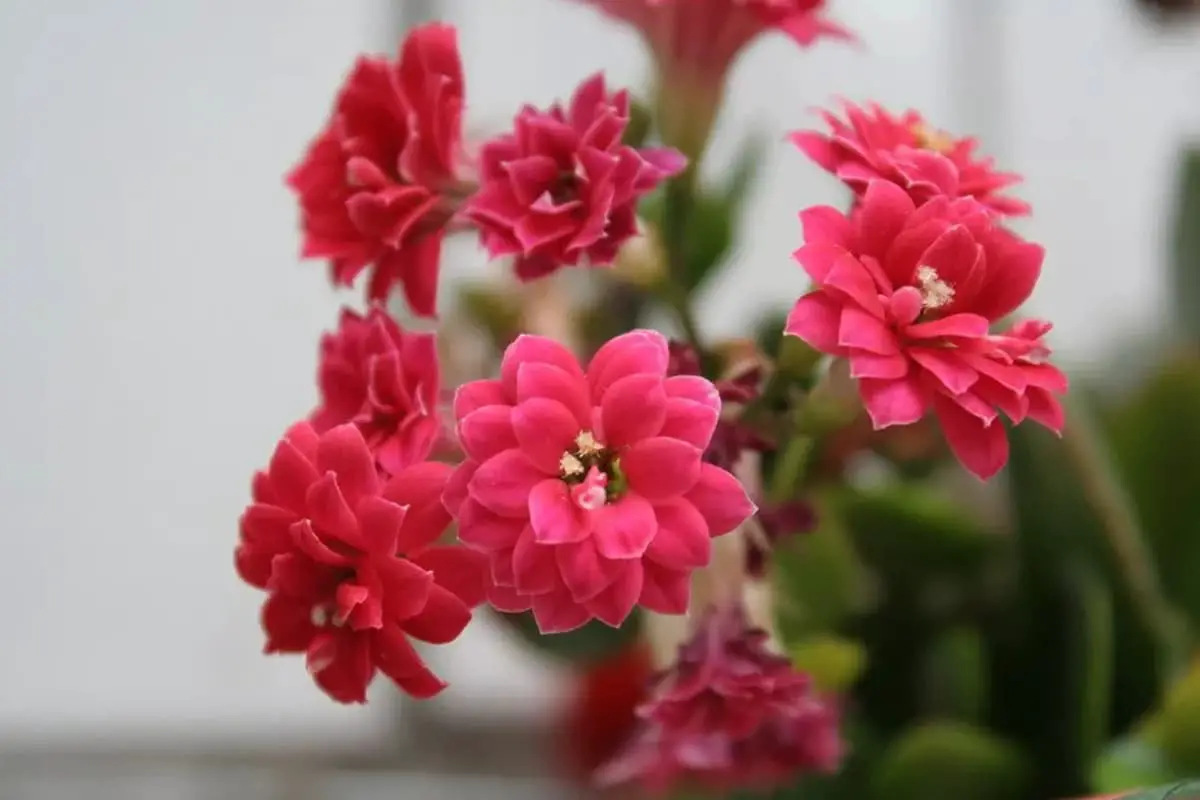
It boasts umbellate inflorescences; small flowers are in shades of orange-red to bright red. It produces a mericarp fruit, with numerous seeds. The flowers are rich in color, including bright red, peach, orange-red, yellow, orange-yellow, and white; blooming period is from January to April.
As Kalanchoe blooms around Christmas and has a long flowering period, it becomes a “festival flower” to set the holiday mood. This flower has high ornamental value; even when not in bloom, its leaves can be appreciated, making it an ideal indoor potted plant. The plant is compact with a neat shape, vibrant green leaves, and dense flowers, making it an ideal indoor potted plant for the winter and spring seasons.
Morphological Characteristics
Kalanchoe is an evergreen perennial succulent herb. The plant is small and compact, with upright stems, 10-30 centimeters high. Leaves grow in pairs, densely packed and emerald green, oval-spoon-shaped or elliptical, 4-8 cm long, 2-6 cm wide, and succulent.
The upper part of the leaf has wavy blunt teeth along the edge, while the lower part is entirely edged. The leaves are shiny, bright green, with a slight red color on the edges. The leaves are thick and succulent, densely deep green, and glossy.
The flower is a conical umbel, upright, and deep green. The flower is 7-10 cm long. Each plant has 5-7 flower clusters, with 60 – 250 flowers. The flowers are small, elevated dish-shaped, 1.2 – 1.6 cm in diameter, with 4 petals. The flowers are rich in color, with shades of bright red, peach, orange-red, yellow, orange-yellow, and white. The flower corolla is tubular and slightly swollen at the base. It is a mericarp fruit, with many seeds. The flowering period is from January to April.
Growing Environment
Kalanchoe is native to Madagascar in Africa. It prefers warm, slightly humid environments with plenty of sunlight. It is not cold-resistant, and the optimal growing temperature is 15-25℃. When the summer temperature exceeds 30℃, its growth is hindered. Indoor temperature in winter needs to be 12-15℃. Below 5℃, the leaves turn red, and the flowering period is delayed. If the room temperature exceeds 24℃ during the flowering period in winter and spring, it will inhibit flowering.
If the temperature is around 15℃, flowering will continue. It is drought-tolerant and not strict about soil, but fertile sandy loam is the best. Kalanchoe is a short-day plant, sensitive to the light cycle. Well-grown plants exposed to short-day lighting (8-9 hours of light per day) for 3-4 weeks can start budding and flowering.
Growth and Propagation
Cutting Propagation
This method works best from May to June or from September to October. Choose slightly mature succulent stems, cut them to be about 5-6 cm long, and stick them into a sand bed. After watering, cover with a thin film. When the room temperature is 15-20℃, roots will start to form 15-18 days after insertion, and they can be potted within 30 days. Pots of 10 cm are commonly used.
If there aren’t many seedlings, leaf cutting can be used. Cut robust and plump leaves from the petiole, wait for the cut surface to dry slightly, then insert them diagonally or lay them flat on the sand bed. Maintain humidity, and in about 10-15 days, roots will grow from the base of the leaf, along with new plants.
Tissue Culture
The United States and France have used parts such as the stem apex, leaves, stems, flower buds, and flowers of Kalanchoe as explants since the late 1970s. They use an MS medium supplemented with 2 mg/L of cytokinin and 0.1 mg/L of 1-naphthaleneacetic acid to induce meristematic buds.
Then, they use 1/2 MS medium with 1 mg/L of indole-3-butyric acid to induce root formation. Under room temperature of 25-27℃ and 16 hours of light exposure, small plants can grow within 4-6 weeks.
Disease and Pest Control
The main diseases are powdery mildew and leaf blight, which can be treated by spraying with a 600-fold solution of 65% zinc dimethyldithiocarbamate wettable powder. Pests such as scale insects and aphids can damage the leaves and tender shoots, which can be prevented and controlled by spraying with a 1000-fold solution of 40% Leogan emulsion.
Main Value
As Kalanchoe blooms around Christmas and has a long flowering period, it becomes a “festival flower” to set the holiday mood. This flower has high ornamental value; even when not in bloom, its leaves can be appreciated, making it an ideal indoor potted plant. The plant is compact with a neat shape, vibrant green leaves, and dense flowers, making it an ideal indoor potted plant for the winter and spring seasons.
Its flowering period coincides with Christmas, New Year’s Day, and the Spring Festival, making it very suitable for decorating windowsills, desks, and counters. When used in public flower beds, display windows, and halls, its overall ornamental effect is excellent.
Given its common name “Longevity,” it is very appropriate and well-liked to gift a pot of Kalanchoe to friends and family during holidays, wishing them good fortune, prosperity, and longevity.
Share
Facebook
Twitter
LinkedIn
Email
Share is Caring.
Peggie
Founder of FlowersLib
Peggie was once a high school mathematics teacher, but she set aside her chalkboard and textbooks to follow her lifelong passion for flowers. After years of dedication and learning, she not only established a thriving flower shop but also founded this blog, “Flowers Library”. If you have any questions or wish to learn more about flowers, feel free to contact Peggie.
Before you go
You May Also Like
We picked them just for you. Keep reading and learn more!
Potentilla fruticosa, belonging to the Rose family and the Potentilla genus, is a shrub that can reach up to 2 meters in height, with bark that peels off longitudinally. Its…
The Hamamelis mollis, also known as Chinese Witch Hazel, Woodland Fragrance, or Ox-Hoof Fruit, is a deciduous shrub or small tree that can grow up to 8 meters high. Its…
Types Of Flowers By Names (A-Z) Types Of Flowers By Color Types Of Flowers By Season Types Of Flowers By Blooming Time 600+ Types of Flowers No. Flower Name No.…
Weigela Coraeensis Weigela coraeensis, a deciduous shrub from the Caprifoliaceae family, can grow up to 3-5 meters tall. It features arching branches with smooth, light brown bark. The leaves are…
The Freesia refracta, with its pristine, snow-like flower color and a delicate fragrance reminiscent of orchids, has earned its names “Lesser Cattleya” and “Fragrant Snow Orchid.” This perennial, bulbous member…
Liriodendron chinense, also known as the Chinese tulip tree, is a magnificent deciduous tree belonging to the Magnoliaceae family and the genus Liriodendron. This impressive species can reach heights of…
The Lily, also known as Lilium, is a perennial herbaceous bulbous plant belonging to the Liliaceae family. It is primarily distributed in the temperate regions of the Northern Hemisphere, with…
The Lilium tsingtauense, also known as the Qingdao Lily or Laoshan Lily, is a rare and beautiful species of lily. This perennial monocotyledonous herb is characterized by its striking orange-red…
Viola cornuta, commonly known as Horned Pansy or Horned Violet, is a perennial herbaceous plant belonging to the Violaceae family. Native to the Pyrenees mountains of Spain and France, this…


 English
  العربية
  Bahasa Indonesia
  Deutsch
  Français
  Italiano
  Nederlands
  Português
  Русский
  日本語
日本語