600+ Types of Flowers A To Z (With Names and Pictures)
Types Of Flowers By Names (A-Z) Types Of Flowers By Color Types Of Flowers By Season Types Of Flowers By Blooming Time 600+ Types of Flowers No. Flower Name No.…

The lily flower (Lilium), commonly known as a lily, belongs to the genus Lilium in the family Liliaceae. It is a perennial herbaceous bulbous plant and is widely cultivated as an ornamental plant due to its diverse species. Lilies are mainly distributed in temperate regions of the northern hemisphere, including eastern Asia, Europe, and North America. At least 96 species have been discovered globally, with 5 species found in Taiwan, China. In recent years, many new varieties have been created through artificial hybridization, such as OT lilies, Oriental lilies, and Rose lilies. It’s important to note that lilies are highly toxic to cats.
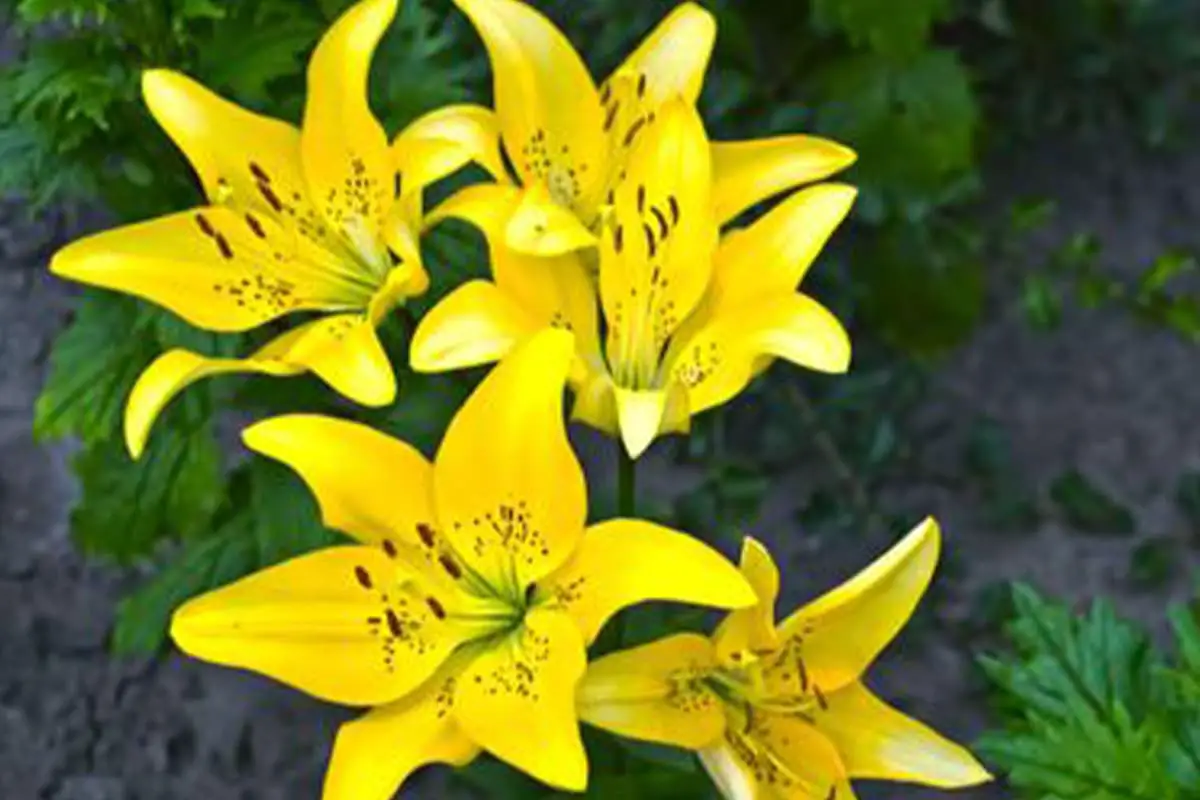
The genus Lilium has a wide distribution range. It is found throughout most parts of Europe, the northern Mediterranean basin, and many regions in Asia on the Old Continent. In the New World, lilies are distributed in southern Canada and throughout the United States.
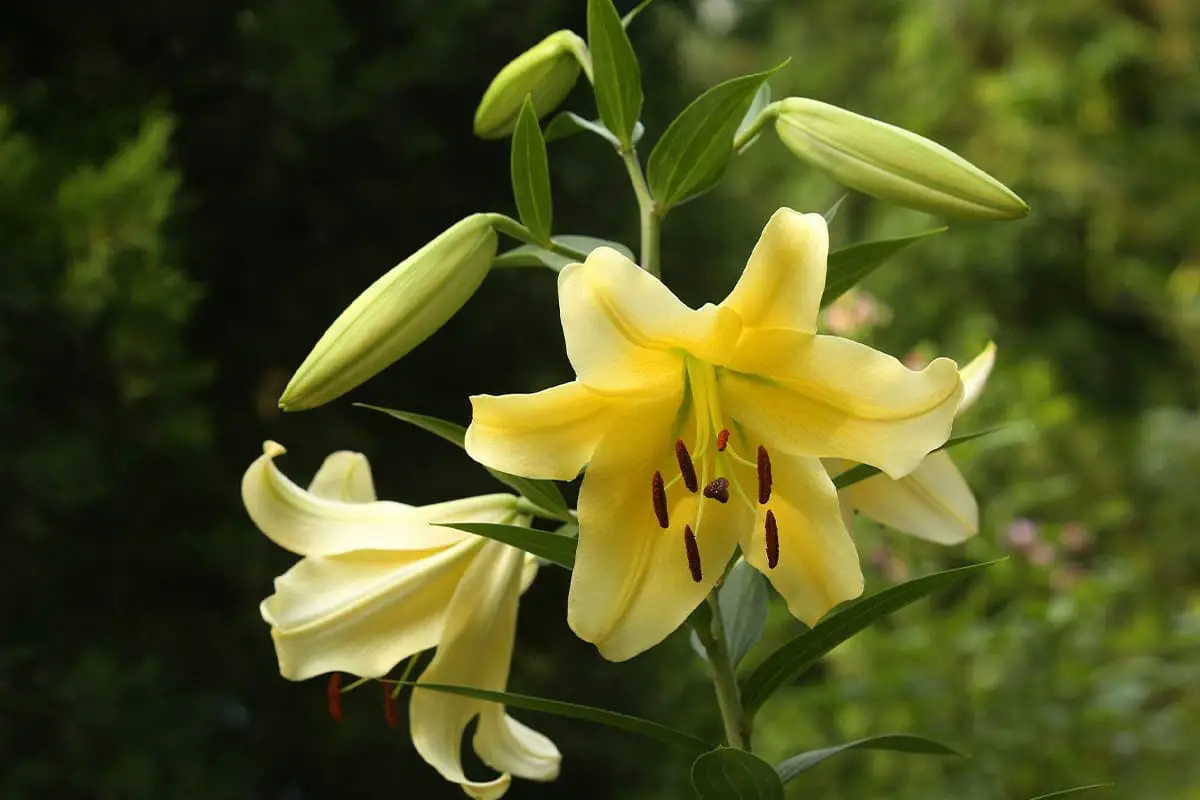
Lilies are herbaceous plants with multi-leaved stems that form bulbs during the winter. The bulbs are covered with scales and some North American lilies develop rhizomatous stems at the base of the bulbs, which produce numerous small bulblets.
Some lilies also have creeping stems. Most lily bulbs require deep planting, although there are species that prefer shallow burial in the soil. Many lilies also produce adventitious roots from the stems. Lily bulbs naturally grow in the soil, and each year, new stems emerge and develop roots, assisting the basal roots of the bulbs.
In their natural habitat, most lilies are deciduous plants that undergo winter dormancy in cold climates with short daylight and limited liquid water.
However, some lilies found in regions with mild winters and hot summers (such as those with a Mediterranean climate) like the Madonna lily, Pine lily, and Tiger lily, go through a brief dormancy in summer and then sprout basal rosettes of leaves in autumn, followed by stem elongation and flowering after winter dormancy.

Seed maturity occurs in late summer. The genus Lilium exhibits diverse and complex reproductive mechanisms, allowing many lily species to adapt well to temperate climates.
Lilies are characterized by their regular flowers, radial symmetry, six tepals arranged in two whorls, with three tepals in each whorl, six stamens in two whorls, with three stamens in each whorl, and a tricarpellary, superior ovary. Lilies often have fragrant flowers in various colors such as white, yellow, orange, pink, red, purple, and green, with some varieties featuring spots, stripes, or edges.
Lilies are often referred to as the “Fairy Maiden” due to their elegant and pure appearance. In Catholicism, the white lily is a symbol of the Virgin Mary, and the Vatican considers the lily as its national flower.
The overlapping scales forming the head of a lily bulb symbolize “a hundred years of harmonious union” and “the fulfillment of all wishes,” making it an essential auspicious flower in traditional Chinese weddings.
Lilies also symbolize the Lily Culture, which is a concept in the ACG (Anime, Comics, Games) and fan fiction communities, representing romantic relationships between women. This term originated in Japan. Lilies are also commonly seen in funeral ceremonies.

Currently, lily flowers are primarily used for ornamental purposes, especially the cut flower varieties exported from the Netherlands and Japan. Varieties like the Tiger Lily and its hybrids are among the important cut flower species.
Lily bulbs contain abundant starch and can be consumed as a vegetable. In China, dried lily bulbs are often used to make soup, and various parts of the plant are also used in traditional medicine.
The bulbs of Lilium species such as Juandan Lily and Shandan Lily, particularly the Wild Lily (Lilium brownii), are extensively cultivated in China.
They have a texture and taste somewhat similar to potatoes and are often processed into dried lily bulbs, which are considered to be a healthy food known for their heat-clearing and detoxifying properties. Dried lily bulbs are soaked, stir-fried, and crushed to be used in soup or for starch extraction.
Lilies also serve as food for certain Lepidopteran larvae, such as the larvae of the Convict Moth.

Peggie was once a high school mathematics teacher, but she set aside her chalkboard and textbooks to follow her lifelong passion for flowers. After years of dedication and learning, she not only established a thriving flower shop but also founded this blog, “Flowers Library”. If you have any questions or wish to learn more about flowers, feel free to contact Peggie.
 English
  العربية
  Bahasa Indonesia
  Deutsch
  Français
  Italiano
  Nederlands
  Português
  Русский
  日本語
日本語