600+ Types of Flowers A To Z (With Names and Pictures)
Types Of Flowers By Names (A-Z) Types Of Flowers By Color Types Of Flowers By Season Types Of Flowers By Blooming Time 600+ Types of Flowers No. Flower Name No.…

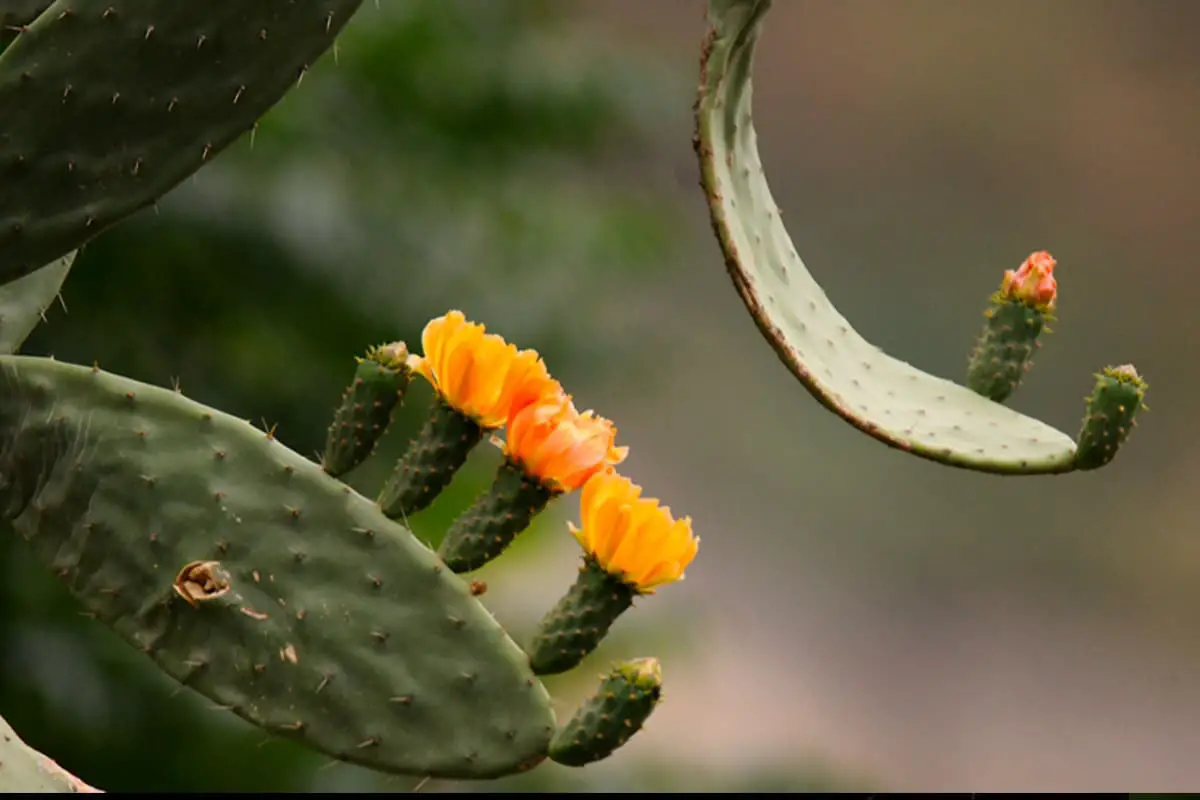
Immortal Finger is a perennial evergreen succulent herb belonging to the Echeveria genus of the Cactaceae family. The plant grows to a height of 25-35 centimeters and has multiple branches that spread outward and droop.
The stem segments are flattened, leaf-like, and range in color from green to gray-green. The edges of the stem segments are shallowly undulated, resembling long fingernails. The flowers are mostly rose-red, with unfurled and curled petals. The fruits are pear-shaped. The flowering period is from February to March, and the fruits ripen from April to May.
Immortal Finger is native to tropical forests in South America but is cultivated in various parts of the world. It prefers a warm and humid climate, rich organic soil with good drainage, and can tolerate partial shade.
It is recommended to place it in a semi-shaded environment and protect it from direct sunlight during the hot summer months when it tends to go into a dormant state. It can be propagated through stem cuttings or grafting.
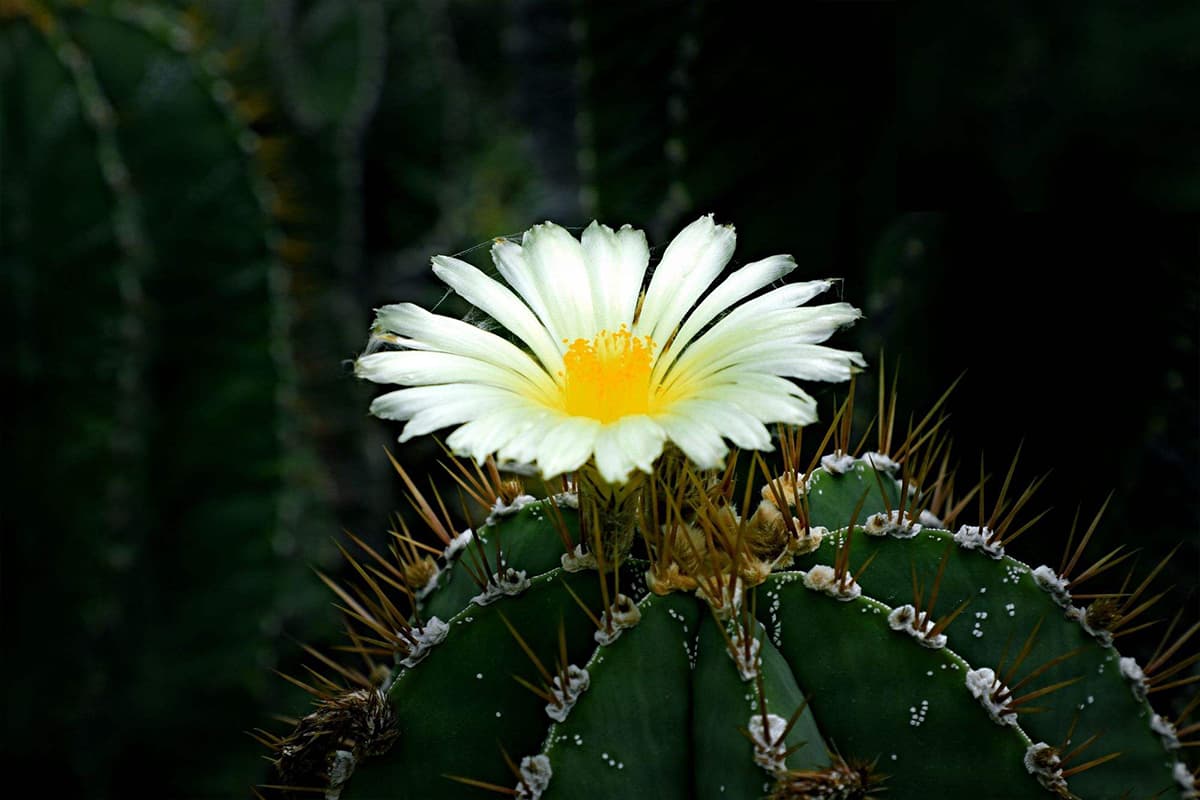
Immortal Finger has the ability to absorb carbon dioxide and release oxygen, thus increasing the level of negative oxygen ions in the environment and improving air freshness. It can also reduce electromagnetic radiation pollution. With its elegant plant form and vibrant colors, Immortal Finger is highly valued as an ornamental flower.
It is commonly grown in pots indoors or hung on eaves and windows. Taking care of Immortal Finger is relatively easy, as it can be planted indoors with insufficient light, making it an excellent choice for decorating living rooms and study rooms with its distinctive presence.
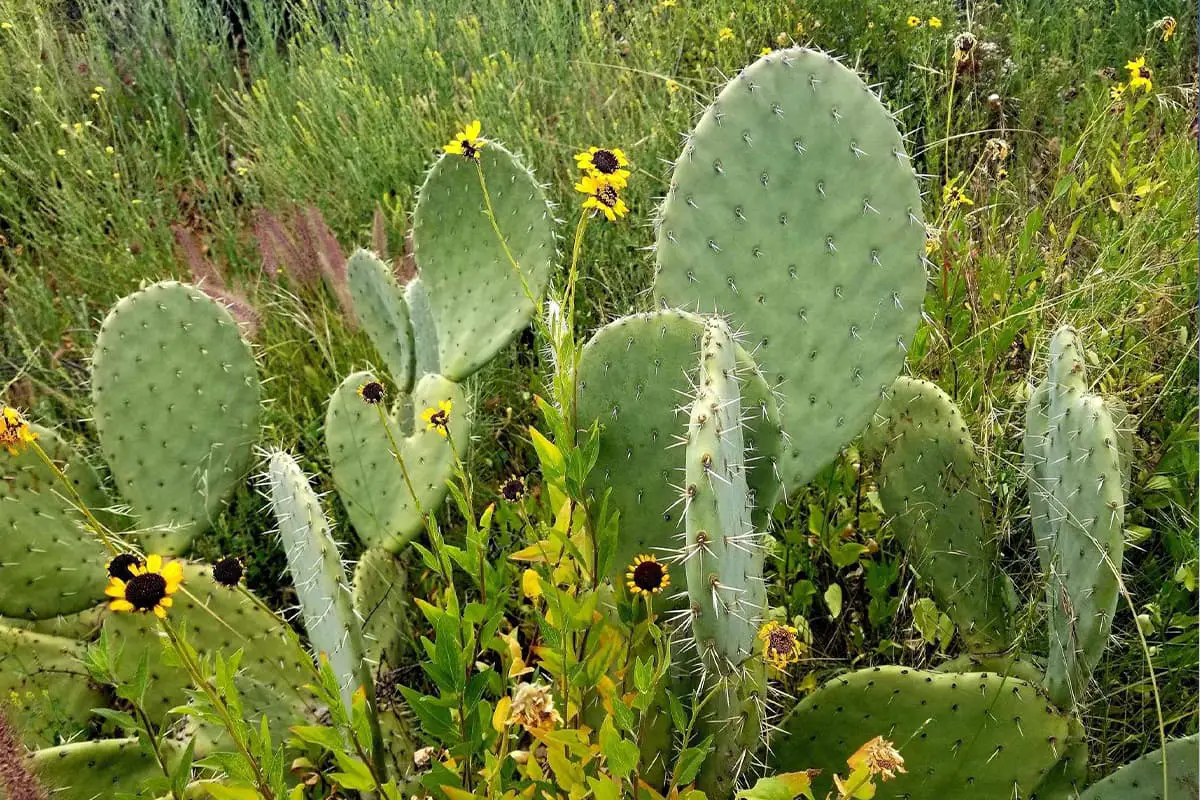
This epiphytic perennial herb has flattened, modified stem segments that are interconnected and form branches. The modified stem leaves are 2.5-5 centimeters long and 1-2.5 centimeters wide, with a light green color.
The edges of the leaves have 2-3 pairs of wavy obtuse teeth. The lower part of each modified stem leaf is semi-circular, while the top is flat with a small amount of fine fuzz in the center. Flower buds grow from the second segment of the modified stem, and due to their nail-like appearance, they are called Immortal Finger.
Adult plants produce flower stalks from the top of the branches in December, and they bloom from January to March. The flower tubes are 3.5-4.5 centimeters long, with 16-18 petals growing both at the lower and upper parts of the tube. They initially extend straight and then spread out radially at a 90-degree angle, displaying colors such as purple-red, orange-red, and pink. February is its peak flowering period.
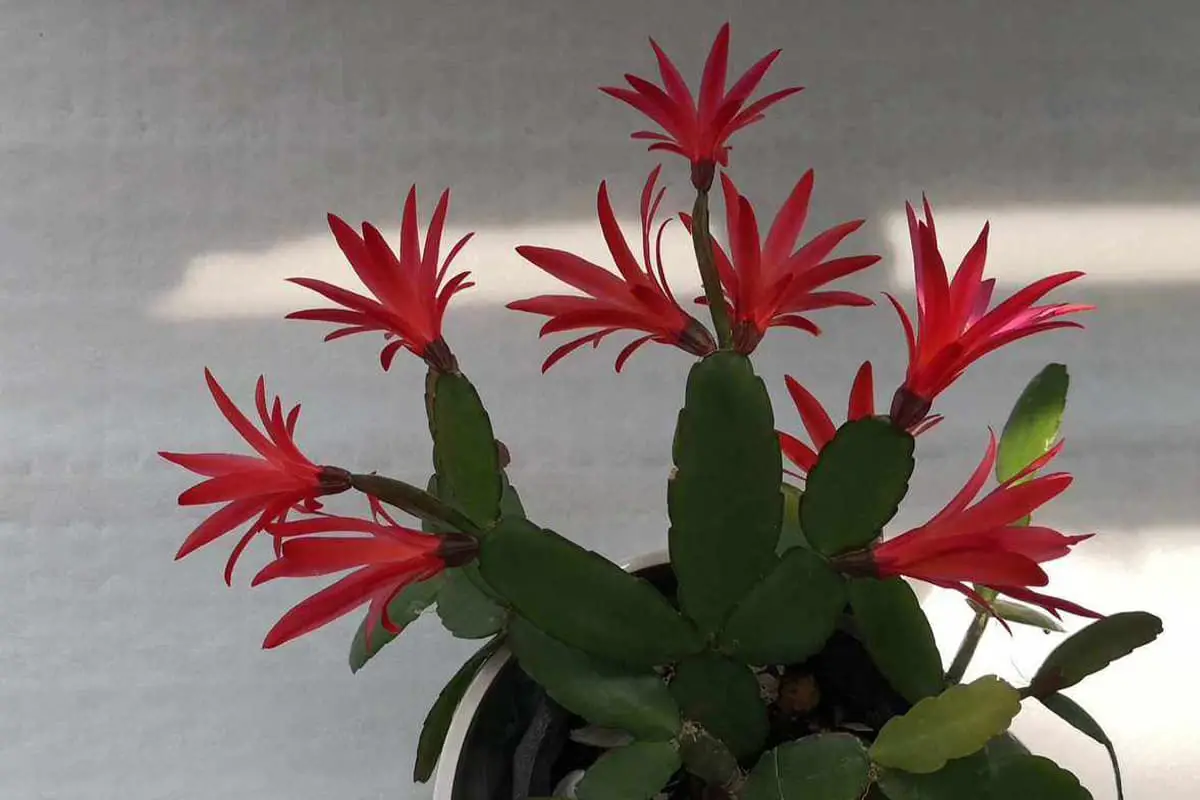
Immortal Finger is a short-day plant that thrives in semi-shaded environments, avoiding direct sunlight. It prefers warm temperatures but dislikes high heat. The optimal growth temperature ranges from 19 to 32 degrees Celsius, while the recommended winter temperature is 7 to 13 degrees Celsius. It enjoys a moist environment but is not tolerant of excessive waterlogging.
Originally from Brazil and Bolivia in South America, Immortal Finger is cultivated in many parts of the world.
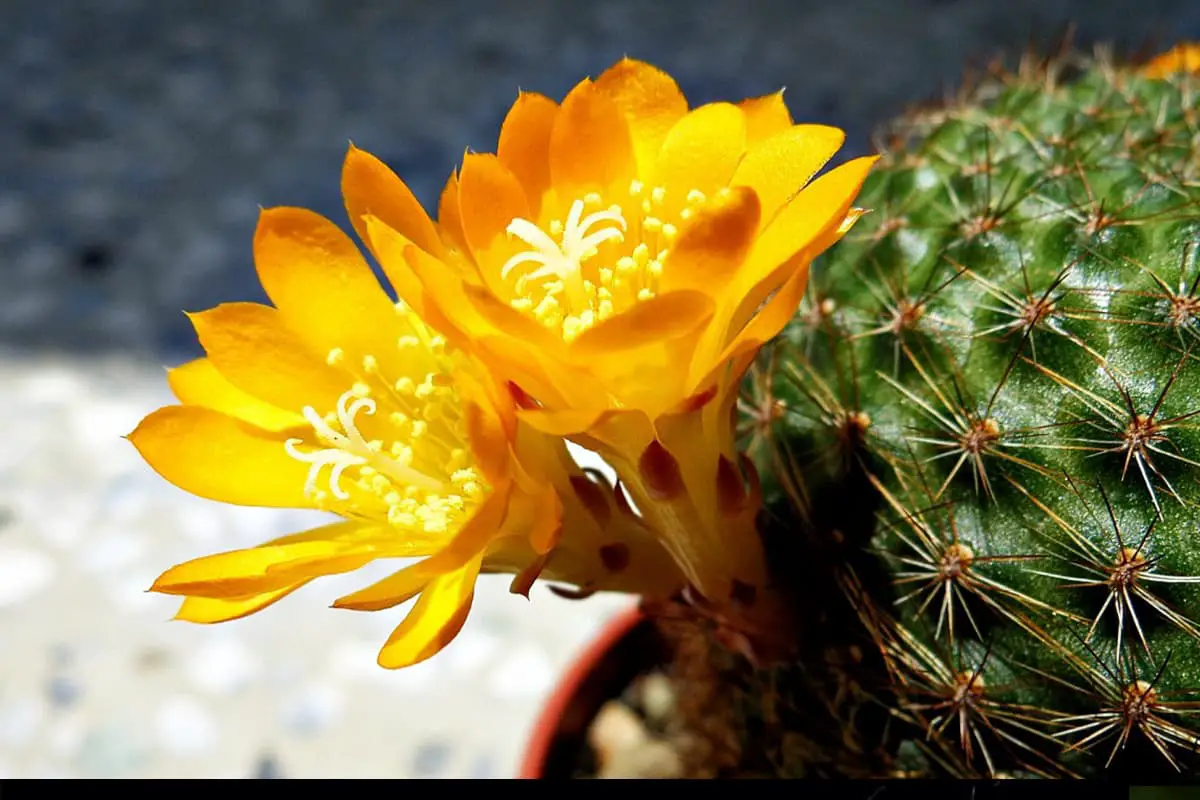
Propagation of Immortal Finger can be done through stem cuttings and grafting.
Stem cuttings can be taken from Immortal Finger for propagation. Cuttings are taken in early April to early June, selecting 3-4 segments of the previous year’s modified stems. The cut ends are left to dry in a shaded area, and the next day, they are inserted into a mixture of pine needles and decomposed leaf soil.
The cuttings are placed in a semi-shaded area to protect them from direct sunlight. Regularly mist the modified stems with water, keeping the potting soil slightly moist but not overly wet. After about a month, new stems will grow, indicating successful rooting. After 3-4 years, the plant will be capable of flowering.
Grafting is another method of propagating Immortal Finger. A large-spined cactus is chosen as the rootstock. In May, 3-5 segments of modified stems are taken as scions, and one scion is grafted onto the top, approximately 47 centimeters from the top. One scion is grafted onto each side on the spine cushions.
After grafting, the plant is covered with translucent plastic film to provide insulation and moisture, aiding in successful grafting. If the scions wilt after about two weeks, it indicates unsuccessful grafting, and another point of grafting can be selected.
Immortal Finger is originally an epiphytic plant, but it thrives in loose and fertile sandy soil when potted. A mixture of pine needles, decomposed leaf soil, a small amount of garden topsoil, and sand can be used as the potting medium.
When planting, it is advisable to mix a small amount of well-rotted organic fertilizer or compound fertilizer rich in nitrogen, phosphorus, and potassium into the soil. It is recommended to use a clay pot with good drainage for the plant, avoiding excessively large pots. If using a purple clay pot, it is advisable to place some pieces of crushed charcoal or foam at the bottom. Every other year, after flowering, the plant should be repotted.
For Immortal Finger grafted onto a cactus, which grows larger and becomes inconvenient to repot after three years, a different method can be applied. After flowering each year and before bud emergence, approximately half to two-thirds of the soil on the two sides of the pot can be dug out with a small shovel, and fresh potting soil mixed with fertilizer is filled in.
The remaining two sides are left undisturbed. The following year, the same method is used to replace the soil on these two sides. By repeating this process annually, the plant will grow vigorously and produce more flowers.
Immortal Finger has two growth periods and one dormant period in a year, and watering and fertilization should be adjusted accordingly. From mid-autumn to early spring of the following year is the reproductive growth period. During this time, the potting soil should be slightly moist.
Watering should be done when the soil feels dry, but stop watering once it becomes moist. From mid-autumn to before flowering, misting the modified stems with water should be done regularly, ensuring that there are small water droplets on the stem segments without dripping. After flowering, stop misting and continue regular watering.
During this period, apply a nitrogen, phosphorus, and potassium compound fertilizer every 10 days, or spray a 0.2% solution of potassium dihydrogen phosphate on the modified stems. Stop fertilization after flowering. After the flowers fade, Immortal Finger enters a brief dormant period, and the potting soil should be slightly dry. However, misting the plant with water once every 3 days is necessary, but no fertilizer should be applied.
From late spring to early summer, it enters the period of vigorous growth. Watering should increase gradually, maintaining slightly moist potting soil without waterlogging. Regular misting and frequent application of diluted fertilizer every 10 days stimulate the growth of modified stems.
In mid-summer to early autumn, during high temperatures, Immortal Finger enters the dormant period. Watering should be reduced, and the potting soil should be slightly dry. Avoid rainwater and do not apply fertilizer.
Immortal Finger prefers an environment with scattered sunlight, warmth, and coolness. From mid-autumn to early summer, it can be placed in a location with ample sunlight or in an area with scattered light. During flowering, it should be protected from direct sunlight to prolong the flowering period.
During the summer and early autumn dormant period, it should be shielded from intense sunlight and placed in a semi-shaded area with scattered light. In early winter, when the minimum temperature drops to around 5°C, it should be kept indoors to protect it from the cold.
It can be placed in a spot where it can receive sunlight through a glass window, but it should be kept at least 2 meters away from televisions, air conditioners, and electric heaters. When the temperature stabilizes around 10°C in spring, it can be taken outdoors. However, long-term indoor cultivation is prone to pest infestation.
The Immortal Finger (Echeveria) holds significant value due to the following aspects:

Peggie was once a high school mathematics teacher, but she set aside her chalkboard and textbooks to follow her lifelong passion for flowers. After years of dedication and learning, she not only established a thriving flower shop but also founded this blog, “Flowers Library”. If you have any questions or wish to learn more about flowers, feel free to contact Peggie.
 English
  العربية
  Bahasa Indonesia
  Deutsch
  Français
  Italiano
  Nederlands
  Português
  Русский
  日本語
日本語