600+ Types of Flowers A To Z (With Names and Pictures)
Types Of Flowers By Names (A-Z) Types Of Flowers By Color Types Of Flowers By Season Types Of Flowers By Blooming Time 600+ Types of Flowers No. Flower Name No.…

Daffodil, belonging to the Amaryllidaceae family, is a perennial herbaceous plant native to China. It has been cultivated for over a thousand years in China and is considered one of the traditional famous flowers.
There are over 800 species of Daffodils worldwide, and more than 10 of them, such as Trumpet Daffodil and Apron Daffodil, have high ornamental value. Daffodils were originally distributed in Central Europe, the Mediterranean coast, and North Africa.

The Chinese Daffodil is a variety of the multi-flowered Daffodil. Its flowers are white, arranged in umbel inflorescence, and its leaves are narrow and strap-shaped.
Daffodil roots are known for their heat-clearing and detoxifying effects. The language of Daffodils is associated with longing and reunion.
Daffodil’s alternative names include Fragrant Concubine, Golden Chalice, Fairy in the Ripples, Snowflower, Golden Stand, Jade Exquisite, and Garlic of Heaven.
Classification of Daffodils includes Chinese Daffodil, Western Daffodil, Yellow Daffodil, and Mountain Daffodil.
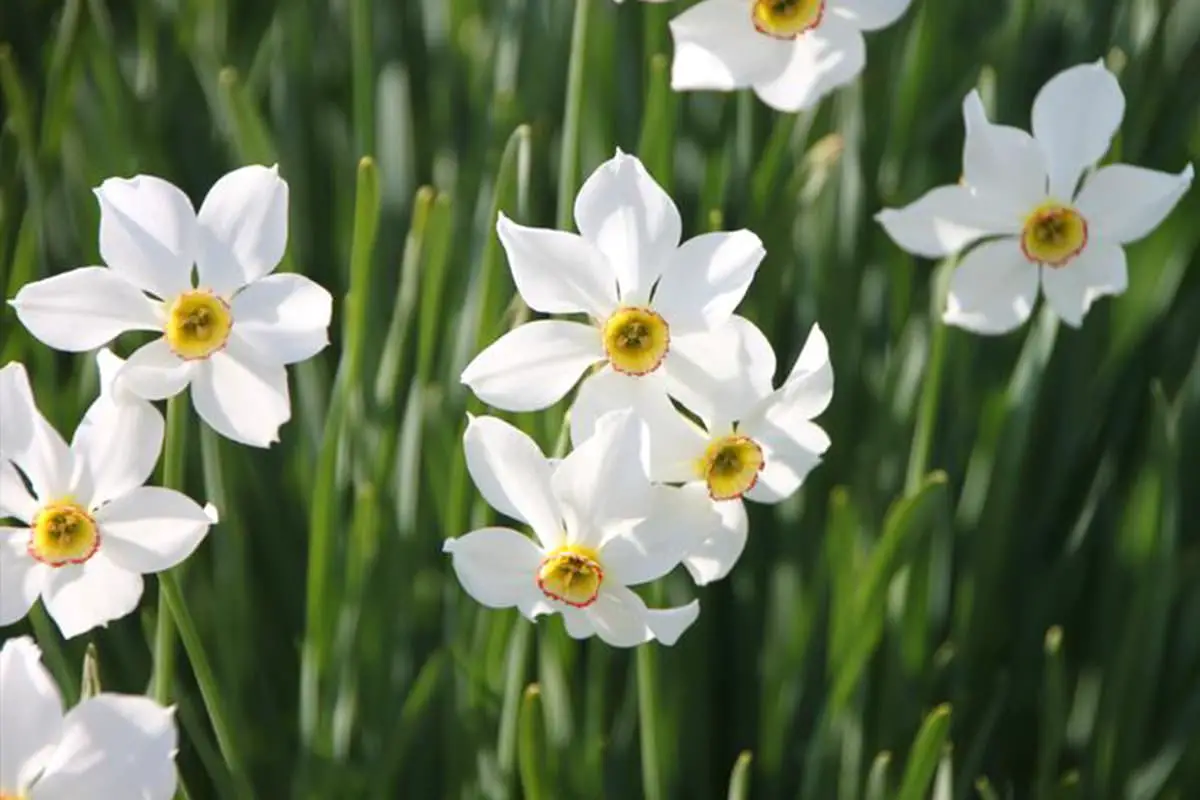
Daffodils have a nearly spherical shape with a bulb. The leaves are broad and flat, approximately 20-40 centimeters long, mostly pale green in color.
The flower stems of Daffodils are generally equal in length to the leaves; some have long flower stalks, while others have short ones.
Roots: Daffodils have fibrous roots that grow on the stem plate. They are relatively fragile, easily breakable, and incapable of regeneration.
Bulbs: The bulbs are mostly near-spherical in shape, with white fleshy skin inside. The flower bud is located in the middle, connected to the stem plate.
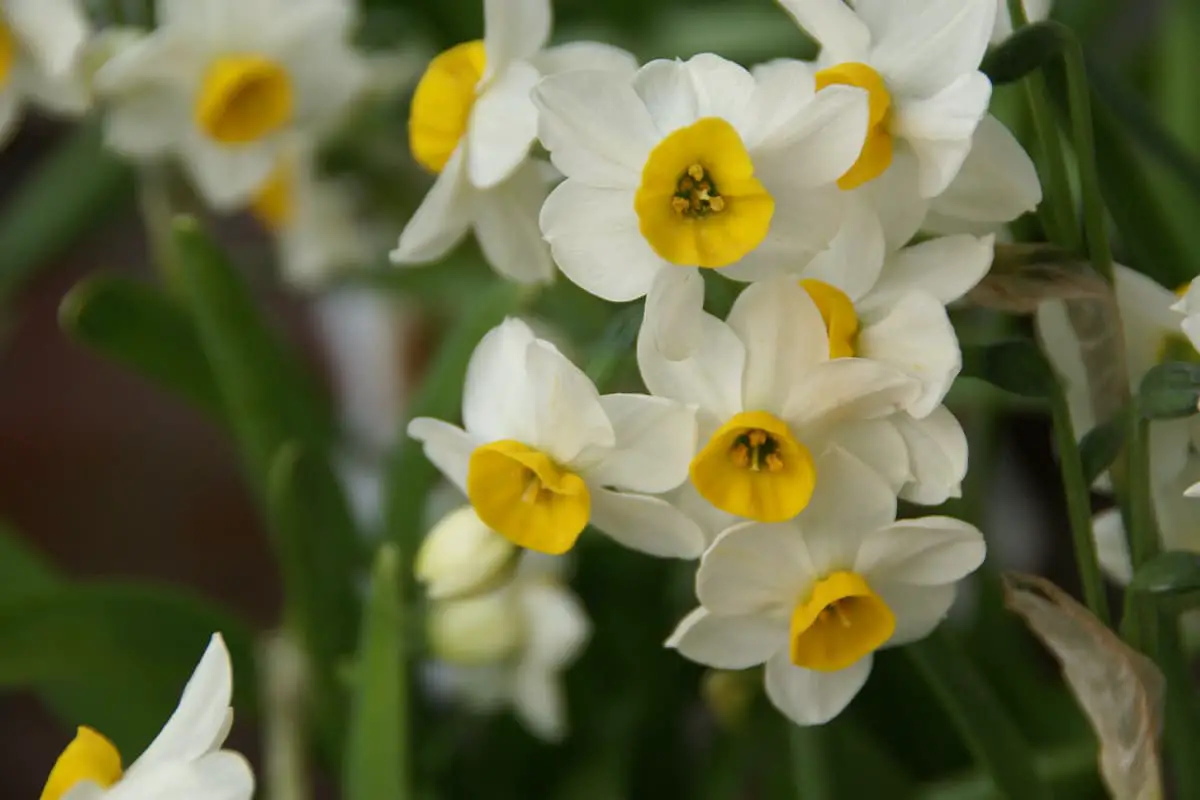
Leaves: The leaves are flat, measuring 30-50 cm in length and 1-5 cm in width. Domestic Daffodils usually have 5-10 leaves, but can have up to 11 leaves.
Flowers: The flowers are white or greenish-white, cylindrical in shape, with 6-8 petals. They are yellowish and elliptical. Daffodils emit a fragrant aroma when in bloom, which typically occurs from January to March.
Daffodils are mostly grown in water, with graceful leaves, rich fragrance, and an elegant appearance, earning them the poetic nickname “Fairy in the Ripples.”
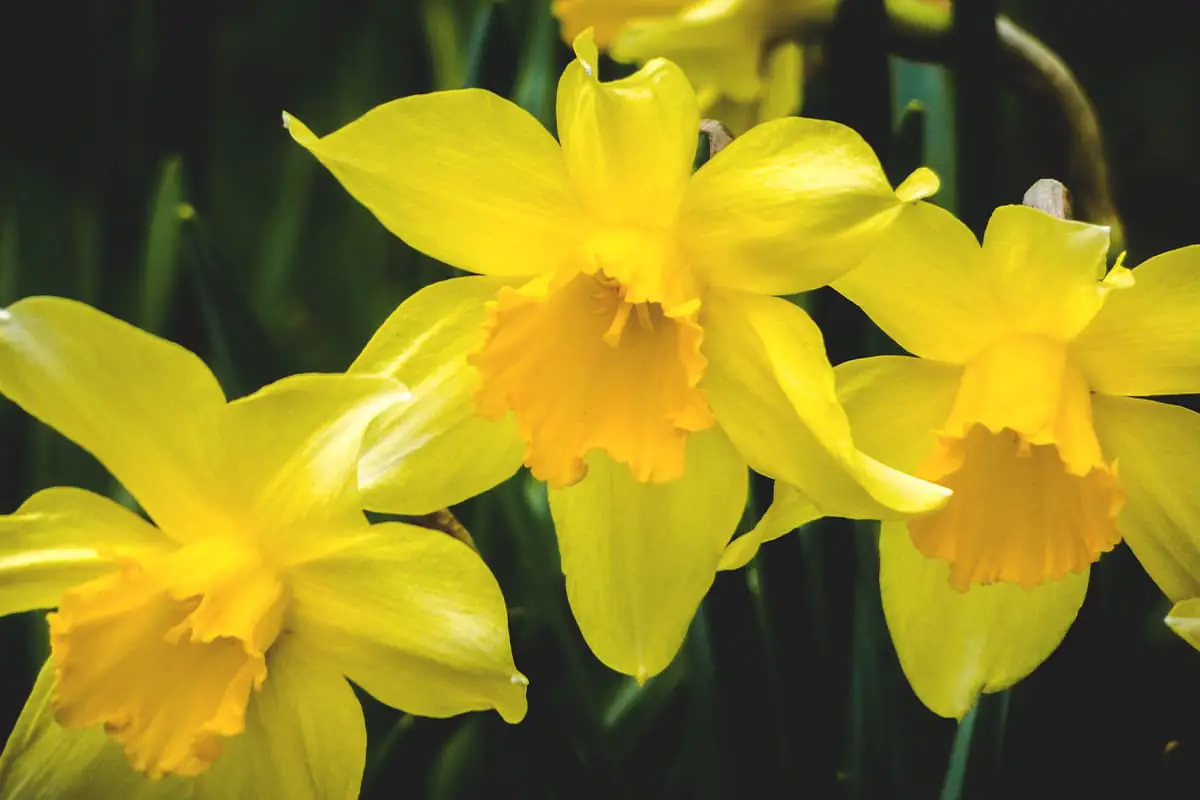
Daffodils are mainly distributed in the warm and humid coastal areas of southeastern China, with Zhangzhou, Xiamen in Fujian, and Chongming Island in Shanghai being the most famous.
Daffodils, also known as Golden Stand, Jade Exquisite, and Elegant Garlic, originated in Zhejiang and Fujian provinces of China and have now spread worldwide.
Daffodils have beautiful flowers, lush leaves, a fragrant aroma, and an elegant and graceful appearance, making them one of the well-known flowers for indoor and garden decoration during the winter season.
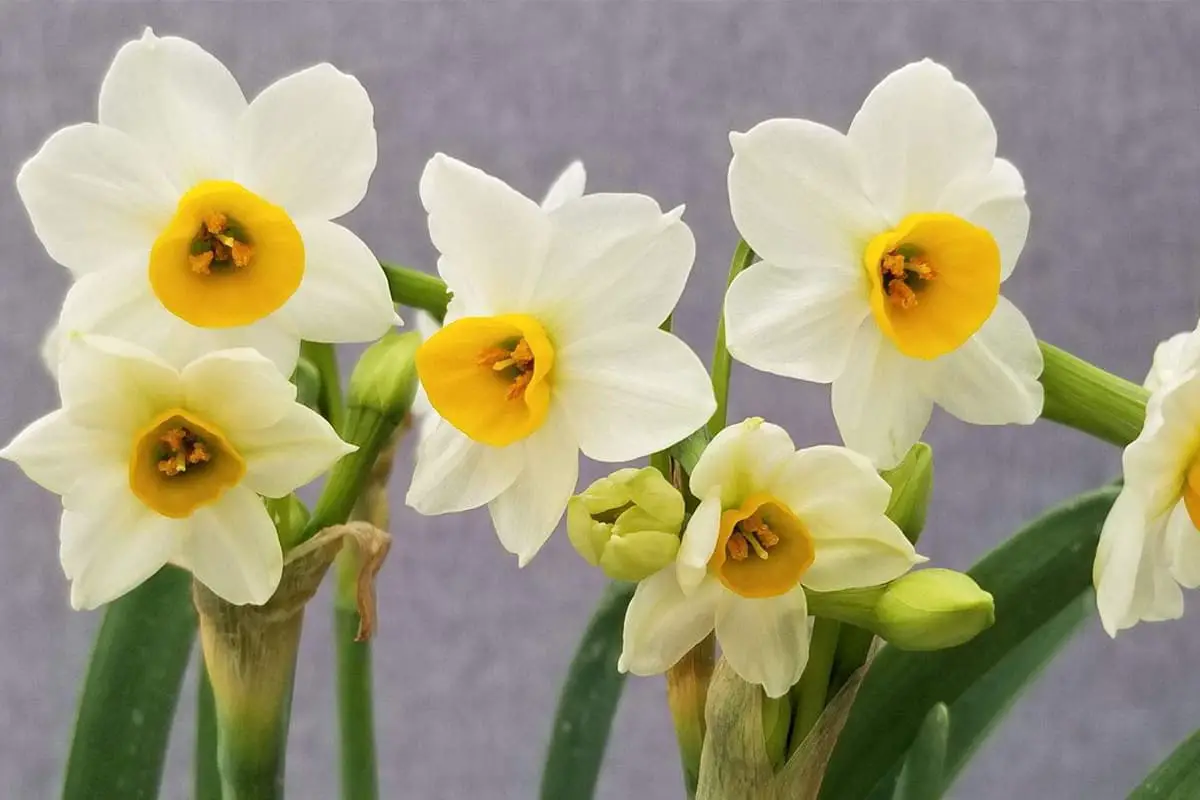
Daffodils prefer a warm and humid environment with good drainage. Loose and fertile alluvial sandy loam soil with deep layers is most suitable for their growth, with a pH range of 5 to 7.5 being suitable.
Daffodils thrive in abundant sunlight. They prefer sunny and warm conditions, so Daffodil pots should be placed in a sunny location during the daytime to provide sufficient light.
Since plants require chlorophyll and photosynthesis to provide nutrients, this helps Daffodil leaves to be broad and upright, with a vibrant green color and a fragrant aroma. Conversely, inadequate sunlight results in tall and weak leaves, yellowing foliage, and even failure to bloom.
Daffodils are bulbous plants, and their cultivation begins with the separation of bulbs. It usually takes about three years from bulb propagation to flowering.
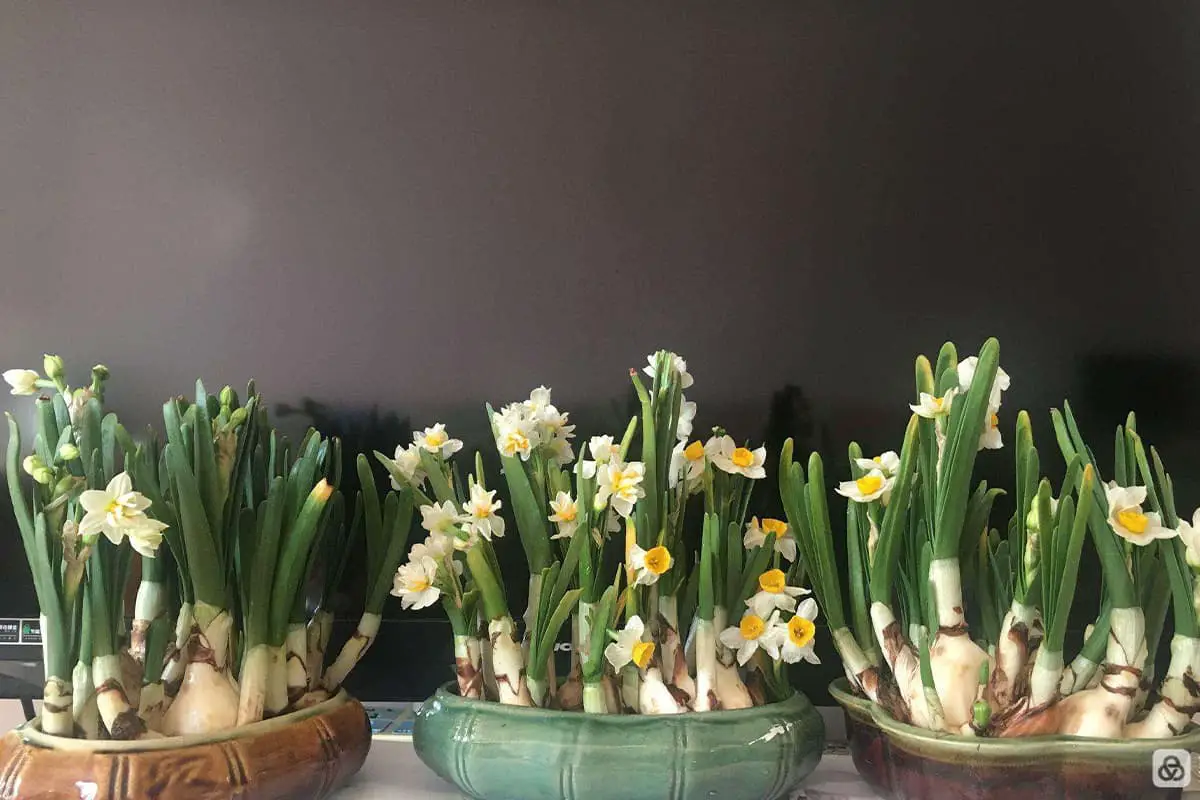
Daffodils go through a dormant period in summer, typically in early summer when the bulbs are removed from the soil, leaves are trimmed, and they are stored in a cool place.
They are then planted again in autumn or winter. Zhangzhou in Fujian is one of the famous production areas for Daffodils and has a cultivation history of over four hundred years.
Daffodils can also be cultivated through carving to grow into Crab Claw Daffodils. The principle of Daffodil carving is that trimming the leaf edges and flower stalks causes mechanical damage, and during the growth process, the injured side heals slowly while the other side grows normally.
As a result, the leaves and flower stalks bend and become dwarfed.
Enduring love gradually takes me away from you. Please don’t forget me and love yourself deeply.
During the Chinese New Year, Daffodils symbolize longing and represent reunion.
Chinese Daffodils symbolize passion, missing you, longing, and reunion.
Western Daffodils symbolize yearning for love, loving you, and purity.
Yellow Daffodils symbolize rekindling love.
Mountain Daffodils symbolize beautiful moments and thriving.

Peggie was once a high school mathematics teacher, but she set aside her chalkboard and textbooks to follow her lifelong passion for flowers. After years of dedication and learning, she not only established a thriving flower shop but also founded this blog, “Flowers Library”. If you have any questions or wish to learn more about flowers, feel free to contact Peggie.
 English
 العربية
 Bahasa Indonesia
 Deutsch
 Français
 Italiano
 Nederlands
 Português
 Русский
 日本語