600+ Types of Flowers A To Z (With Names and Pictures)
Types Of Flowers By Names (A-Z) Types Of Flowers By Color Types Of Flowers By Season Types Of Flowers By Blooming Time 600+ Types of Flowers No. Flower Name No.…

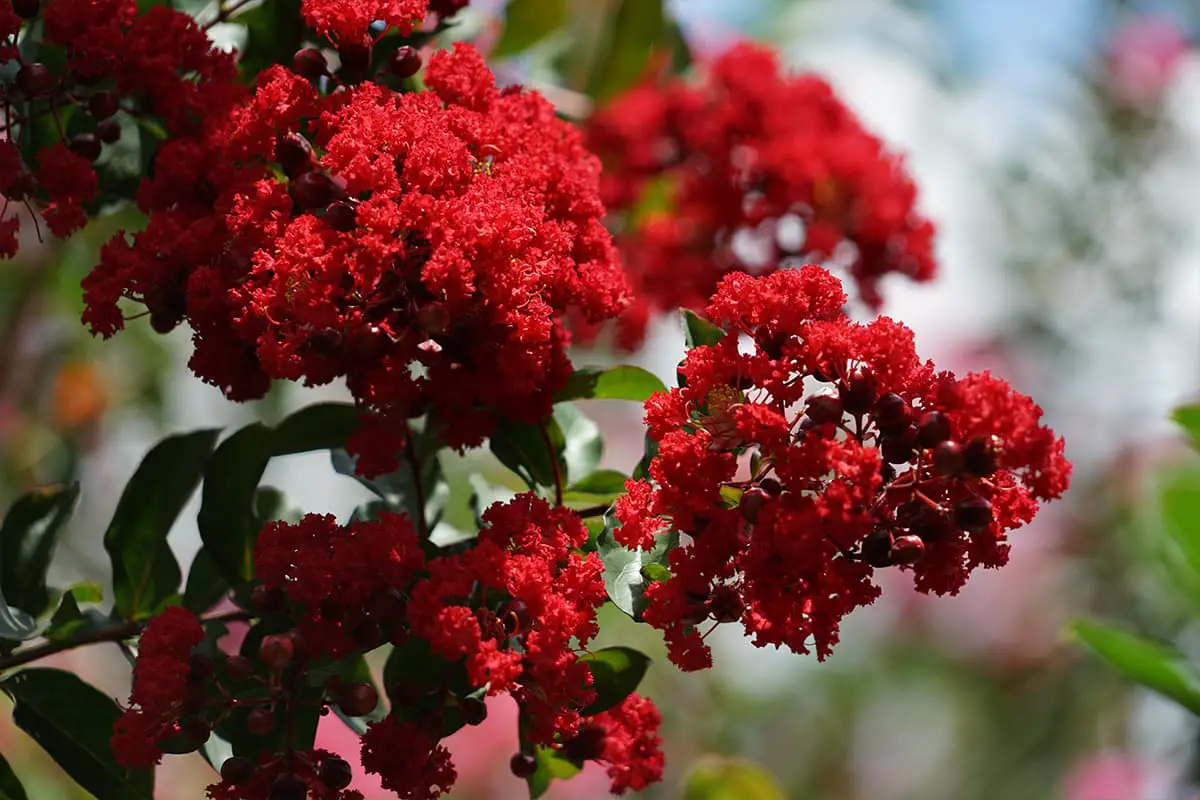
Crape myrtle is a small deciduous tree native to India. It is a resilient and long-lived tree species with an extended flowering period, earning it the nickname “Hundred Days Red.” Due to its moderate height, it is highly suitable for ornamental use in gardens and as street trees for urban greening.
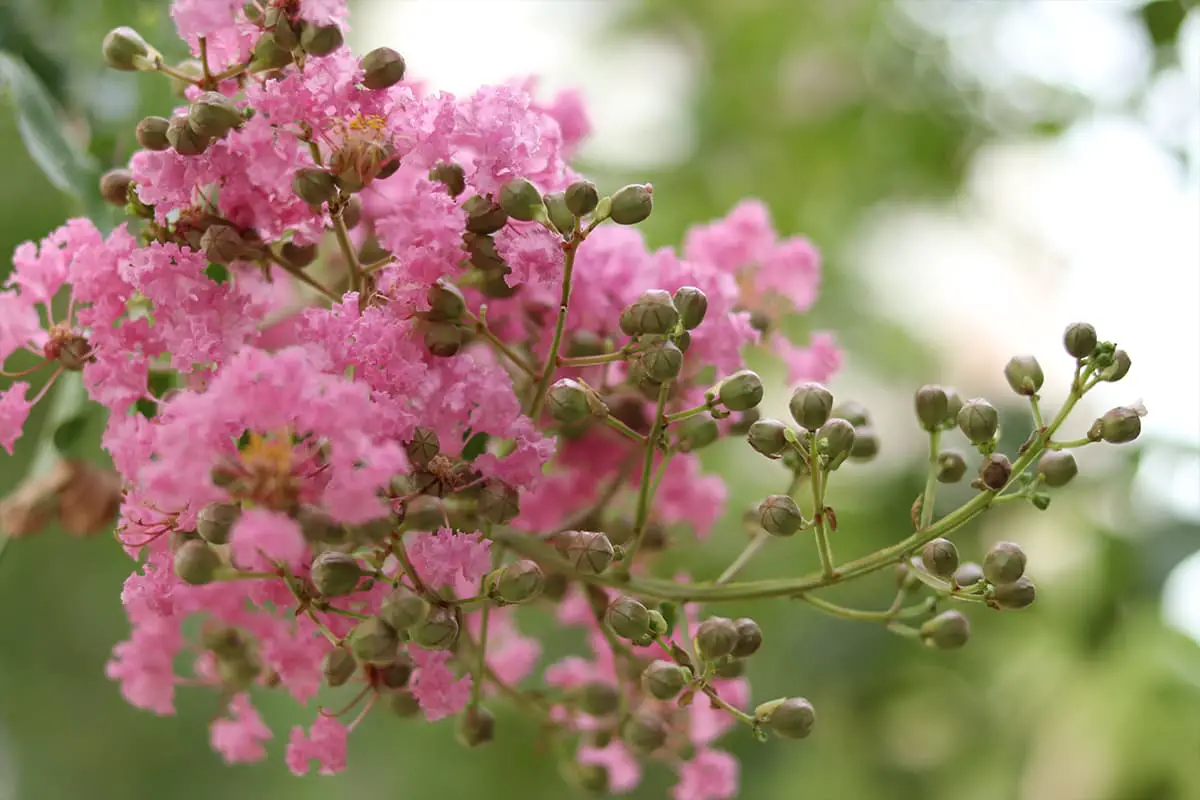
Crape myrtle is also known by various other names, such as “Hundred Days Red,” “Full House Red,” “Mosquito Flower,” and “Itchy Tree.”
Crape myrtle belongs to the Lythraceae family and is a deciduous small tree or shrub. It has a tall trunk with smooth gray or gray-brown bark. The branches are often twisted, and the twigs are slender, slightly wing-shaped.
The leaves are papery and vary in shape, ranging from elliptical to broadly rounded or inverted egg-shaped. The flowers, which are light red, purple, or white, form in conical clusters at the top. The fruits are elliptical or broadly rounded, and the seeds have wings.
Crape myrtle blooms from June to September, and the fruits mature from September to December.
Crape myrtle trees can grow up to approximately 7 meters in height. The bark of the tree is gray or brown, with a smooth texture. Most branches exhibit twisted growth, while the smaller twigs are relatively slender. The leaves of the crape myrtle are papery and shaped like inverted eggs or circles.
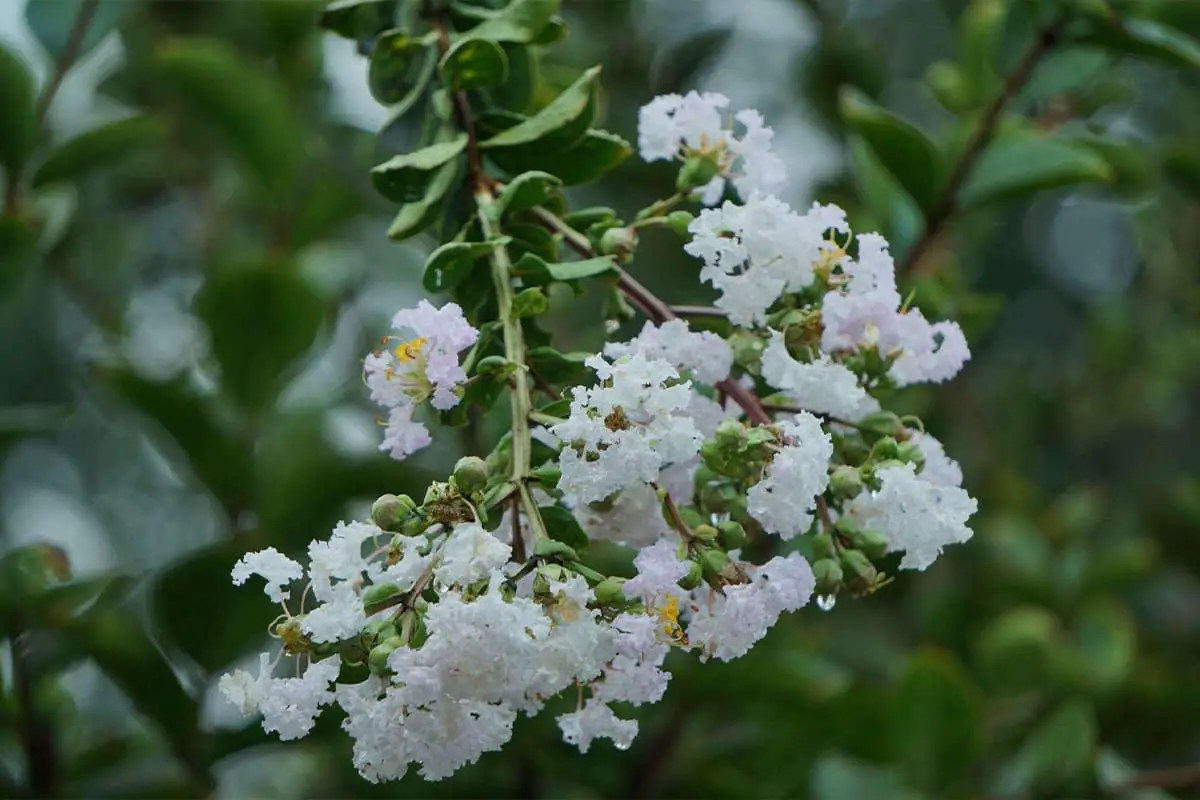
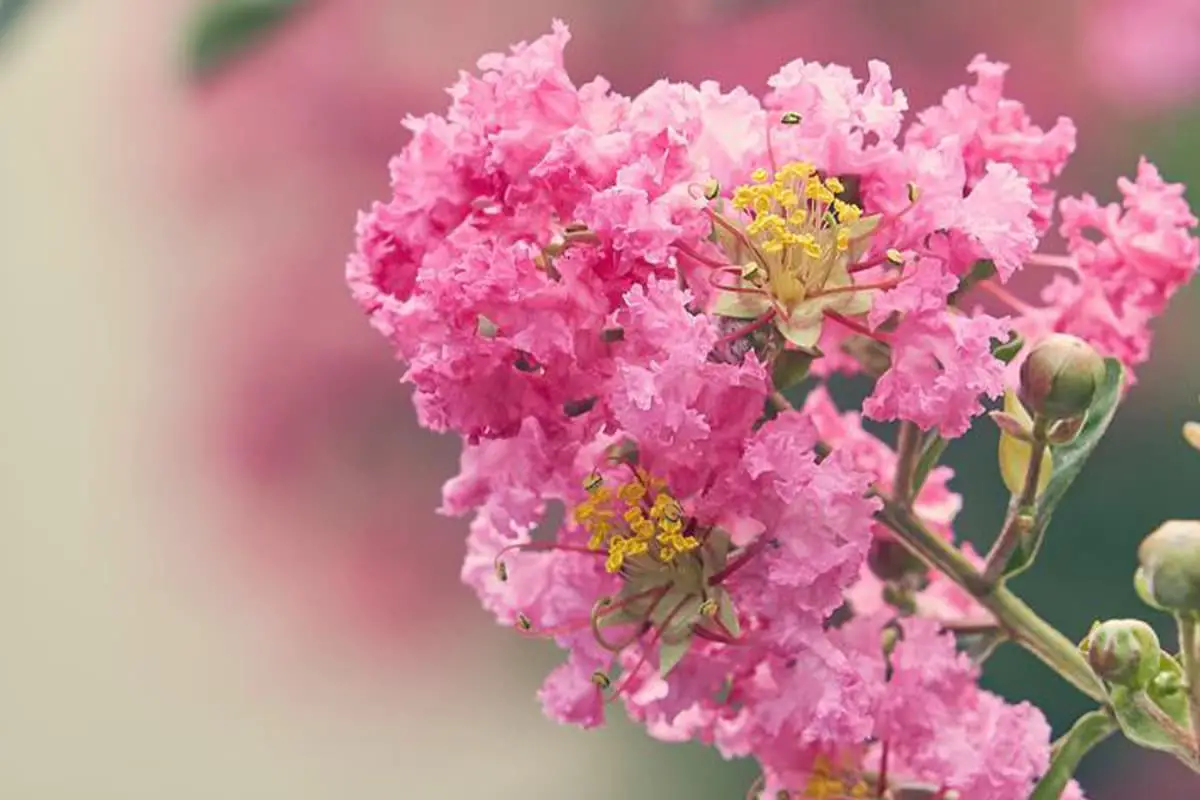
Crape myrtle flowers exhibit a rich variety of colors, including rose red, deep pink, bright red, purple, and white. The flower diameter is approximately 3-4 centimeters, and the flowering period typically occurs in the less-flower-abundant autumn, lasting for a considerable duration, which led to its name “Hundred Days Red.”
Crape myrtle is native to southern Asia and northern Australia and is widely distributed in Eastern, Central, and Southern China, as well as southwestern regions. It thrives in well-lit environments and tolerates partial shade. It is drought-tolerant and dislikes waterlogging, preferring warm and humid climates.
Crape myrtle exhibits a certain degree of cold resistance and prefers deep, fertile sandy loam soil. It can be propagated through both seed sowing and cutting methods.
Crape myrtle thrives in warm and moist, sunlit environments, but it can also tolerate partial shade. Adequate fertilization is crucial for its growth, and it is best planted in fertile and deep sandy soil. Both acidic and calcareous soils are suitable for its cultivation.
In terms of humidity, Crape myrtle prefers to grow in moist soil and has a certain degree of drought tolerance. However, it is susceptible to waterlogging and should not be planted in areas with high groundwater levels.
Crape myrtle also exhibits strong pollution resistance and can withstand certain levels of pollution, such as sulfur dioxide, hydrogen fluoride, and chlorine gas.
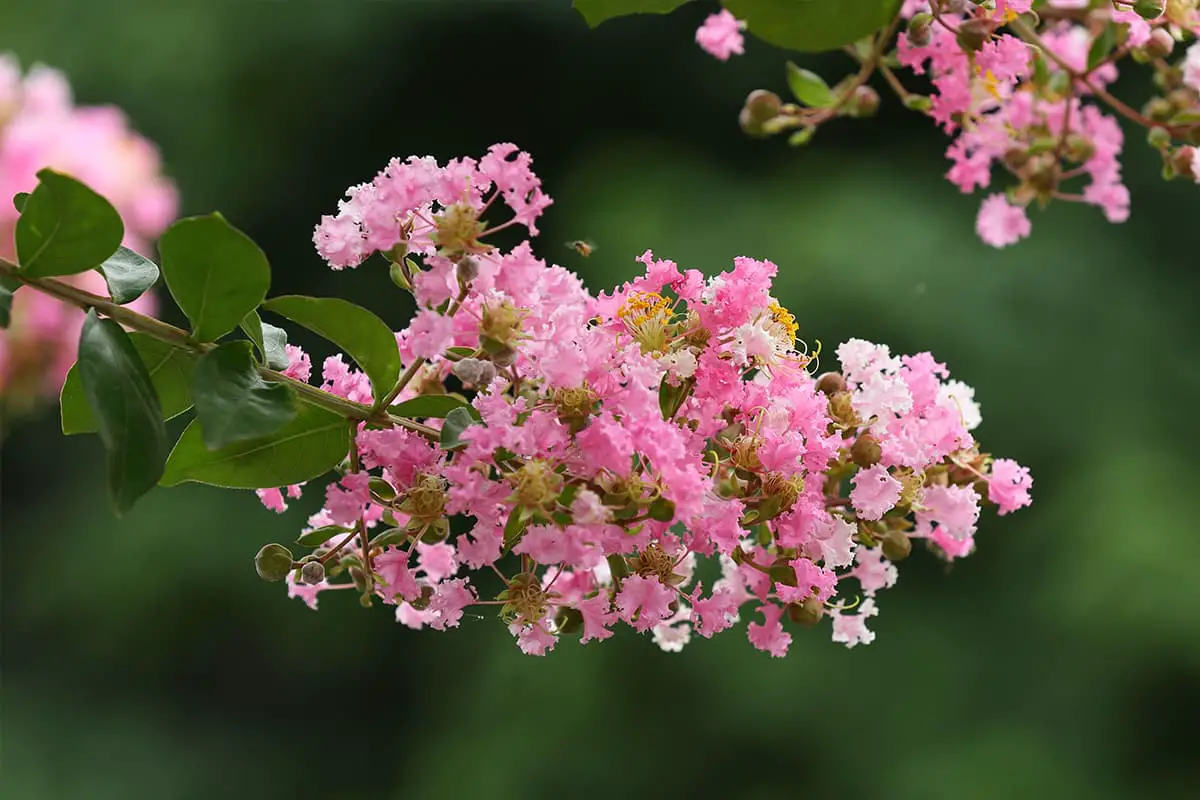
The main varieties of Crape Myrtle include Crape Myrtle, Emerald Crape Myrtle, Scarlet Crape Myrtle, and Silver Crape Myrtle. Crape Myrtle: Flowers are purple-red in color. Emerald Crape Myrtle: Flowers are blue-purple, and the leaves are dark green.
Scarlet Crape Myrtle: Flowers are fiery red. Silver Crape Myrtle: Young branches and leaves exhibit a yellow-green color, while the flowers are white or slightly tinged with pale yellow. Other characteristics are similar to Crape Myrtle.
The commonly used propagation methods for Crape Myrtle are seed sowing, cutting, grafting, division, and layering. Among these methods, cutting is preferred as it has higher survival rates compared to seed sowing, with earlier flowering and faster maturity of the plants. It also results in higher production of seedlings.
Seed Propagation: Seed propagation of Crape Myrtle can yield a large number of robust and uniform seedlings. The process includes seed collection, preparing the planting bed, seed scarification treatment for germination, and determining the appropriate sowing time and method.
Cutting Propagation: Cutting propagation of Crape Myrtle can be done using softwood cuttings or hardwood cuttings.
Layering Propagation: In the months of June to August, selected 1-2-year-old branches are appropriately defoliated, bent, and buried in the soil. The branches are treated with girdling, and after 45 days, they will develop roots. The mother plant is then cut off, and the newly rooted plant is separated and nurtured.
Division Propagation: In early spring, around March, the new shoots sprouting from the base of the Crape Myrtle are separated from the mother plant and replanted. Sufficient watering will ensure their survival.

Grafting Propagation: Before the Crape Myrtle branches start to bud in the spring, sturdy seedlings are selected as rootstocks. A longitudinal cut (about 3-4 centimeters deep) is made on the outer part of the top end of the rootstock, and the cut should extend from the center of the tree.
Then, a 5-8 centimeters long scion with 2-3 buds is prepared, and its base is cut into a wedge shape measuring 3-4 centimeters on each side. This grafting method has a survival rate of over 98%.
Crape Myrtle has high ornamental and economic value, making it an excellent flowering plant for summer and autumn. It combines ornamental, medicinal, utilitarian, and environmental values and has been widely utilized in landscaping.
Ornamental Value
The vibrant and beautiful colors of Crape Myrtle flowers, coupled with their long blooming period and longevity, make them suitable for bonsai and garden landscapes, adding ornamental value.
Crape Myrtle is often referred to as “Crape Myrtle” due to its extended flowering period. Bonsai made from Crape Myrtle, including the flowers, roots, and trunks, have excellent ornamental value. When planted in courtyards, parks, and roadsides, Crape Myrtle also contributes to greening and beautification.
As an outstanding flowering tree, Crape Myrtle is widely used in landscape design for park greening, courtyard beautification, road landscaping, and urban neighborhoods.
It can be planted in front of buildings, within courtyards, by ponds, along riversides, next to lawns, and on both sides of park pathways. It is also suitable for bonsai.
Utilitarian Value
The trunk of Crape Myrtle is hard and durable, making it suitable for use in furniture, construction, and agricultural tools. When planted individually in gardens, it becomes a landscape element and is commonly used in various parks and public green spaces.
Medicinal Value
The bark, wood, and flowers of Crape Myrtle have properties such as promoting blood circulation, relieving pain, reducing swelling, and detoxification. The leaves of Crape Myrtle, when used medicinally, can dispel wind and dissipate stasis, as well as exhibit effects such as clearing heat, detoxification, stopping bleeding, and reducing swelling.
Crape Myrtle has high medicinal and economic value. Its stems, flowers, leaves, and roots can all be used in herbal medicine. They have a slightly bitter and astringent taste and a neutral nature.
Crape Myrtle is known to have effects in clearing heat, detoxification, stopping diarrhea, stopping bleeding, and relieving pain. It can be used to treat diseases such as cirrhosis, ascites, hepatitis, various bleeding disorders, fractures, mastitis, eczema, and more.
Environmental Value
Crape Myrtle is a fragrant flowering plant. It has strong resistance to hydrogen fluoride, hydrogen chloride, chlorine gas, and other pollutants. It also has a strong capacity to absorb sulfur dioxide and can effectively trap dust particles.
The volatile oils produced during flowering have significant antimicrobial properties, capable of killing bacteria such as diphtheria and dysentery within 5 minutes. They also exhibit noticeable inhibitory effects on the growth and reproduction of tuberculosis bacilli and Escherichia coli.
Therefore, Crape Myrtle is highly suitable for planting in urban greening projects and industrial areas.
Crape Myrtle flowers represent “passionate love” and also carry various symbolic meanings such as “good fortune,” “femininity,” and “eloquence.” Additionally, Crape Myrtle flowers are also seen as a symbol of wealth, prosperity, and abundance.

Peggie was once a high school mathematics teacher, but she set aside her chalkboard and textbooks to follow her lifelong passion for flowers. After years of dedication and learning, she not only established a thriving flower shop but also founded this blog, “Flowers Library”. If you have any questions or wish to learn more about flowers, feel free to contact Peggie.
 English
  العربية
  Bahasa Indonesia
  Deutsch
  Français
  Italiano
  Nederlands
  Português
  Русский
  日本語
日本語