600+ Types of Flowers A To Z (With Names and Pictures)
Types Of Flowers By Names (A-Z) Types Of Flowers By Color Types Of Flowers By Season Types Of Flowers By Blooming Time 600+ Types of Flowers No. Flower Name No.…

The Broadbean flower is a perennial or annual herb, standing at a height of 30-180cm. It features an upright, unbranched stem, devoid of hair. Its even pinnate leaves are graced by large stipules in a semi-arrow shape with a white membranous edge, sparsely serrated and hairless.
The tip of the leaf stalk exhibits a degenerated tendril. It has 2-6 leaflets with an oval or broad oval to elongated leaf shape, measuring 4-8cm in length and 2.5-4cm in width.
Its leaf tips are round or blunt with a fine tip, and the leaf base is wedge-shaped, possessing a smooth margin.
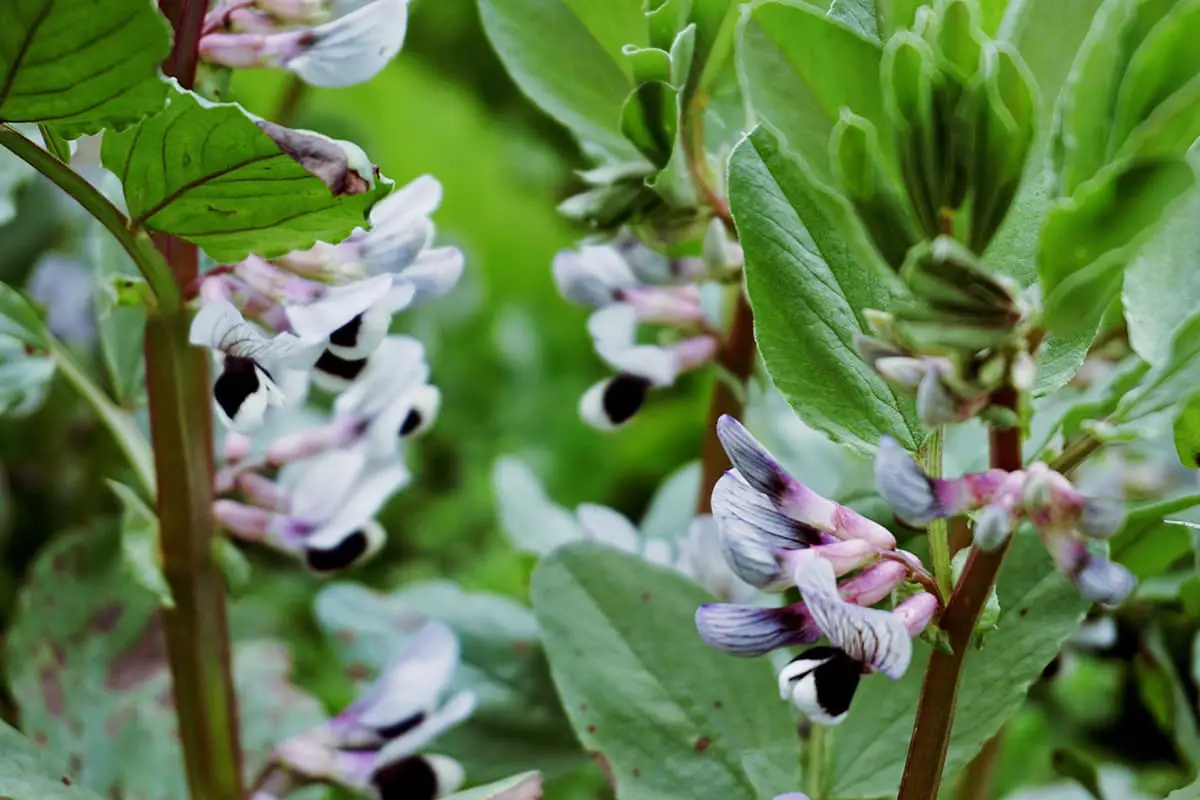
The plant showcases axillary or solitary racemes with extremely short peduncles. Its calyx is bell-shaped and membranous, approximately 1.3cm long with five lobes, and its lobes are lanceolate, the upper two being slightly shorter.
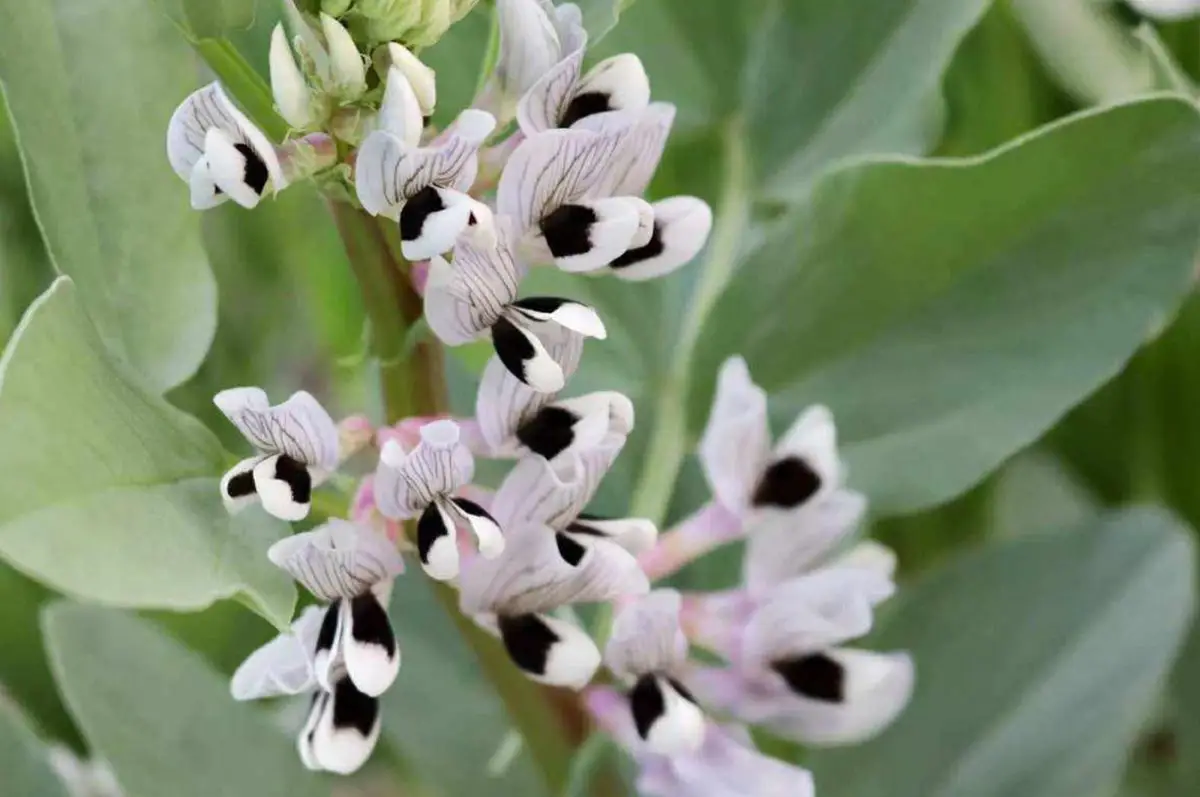
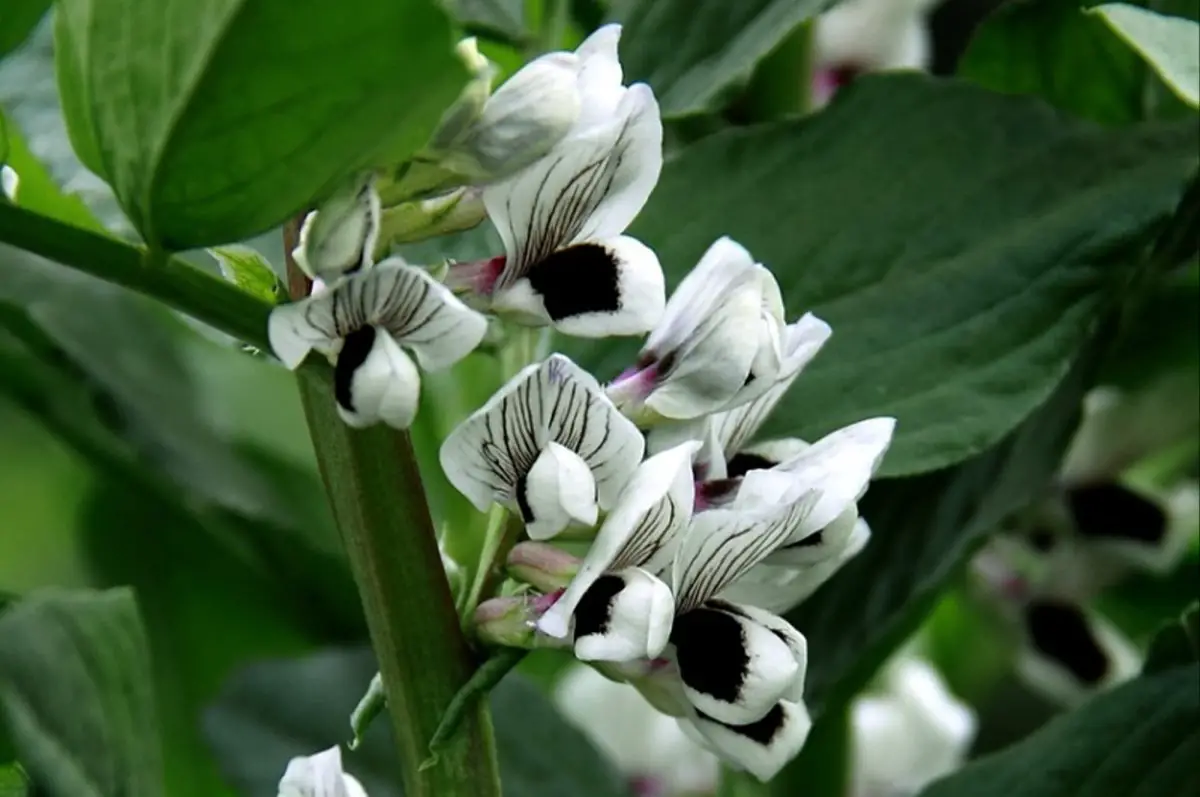
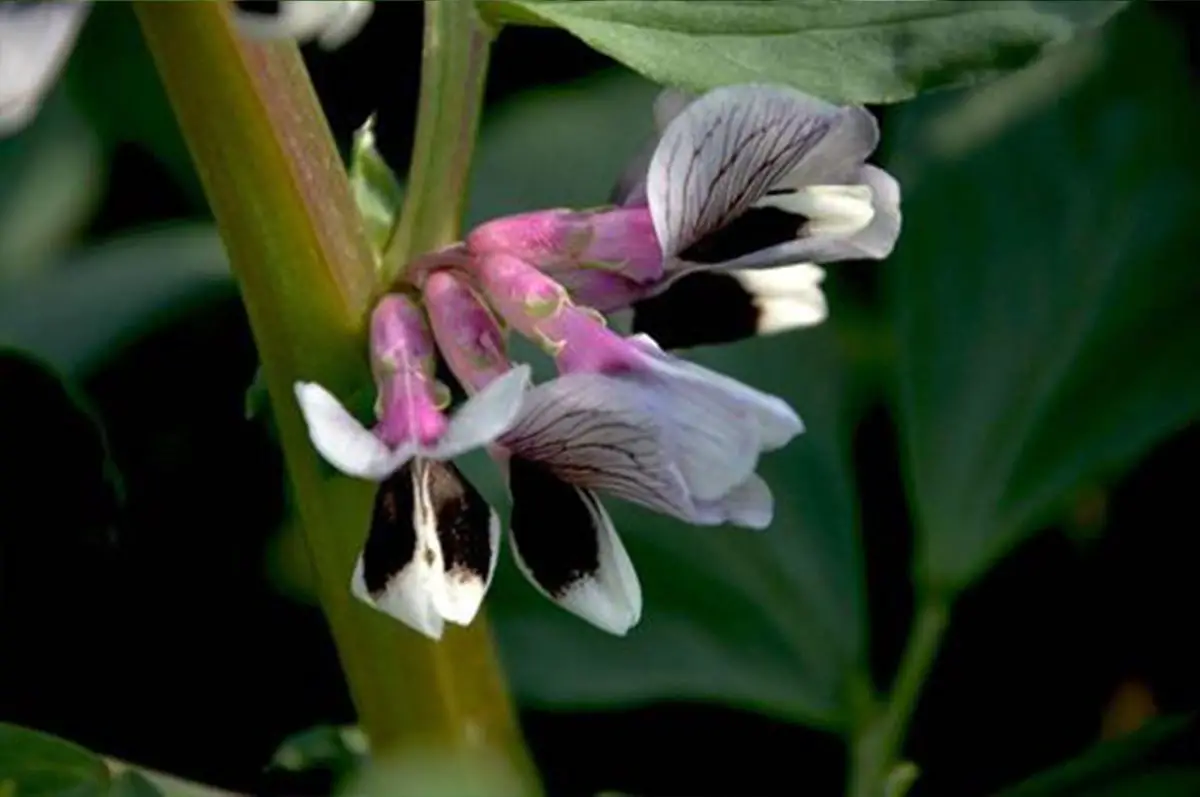
The corolla is butterfly-shaped, white with red-purple patterns. Its standard petal is ovate with a blunt tip, narrowing towards the base. The wing petals are oval with rounded tips, the base forming an ear-shaped triangle, one side having a claw, while the keel petals are semicircular in a triangular shape, also possessing a claw.
The plant has ten stamens in two groups. The ovary is stalkless and hairless, with a cluster of white beard hairs at the tip of the flower branch. Its pods are oval and plump, measuring 5-10cm in length and about 2cm in width.
There are 2-4 seeds per pod, which are elliptical and slightly flat. The flower blooms in March-April, and the fruiting period is from June-August.
The flower is harvested around the time of the Qingming Festival when it blooms, and it is then dried in the sun or by roasting.
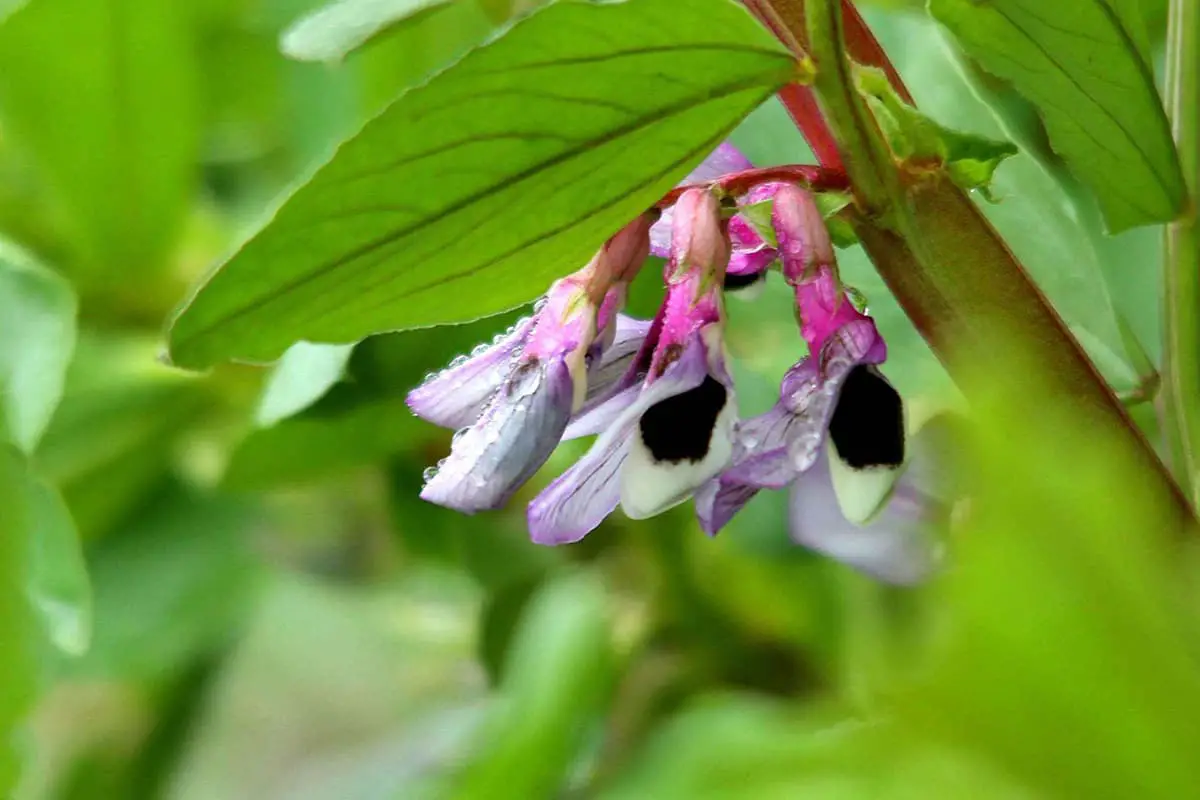
The dried flower is dark brown, shriveled, and approximately 2cm long. The calyx closely adheres to the corolla, with five lobes at the tip, each of which may be fragmented due to drying. The standard petal is on the outside, enveloping the wing and keel petals.
Due to the shriveling and curling, it can be challenging to distinguish. It emits a faint fragrance and tastes bland. The ideal medicinal flower is dry, intact, and dark purple in color.
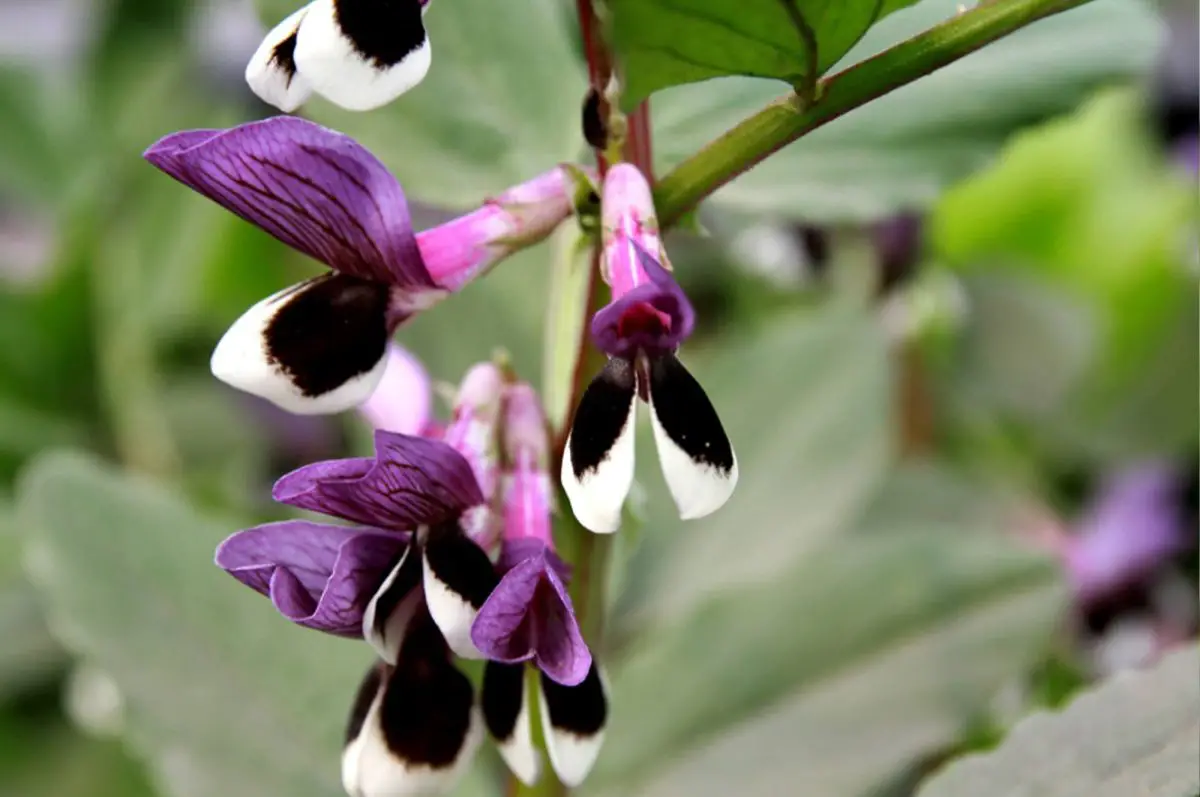
The flower is typically shriveled, 2-3cm long, and dark brown in color. Usually, one to several flowers grow on a very short peduncle. The calyx is bell-shaped, tightly attached to the corolla tube, with five lobes at the tip. The lobes are ovate lanceolate and uneven in length.
The corolla is butterfly-shaped, with the standard petal enveloping the wing and keel petals. The wing petal has a large dark purple spot in the center.
The flower emits a faint fragrance and tastes bland. The preferred ones are those that are whole, free of leaves, and stems.
It is used for treating vomiting, hemoptysis (coughing up blood), nosebleeds, and spots associated with fever.
This flower has a hemostatic function and is used for hemoptysis and vomiting of blood. It can be combined with lotus nodes for usage. For the treatment of nosebleeds, it can be used with blood remainder charcoal and Imperata cylindrica flower. When used for fever with rashes, it can be combined with moutan bark.
The product can also be used to treat vaginal discharge and hypertension. It has the function of stopping discharge and reducing blood pressure.
Dosage and Administration
Oral administration: decoction, 2 to 3 qian (approximately 7.5 to 11.25 grams), or fresh product 0.5 to 1 liang (approximately 15 to 30 grams); it can be taken in juice form or steamed.
Formulas
Additional Medicines

Peggie was once a high school mathematics teacher, but she set aside her chalkboard and textbooks to follow her lifelong passion for flowers. After years of dedication and learning, she not only established a thriving flower shop but also founded this blog, “Flowers Library”. If you have any questions or wish to learn more about flowers, feel free to contact Peggie.
 English
  العربية
  Bahasa Indonesia
  Deutsch
  Français
  Italiano
  Nederlands
  Português
  Русский
  日本語
日本語