600+ Types of Flowers A To Z (With Names and Pictures)
Types Of Flowers By Names (A-Z) Types Of Flowers By Color Types Of Flowers By Season Types Of Flowers By Blooming Time 600+ Types of Flowers No. Flower Name No.…

Trifolium repens, also known as white trefoil, white-flowered clover, Dutch clover, and creeping clover, is a perennial herbaceous plant. It is cultivated and sometimes escapes into fields as a weed, although it does not pose a significant threat to dryland crops.
It can, however, be harmful to local vegetable gardens and young forests. White clover has a lifespan of up to six years and reaches heights of 10-30 centimeters. It has a short taproot, with well-developed lateral and fibrous roots.
The stems creep and slightly ascend above ground, rooting at the nodes, and the plant is hairless throughout. It has palmate trifoliate leaves; stipules are ovate-lanceolate, membranous, sheathing at the base, and pointed at the free end.
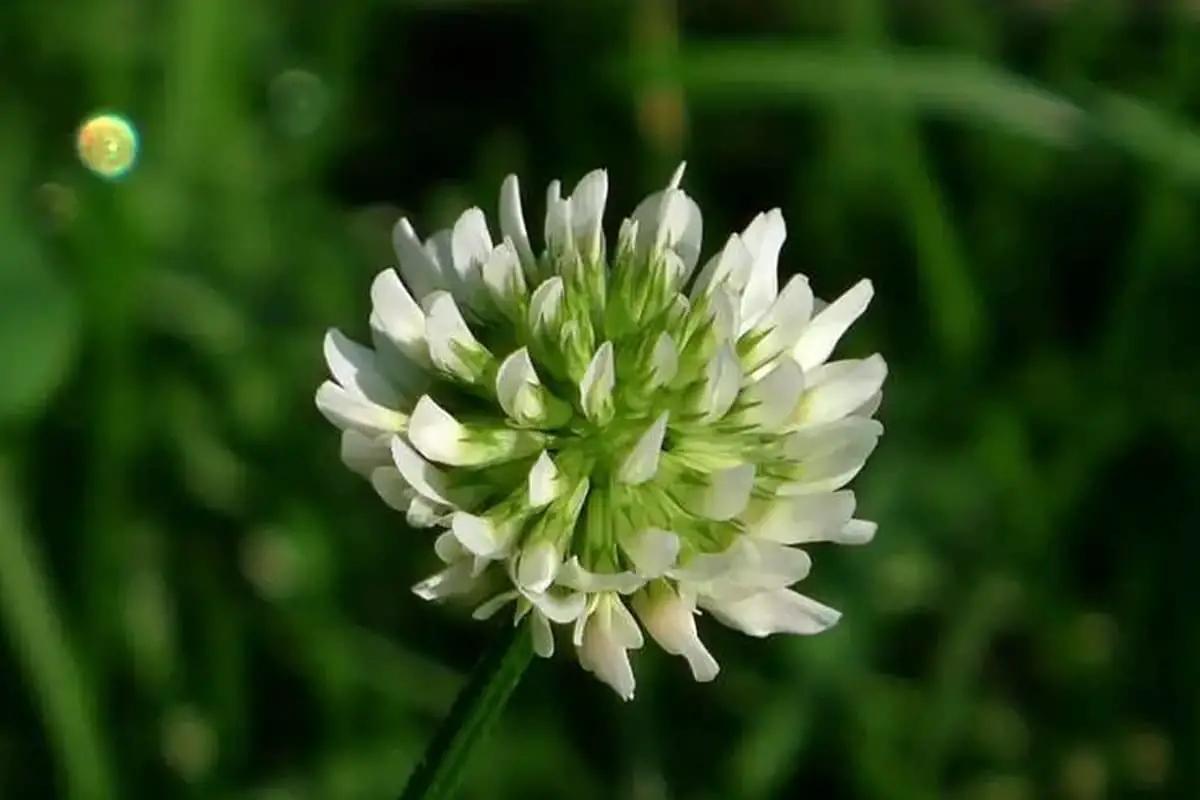
This species is highly adaptable, with strong heat and cold resistance, thriving in acidic soils as well as in sandy soils. It holds ornamental value and is one of the world’s primary cultivated forages.
In China, it is mainly used for grassland development, offering substantial ecological and economic benefits.
This short-lived perennial herb has a lifespan of up to five years and grows 10-30 cm tall.
Root: It has a short primary root with well-developed lateral and fibrous roots.
Stem: The stems creep and slightly ascend above ground, rooting at the nodes, and the plant is hairless throughout.
Leaves: The palmate trifoliate leaves feature ovate-lanceolate stipules that are membranous and sheath the stem at the base.
The leaflets are inverted egg-shaped to nearly round, ranging in length from 8-20 (-30) mm and in width from 8-16 (-25) mm, with tips ranging from indented to bluntly round.
The midvein protrudes on the underside, with about 13 pairs of lateral veins branching off at a 50° angle.
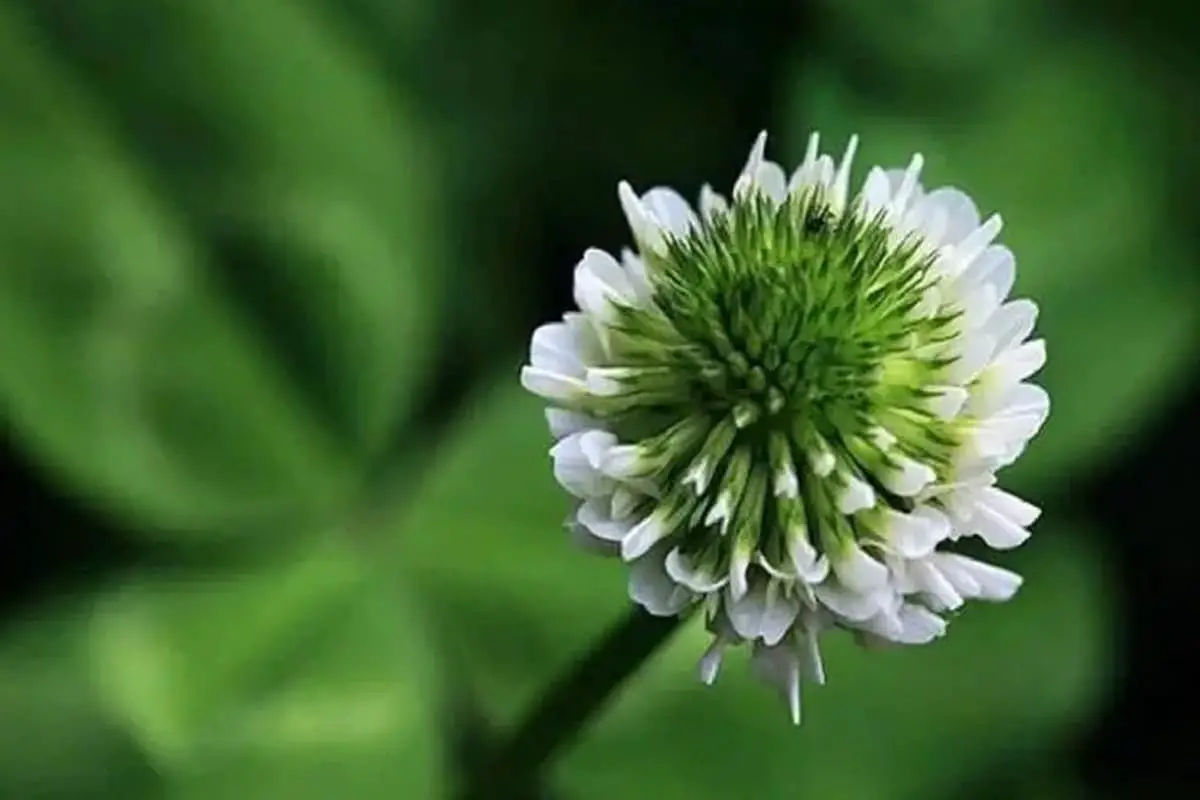
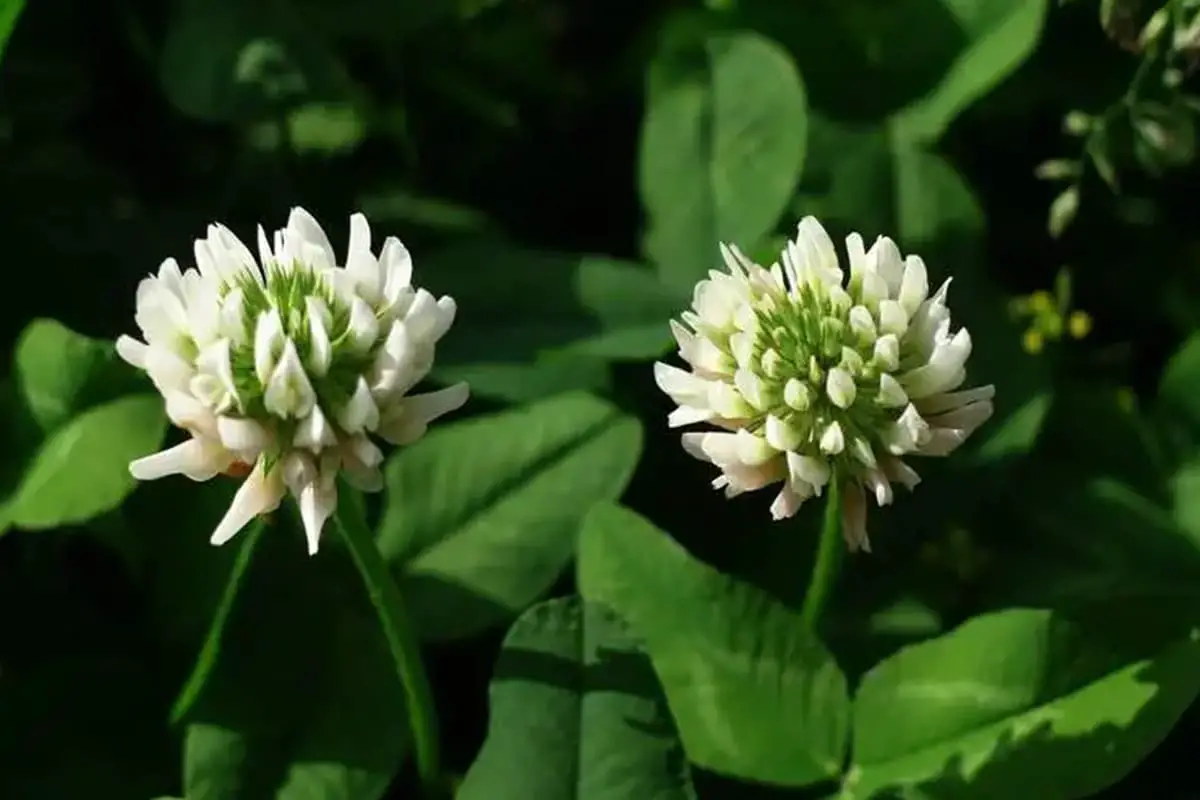
Flowers: The inflorescence is spherical, terminal, and 15-40 mm in diameter. The flowers, numbering 20-50 (-80), are densely packed.
The sepals are bell-shaped with 10 veins and slightly unequal teeth that are shorter than the sepal tube. The corolla is white, cream, or pale pink and fragrant.
The standard petal is nearly twice as long as the wings and keel, with the keel slightly shorter than the wings. The ovary is linear-oblong, with the style slightly longer than the ovary, and contains 3-4 ovules.
Fruit and seeds: The fruit is oblong, usually with three seeds. The seeds are broadly ovoid.
Soil: White clover is not particular about soil and thrives in acidic clay soil, as well as sandy soil, with a pH range of 5.5 to 7, and can grow even at pH 4.5.
It prefers slightly acidic soil and is not tolerant of saline-alkaline conditions, with an optimal pH range of 6 to 6.5 for nodule formation.
As a long-day plant, white clover does not tolerate shade. With more than 13.5 hours of daylight, the number of flowers can increase.
It prefers open, sunny areas and exhibits phototropic movement, meaning its leaves move in response to weather changes and the angle and position of light sources throughout the day.
Drought tolerance: It has a certain level of drought tolerance and does not wilt at temperatures around 35°C. It grows best in full sunlight at optimal temperatures between 16-24°C, where it flourishes and competes strongly.
Cold tolerance: White clover prefers a warm, moist climate. It does not tolerate drought or prolonged waterlogging and grows best in areas with annual rainfall between 800-1200mm.
Seeds begin to germinate at temperatures between 1-5°C, with optimal growth temperatures between 19-24°C. It can survive winters under snow cover as deep as 20 cm for a month and at temperatures as low as -15°C.
It can also endure summers with average temperatures of ≥35°C and brief extreme highs of 39°C.
Originally from Europe and North Africa, white clover is widely distributed across Asia, Africa, Australia, and the Americas. In China, it is commonly found in subtropical and warm temperate regions.
White clover is rich in various nutrients and mineral elements, offering significant forage, landscaping, genetic breeding, and medicinal benefits. It can serve as a green manure, embankment protection, and lawn decoration, as well as a source of nectar and medicinal herbs.
White clover is palatable and highly digestible, favored by various livestock including cattle, sheep, and herbivorous fish. Its nutritional content and digestibility surpass those of alfalfa and red clover.
The forage value of grasslands increases with the proportion of white clover, while hay and seed yields vary by region. It is characterized by early germination, late withering, and a long forage season, especially in the south from April to November.
White clover has creeping stems and long petioles, forming a low grass layer, making leaves and tender stems the primary grazing targets.
Moreover, as white clover ages, its digestibility decreases more slowly compared to other forages. It endures trampling, spreads rapidly, and competes effectively with weeds, making it suitable for grazing.
However, moderate grazing is recommended to facilitate regrowth. When fed, it should be paired with grasses from the Poaceae family to maintain a carbon-nitrogen balance and prevent bloating.
Additionally, the dried grass powder can be used as a component in mixed feeds.
White clover has strong invasive and competitive abilities that effectively suppress weed growth, requiring little maintenance and offering long usability. It improves soil quality and retains soil moisture, making it ideal for landscaping in gardens, parks, and golf courses.
White clover’s foliage and flowers are aesthetically pleasing with an extended green period. Low planting and maintenance costs, from seeding to establishment, take only 30 to 40 days.
Once planted, it can be used continuously for 6-7 years or even up to 10 years. The self-seeding capability of the fallen seeds makes it an excellent choice for decorative lawns, either in large swathes or mixed with trees and shrubs for a tiered landscape.
When mixed with other warm-season lawns, it extends the green period. With a well-developed root system that stabilizes the soil, its dense leaves prevent soil erosion by rain and wind.
It is suitable for planting on slopes and lakeshores to prevent erosion and create vibrant ecological landscapes. Resistant to pests and weeds, it requires minimal weeding after establishment, reducing labor and the use of chemical herbicides.
White clover roots host numerous nodules that fix atmospheric nitrogen, eliminating the need for nitrogen fertilizers and only requiring phosphorus and potassium to promote lush foliage.
In mildly saline-alkaline soils, inoculating seeds with clover rhizobia can promote root development. Intercropped in orchards, its roots mainly occupy the top 15 cm of the soil layer, avoiding competition with deeper-rooted trees.
Its shade tolerance and rapid growth cover the orchard floor, establishing dominance and preventing other weeds, especially noxious broadleaf weeds, from proliferating.
The root exudates and remnants contribute organic matter to the soil, alleviating nutritional deficiencies in fruit trees, stimulating soil microbial activity, and improving soil fertility and nutrient utilization.
White clover flowers are an excellent nectar source, attracting bees and butterflies for pollination, enhancing fruit set, and forming a beneficial ecological cycle in the orchard of fruit, grass, fertilizer, and water.
The entirety of the white clover plant can be used medicinally, having a mildly sweet taste and neutral properties. It is known for its cooling, calming, pain-relieving, expectorant, and cough-suppressing effects.
Clinical trials abroad have reported that a tincture made from white clover flowers can be used to treat colds. Its whole-plant tincture has astringent and hemostatic properties, useful for stopping bleeding and promoting wound healing.
It also contains isoflavones with anticancer properties. Polysaccharides extracted from white clover boost immunity, combat tumors, slow aging, and lower blood lipids, offering a range of medicinal and health benefits.

Peggie was once a high school mathematics teacher, but she set aside her chalkboard and textbooks to follow her lifelong passion for flowers. After years of dedication and learning, she not only established a thriving flower shop but also founded this blog, “Flowers Library”. If you have any questions or wish to learn more about flowers, feel free to contact Peggie.
 English
  العربية
  Bahasa Indonesia
  Deutsch
  Français
  Italiano
  Nederlands
  Português
  Русский
  日本語
日本語