The Sterculia lanceolata, commonly known as false Sterculia, earns its name due to its striking resemblance to its genus-mate, the Sterculia. It’s also known as Seven Sisters’ fruit, cockscomb bark, cockscomb tree, race Sterculia, and mountain kapok.
This member of the Malvaceae family is a semi-deciduous tree. The leaves of the false Sterculia are elliptical with a sharp tip, a bluntly rounded base, and smooth edges, with swollen leaf stalks.
The flowers form dense, multi-branched, axillary corymbs, featuring pale red petals with five sepals that are only connected at the base, spreading outwards in a star-like fashion.
In open ground, the blooming period is from April to May, whereas in a greenhouse, flowers can appear as early as March. Typically, the false Sterculia bears fruit in the summer.
While the fruit can be eaten directly, the plant is more valued for its ornamental and medicinal properties than for its edibility.
I. Basic Introduction
The Sterculia lanceolata Cav., a member of the Malvaceae family and the genus Sterculia, is a tree with young branches that are initially hairy.
Its leaves are elliptical, lanceolate or elliptical-lanceolate, with a sharply pointed tip, a blunt or nearly round base, hairless on the surface, and nearly hairless beneath; the petioles are 2.5-3.5 cm long.
The inflorescence is a densely branched, axillary panicle, 4-10 cm in length; the flowers are pale red with five sepals.
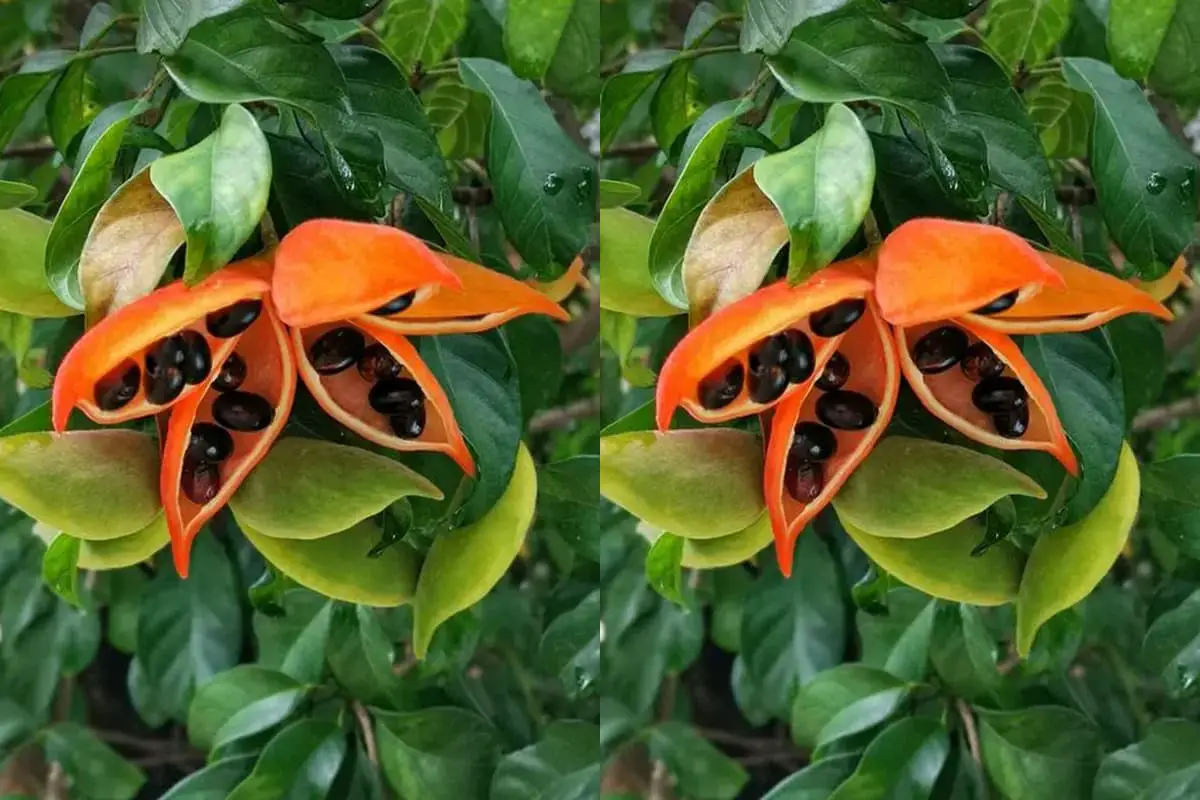
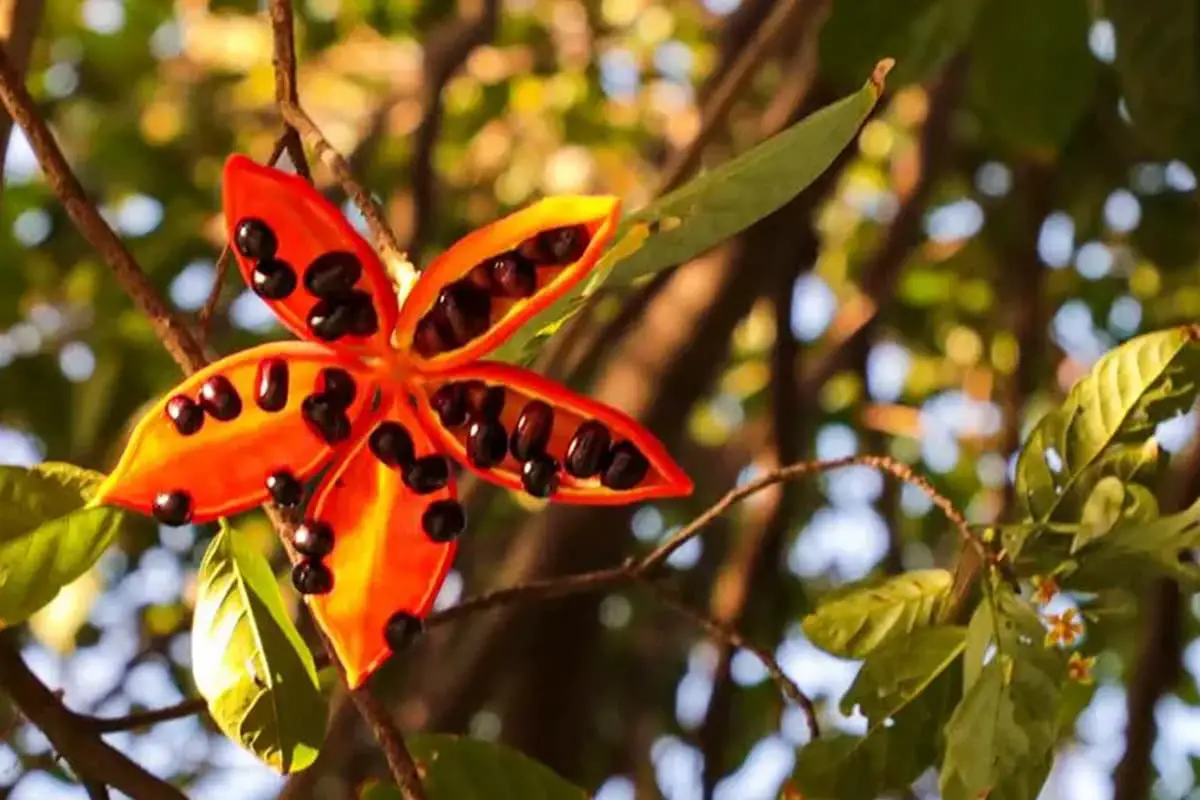
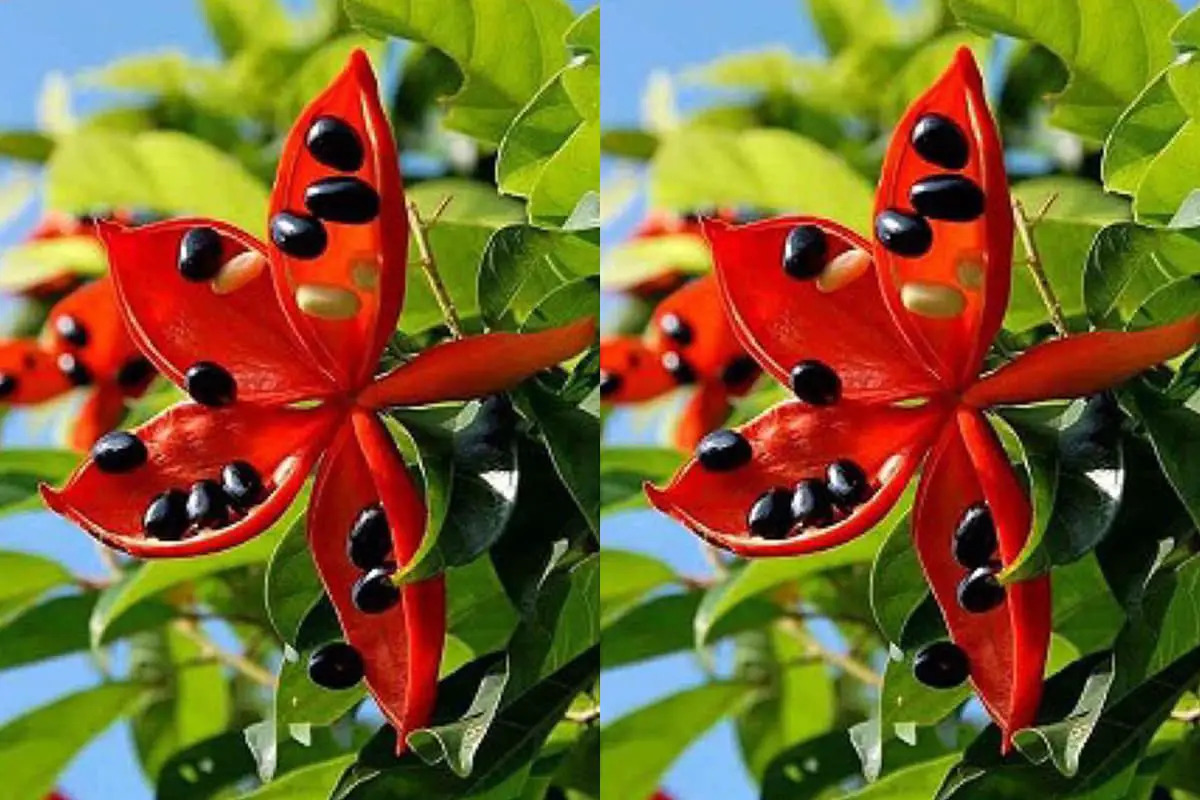
The fruit is a bright red follicle, ovate or elongated-elliptical, beaked at the tip, tapering at the base, and densely covered with short soft hairs; the seeds are black-brown, ellipsoid-ovate, and about 1 cm in diameter. Each fruit contains 2-4 seeds. The flowering period is from April to June.
The tree is distributed in China, Myanmar, Thailand, Vietnam, and Laos; Commonly seen in the mountains and wilds of southern China, it thrives near mountain streams and valleys.
The fibrous bark of this species can be used as raw material for burlap sacks and in papermaking; the seeds are edible and can also be pressed for oil.
The wood is suitable for making farming tools and other small-diameter materials. It is a native tree species in southern Guangdong, China, and can be seen in the countryside and mountain fringes.
With its robust growth, dense canopy, and graceful shape, it is ideal as an ornamental tree for gardens and avenues.
II. Growth and Distribution
Growth Environment
This calciphile thrives not only in acidic soils but predominantly in calcium-rich limestone soils, flourishing in the valleys, shaded slopes, ravines of karst mountains, sparse forests, shrublands, and dense woodlands.
The distribution range extends from the tropical to the subtropical regions of Asia, with China representing the northern edge of its natural habitat.
It is a tropical tree species with a considerable tolerance to cold, capable of withstanding prolonged temperatures of 3-5°C and brief dips to around -4°C, as well as light frost and mild snow.
It is also tolerant of high temperatures and extended periods of hot weather, preferring humid air but can also withstand dry conditions. Even in harsh environments like limestone karst mountains, cliffs, and crevices, it can grow into a large tree.
The plant has a strong adaptability to light; it tolerates shade in its juvenile phase and thrives in sparse shade or full sunlight on hillsides, in valleys, and on rocky outcrops as it matures.
It adapts well to various soil types, with a natural preference for limestone soil, though it can also grow in acidic soils, requiring moderately fertile and loose-structured earth.
With a well-developed root system, it can penetrate crevices and cling to rock faces, effectively covering rocky hills and preserving soil and water.
In the tropical karst mountains of Guangxi, China, it commonly coexists with Worry-Free Flowers, Hainan Wind-Blew Trees, Golden Plum Trees, True Bullock’s Heart Trees, and False Bullock’s Heart Trees, where it forms the second layer of the forest canopy.
Distribution Range
It is found in China, Myanmar, Thailand, Vietnam, and Laos.
III. Morphology and Characteristics
This tree species features young twigs covered with fine hair. Its leaves come in shapes ranging from elliptical to lanceolate or elliptical-lanceolate, measuring 9-20 centimeters in length and 3.5-8 centimeters in width.
The leaves taper to a sharp point at the tip, with a blunt or nearly round base. The upper surface of the leaves is hairless, while the underside is almost glabrous.
There are 7-9 curved arching lateral veins on each side, which are inconspicuously connected near the leaf margin. The petioles are 2.5-3.5 centimeters long.
The panicle inflorescences are axillary, dense, and highly branched, ranging from 4-10 centimeters long. The flowers are pale red with five sepals that are only united at the base, spreading outward in a stellate fashion.
The sepals are either oblong-lanceolate or oblong-elliptical, blunt or slightly pointed at the tip, and 4-6 millimeters long. The outer side is covered with short soft hairs, and the margins are ciliated.
The male flowers have stamens with a 2-3 millimeter long curved filament and about ten anthers. The female flowers feature a spherical, hairy ovary with a curved style and a stigma that is not clearly five-lobed.
The fleshy fruits are bright red, either long ovoid or long elliptical, measuring 5-7 centimeters long and 2-2.5 centimeters wide, tapering at the base with a beak at the tip, and densely covered with short soft hairs.
The seeds are dark brown, oval-egg-shaped, and about 1 centimeter in diameter, with 2-4 seeds per fruit. The flowering period is from April to June.
IV. Cultivation Methods and Precautions for the Decaisnea Fargesii
How to Grow Decaisnea Fargesii
Planting
The ideal time for planting Decaisnea Fargesii is in spring, with a spacing of 4 meters by 5 meters, planting 33 trees per acre.
The hole should be dug to the dimensions of 80 centimeters by 80 centimeters by 60 centimeters. Use a mix of organic and a small amount of chemical fertilizers for the base to promote early and rapid growth and production.
Fertilization
Young Decaisnea Fargesii trees typically require fertilization 4 to 6 times per year, once every 2 to 3 months, using either organic or chemical fertilizers.
Mature fruit-bearing trees need more nutrients to prevent weakening, hence fertilize at least twice yearly. The first application is at the end of winter or the beginning of spring, primarily using organic fertilizers, at 20 to 30 kilograms per tree.
The second application follows the fruit harvest in August or September, focusing on chemical fertilizers at 0.5 to 1 kilogram per tree, spread around the root zone.
Water Management
Considering the growth habits of Decaisnea Fargesii, which tolerate waterlogging but not drought, adequate soil moisture and atmospheric humidity are required during flowering and young fruit stages, following the adage “sunny weather for mangoes, rainy for Decaisnea Fargesii.”
Therefore, if dry weather occurs during flowering, it’s essential to spray the canopy with water to increase humidity, which benefits blooming and fruit setting.
Pruning and Shaping
Pruning and shaping can regulate and balance the vigor of the tree, remove diseased or pest-infested branches to maintain a healthy, ventilated, and well-lit growth, resulting in a reasonable crown structure and a neat and beautiful appearance with abundant flowers and leaves.
For trees grown as street trees, prune branches and suckers below 2 to 2.15 meters in height, whereas landscape or garden trees can retain their natural shape with untouched root suckers to cultivate a more aesthetically pleasing and fuller canopy.
If the tree is vigorously growing but produces few flowers or fruits, post-harvest thinning of dense, weak, or diseased branches can reduce the presence of scale insects and sooty mold they induce, as well as benefit blooming and fruiting.
Wounding the branches in summer or autumn can also encourage flowering in the spring.
Precautions in Cultivating Decaisnea Fargesii
Propagation Timing: Decaisnea Fargesii can be propagated through cuttings in both spring and fall. Seeding can be done when the fruits mature and split open.
Soil for Growth: Decaisnea Fargesii thrives in deep, moist, organic-rich loamy soil.
Moisture Requirements: Decaisnea Fargesii prefers a moist growing environment.
Temperature for Growth: Decaisnea Fargesii enjoys a warm and humid climate, not tolerating drought or cold conditions.
Light Requirements: Decaisnea Fargesii loves sunlight and requires ample daily exposure.
V. Propagation Methods
Decaisnea Fargesii is commonly propagated by seeding or cutting.
Seeding Propagation
When the fruit of Decaisnea Fargesii matures and splits open, it should be harvested with the fruit intact. The seeds must be extracted and should not be exposed to direct sunlight.
To prevent dehydration, sow the seeds immediately after harvest in a sand bed that isn’t overly moist to avoid affecting germination rates.
The seeds can be treated with fungicides like Thiram or Carbendazim before sowing using the dibble method. Germination usually occurs within a week.
As soon as the seeds have sprouted, they should be transferred into growing bags to increase the survival rate of transplantation and reduce maintenance.
Cutting Propagation
As the branches of Decaisnea Fargesii root easily, cuttings are a popular and straightforward propagation method that also allows for rapid growth.
Cuttings can be taken from the current year’s semi-lignified shoots or from two to three-year-old lignified branches, and even from older branches, during spring or autumn.
Cuttings should be about 1.2 to 1.5 meters in length, and inserted about 0.3 meters into the soil. In cases where material is scarce, cuttings can also be made 20 to 30 centimeters long. As long as the air and soil moisture are well-maintained, roots should form within a month.
VI. Disease Control
Decaisnea Fargesii is prone to anthracnose, especially in warm, rainy years, which causes leaf withering and drop-off.
Prevention Methods:
First and foremost, maintain good field hygiene by collecting and burning fallen diseased leaves to reduce sources of infection.
In gardens or plants with a heavy infestation, thoroughly spray with a solution of 1% Bordeaux mixture or 30% copper oxychloride suspension diluted to 600 times.
Additionally, starting from the shoot elongation and leaf expansion phase or at the onset of the disease, alternate with regular sprays of 4% sulfur suspension at 600 times dilution.
VII. Value and Others
The Benefits and Uses of False Derris
Economic Significance of the False Derris
The False Derris is a plant of high economic value, notable for the abundance of fibers in its stem bark, which are extracted for the production of burlap material. These fibers are also utilized in papermaking.
Moreover, its seeds are edible and rich in oils, suitable for extraction and human consumption. These applications underscore the significant economic roles of the False Derris.
Medicinal Benefits of the False Derris
Both the roots and leaves of the False Derris can be used in traditional medicine. Sweet in flavor and warm in nature, they are primarily used to eliminate wind and invigorate blood circulation as well as to ease muscles and tendons.
They are traditionally employed in treating injuries from falls, jaundice, external bleeding, and various adverse symptoms. Furthermore, the False Derris is also effective in treating rheumatic pain, serving as an excellent pain reliever.
Roots and leaves: Sweet, slightly warm. They relax tendons and unblock collaterals, expelling wind and invigorating blood. Indicated for rheumatic pain, postpartum paralysis due to wind, injuries from falls, back and leg pain, jaundice, and external bleeding.
The leaves of the False Derris, spicy and warm in nature and associated with the liver meridian, can disperse blood stasis and alleviate pain. They are used to treat pain due to blood stasis, injuries from falls, swelling, and bruises.
Effects: Disperses blood stasis and relieves pain.
Indications: Treats injuries from falls, pain due to blood stasis, bruises, and swelling.
Properties and Channels: Spicy, warm. Liver meridian.
Environmental and Aesthetic Use of the False Derris
The False Derris tree is characterized by its straight trunk and spherical crown visible from a distance, dense branches, and bright red fruit, offering high ornamental value.
Commonly planted in gardens and scenic areas in the southern regions, it serves as a shade tree and enhances the landscape, standing out as an excellent ornamental plant. It can absorb various toxic substances from the air, contributing to environmental greening.
Distinguishing False Derris from Derris
While the False Derris and Derris appear similar, they can be differentiated:
The leaves of the Derris are broad-rectangular to rectangular-oval in shape, much wider than those of the False Derris, measuring 8-25 centimeters in length and 5-15 centimeters in width.
The leaves of the False Derris are oval-rectangular to lanceolate, ranging from 7-15 centimeters in length and 2.5-7 centimeters in width.
The fruit of the Derris usually contains 1 to 3 seeds per pod; the size ranging between broad beans and pigeon eggs, significantly larger than the seeds of the False Derris. The fruit of the False Derris typically has 5 to 7 seeds per pod, about the size of peanuts.
Additionally, the branches and leaves of the Derris are denser than those of the False Derris, almost completely blocking sunlight.


 English
  العربية
  Bahasa Indonesia
  Deutsch
  Français
  Italiano
  Nederlands
  Português
  Русский
  日本語
日本語