600+ Types of Flowers A To Z (With Names and Pictures)
Types Of Flowers By Names (A-Z) Types Of Flowers By Color Types Of Flowers By Season Types Of Flowers By Blooming Time 600+ Types of Flowers No. Flower Name No.…

The Christmas Cactus is a perennial evergreen succulent from the Schlumbergera genus in the Cactus family. The plant stands 25-35 cm tall with many branches that sprawl out and hang down.
The stem segments are flat and leaf-like, and their color ranges from green to gray-green. The edges of the stem segments have a shallow wave shape, resembling long fingernails. The flowers are typically rose-red, with petals that open and curl backwards.
The fruit is pear-shaped. The flowering period is from February to March, and the fruit ripens from April to May.
The Christmas Cactus is native to the tropical forests of South America, but it is widely cultivated around the world. It prefers a warm, humid climate and soil that is rich in organic matter and well-drained.
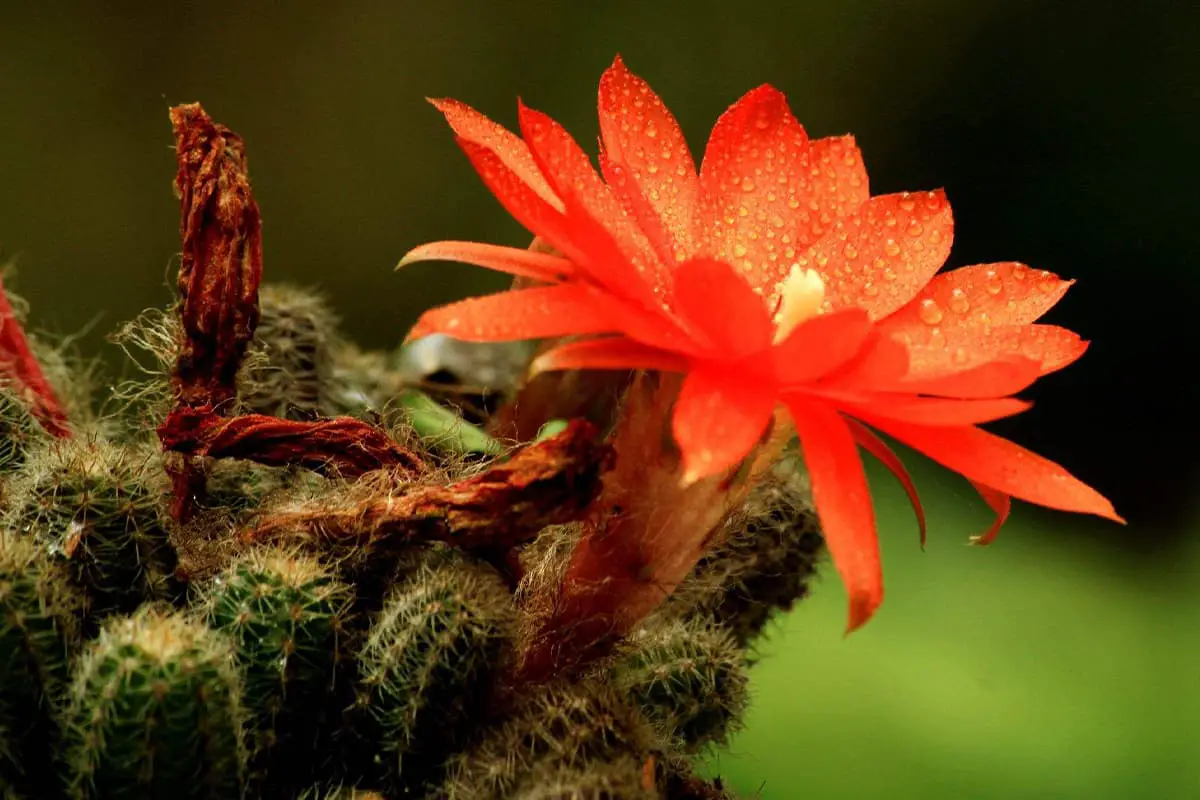
It can tolerate some shade, making it suitable for semi-shaded conditions. It needs protection from direct sunlight in the summer and often enters a dormant state during high temperatures. Propagation is typically done through cuttings or grafting.
The Christmas Cactus has the ability to absorb carbon dioxide and release oxygen, increasing the amount of negative oxygen ions in the environment and improving air freshness. It can also reduce electromagnetic radiation pollution.
With its elegant shape and vibrant flowers that bloom for a long period, the Christmas Cactus is a highly valued ornamental plant. It is often potted for indoor display or hung on eaves or in front of windows.
It is also easy to care for and can be grown indoors with insufficient light, making it a great decorative piece for living rooms, study rooms, etc.
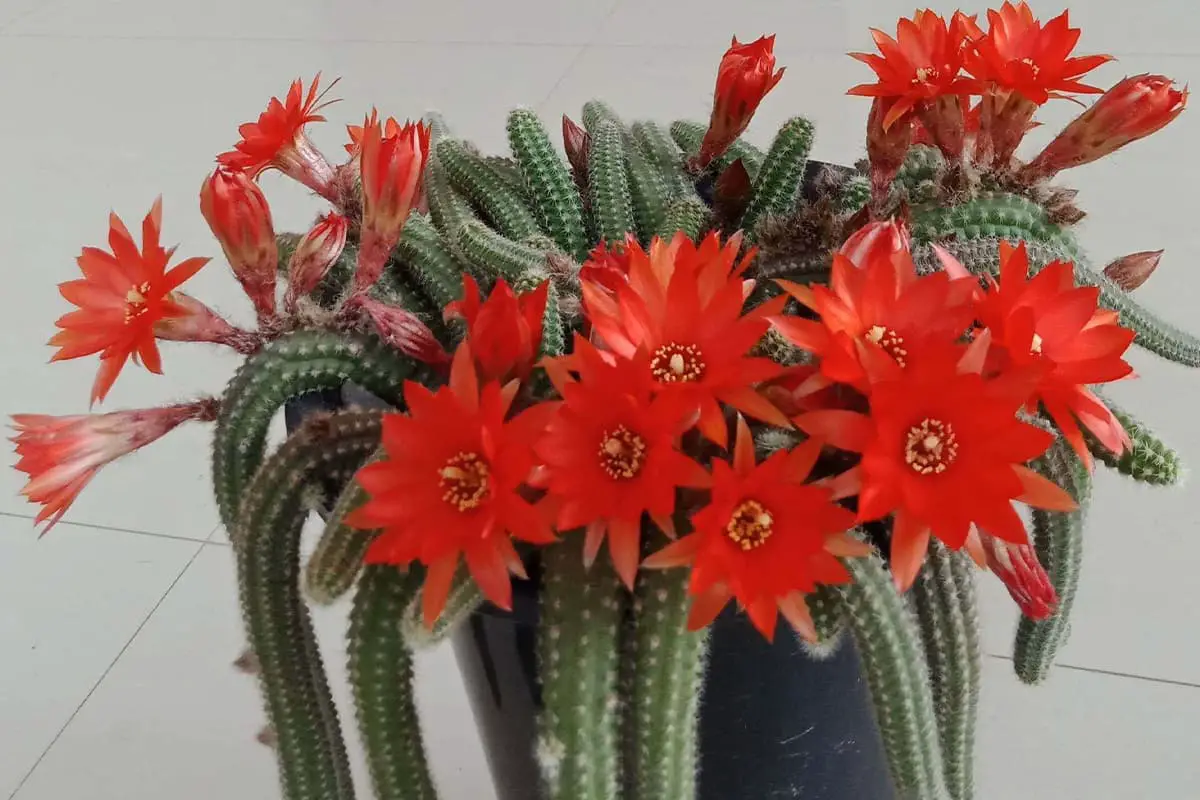
This epiphytic perennial has flat metamorphic stem segments connected into branches. The metamorphic leaflets are 2.5-5 cm long and 1-2.5 cm wide, with a light green color. The edges have 2-3 pairs of wavy blunt teeth.
Each metamorphic stem segment has a semicircular lower part and a flat top, with a small amount of fine velvet in the center. Flower buds grow from the second metamorphic stem segment, hence the name Christmas Cactus due to the fingernail-like shape.
Mature plants flower from the top of the branches in December, with the bloom occurring from January to March of the following year. The flower tube is 3.5-4.5 cm long, with 16-18 petals located on the lower and upper parts of the flower tube.
They first extend straight and then radiate at a 90-degree angle. The flowers come in colors such as purple-red, orange-red, and pink. February is the peak flowering period.

The Christmas Cactus is a short-day plant that prefers a semi-shaded environment to protect it from direct sunlight. It thrives in warm conditions, but is intolerant of high temperatures.
The ideal growth temperature is between 66.2-89.6°F, while the optimal winter temperature is 44.6-55.4°F. This plant enjoys a moist environment. During the growing season, the soil should be kept moist but not waterlogged.
This plant is native to Brazil and Bolivia in South America. It is widely cultivated around the world.
Cutting: The propagation of the Christmas Cactus can be achieved through cutting and grafting. Cutting should take place from early April to June. Cut 3-4 sections of the previous year’s abnormal stems and let the cut dry in the shade.
The following day, insert the cuttings into loose, decomposed pine needle soil, place them in a semi-shade to prevent sunburn, and regularly spray water on the abnormal stems.
The pot soil should be slightly moist but not overly wet. After a month, when the new stem grows, revert to normal management. It should flower in 3-4 years.
Grafting: Choose a large black thorny Christmas cactus as the rootstock. In May, take 3-5 sections of the abnormal stem as the scion. Graft one branch at the top, 47 cm away from the top, and graft one branch on each side of the thorn seat.
After grafting, cover it with a transparent plastic film to maintain the temperature and humidity for survival. If the scion wilts after half a month, it means it has not survived and you can choose another point to graft.
The Christmas Cactus originally grows on large trees. When potted, it prefers loose, fertile, sandy soil. The main soil can be decomposed pine needle soil, mixed with a small amount of vegetable garden topsoil and sand as a culture soil.
When planting, it is advisable to mix a small amount of mature organic fertilizer or nitrogen, phosphorus, and potassium compound fertilizer as a base fertilizer in the soil. The pot should be a breathable terracotta pot, not too large.
If using a purple sand pot, pad the bottom with some broken charcoal or hard foam. Biennially, after flowering, turn the pot and change the soil.
For a Christmas Cactus grafted onto another cactus, after three years, because of the bamboo frame, it grows larger and it is not convenient to turn the pot.
Every year after flowering and before budding, dig out 1/2-2/3 of the pot soil on the opposite sides with a small shovel, fill it with new culture soil mixed with fertilizer, and leave the other two sides untouched.
The following year, use the same method to change the soil on these two sides. In this way, changing the soil every year, the plant grows robustly and produces many flowers.
The cactus experiences two growth periods and a dormancy period annually, with watering and fertilizing schedules adjusted accordingly. From mid-autumn to early spring is its reproductive growth period; during this time, the potting soil should be slightly moist.
Water when the soil appears dry and stop when it’s moist. Water spray should be applied regularly to the plant’s stem before it blooms, making sure the stem is covered with tiny water droplets but not dripping.
Stop spraying after blooming and continue watering. About every 10 days from mid-autumn to pre-bloom, apply a compound fertilizer of nitrogen, phosphorus, and potassium, or spray the stem with a 0.2% solution of monopotassium phosphate.
Stop fertilizing after blooming. Once the flowers fade, the cactus enters a short dormancy period; the soil should be slightly moist, and the plant should be misted about every three days without fertilizing.
From late spring to early summer, the cactus enters its nutritional growth period. Increase watering gradually, keeping the soil slightly moist but not waterlogged, and regularly spray water. Apply light fertilizer about every 10 days to promote stem growth.
During the hot days of late summer to early autumn, the cactus enters a dormancy period. Water sparingly, keeping the soil slightly moist, avoid rain exposure, and do not fertilize.
Cacti prefer an environment with plenty of diffused light, warm yet cool conditions. From mid-autumn to early summer, they can be placed in a spot with either full sunlight or plenty of diffused light.
Avoiding direct sunlight during blooming can prolong the flowering period. During the dormancy period in late summer to early autumn, avoid intense sunlight and place in a semi-shaded area with plenty of diffused light.
When the minimum temperature drops to around 5°C in early winter, move the cactus indoors to protect it from the cold, placing it in a sunny spot behind a window but at least 2 meters away from a TV, air conditioner, or heater.
Move it outside when the spring temperature stabilizes around 10°C. Long-term indoor cultivation can attract pests.
Cacti absorb carbon dioxide and release oxygen, increasing the concentration of negative oxygen ions in the environment, improving air freshness, and reducing electromagnetic radiation pollution.
They have an appealing form and vibrant flower colors, and a long blooming period, making them highly valued ornamental plants. They are often potted for indoor decoration or hung under eaves or in front of windows.
Cacti are also relatively easy to care for. They can thrive in indoor settings with insufficient light, making them excellent decorative pieces for living rooms, studies, and the like.

Peggie was once a high school mathematics teacher, but she set aside her chalkboard and textbooks to follow her lifelong passion for flowers. After years of dedication and learning, she not only established a thriving flower shop but also founded this blog, “Flowers Library”. If you have any questions or wish to learn more about flowers, feel free to contact Peggie.
 English
  العربية
  Bahasa Indonesia
  Deutsch
  Français
  Italiano
  Nederlands
  Português
  Русский
  日本語
日本語