600+ Types of Flowers A To Z (With Names and Pictures)
Types Of Flowers By Names (A-Z) Types Of Flowers By Color Types Of Flowers By Season Types Of Flowers By Blooming Time 600+ Types of Flowers No. Flower Name No.…

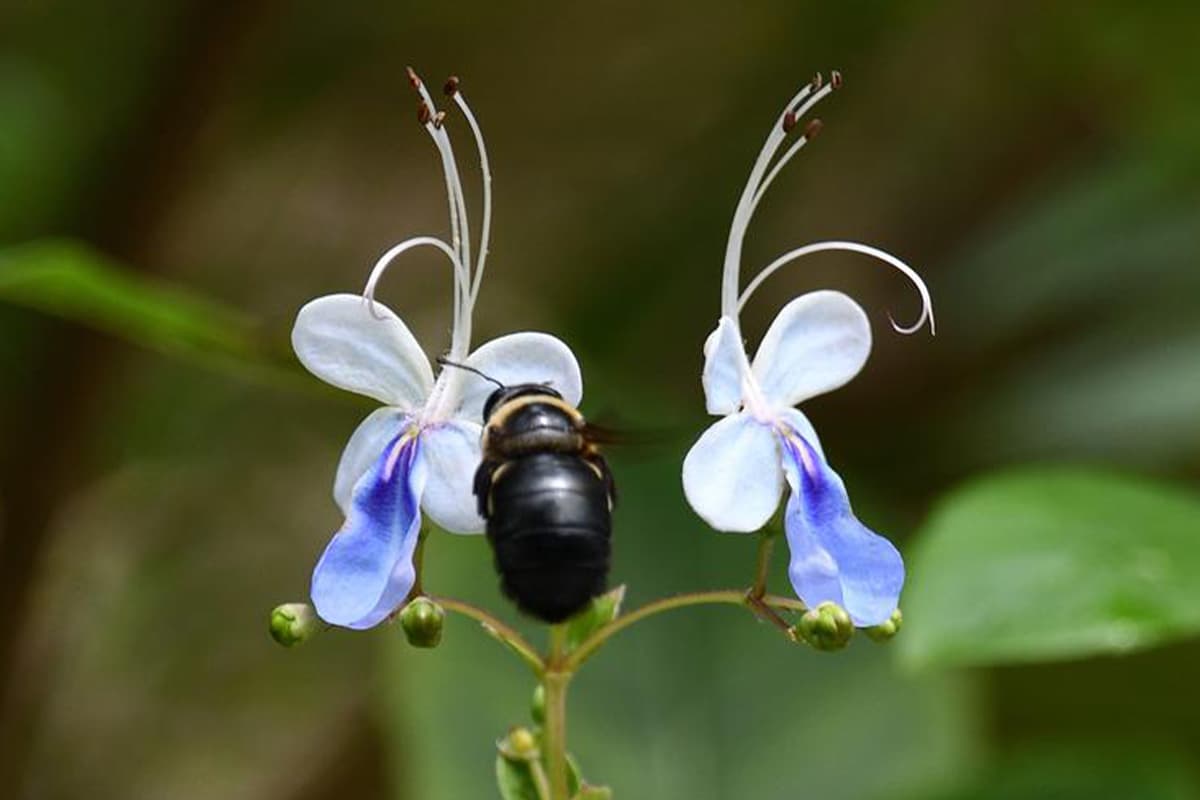
The Blue Butterfly, also known as Rotheca myricoides, is a plant species from the Verbenaceae family and the Rotheca genus. It is widely distributed in Uganda, Africa. The flower, resembling a butterfly, comes in shades of light blue to purple.
The petals symmetrically spread on both sides of the corolla, which is white, while the labellum is purple-blue, and the stamens are slender.
Named the Blue Butterfly for its resemblance to a group of butterflies in full bloom, it appears light and lovely with a refined color, making it an excellent ornamental shrub.
The Blue Butterfly thrives in high temperatures, preferably between 23 and 32 degrees Celsius, and reproduces through cutting propagation, ideally in spring and autumn.
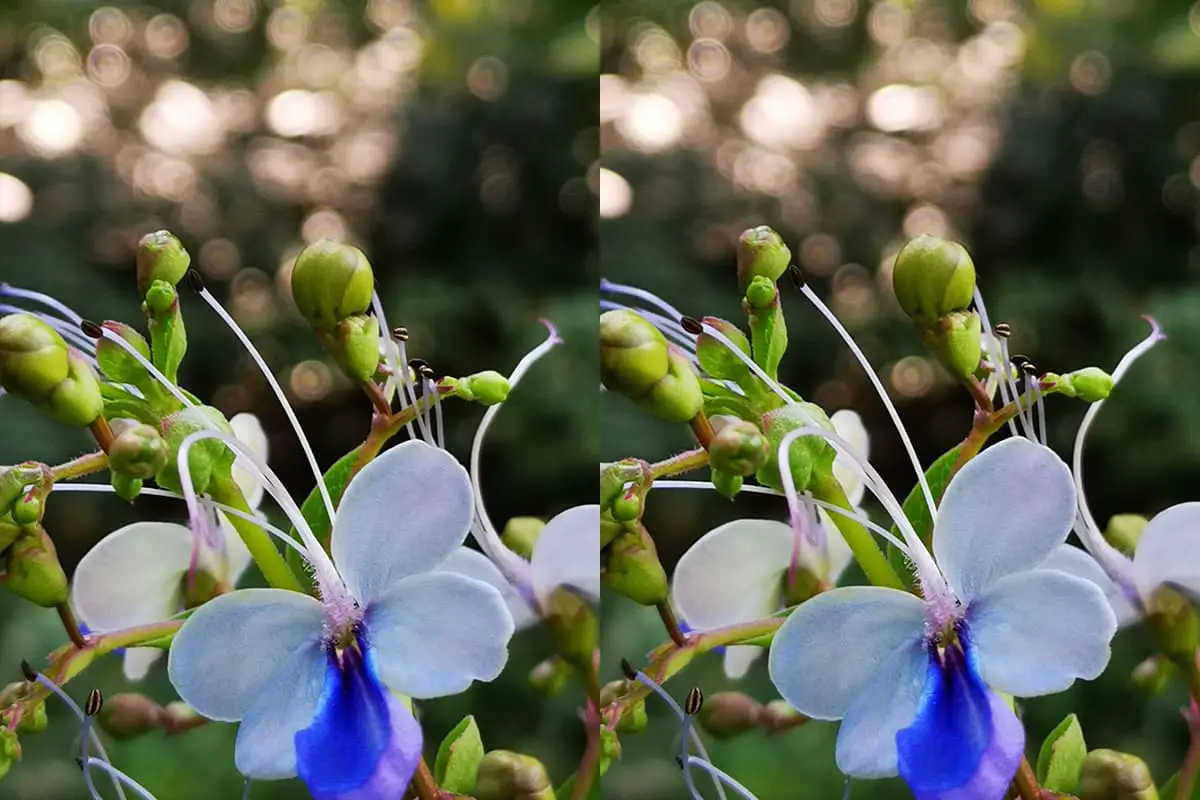
The plant prefers loam or sandy loam soil with good drainage. It thrives in high temperatures, ideally between 23 and 32 degrees Celsius, and is primarily found in Uganda, Africa.
The young branches are square and purple-brown. The height ranges from 60 cm to 1 meter. Leaves are opposite, ovate to lanceolate, with a pointed or blunt tip. The upper half of the leaf margin has shallow serrations, while the lower half is entire.
The flowers, in the shape of butterflies, range from light blue to purple. The corolla is white, and the labellum is purple-blue, with slender stamens. The inflorescence is terminal and conical.
The calyx is cup-shaped with 5 segments, and the segments are round, green with a purple hue. The fruit is elliptical, spherical, and about 0.5 to 0.8 cm in diameter. The surface has a dotted pattern. The evergreen shrub is 60-120 cm tall. The leaves are opposite, ovate to lanceolate.
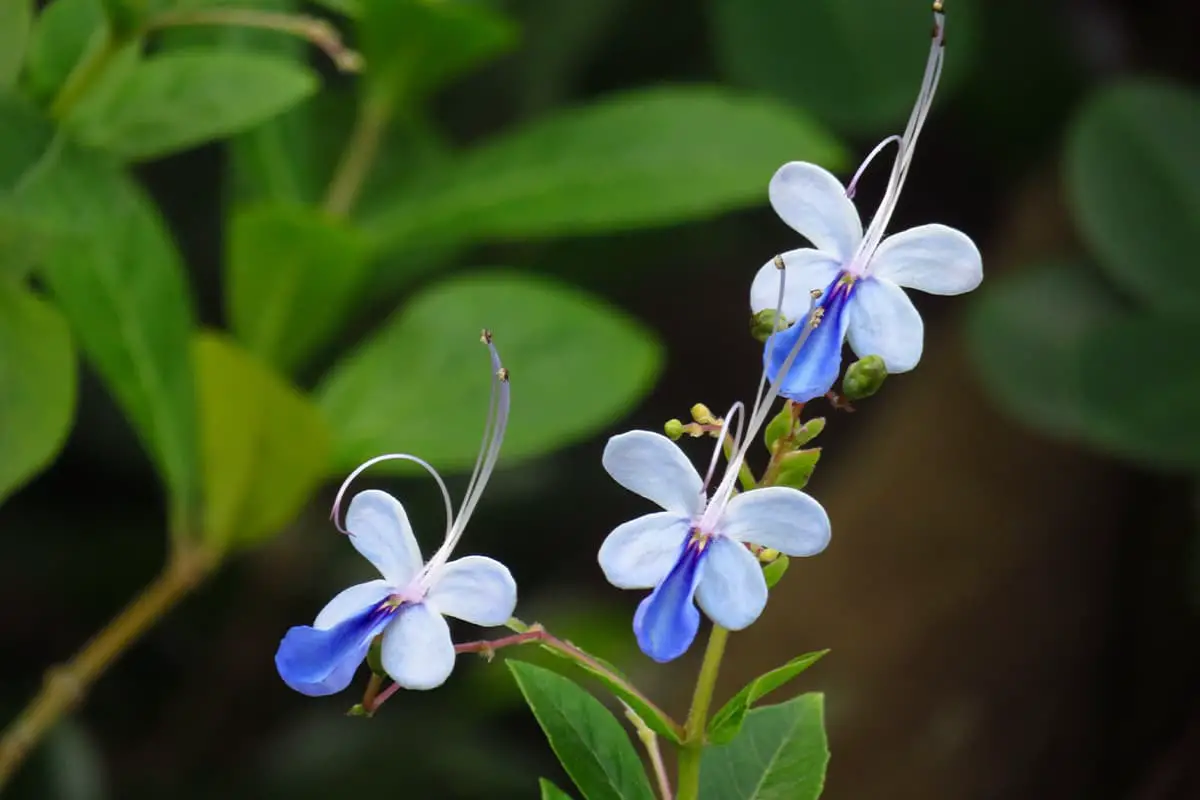
Fertilize 2-3 times during the growing season in spring and summer. Prune branches after flowering or in early spring, apply heavy or strong pruning if the plant is aging.
The plant prefers loam or sandy loam soil with good drainage, and thrives in high temperatures, preferably between 23 and 32 degrees Celsius. It needs to be kept warm and sheltered from wind during winter.
It adapts well to half-day to full-day sunlight. Intense sun may cause the leaves to yellow slightly but does not affect growth and blooming.
In winter, cold weather may cause some leaf fall. It blooms in spring and summer, with a long flowering period as the flowers bloom sequentially from the branch tips. After flowering, the plant can be pruned to prevent it from growing too tall and sparse.
Apply a slow-release fertilizer at the end of winter or the beginning of spring, and supplement once more after flowering.
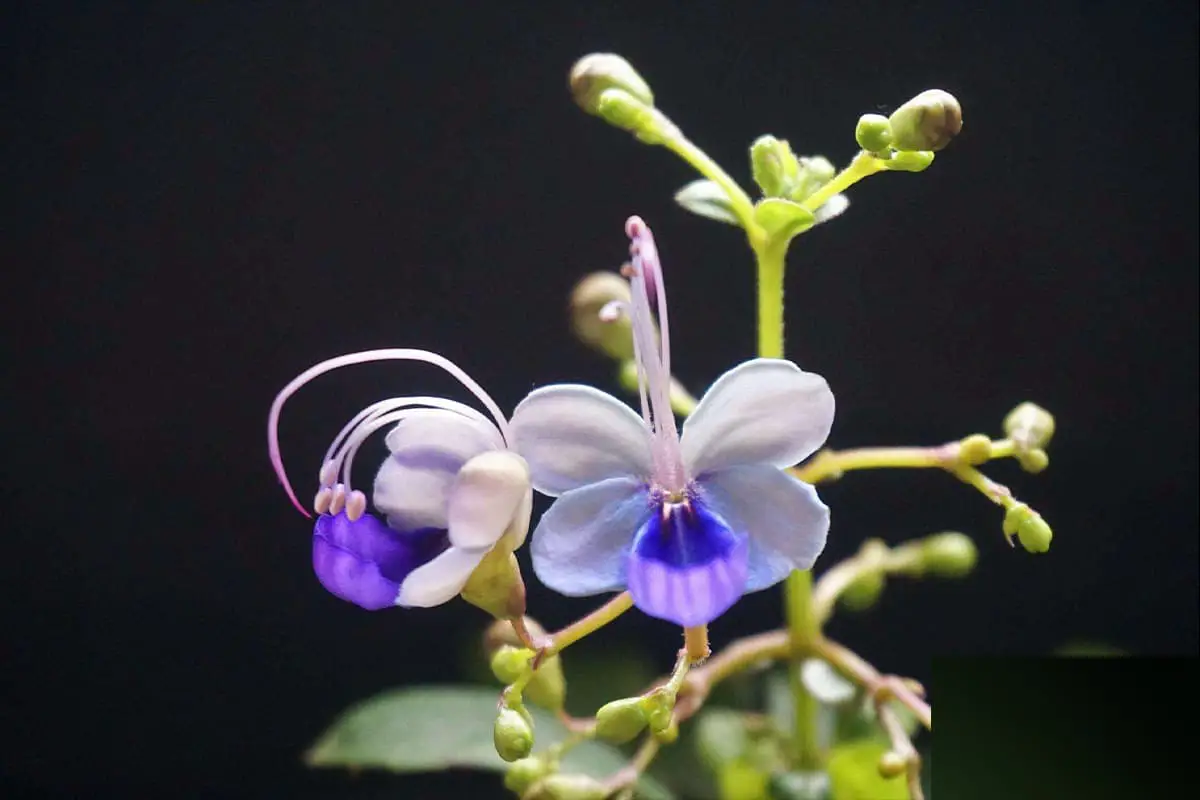
Propagation and cultivation management can be achieved through division, root cuttings, or seed propagation. For division, dig up and separate the sprouts from the ground after the leaves have fallen in autumn and winter, and before new buds appear in spring.
For root cuttings, cut the lateral roots during the rainy season and plant them in sandy soil. Roots will grow in 1-2 weeks. For seed propagation, harvest seeds in September and October, store in sand during winter, and sow in the following spring.
Germination occurs 2-3 weeks after sowing. Control root expansion during the growing season. Keep the soil moist and fertilize once in May or June, while regularly pruning excessive shoots. In winter, remove dried parts above ground to reduce the risk of pests and diseases.
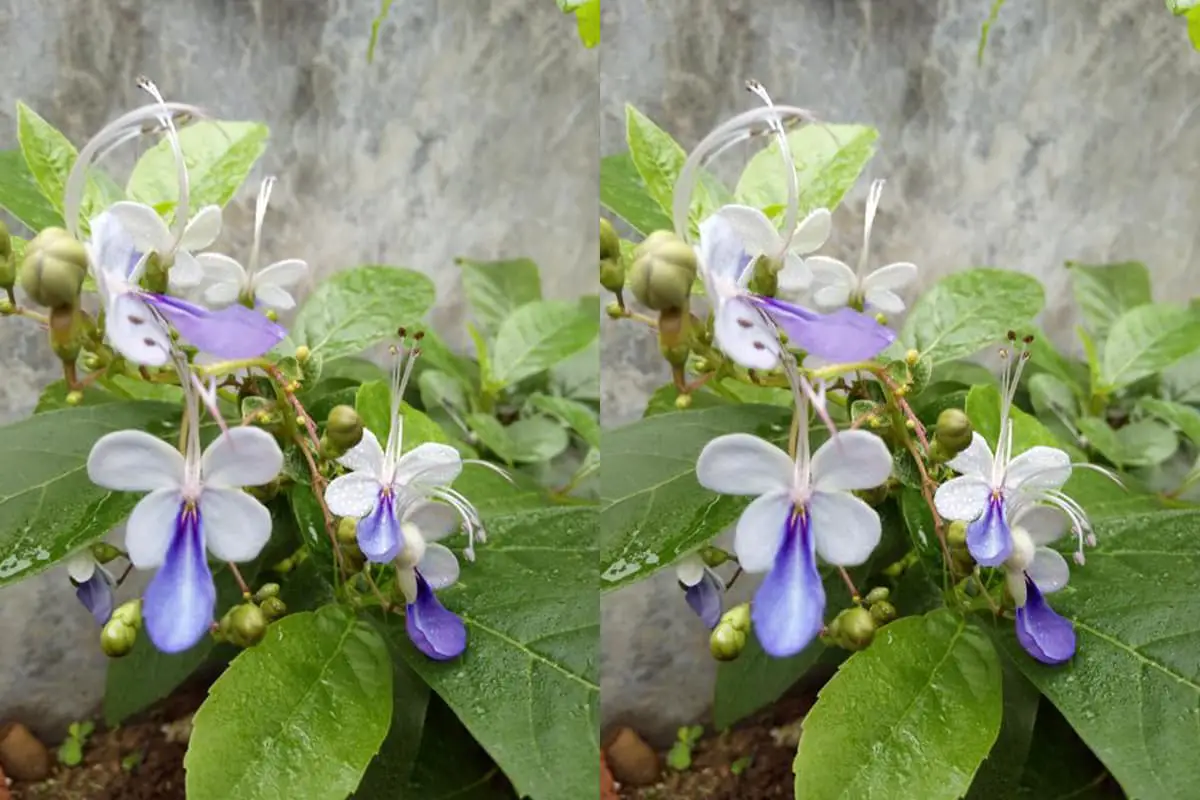
Propagation is done through cuttings, preferably in spring and autumn.
With its refined color, the Blue Butterfly makes an excellent ornamental shrub. It can be used as a decoration on balconies, rooftops, bedrooms, and living rooms, or commonly planted in groups or patches in parks, courtyards, and communities for viewing.

Peggie was once a high school mathematics teacher, but she set aside her chalkboard and textbooks to follow her lifelong passion for flowers. After years of dedication and learning, she not only established a thriving flower shop but also founded this blog, “Flowers Library”. If you have any questions or wish to learn more about flowers, feel free to contact Peggie.
 English
  العربية
  Bahasa Indonesia
  Deutsch
  Français
  Italiano
  Nederlands
  Português
  Русский
  日本語
日本語