The Rosa Chinensis, also known as Green Rose, Green Hydrangea, or Emperor’s Robe, is a variant of the Rose. It has a bushy growth habit, with a height of 60-120 cm and a width of 60-90 cm.
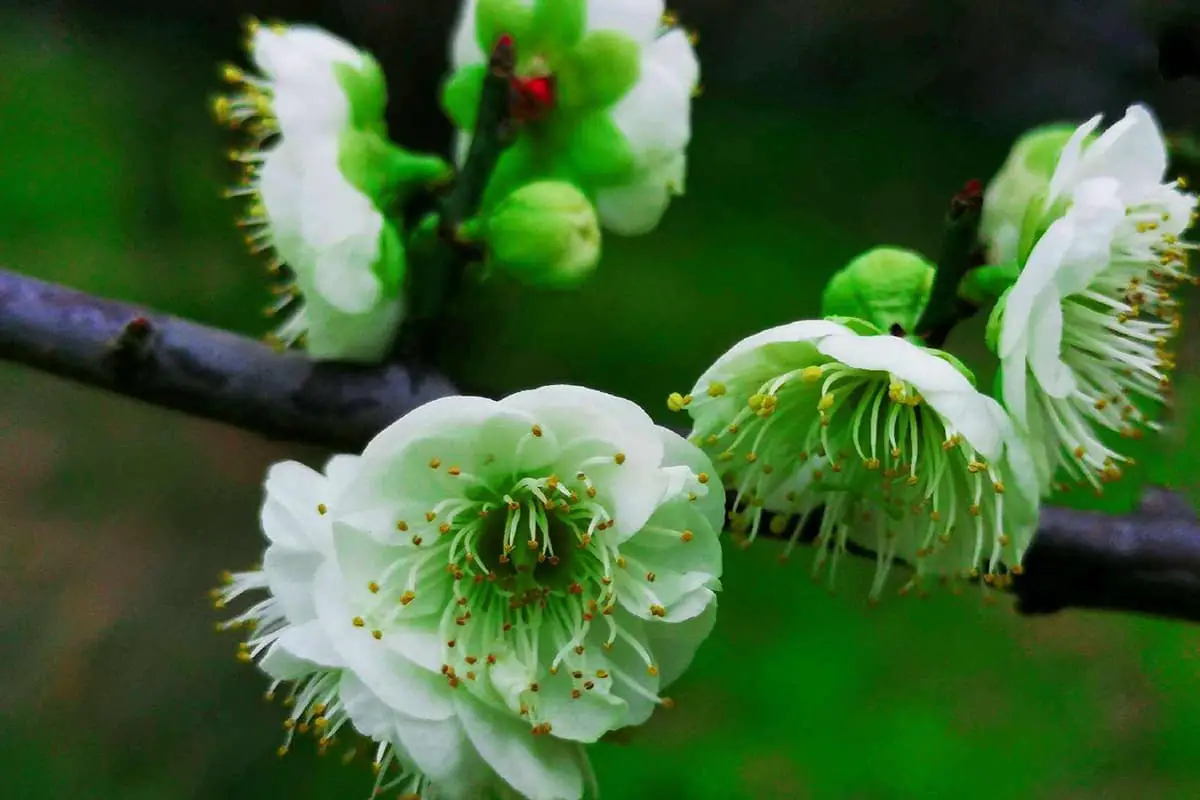
The leaves are ovate, dark green, and slightly bluish. The flowers are small, with green, narrow, and pointed petals, resembling sepals with serrated edges, and have no scent.
The “petals” of the Green Sepal Rosa Chinensis are actually mutated sepals, hence the flowers are pure green like the leaves, making it difficult to distinguish the leaves from the flowers at a distance. The Green Sepal Rosa Chinensis blooms all year round, with a single flower lasting 6-7 weeks.
I. Basic Introduction
Despite the numerous varieties and rich colors of roses, varieties that produce green flowers are rare, especially pure green ones.
In the past, due to its unique flower type and rare color, the Green Sepal Rosa Chinensis was difficult to propagate and cultivate, making it a rare variety among roses.
This variety was introduced to England between 1845 and 1856 and has been protected and actively propagated since then. It is available for sale in the UK, the US, and Japan.
II. Morphology and Characteristics
The Green Sepal Rosa Chinensis is a variant of the Rose, a small shrub of the Rosaceae family. It has a bushy growth habit, with a height of 60-120 cm and a width of 60-90 cm. The leaves are ovate, dark green, and slightly bluish.
The flowers are small, with a diameter of 2.5 to 4 cm, green, narrow, and pointed petals, resembling sepals with serrated edges, and the central petals are slightly yellowish-brown. Both the pistil and stamens are degenerate, and the flower has no scent.
III. Cultivation Methods
The Green Sepal Rosa Chinensis can’t reproduce sexually because its floral heart has degenerated into a bunch of coiled sepals with no reproductive organs. Therefore, it can only be propagated by cutting, layering, or grafting.
Green Sepal Rosa Chinensis has a weak vitality and poor resistance to diseases. It is easily damaged by pests such as aphids. Although sunlight can enhance its resistance to diseases, it is advisable to limit its exposure to the sun to prevent the flowers from turning into a bunch of leaves.
IV. Value and Other Aspects
In horticulture, the Green Sepal Rosa Chinensis is considered a precious variety of roses. Its main characteristic is its narrow, green petals that look like sepals or leaves.
In biology, it has long been considered a classic example of the evolution of floral organs from leaves, a phenomenon generally referred to as “atavism”.
In recent years, some gardening companies have been preparing to use it for cut flower production and make it a unique element in floral arrangements and floral designs.
However, due to the weak growth of the Green Sepal Rosa Chinensis itself, large-scale cultivation still faces many difficulties, making this goal difficult to achieve in the short term.


 English
  العربية
  Bahasa Indonesia
  Deutsch
  Français
  Italiano
  Nederlands
  Português
  Русский
  日本語
日本語