600+ Types of Flowers A To Z (With Names and Pictures)
Types Of Flowers By Names (A-Z) Types Of Flowers By Color Types Of Flowers By Season Types Of Flowers By Blooming Time 600+ Types of Flowers No. Flower Name No.…

The Rhododendron mucronulatum is a deciduous shrub, standing 1-2 meters tall with multiple branches. It is commonly found in mountain shrublands. Its flowering period is from April to June, and its fruiting period is from May to July.
Flowers are born in the axils or pseudo-terminal, containing 1-3 blooms that open before the leaves, and are umbellately arranged. The flower stalk is 5-10 millimeters long, sparsely covered with scales.
The calyx is 0.5-1 millimeter long, 5-lobed, covered with scales, and hairless or sparsely stiff-haired. The corolla is wide funnel-shaped, 2.3-2.8 centimeters long and 3-4 centimeters in diameter, light rosy-purple in color.

The Korean Rhododendron (scientific name: Rhododendron mucronulatum) is a species of the Rhododendron genus. It is a deciduous shrub, standing 1-2 meters tall with multiple branches, and commonly found in mountain shrublands.
The flowering period is from April to June, and the fruiting period is from May to July. It is native to Japan, Korea, and Russia. Due to its beautiful flowers, it has horticultural value and is commonly cultivated.
It is native to Japan, Korea, and Russia.
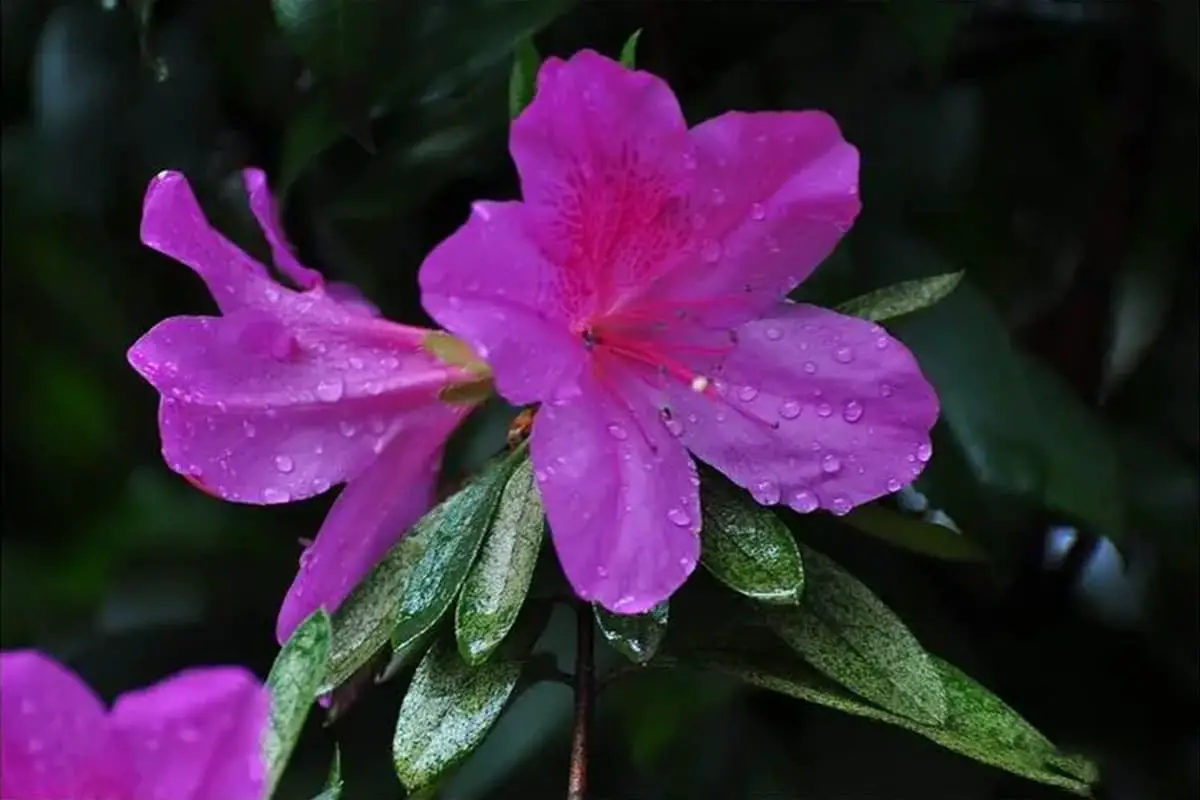
The Korean Rhododendron is a deciduous shrub, standing 1-2 meters tall with multiple branches. The young branches are slender and sparsely covered with scales.
The leaves are thin, oval or ovate-lanceolate, 3-7 centimeters long and 1-3.5 centimeters wide, with a sharp, gradually tapering or blunt tip. The edges are entire or finely rounded toothed, and the base is wedge-shaped or blunt.
The upper surface is sparsely covered with scales, and the lower surface has scales of different sizes, brown in color, spaced 2-4 times their diameter apart; the leaf stalk is 3-5 millimeters long.
The flowers are born in the axils or pseudo-terminal, containing 1-3 blooms that open before the leaves, and are umbellately arranged. The flower buds are covered with persistent scales. The flower stalk is 5-10 millimeters long, sparsely covered with scales.
The calyx is 0.5-1 millimeter long, 5-lobed, covered with scales, and hairless or sparsely stiff-haired.
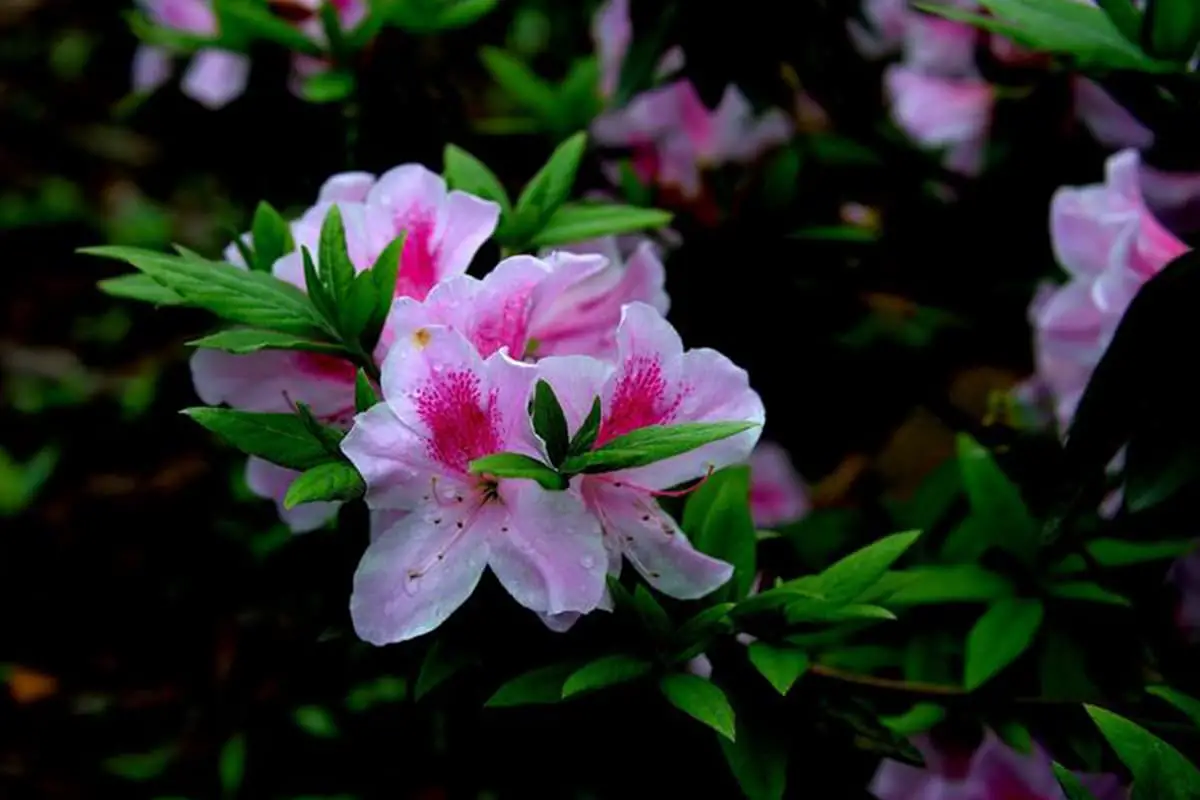
The corolla is wide funnel-shaped, 2.3-2.8 centimeters long and 3-4 centimeters in diameter, light rosy-purple in color, the outside is covered with short soft hair, without scales; there are 10 stamens of unequal length, slightly shorter than the corolla, the filament base is covered with short soft hair; the ovary is 5-chambered, densely covered with scales, the style is smooth, longer than the corolla.
The capsule is oblong, 1-1.5 centimeters long and 4-5 millimeters in diameter, with a 5-lobed opening at the top. The flowering period is from April to June, and the fruiting period is from May to July.
Azaleas thrive in acidic soil with a pH value of 5.5-6.5. As the soil in the north tends to be alkaline, potted soil needs to be mixed with decomposed pine needle soil and other humus soil.
Azaleas have fibrous roots that demand strict fertilizer concentration and water quality, so fertilization should follow the principle of timely and appropriate, thin and frequent application.
Before spring bloom to promote the growth of branches, leaves and buds, phosphorus fertilizer can be applied once a month. After flowering, apply 1-2 times of nitrogen-phosphorus mixed fertilizer.
Apply phosphorus fertilizer 1-2 times during the bud formation period in September and October. During the growing season and flowering period, more fertilizer and water are needed, while in winter dormancy and summer slow growth periods, fertilizer and water should be controlled to prevent root rot.
Azaleas prefer a moist and cool environment. In the dry climate of the north, timely watering and spraying is necessary to maintain high air humidity. The best water for watering is alum fertilizer water and rainwater.
If tap water is used, a small amount of ferrous sulfate and vinegar should be added. Watermelon or tomato cut into small pieces and applied can also improve the soil quality and flower quality.
To accelerate the blooming of the plant, the azalea often promotes new branches by plucking the heart.
For the crowded flowers that affect the shape, thinning can be done early, which not only makes the flowers larger and brighter that year, but also benefits the plant’s growth and flowering in the coming year.
Azaleas have strong budding power. The branches severely affect the growth and development of the plant, reducing its ornamental and commercial value, so pruning is necessary to adjust.
Pruning is generally done after the flowers fade in spring and in autumn, cutting off dead branches, inclined branches, overgrown branches, pest-infested branches and some cross branches to avoid nutrient consumption and make the entire plant bloom fully.
Azaleas differentiate flower buds in autumn. Through refrigeration and heating treatment, the flowering period can be artificially controlled.
To make azaleas bloom early, they can be moved to a greenhouse for cultivation, with the temperature controlled at 20-25°C, and water sprayed frequently on the branches and leaves to maintain a relative humidity of over 80%.
This way, flowers can bloom in about a month and a half. To delay the flowering of azaleas, let the azaleas with formed flower buds remain in a low temperature state, keep the temperature at 2-4℃, water when the pot is dry, move them outdoors in summer and autumn, and they can bloom about 2 weeks later.
Seed propagation, cutting propagation and tender branch propagation.
For seed propagation, harvest the fruits in autumn, air-dry them indoors, wait for the fruits to split, collect the tiny seeds, store them in a dry place indoors, sow the seeds in spring, use high-temperature sterilized humus soil for pot soil, spread a thin layer of chopped moss on top, sow the seeds on the moss, place the pot in a dark and moist place, and the seeds can germinate in about 20-30 days. The seedlings are weak and require careful management to obtain robust seedlings.
Cutting propagation is the most widely used propagation method in azalea cultivation.
Generally, in May and June, cut healthy semi-lignified new branches about 5-8 cm long, cut off the lower leaves, keep the top 2-3 leaves as cuttings, it’s best to dip the base of the cuttings in a solution of indolebutyric acid or ABT rooting powder, then insert them into loose, well-drained, humus-rich acidic soil, keep the temperature at 20-25°C, shade and frequently spray to moisturize and promote the sprouting of new roots.
Tender branch grafting is used for precious varieties that are difficult to survive, such as western azaleas.
First, cut about 3-4 cm of tender branches as scions, shave the base into a wedge shape with a sharp knife, use rhododendrons as rootstocks, use tender branch grafting, then place them under a shade shed, bind them with plastic film, and cover the scions and rootstocks together with a plastic bag to keep them moist.
Azaleas commonly suffer from leaf gall, leaf spot, and brown spot diseases. Here are the prevention methods:
Medicinal value
Source: The leaves are used for medicine. Pick the leaves in autumn and dry them or use them fresh.
Characteristics: Bitter and neutral.
Main function: Relieves exterior symptoms, transforms phlegm, stops coughing, and calms asthma. Used for cold headaches, coughs, asthma, and bronchitis.
Dosage: 1 to 5 qian (3.75 to 18.75 grams).
Ornamental value
Azaleas are lush with branches and leaves, have a strong budding power, are resistant to pruning, and have unique root stumps, making them excellent bonsai materials.
In gardens, it is best to plant them in clusters along the forest edge, by streams, by ponds, or next to rocks. They can also be scattered under sparse forests. They are good materials for flower hedges and can be pruned and cultivated into various shapes.
During the flowering season, they create a lively and bustling feeling. Outside the flowering season, the deep green leaves can be planted in gardens as short walls or barriers.

Peggie was once a high school mathematics teacher, but she set aside her chalkboard and textbooks to follow her lifelong passion for flowers. After years of dedication and learning, she not only established a thriving flower shop but also founded this blog, “Flowers Library”. If you have any questions or wish to learn more about flowers, feel free to contact Peggie.
 English
  العربية
  Bahasa Indonesia
  Deutsch
  Français
  Italiano
  Nederlands
  Português
  Русский
  日本語
日本語