Rehmannia glutinosa, a perennial herbaceous plant in the family Orobanchaceae, is characterized by its fleshy rootstock that is yellow when fresh, and its purple-red stem.
The foliage is ovate to elongate-oval in shape, green on the upper surface and somewhat purple or purple-red on the lower surface, with irregularly rounded or bluntly serrated to toothed edges.
The inflorescence is ascending or curved, forming a loose cluster at the top of the stem or singularly inserted in the leaf axil, blooming from April to July. The fruit is ovate to elongate-oval, maturing from April to July.
Rehmannia glutinosa is one of the “Four Great Huai Medicines”. In Southeast Asian countries, these medicines are considered precious gifts to be exchanged; in Japan and the UK, they are known as “Huai Medicines”.
It grows in sandy loam, on barren slopes, at the foot of mountains, beside walls, and along roadsides, at altitudes of 50-1100 meters.
There are two types of Rehmannia glutinosa: fresh and dried. The fresh plant is superior to the dried in its hemostatic and heat-clearing, salivation-inducing properties.
Fresh Rehmannia glutinosa has the ability to clear heat, promote salivation, cool the blood, and stop bleeding, while dried Rehmannia glutinosa can clear heat, cool the blood, nourish yin, and promote salivation. It can be used in natural floral arrangements.
I. Morphological Features
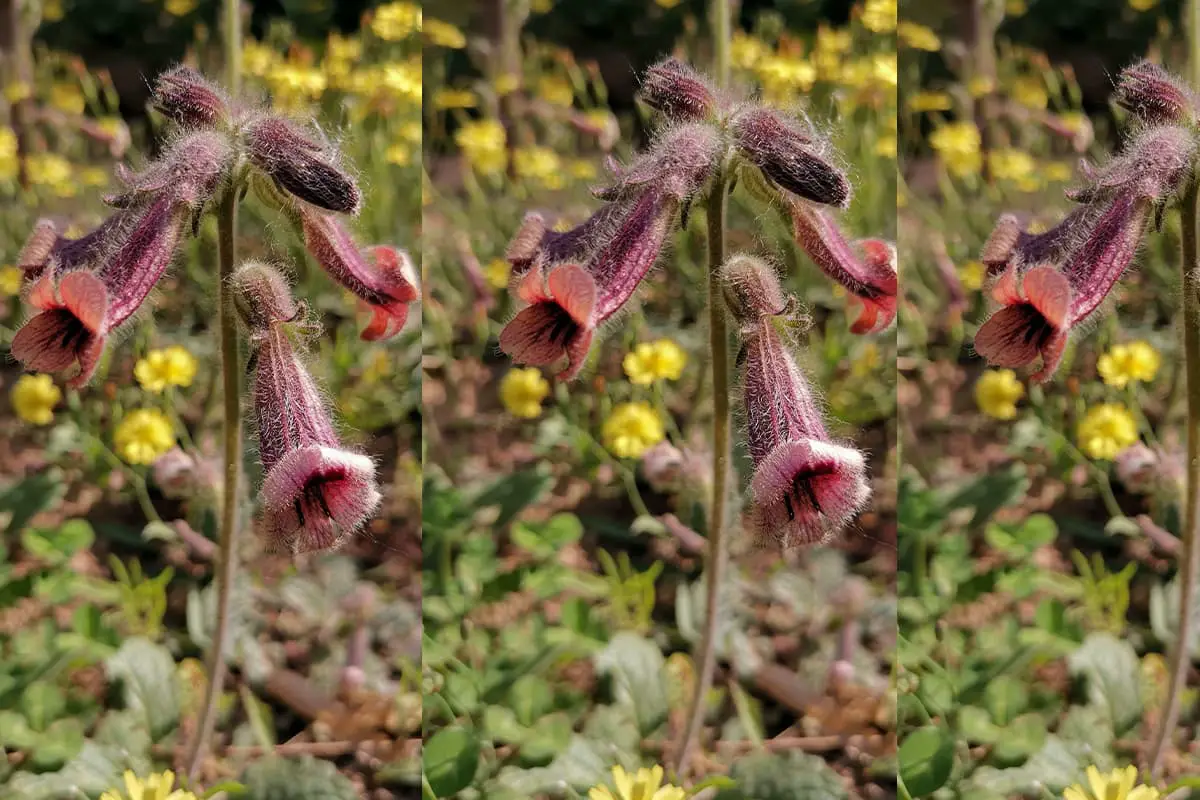
The Rehmannia glutinosa is a perennial herb growing 10-30 centimeters tall, densely covered with grey-white multicellular long soft hairs and glandular hairs.
The rootstock is fleshy and thick, yellow when fresh, and can reach a diameter of 5.5 centimeters under cultivation conditions, with a purple-red stem.
The leaves are usually clustered in a rosette at the base of the stem, strongly reduced to bracts upward or gradually reduced and alternately arranged along the stem.
The leaf blade is ovate to elongate-oval in shape, green on the upper surface, and somewhat purple or purple-red on the lower surface. It measures 2-13 centimeters long and 1-6 centimeters wide, with irregularly rounded or bluntly serrated to toothed edges.
The leaf base narrows into a petiole, and the veins are concave on the upper surface and raised on the lower surface.
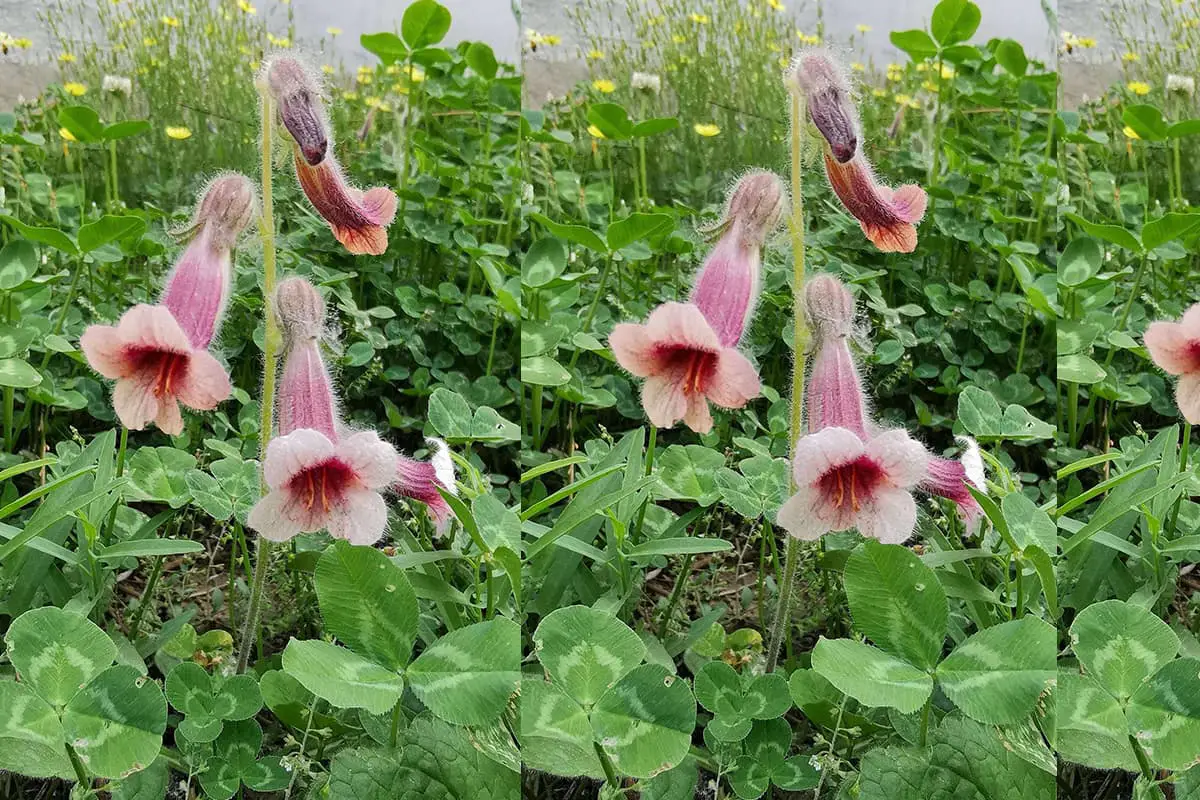
The flowers have a 0.5-3 centimeters long pedicel, slender and curved, then ascending, loosely arranged in a corymb at the top of the stem, or almost all solitary in the leaf axils and dispersed along the stem.
The calyx is 1-1.5 centimeters long, densely covered with multicellular long soft hairs and white long hairs, with 10 protruding veins.
The calyx teeth are 5, rectangular-ovate or ovate-lanceolate or more or less triangular, 0.5-0.6 centimeters long and 0.2-0.3 centimeters wide, rarely the front two are split to give a total of 7 calyx teeth.
The corolla is 3-4.5 centimeters long, somewhat curved, purple-red on the outside, and covered with multicellular long soft hairs. The corolla lobes are 5, blunt or slightly concave at the tip, yellowish-purple on the inside, purple-red on the outside, both surfaces covered with multicellular long soft hairs, 5-7 millimeters long and 4-10 millimeters wide.
There are 4 stamens. The anther is rectangular, 2.5 millimeters long and 1.5 millimeters wide, forked at the base, so that the two anther chambers are often arranged in a straight line.
The ovary is 2-chambered when young, becoming one-chambered when old due to the tearing of the septum, and is glabrous. The style flares into 2 lamellate stigmas at the top.
The capsule is ovate to elongate-oval, 1-1.5 centimeters long. The plant flowers and fruits from April to July.
II. Species Differences
Rehmannia
Branches and Leaves
The rootstock is fleshy, yellow when fresh; the stem is purple-red, the leaves are oval to elongated oval, green on top and slightly purple or purplish-red underneath, with irregular circular or blunt serrations along the edges.
Flowers and Fruits
The inflorescences are ascending or curved, slightly arranged into a raceme at the top of the stem, or all single in the leaf axils.
Rehmannia of Tianmu
Branches and Leaves
The rootstock is fleshy and thick, orange-red. The stem is upright, the plant height is 30-60 cm, and the whole plant is covered with gray-white long soft hairs or glandular hairs.
The basal leaves are lotus-shaped, the leaves are elliptical, and the base narrows into a long stalk; the stem leaves gradually get smaller upwards, green on the top, wrinkled; the bottom is purplish-red; the leaf edges are serrated.
Flowers and Fruits
The racemes are terminal or single in the leaf axils; the flowers are large, the corolla tube is slightly bent, the outside is purplish-red, and the inside is yellow with purple spots.
III. Growth Environment
It often grows at altitudes of 50-1100 meters on barren hillsides, at the foot of mountains, by walls, roadside, etc.
IV. Cultivation Techniques
Rehmannia likes loose, fertile sandy loam soil, and it is not suitable to plant in red soil, yellow soil, or paddy soil with high viscosity.
Rehmannia is a light-loving plant, and the planting site should not be near the edge of the forest or intercropped with tall stalk crops.
When the soil temperature is at 11-13℃, it takes 30-45 days for seedlings to emerge, 25-28℃ is most suitable for germination, and if the soil moisture is suitable within this temperature range, germination will occur one week after planting, and it will emerge from the soil in 15-20 days; rootstocks cannot sprout below 8℃. It takes 150-160 days from planting to harvest.
Rhizome Propagation
Rhizome propagation is the main method. Seed propagation is mostly used when breeding new varieties.
Seeds used for rhizome propagation come from the inverted planting method, cellar storage, and overwintering of Rehmannia in the spring, but the yield and quality of Rehmannia produced by the inverted planting method are higher.
The specific method is: In July and August, in the good variety of Rehmannia planted in the spring of the same year, select robust and pest-free rootstocks, dig them up, break them into 4-5cm short sections, slightly dry them after the wind, and then re-plant them at a row distance of 10-30cm and a plant distance of 5-10cm into a plot of land where sufficient base fertilizer has been applied.
Weed appropriately, top-dress, pay attention to drainage after rain, and plant as you dig in the spring of the second year. The best time to plant Rehmannia is when the average daily temperature is 18-21℃.
For example, in Beijing, it is in early to mid-April, in Chongqing, it is from late February to late March, and in Henan, early spring Rehmannia is in early to mid-April; late Rehmannia (or wheat stubble Rehmannia) is from early May to early June.
When planting, open ditches on ridges or beds, with a ditch distance of 33cm, every 15-20cm, plant a section, cover the soil 3-4cm, water after compacting the surface soil. Plant 2 rows per ridge and 3-4 rows per bed.
After the seedlings are even, choose a cloudy day to transplant, and about 1 month after planting, thin the seedlings, leaving 1 healthy seedling per hole. Before sealing the row, lightly hoe 2-3 times, and shovel up the excess seedlings that grow continuously.
Field Management
Every time after intertillage, top-dress once, apply human and animal manure or cake fertilizer, in the rainy season, pay attention to drainage to prevent waterlogging, so that there is no standing water in the field, when buds appear, remove them at any time.
When cultivating Rehmannia, it is not suitable to choose land that has been planted with cotton, sesame, beans, melons, etc., otherwise the disease will be severe.
If you want to intercrop, you should choose Gramineae crops; Rehmannia has “three fears”, that is, fear of drought, fear of waterlogging and fear of pests and diseases.
Because its root system is small and its water absorption capacity is poor, it will wilt slightly in drought; if the soil moisture is too much, the fleshy rootstock is prone to rot. So appropriate irrigation is needed.
V. Pest Control
Spot blight can be selected for disease-resistant varieties, clean gardens, and Bordeaux mixture spray at the onset of the disease. There are also Rehmannia wilt, soybean cyst nematode, ring spot disease and other hazards.
Insect pests include cotton red spiders, which can be controlled with a 1500-fold solution of 40% water amine phosphorus during their occurrence. Butterflies, in their larvae stage, use pesticides such as Dichlorvos for control.
VI. Main Value
Medicinal Use
It originates from the fresh or dried tuberous roots of Rehmannia, a plant from the Orobanchaceae family. Harvested in autumn, the rhizomes and fibrous roots are removed along with any soil or sand.
It can be used fresh, or it can be slowly roasted until it is nearly dry. The former is commonly known as Fresh Rehmannia, while the latter is called Raw Rehmannia.
Preparation: (Cooked Rehmannia)
- Clean the Raw Rehmannia, stew it in wine until the wine is absorbed, remove and air-dry until the outer skin is slightly dry, cut into thick slices or chunks, and dry. For every 100 kg of Raw Rehmannia, use 30-50 kg of rice wine.
- Clean the Raw Rehmannia, steam it until it becomes dark and moist, remove and dry until it is nearly dry, cut into thick slices or chunks, and dry.
Properties: Fresh Rehmannia: sweet, bitter, and cold. Raw Rehmannia: sweet and cold. Cooked Rehmannia: sweet and slightly warm.
Meridian entry: Heart, Liver, and Kidney meridians.
Primary Functions: Rehmannia is cool in nature, sweet and bitter, with benefits of nourishing the yin and kidneys, enriching the blood, and cooling the blood.
It is particularly beneficial for those with yin, blood, and kidney deficiencies. Moreover, Rehmannia has effects of strengthening the heart, promoting urination, reducing fever and inflammation, promoting blood coagulation, and lowering blood sugar.
Fresh Rehmannia: Clears heat and generates body fluid, cools blood, stops bleeding. Used for heat diseases that harm yin, red tongue, restlessness, spots and rashes, hematemesis, epistaxis, swollen sore throat.
Raw Rehmannia: Clears heat, cools blood, nourishes yin and generates body fluid. Used for heat diseases with red tongue, yin deficiency with internal heat, bone steaming and fever, internal heat with thirst, hematemesis, epistaxis, spots and rashes.
Cooked Rehmannia: Nourishes yin and enriches blood, benefits essence and fills the marrow. Used for liver and kidney yin deficiency, weak waist and knees, bone steaming and hot flashes, night sweats, seminal emission, internal heat with thirst, blood deficiency with sallow complexion, palpitations, irregular menstruation, metrorrhagia, dizziness, tinnitus, premature graying of hair.
Dosage: Fresh Rehmannia: 12-30g. Raw Rehmannia, Cooked Rehmannia: 9-15g.
Storage: Fresh Rehmannia should be buried in sand to prevent frost; Raw Rehmannia should be stored in a dry and ventilated place to prevent mold and pests.
Edible Use
Rehmannia is used as a food; it can be julienned and served in cold dishes, or cooked in porridge.
Suitable and Unsuitable Groups
Appropriate Consumers: Suitable for those with yin deficiency, fever, dry mouth and thirst, yin damage constipation, insufficient kidney yin, dry and painful throat caused by excessive internal heat, eczema, neurodermatitis, and women with irregular menstruation, excessive uterine bleeding, and restless fetus syndrome.
Inappropriate Consumers: Not suitable for those with spleen deficiency and diarrhea, and those with stomach deficiency and poor appetite. Also, Rehmannia should not be consumed with Chinese leeks, radish, or white onion, and should not be cooked in copper or iron pots.
Ornamental Use
Rehmannia is suitable for pot cultivation; if grown in a greenhouse, it can bloom in early spring. Because of its height, beautiful flower clusters, and shape, it can be used in flower beds, rock gardens, and natural flower arrangements.


 English
  العربية
  Bahasa Indonesia
  Deutsch
  Français
  Italiano
  Nederlands
  Português
  Русский
  日本語
日本語