600+ Types of Flowers A To Z (With Names and Pictures)
Types Of Flowers By Names (A-Z) Types Of Flowers By Color Types Of Flowers By Season Types Of Flowers By Blooming Time 600+ Types of Flowers No. Flower Name No.…

Qiju Chrysanthemum is a specialty product from Anguo City, Baoding City, Hebei Province, China. The fresh Qiju Chrysanthemum has an inverted conical head inflorescence, sometimes slightly flattened into a fan shape.
It is light and soft, crisp when dry, with a clear fragrance and a sweet, slightly bitter taste. According to the “Chinese Herbal Medicine Record,” chrysanthemums from Anguo, Hebei are referred to as “Qiju Chrysanthemum,” and Shennong’s Herbal Classic classifies it as a top-grade herb.
Anguo City in Hebei Province, formerly known as Qizhou, has a long history of producing medicinal herbs. Therefore, the herbs produced here are often distinguished by the prefix “Qi,” hence the name “Qiju Chrysanthemum” for the chrysanthemums grown in Hebei Anguo.
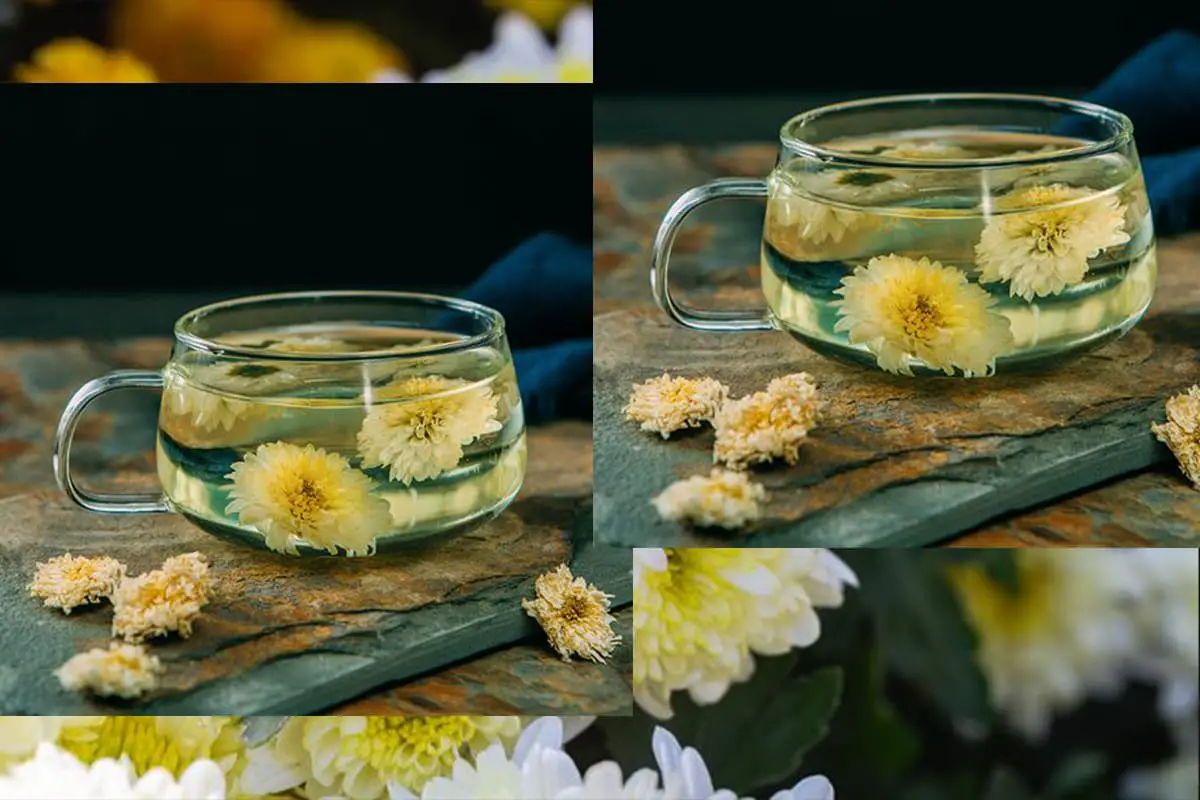
The “Chinese Herbal Medicine Record” states that chrysanthemums from Anguo, Hebei are called “Qiju Chrysanthemum.” Shennong’s Herbal Classic lists it as a top-grade herb. Anguo City in Hebei Province, formerly known as Qizhou, has a long history of producing medicinal herbs.
Therefore, herbs from this region are often distinguished by the prefix “Qi” from those of other regions, hence the chrysanthemums produced in Hebei Anguo are called Qiju Chrysanthemum.
Qiju Chrysanthemum (CHRYSANTHEMI FLOS) is cultivated in eleven towns of Anguo City, including Wurenqiao, Zhengzhang, Dawunv, Xicheng, Mingguandian, Beiduan, Yaodu Street Office, Nanloudi, Qizhou Road Street Office, Shifo, and Xifualuo. It covers 198 natural administrative villages.
The geographical location is 115°12’45” to 115°29’5″ east longitude and 38°14’20” to 38°33’5″ north latitude.
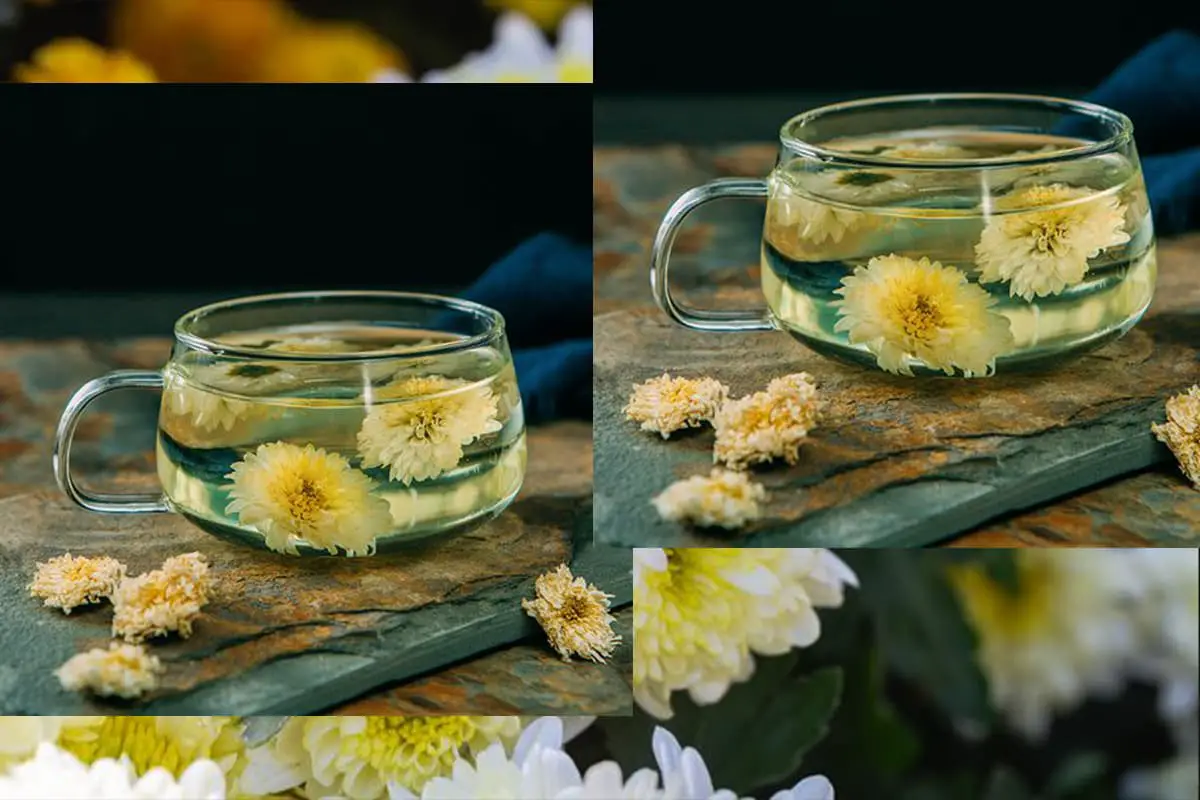
External sensory features: Qiju Chrysanthemum has an inverted conical head inflorescence, sometimes slightly flattened into a fan shape, with a diameter of 2.5 to 3.5 cm. The involucre is disc-shaped, with 3 to 4 layers of ovate or elliptical involucral bracts.
The female tongue flowers are in several layers, located on the periphery, almost white, straight, and upward, longitudinally folded, and scattered with golden yellow gland dots.
The bisexual tubular flowers are numerous, located in the center. The plant is light, soft, crisp when dry, with a clear fragrance, sweet, slightly bitter taste.
Internal quality: The moisture content is ≤15.0%, the content of chlorogenic acid is ≥0.20%, the content of luteolin is ≥0.080%, and the content of 3,5-O- dicaffeoylquinic acid is ≥0.70%. The quality safety regulations comply with the requirements of pollution-free agricultural products.
The authentic medicinal Qiju Chrysanthemum variety is used.
The region has a continental semi-arid monsoon climate, with distinct four seasons and simultaneous rain and heat. The spring is dry and windy, and the temperature rises quickly.
The summer is hot and rainy. The autumn is warm during the day and cool at night, with a large temperature difference. The winter is cold with little rain and snow.
The average annual temperature is 12.6℃, with an annual sunshine duration of 2323.3 hours, an average annual precipitation of 512.9mm, an average frost-free period of 187 days, and an effective accumulated temperature of 4301℃.
The soil is brown and loamy, with alluvial impact parent material and alluvial silt parent material. The texture is mainly sandy loam and light loam, with good soil texture, high fertility, and good fertility and water retention properties.
All watering is done with underground water, which is of good quality, with a pH value of 7.8 to 8.2, which meets the national standards for farmland irrigation and is suitable for the growth of Qiju Chrysanthemum.
Applying fertilizer to the ground. Each acre receives 300 kg of organic fertilizer and about 50 kg of NPK compound fertilizer as base fertilizer, and the soil is plowed 25 cm deep, raked flat, and made into flat ridges.
Dividing and transplanting. In mid-April to early May, when the overwintering plants are 15 to 25 cm tall, they are divided and transplanted. When dividing, the whole plant is generally dug out on a cloudy day, then divided, each seedling should have white roots, the roots are kept 6 to 7 cm long, and the above-ground part is kept 15 cm.
Holes are dug at a row spacing of 40 cm and a plant spacing of 35 cm, the holes are 6 to 10 cm deep, and one plant is planted in each hole. After planting, the soil is covered and compacted, and water is applied in time.
Inter-row cultivation and weeding. Weeding is done 7 to 10 days after transplanting, and inter-row cultivation is generally done 2 to 3 times.
Reasonable topdressing. Qiju Chrysanthemum has a developed root system and requires a large amount of fertilizer, which should be concentrated during the bud formation period. About 25 kg of NPK compound fertilizer per acre is applied to promote root development and increase the number of flower branches.
Pest and disease control. The plant protection policy of “prevention first, integrated control” is implemented.
Through the selection of resistant varieties, the cultivation of strong seedlings, the strengthening of cultivation management, and scientific fertilization, agricultural control, physical control, and biological control are comprehensively used, together with the scientific and reasonable use of chemical control, to control the damage of harmful organisms within the allowable range.
The main pests and diseases are black spot disease, wilt disease, yellow wilt disease, and Qiju gall midge. Chemical control should use low-toxicity, high-efficiency, and residue-free qualified pesticide varieties.
Harvesting and processing. According to the weather conditions, the harvest is generally completed from the end of October to early November before frost.
The harvest standard is that the flowers are in full bloom, 80% of the flower hearts are open, and the flower color is pure white.
The Qiju Chrysanthemum is harvested fresh, the flowers are picked, steamed with steam, or dried in a drying room, and if conditions permit, dried with microwave vacuum drying equipment.
Packaging: Before packaging, the Qiju Chrysanthemum should be checked again to ensure it is fully dry and to remove inferior products and foreign objects.
Corrugated cardboard boxes are used for packaging, clearly marked with the product name, specifications, grade, origin, batch number, weight, date, etc.
Storage: After packaging, it is stored in a dry indoor place to prevent mouse damage. To maintain the color, it can also be stored in a sealed polyethylene plastic bag, with a suitable storage temperature of 4 to 10℃.
Transportation: The transportation vehicle or container should have good ventilation and moisture-proof measures, and should not be mixed with other toxic, harmful, and easily odorous substances.
The main protected area is 200,000 acres, the annual planting area is 15,000 acres, and the annual output is 2,500 tons.

Peggie was once a high school mathematics teacher, but she set aside her chalkboard and textbooks to follow her lifelong passion for flowers. After years of dedication and learning, she not only established a thriving flower shop but also founded this blog, “Flowers Library”. If you have any questions or wish to learn more about flowers, feel free to contact Peggie.
 English
  العربية
  Bahasa Indonesia
  Deutsch
  Français
  Italiano
  Nederlands
  Português
  Русский
  日本語
日本語