The Prunus mume albo-plena, a member of the rose family and apricot genus, is a perennial shrub cultivated throughout China, with the most significant presence in the provinces south of the Yangtze River.
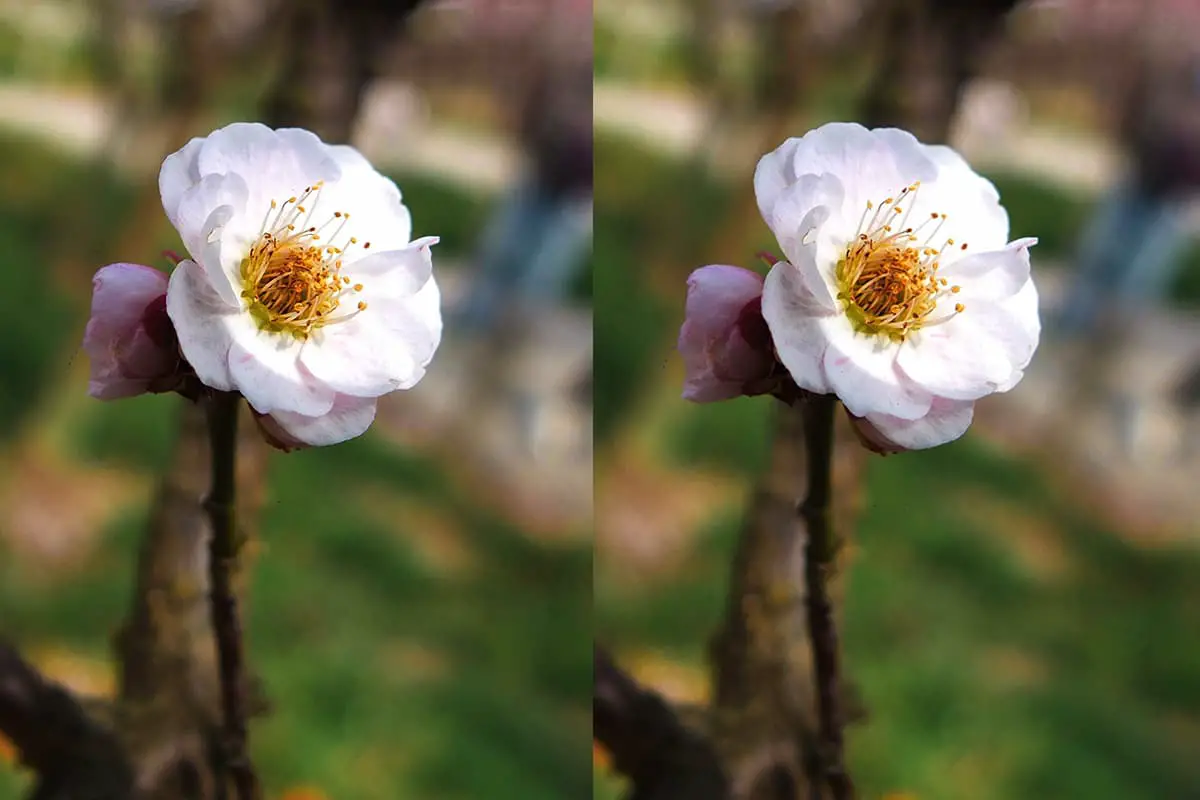
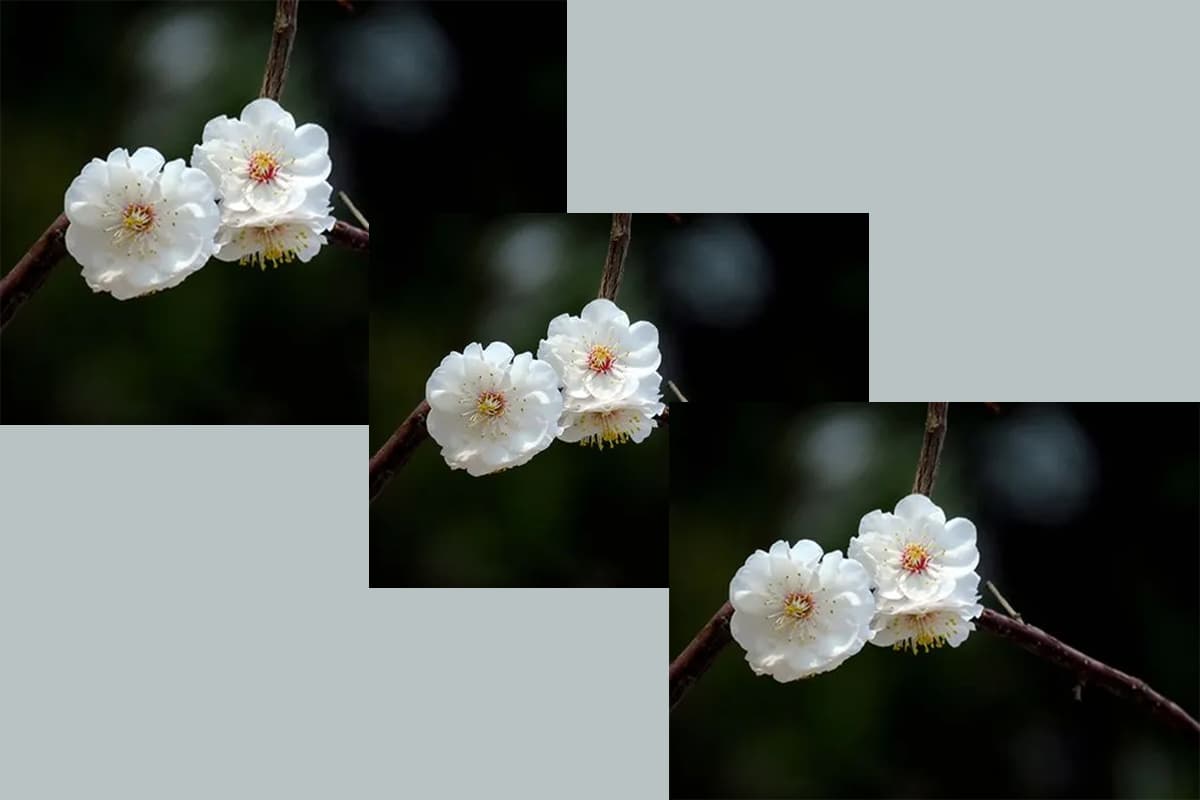
Characterized by its disc-shaped, double-petaled blooms, the Yudie Mei presents flowers of a pristine, jade-like white, with pale green calyces sprinkled with a hint of crimson purple.
When in bloom, it resembles a tree laden with flying snow, exuding a serene and everlasting beauty. The Yudie Mei generally blossoms later than other species, with its peak blooming period typically ranging from mid-February to early March.
There are currently about 30 varieties, with the most famous being the Subai Taige, which was first planted around 1930. Its blossoming period usually falls between late February and early March.
I. Common Varieties
The species of flowering plum have varied greatly due to long-term cultivation, with a wide range of varieties. According to the research of Professor Chen Junyu, they can be divided into the following four categories.
Upright Plum Class (var. mume) The branches are upright or oblique, divided into the following seven types based on flower shape and color.
Upright Plum Class (var. mume)
Name
Latin Scientific Name
Characteristics
River Plum Type
f. simpliciflora T. Y. Chen
Flower disc shape, single petal, pure white, water red, flesh-colored, or peach red.
Palace Pink Type
f. alphandii (Carr.) Rehd.
Flower disc shape, semi-double to double petals, pink.
Big Red Type
f. rubriflora T. Y. Chen
Similar to Palace Pink Type but with big red flowers, blooms abundantly, with a sweet and strong fragrance.
Cinnabar Type
f. purpurea (Makino) T. Y. Chen
Flower disc shape, single, semi-double, or double petals, purple-red.
Jade Disc Type
f. albo-plena (Bailey) Rehd.
Flower disc shape, double petals, white; calyx is crimson-purple.
Green Calyx Type
f. viridicalyx (Makino) T. Y. Chen
Flower disc shape, single to semi-double petals, white; calyx is green.
Sprinkled Gold Type
f. versicolor T. Y. Chen et H. H. Lu
Flower disc shape, single to double petals, a tree blooms with nearly white, pink, red stripes on white, or red dots on white flowers, quite unique.
Hanging Water Plum Class (var. pendula Sieb.) The branches droop, forming a unique umbrella-shaped tree form, which can be divided into the following six types.
Hanging Water Plum Class (var. pendula Sieb.)
Name
Characteristics
Single Pink Hanging Water Type (f. simplex T. Y. Chen)
Flower disc shape, single petal, pink or white. There are 3 known varieties, such as Single Pink Hanging Water, Single Petal Hanging Water, etc.
Double Pink Hanging Water Type (f. modesta T. Y. Chen)
Flower disc shape, semi-double or double petals, pink. There are 2 varieties, namely Ling Eye and Oriental Red Hanging Water.
Bone Red Hanging Water Type (f. atropurpurea T. Y. Chen)
Flower disc shape, single petal, deep purple-red, like Bone Red Hanging Water.
Remnant Snow Hanging Water Type (f. albiflora T. Y. Chen)
Flower disc shape, semi-double petals, white, like Remnant Snow Hanging Water.
White Jade Hanging Water Type (f. viridiflora T. Y. Chen)
Flower disc shape, single or semi-double petals, white; calyx is green, like Double Jade Hanging Water, Single Jade Hanging Water.
Five Treasures Hanging Water Type (f. marmorata T. Y. Chen)
A tree blooms with nearly white, pink, red stripes on white, or red dots on white flowers, like Five Treasures Hanging Water.
Dragon Wandering Plum Class (var. tortuosa T. Y. Chen et H. H. Lu) The branches naturally twist like a wandering dragon; flower disc shape, semi-double petals, white, like Dragon Wandering Plum.
Apricot Plum Class (var. bungo Makino) Branches and leaves resemble mountain apricot; semi-double petals, pink, like Apricot Plum, Western Plum, Spring Delivery, and other varieties. Blooms later, has stronger cold resistance, might be a natural hybrid of apricot and plum.
II. Growth and Distribution
This plant is cultivated throughout China, particularly in the provinces south of the Yangtze River Basin. A few varieties are also found in the northern part of Jiangsu and the southern part of Henan, with some successfully introduced in North China. It can also be found in Japan and Korea.
III. Morphology and Characteristics
Plum (Original Variant)
A small deciduous tree, or sometimes a shrub, it stands 4-10 meters tall. Its bark is light gray or greenish, smooth, with green, hairless branches. The leaves are ovate or elliptical, measuring 4-8 cm long and 2.5-5 cm wide.
They have a pointed tip and a broad wedge-shaped to round base, with small sharp serrations on the margins. The leaf is grayish-green, with short soft hairs on both sides when young, gradually shed as they mature, or only with short soft hairs in the vein axils on the underside.
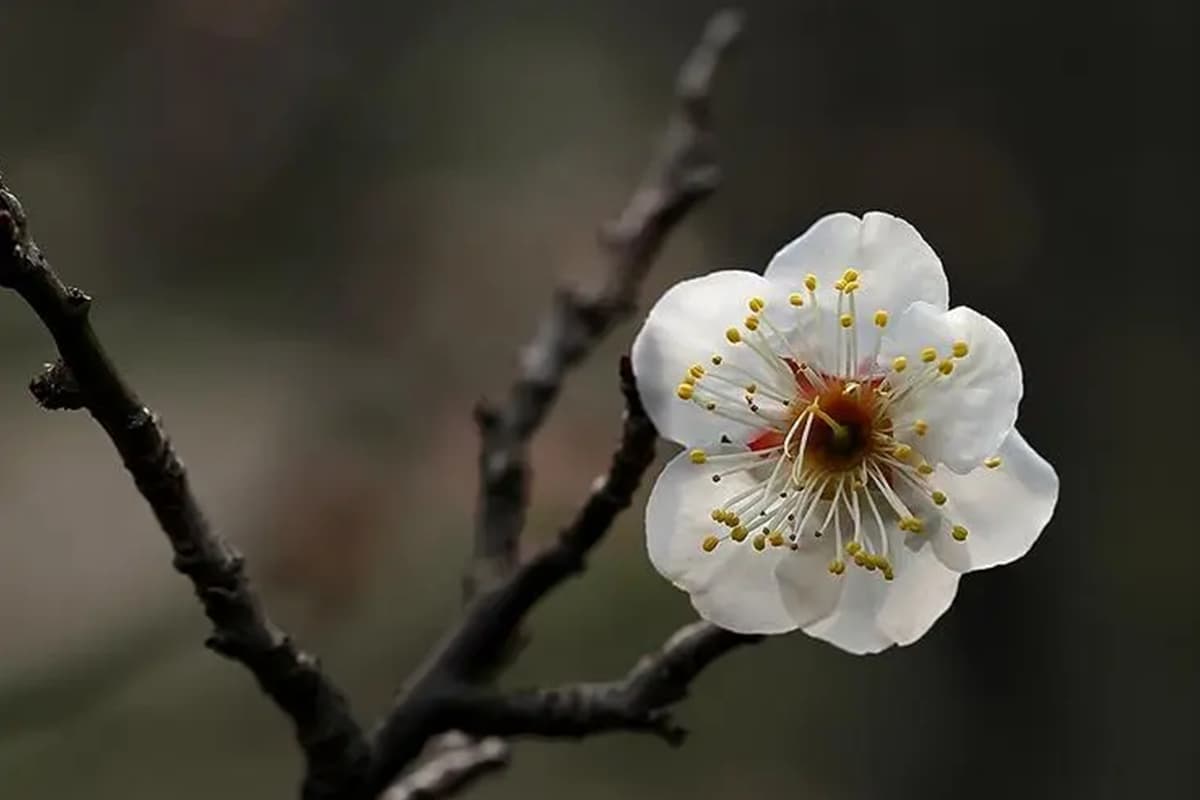
The leaf stalk is 1-2 cm long, hairy when young, but becomes hairless with age, often with glands. The flower is solitary or occasionally two flowers are borne within a single bud, with a diameter of 2-2.5 cm, and a strong aroma.
Blooming occurs before the leaves unfurl. The flower stalk is short, about 1-3 mm long, often hairless. The calyx is usually reddish-brown, but in some varieties, it is green or purplish-green.
The calyx tube is broadly bell-shaped, hairless, or sometimes with short soft hairs. The calyx lobes are ovate or nearly round, with a blunt tip. The petals are ovate, ranging in color from white to pink.
The stamens are short or slightly longer than the petals; the ovary is densely covered with soft hairs, and the pistil is short or slightly longer than the stamens. The fruit is nearly spherical, 2-3 cm in diameter, yellow or greenish-white, covered with soft hairs, and has a sour taste.
The flesh sticks to the stone, which is elliptically shaped, with a round top and a small protruding tip, tapering to a wedge shape at the base, slightly flattened on both sides, with a slightly blunt keel, with distinct longitudinal grooves on both the ventral and dorsal keels, and a honeycomb-like surface.
The flowering period is in winter and spring, and the fruiting period is in May-June (in North China, the fruiting period extends to July-August). 2n=16, 24.
Jade Disc Type (f. albo-plena (Bailey) Rehd.)
The flower is disc-shaped, double-flowered, white; the calyx is purplish-red. There are 30 varieties, such as Jade Disc, Pink Disc, and Purple Stem White.
IV. Value and Others
The plum originated in southern China and has a cultivation history of over three thousand years. It has many varieties for both ornamental and fruit trees.
Many types can not only be grown outdoors for viewing but can also be cultivated as potted plants, or made into plum stacks. The fresh flowers can be used to extract essence, and the flowers, leaves, roots, and seeds can all be used for medicinal purposes.
The fruit can be eaten, salted, or smoked to make black plum medicine, which can stop coughing, diarrhea, promote salivation, and quench thirst. The plum can also resist root-knot nematodes and can be used as a rootstock for stone fruit trees.


 English
  العربية
  Bahasa Indonesia
  Deutsch
  Français
  Italiano
  Nederlands
  Português
  Русский
  日本語
日本語