How to Care for Potted Plum Blossoms
- Choosing and Changing Pots
Potted plum blossoms are commonly grown in pots with diameters of 20-25 cm. After the blossoms have fallen, repot the plant on a sunny day. Remove the old soil, trim long, dead, or rotten roots, and trim one-year-old flowering branches leaving 2-3 buds at the base.
- Soil Selection
Use a mixture of fertile garden soil, leaf mold, and coarse sand, along with a small amount of bone meal for plum blossoms in pots.
- Turning Pots and Changing Soil
Potted plum blossoms need their pots turned and soil changed every two to three years to maintain soil fertility and promote growth.
When turning pots and changing soil, use a larger container and take care not to damage the roots. Mix garden soil and leaf mold in specific proportions.
- Watering Appropriately
Plum blossoms thrive in warm, moist soil. Water regularly, about every two to three days in spring and autumn.
In summer, due to higher temperatures and more evaporation, water twice a day, morning and evening. Also, spray water to cool the plant during high temperatures. In winter, wait until the soil is dry before watering.
- Fertilizing Appropriately
Plum blossoms need plenty of nutrients, but be careful not to over-fertilize as it can burn the roots. During the growing season, fertilize every two weeks mainly with phosphate and potash fertilizers. You can also use well-rotted organic fertilizer.
Apply organic fertilizer once before winter to provide enough nutrients for the plum blossoms, which will promote more blooming.
- Pruning Appropriately
Regular pruning is necessary for potted plum blossoms to control their size. If there are branches growing too high, pinch off their tops to avoid them growing too tall.
Cut off all wilted, diseased, or non-flowering branches to avoid wasting nutrients and to make the plant structure reasonable, increase light penetration, and promote branching.
When a branch grows to 25 cm, you can pinch off the top part. Prune at least once a year, or you can prune according to your preferences to create cliff-style, curved-trunk styles, and so on.
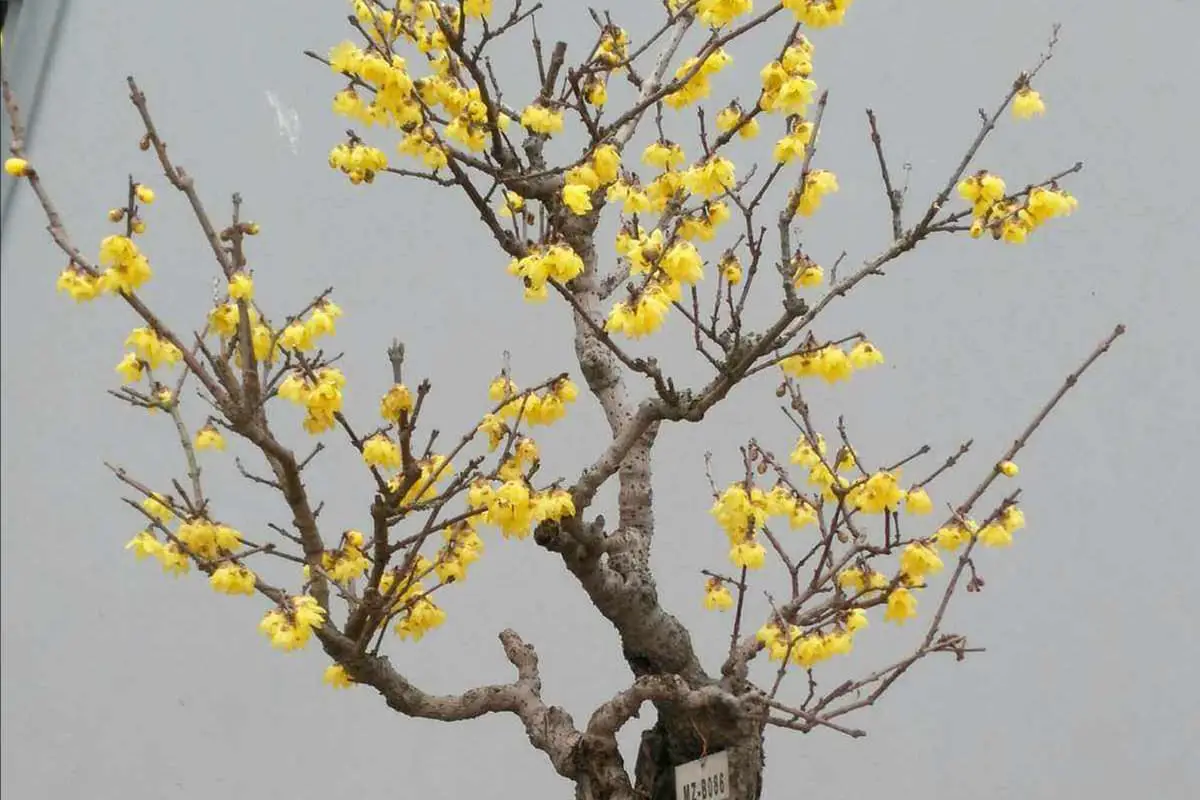
Plum Blossom Bonsai Styling
Trunk
- Curved Trunk: The bonsai’s main trunk is irregularly curved. The curves should not be too large or symmetrical, and the goal is to pursue a natural look.
- Slanted Trunk: The plum blossom’s slanted trunk style. The slanted trunk style of plum blossom bonsai is easy to create; just tilt the plant when planting it.
- Lying Trunk: The plum blossom trunk lies flat against the pot surface, looking upwards. The posture is elegant and beautiful.
- Cliff Style: When nurturing a small tree, press down the trunk and place it in the pot to create the cliff style. The cliff-style plum blossom bonsai has an elegant charm and is loved by people in ancient and modern times.
- Hanging Branch: Generally, this is created using real plum blossoms. Its branches naturally hang down elegantly. Hanging branch plum blossoms can be obtained from ordinary plum blossom buds. Using plum branches to create bonsai can be supplemented with winding to increase its hanging range, making it more elegant.
The trunk of the plum blossom bonsai can be realized by cutting with a knife and peeling the bark. When carving or peeling, it is not suitable to complete the whole trunk at once.
Operate from top to bottom on one side, keeping the trunk’s upward water supply line. The operation line can be changed, such as spiral or winding.
After the wound has scarred, do the same on the other side. If you feel the vicissitudes are not enough, you can repeat the operation several times.
Root
The rootstock should be composed of old stems that hang down from the root and intertwine with each other. Exposed roots can show the elegance and fragrance of the plum blossom tree in various forms.
The main thing for exposed root potted plums is to hang its roots on the surface of the pot like an eagle’s claw. When the plum stock is placed on the pot, it can only be formed by tying its parallel roots into a slanted form and cultivating them.
Branch
The styling of the plum blossom bonsai branches mainly relies on pruning. Pruning of plum blossoms is mainly done after the flowers wither. Pruning is mainly completed through shortening, thinning, retracting, bud rubbing, and heart picking.
- Shortening: This involves cutting off part of the one-year-old branches of the potted plum blossom. Generally, new plum blossom branches are lightly shortened. For mature branches, they should be significantly shortened. Control the length of the retained branches and the direction of the cut buds according to the shape. The light shortening part is 1/3 of the cut branch, and the heavy shortening part is 2/3 of the cut branch.
- Thinning
This mainly involves removing overly dense branches. First, clear away dead branches, pest-infested branches, intersecting branches, and overlapping branches. Increase the ventilation and light transmission of the plant to promote its healthy growth.
- Retracting
Generally, branches over two years old are shortened to achieve rejuvenation. This pruning method is widely used in plum blossom pruning techniques and is also an important measure for plant modeling and tree maintenance. The pruning time is generally chosen in late spring and early summer.
- Bud Rubbing
This is easy to understand, remove new root buds, trunk buds, and axillary buds in time, while paying attention to retaining the direction of the buds, preventing new buds from sprouting intersecting branches, opposite branches, overlapping branches, and parallel branches, affecting the beauty of the plum blossom bonsai.
- Heart Picking
The main purpose is to inhibit the growth of lateral branches and shorten branches. When the bonsai grows 2-4 new leaves, control the time of pinching. Picking the heart of the plum blossom can stimulate the lateral branches to sprout buds, increasing blooming.


 English
  العربية
  Bahasa Indonesia
  Deutsch
  Français
  Italiano
  Nederlands
  Português
  Русский
  日本語
日本語