600+ Types of Flowers A To Z (With Names and Pictures)
Types Of Flowers By Names (A-Z) Types Of Flowers By Color Types Of Flowers By Season Types Of Flowers By Blooming Time 600+ Types of Flowers No. Flower Name No.…

Pelargonium hortorum Bailey, also known as garden geranium, zonal geranium, and storksbill, belongs to the Geraniaceae family and Pelargonium genus, which includes about 230 species of perennial succulent, subshrub, or shrub plants.
Geranium is a perennial herbaceous flower with palmate leaves and long petioles; its flowers are usually umbellate with five petals, blooming from May to July. The flower colors vary, including red, white, pink, purple, etc. The flowers are beautiful and rich in color, possessing high ornamental value.
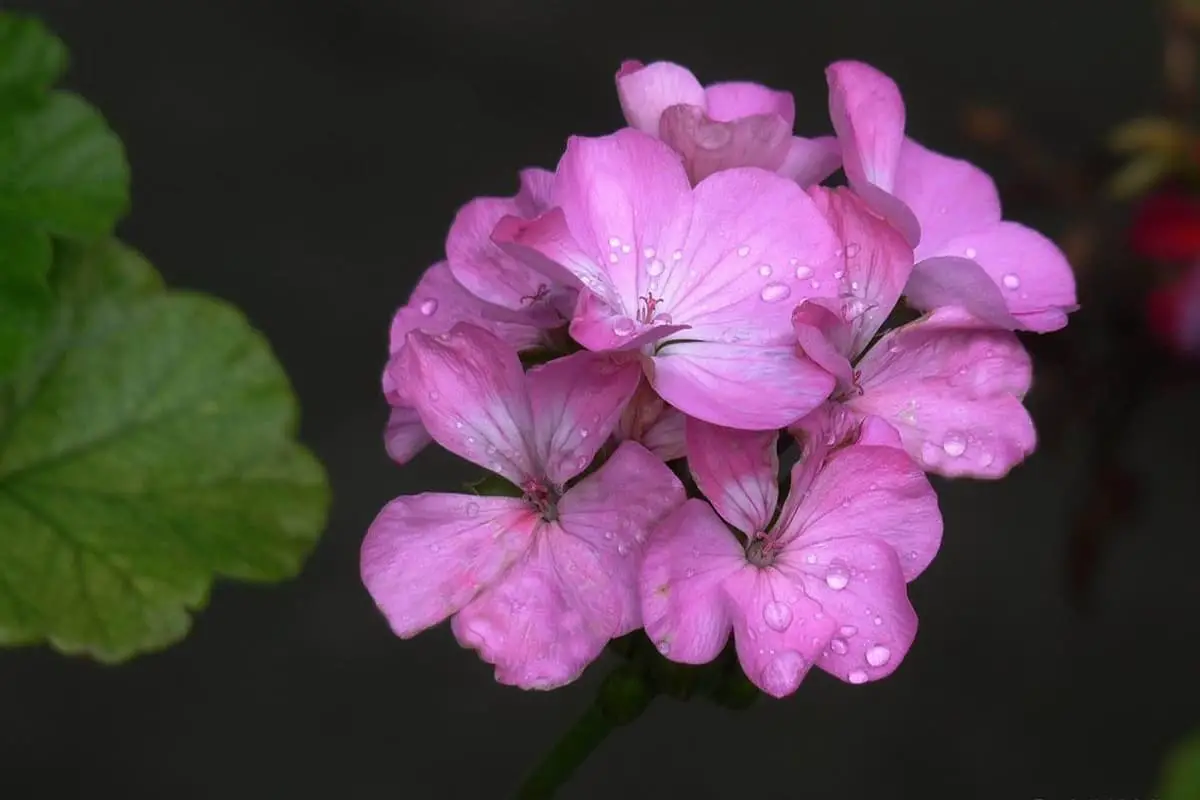
It’s worth noting that geraniums are poisonous. The juice of the plant contains an alkaloid that can cause redness and swelling of the skin if touched, but as long as you don’t touch the juice, keeping it at home for viewing and its fragrance are non-toxic.
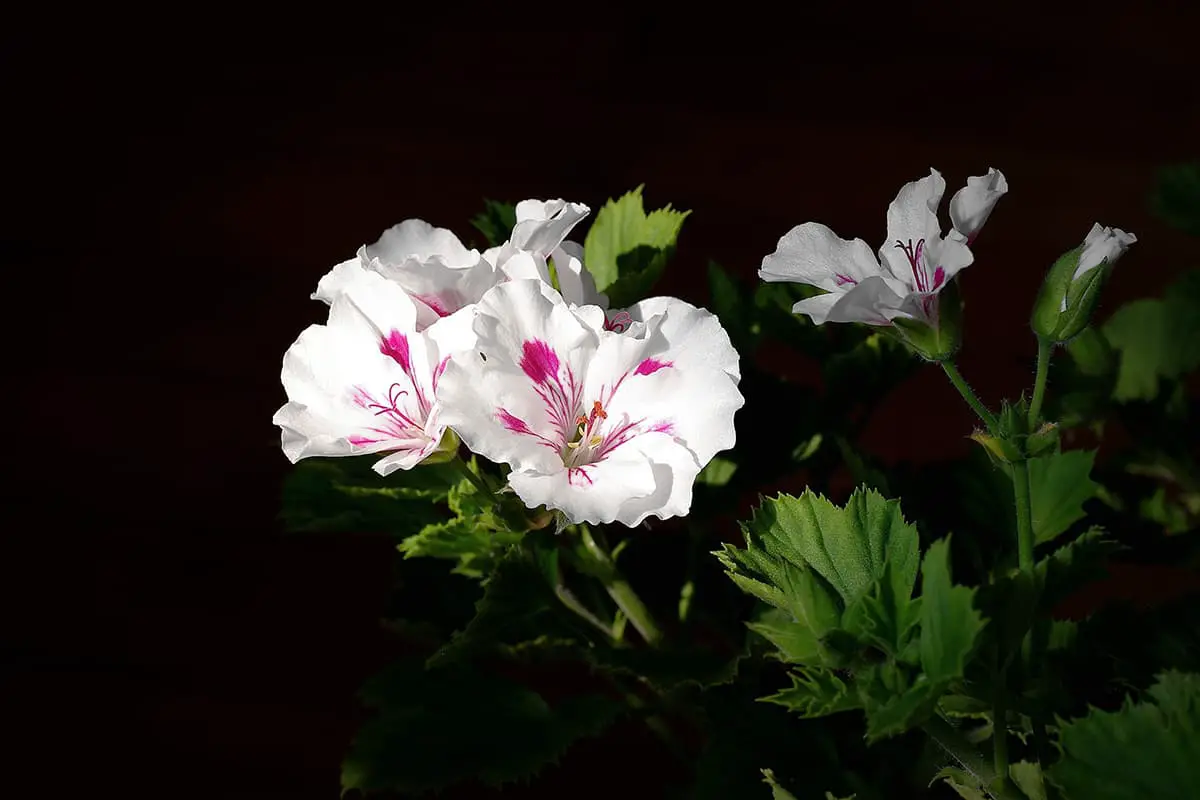
Geranium, also known as garden geranium, zonal geranium, and storksbill, is originally from South Africa and is a perennial herbaceous flower. The leaves are palmate with long petioles, the leaf edges are often serrated, and the leaf surface has deep annular patterns. The flowers usually have five petals, the inflorescences are umbellate, and grow on straight flower stalks.
Because the flowers are densely clustered like a ball, it is also known as a garden geranium. The flower colors vary, including red, white, pink, and purple. Geraniums bloom from early winter until the beginning of the next summer. Geraniums can be potted indoors and outdoors; they can also be used for spring flower beds.

Trailing geraniums, also known as shieldleaf geraniums or vine geraniums, have several varieties: Amethyst with purple-red flowers; Lambada98 with pink flowers; Shany with semi-double, dark red flowers; Penve with semi-double, pink flowers; Tomado with single, white flowers. In addition, there are tetraploid geraniums like Freckles with pink flowers and TetraScarlet, a large-flowered variety with bright red flowers.
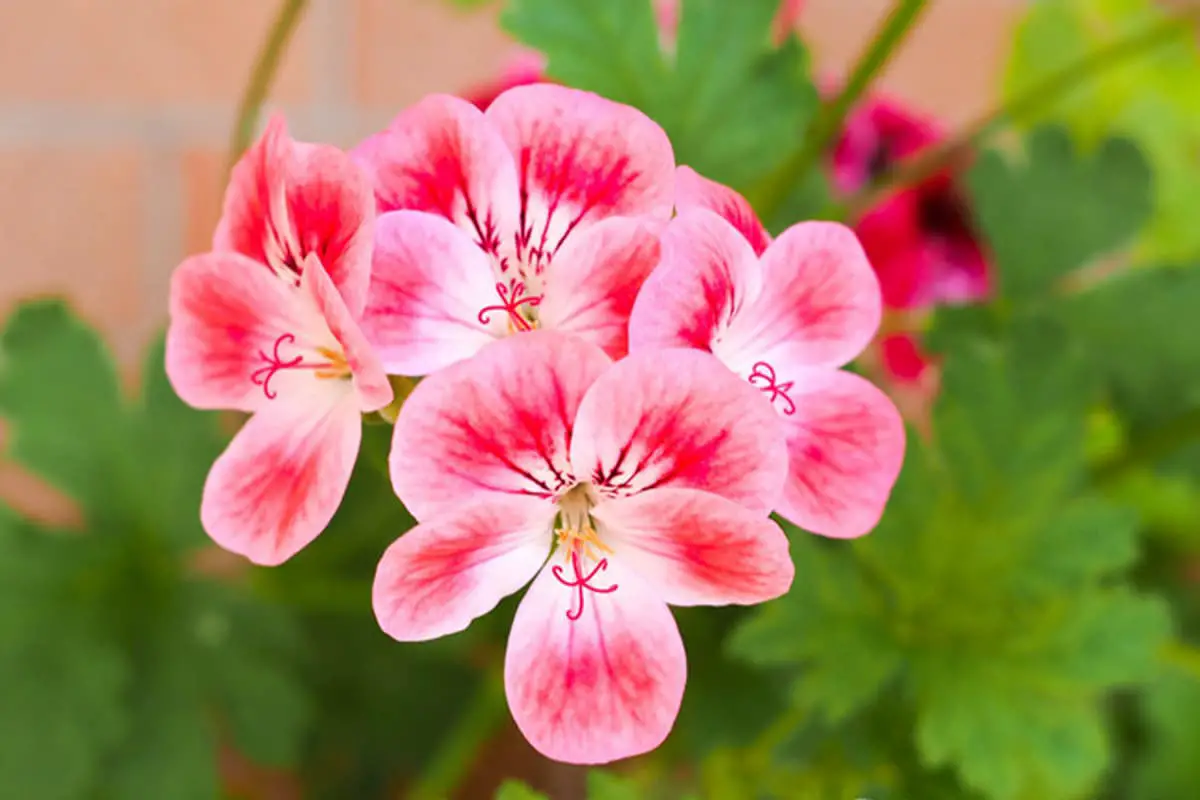
Scented geraniums are also known as fragrant geraniums, and they are commercially named mosquito repellent plants. Scented geraniums (Pelargonium graveolens) are plants of the Pelargonium genus and are popular because they have a volatile fragrance. They can be used to produce essential oils, the main components of which include geraniol, citronellol, linalool, etc.
There are many types of fragrances, including lemon, rose, and fruit. Because they are easy to grow and manage and have a high yield of essential oil, they can be used as a substitute for other essential oils with lower yields, such as rose oil or neroli oil.
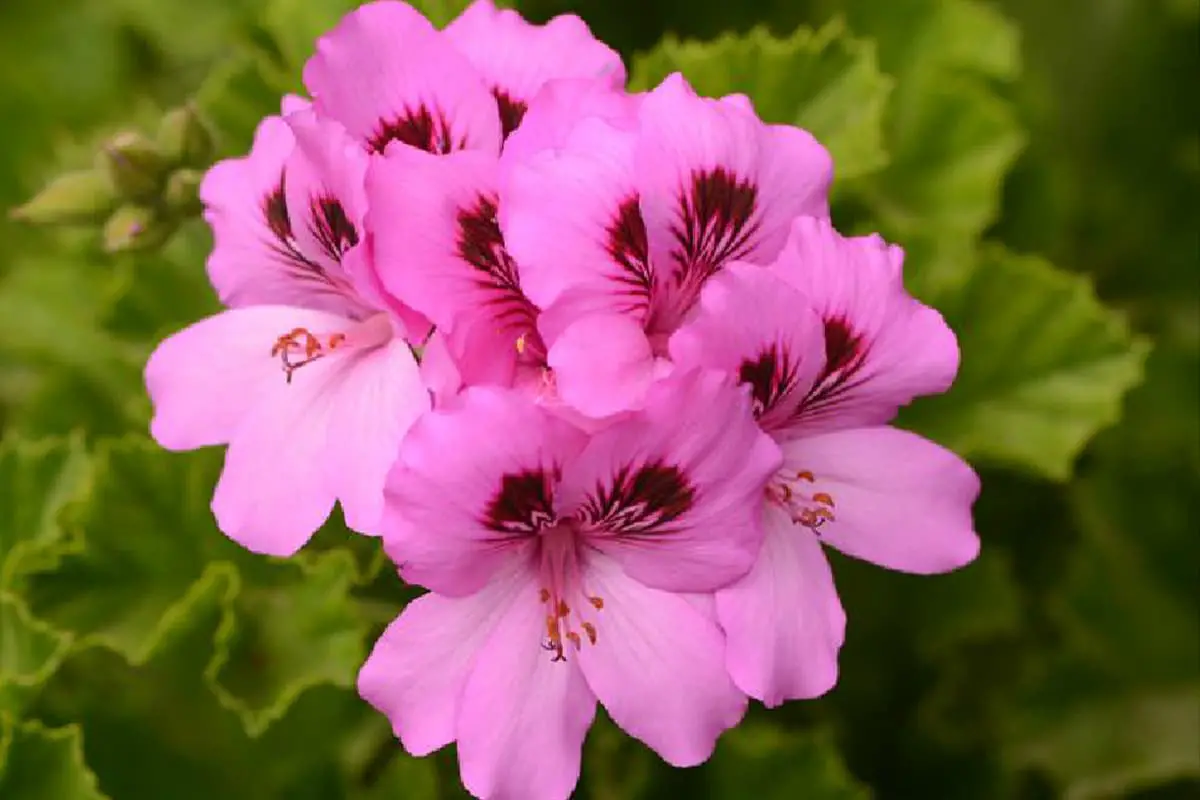
Horseshoe Geranium is a sub-shrub that grows 30-80cm tall, with an upright, cylindrical, nearly fleshy stem. The leaves are ovate shield-shaped or inversely ovate, with deep brown horseshoe-shaped rings on the leaf surface, and the leaf edges have blunt serrations. The flowers range from deep red to white, fewer in number, and bloom year-round.
The household geranium is a perennial herb, 30-40 cm tall, with an upright, branching stem. The base is woody and covered with long, spreading, soft hairs. The leaves are alternate; the stipules are dry and membranous, broadly triangular-ovate; the leaf blades are round-kidney shaped, with the base heart-shaped or truncated.

The umbellate inflorescences are opposite to the leaves or axillary, obviously longer than the leaves, with several flowers; the calyx lobes are lanceolate, and the corolla is pink, light red, dark red or white.
Geraniums like warm winters and cool summers. In winter, the indoor temperature is maintained at 10-15℃ every day, and the nighttime temperature is above 8℃, it can bloom normally. However, the suitable temperature should be 15-20℃.
Geraniums prefer dry and dislike humidity, so they should not be watered too much in winter, and they need to be dry and wet. If the soil is wet, the stem will be tender, which is not conducive to the germination and blooming of flower branches; if it is too wet for a long time, it will cause the plant to grow tall, the flower branches to move upwards, and the leaves to gradually turn yellow and fall off.
Geraniums need plenty of sunlight during the growth period, so they must be placed in a sunny place in winter. If the light is insufficient, the stem and leaves will grow tall, the flower stalks will be thin and soft, and the inflorescences will not develop well; flower buds often do not bloom well and wilt prematurely under weak light. Geraniums do not like heavy fertilization, and too much fertilizer will cause the geraniums to grow too vigorously and not conducive to flowering.
Commonly cultivated throughout China. Originally from the southern part of Africa.
Before 1600, it was brought back to the botanical garden in Leiden, the Netherlands, by a ship that had docked at the Cape of Good Hope. In 1631, British gardener John Tradescant purchased seeds from Rene Morin in Paris and introduced the plant to England.
Perennial herb, 30-60 cm tall.
The stem is erect, woody at the base, fleshy at the upper part, much branched or unbranched, with conspicuous nodes, densely covered with short soft hairs, and has a strong, chopped fishy smell. The leaves are alternate; the stipules are broadly triangular or ovate, 7-15 mm long, covered with soft hairs and glandular hairs; the leaf petioles are 3-10 cm long, covered with fine soft hairs and glandular hairs; the leaf blades are round or kidney-shaped, heart-shaped at the stem, 3-7 cm in diameter, the edges are wavy and shallowly cut, with round teeth, both surfaces are covered with transparent short soft hairs, and there is a dark red horseshoe-shaped ring on the surface within the leaf edge.
The umbellate inflorescences are axillary and contain multiple flowers. The peduncles are longer than the leaves and are covered in short soft hairs. There are several wide ovate bracts. The pedicels are 3-4 cm long and are covered in soft hairs and glandular hairs. The buds hang down during the bud stage and stand upright during the flowering stage.
The calyx lobes are narrowly lanceolate, 8-10 mm long, densely glandular-haired and long soft-haired on the outside, and the petals are red, orange-red, pink or white, wide ovate, 12-15 mm long, 6-8 mm wide, round at the top, short claw at the base, the lower three are usually larger; the ovary is densely covered with short soft hairs.
The capsule is about 3 cm long and covered with soft hairs. The flowering period is from May to July, and the fruiting period is from June to September.
1. Temperature Control: The suitable temperature for geraniums is 10-20 degrees Celsius, which is very suitable in spring and autumn, too cold in winter and too hot in summer. So in the summer, it is necessary to prevent sun exposure and place it in a cool place. In winter, the indoor temperature should not be lower than 0 degrees, otherwise it will freeze. If there is no heating equipment, turning on a 200-degree light bulb in a small room will also have a certain frost protection effect.
2. Moisture Control: Geraniums are forbidden from watering too much. If it is found that the roots of the geraniums are rotten, it may be because of excessive watering and the weather is rather hot and stuffy. Control the frequency of watering to once every two or three days, and each watering should be thorough.
3. Soil Selection: Geraniums are suitable for survival in sandy soil, and the soil bought in flower markets mixed with some sand is more conducive to the growth of geraniums.
4. Weather Impact: Strong winds can break geraniums, and heavy rain can cause the roots of geraniums to be soaked in rainwater, causing the roots to lack oxygen and rot.
6. Fertilization Control: Over-fertilization at one time can cause dehydration of geraniums. If too much fertilizer is applied, such as too much nitrogen fertilizer, it will cause the plant to grow wildly and not bloom. After excessive fertilization, frequent watering can alleviate symptoms.
7. Lighting Conditions: Adequate sunlight helps geraniums to bloom, but they should not be exposed to direct sunlight when the temperature is too high. More sun exposure in spring and autumn, and in summer, pay attention to the temperature, if the temperature is too high, avoid exposing geraniums to light.
Both spring and autumn are suitable for this method, and sowing in indoor pots in spring is preferable. The optimal temperature for germination is 20-25℃. The seeds of geraniums are not large, so the soil should not be covered too deep after sowing, and they germinate in about 2-5 days. If sown in autumn, they can flower in the summer of the second year. Excellent intermediate varieties can be selected from seedlings propagated by sowing.
Cutting propagation can be done at any time except when the plants are in semi-dormant state in June and July. Spring and autumn are the best times. During the high temperatures of summer, the cuttings can easily turn black and rot. Cuttings should be 10 cm long, with the top parts being the best as they grow vigorously and root quickly.
After cutting, let the cut dry for several days, and after a thin film has formed, insert it into a sand bed or a mixed substrate of expanded perlite and peat, taking care not to damage the bark of the cutting, otherwise the wound can easily rot. After insertion, place it in a semi-shade place, keep the room temperature at 13-18℃, and root after 14-21 days, when the roots are 3-4 cm long, it can be potted.
During the cutting process, soaking the base of the cutting in 0.01% indole acetic acid solution for 2 seconds can increase the survival rate and rooting rate of the cuttings. Generally, cuttings bloom after 6 months of cultivation, i.e., cuttings taken in January will bloom in June; cuttings taken in October will bloom in February or March of the following year.
Geraniums can also be propagated by tissue culture. Using MS medium as the basic culture medium, add 0.001% indole acetic acid and cytokinins to stimulate the explants to produce callus and adventitious buds, and use 0.01% indole acetic acid to promote rooting. Tissue culture provides a new way for the breeding of high-quality varieties and the development of new varieties of geraniums.
Seedling Stage Management
First Stage: Germination Period
Seed germination: Under suitable conditions, the seeds begin to germinate on the day of sowing until the cotyledons unfold, and the radicle extends out in about 1-3 days. Coarse vermiculite is used for covering to maintain humidity. Germination does not require light, but providing 100-1000 lux of light will increase germination rate and reduce the chance of etiolation.
From 1-3 days after sowing until the appearance of the young roots, the substrate is kept saturated; from day 4-8, it is reduced to damp; from day 9 onwards, the substrate is kept alternating between dry and wet. Air humidity is maintained at 100% until the appearance of young roots, then reduced to 40%.
Second Stage: Seedling Growth Period
After the cotyledons have spread, the plant needs a suitable environment during its vegetative growth period and must be provided with sufficient nutrients to allow it to smoothly enter the flower induction stage.
In spring, it is suitable for planting in the ground in the south and in indoor pots for overwintering in the north. Generally, pot cultivation is used. When planting in the ground, choose a place that is not prone to water accumulation. The soil should be loose, fertile, and well-drained sandy loam.
For potting, use a mixture of leaf compost, garden soil, and sand. Before planting, place tiles at the bottom of the pot for better drainage. Generally, first plant in small pots without applying base fertilizer, care for them for a while before moving them into larger pots, and then apply an appropriate amount of mature manure as base fertilizer in the pot, cover with potting soil, and avoid direct contact of the roots with the base fertilizer.
Mature Stage Management
When the geranium seedling is 12-15 cm tall, pinch the top to encourage the production of side branches. During the high temperatures of summer, watering should be strictly controlled, otherwise the semi-dormant geraniums may turn yellow and shed leaves if the pot soil is too wet.
During the growth period of stems and leaves, fertilize once every half month, but do not use too much nitrogen fertilizer. If the stems and leaves are overgrown, stop fertilizing and appropriately remove some leaves, which is conducive to flowering.
During the flower bud formation period, apply phosphate fertilizer every two weeks. To control the height of the plant and achieve large, bright-colored flowers, in addition to choosing dwarf geranium varieties, the use of growth regulators is very important.
Two weeks after the geraniums are planted in 12 cm or 15 cm pots, spray the leaves with 0.15% paclobutrazol or uniconazole once a week, twice in total, and expose them to light for 14-18 hours a day, which can effectively control the height of the geraniums and provide high-quality potted flowers.
Winter Management
Geraniums like warmth and are cold-sensitive, so special attention should be paid to cold and freeze protection in winter. When growing geraniums in the north, the potted plants should be moved indoors before frost arrives, and placed in front of a sunny window to receive plenty of light.
If the light is insufficient, the plant tends to grow lanky, which affects the formation of flower buds, and even the formed buds may wither due to insufficient light. In the south, after the start of winter, the potted plants should also be moved to a windproof, warm, and sunny location, which is conducive to the potted flowers getting more sun and avoiding cold winds.
The indoor temperature should be kept at 15℃ to 20℃ during the day and not lower than 10℃ at night. In an environment with a too low temperature, the plant grows weakly, which is not conducive to the differentiation of flower buds, and it produces fewer flowers or even no flowers. However, an environment with a temperature higher than 25℃ is also not conducive to its growth and flowering.
Geraniums prefer dryness and are sensitive to humidity, so watering should be moderate on a daily basis. In winter, it’s not appropriate to water daily. Even in dry weather, watering should be done every five to seven days, maintaining the pot soil slightly dry and barely moist.
Overwatering can cause yellowing and shedding of the leaves, affecting flowering and even leading to root rot and death. However, regularly spraying the leaves with clean water to keep them clean can facilitate photosynthesis. If you want geraniums to bloom continuously, they need an ample supply of nutrients.
Medicinal Value
Sweet and slightly heavy, its aroma is a bit like a rose, with a hint of mint.
Historical Clinical Records: It has been used to treat cholera and bone injuries, and it also has exorcising effects.
Effects: Hemostatic, vasoconstrictor, asthmatic relief, liver detoxification, gallstones, kidney detoxification, kidney stones, diuretic, muscle soreness, oily skin, skin aging revitalization, herpes, skin pallor, weight loss, promotes scarring, eczema, sunburns and burns, ringworm, menstrual irregularity, inflamed and congested breasts, alleviating depression and anxiety, repelling demons, invigorating, deodorizing, antibacterial, germicidal, smoking and alcohol cessation.
Cautions: It may cause irritation to some sensitive skin. It can regulate hormones, hence it is advisable to avoid during pregnancy.
Psychological Effects
Pelargonium hortorum Bailey is a nerve tonic that can soothe anxiety and depression, as well as lift spirits. It helps restore psychological balance and, as it can also affect the adrenal cortex, it helps to alleviate stress.
Physiological Effects
Generally, thin liquid fertilizer should be applied every 10 days or so. This can be a mixture of soybean cake, hoof slices, and fishy water, to be used after fermentation and diluted with water. Alternatively, you can use composite fertilizers sold in flower shops, using only 3 to 5 pieces each time.
Geraniums have many branches. To encourage them to bloom more, the plants should be pinched several times to promote more branching and bud formation. After the flowers wilt, remove the spent flowers in time and prune the dense or weak branches to avoid consuming nutrients. However, heavy pruning is not suitable in the deep winter.
Shaping and Pruning
To make the plant crown full and compact, shaping and pruning should begin when the seedling is small. Generally, when the seedling is about 10 cm tall, pinch the top to stimulate new branches. After the new branches grow out, pinch the top again 1-2 times until a satisfactory plant shape is formed. Flowers bloom at the top of the branches.
After each flowering, timely flower removal and pruning should be carried out to stimulate the constant growth of new branches and continuous flowering. Generally, pruning is performed three times a year, in early spring, during recovery, and after autumn.
Due to its rapid growth, it needs to be pruned and shaped every year. Generally, the plant is pruned at least three times a year. The first time in March, mainly to thin out the branches; the second time in May, to remove the spent flowers and overly dense branches; the third pruning after the beginning of autumn, mainly for shaping.
Generally, after the hot weather passes and the weather cools down, the geranium gradually recovers its growth, and the new buds of the dormant plants have grown out. This time is usually from late August to early September, and it’s suitable to prune the plant completely in conjunction with repotting.
Depending on the growth of the plant, generally 3-5 main branches that are close to the base, strong, and evenly distributed are selected to remain, and other overly dense, weak, and elongated branches are pruned off from the base. Then the main branches and side branches are cut short, leaving only the robust buds on each side branch, so that the entire plant’s branches are evenly distributed and compact, forming a full and dwarf shape.
After the flowers wither, the flower branches should be removed immediately to avoid consuming nutrients, which is conducive to the development and flowering of new flower branches. Generally, potted plants that are 3-4 years old need to be renewed.
During the flowering period in winter and spring, the plants should be placed in a place with plenty of sunlight, otherwise, the leaves are prone to droop and turn yellow. During rainy or snowy days, additional artificial light is more ideal for flowering.
Beauty Value
Pelargonium hortorum is suitable for all skin conditions as it can balance sebum secretion to keep skin plump. It may be beneficial for eczema, burns, shingles, herpes, ringworm, and frostbite. It is excellent for loose, congested pores, and oily skin, making it a comprehensive cleansing oil.
As Pelargonium hortorum can promote blood circulation, it can enliven pale skin after use. Using it in a diffuser or applying it on the face with a towel can stimulate the lymphatic system and strengthen the circulatory system.
Pure Essential Oil Usage
Adding it to facial skincare products can effectively treat facial pimples. Using it in a diffuser or applying it on the face with a towel can stimulate the lymphatic system, strengthen the circulatory system, and help with gastritis and colitis.
Compatibility: The essential oils suitable for blending with it include: basil, bergamot, cedar, clary sage, grapefruit, jasmine, lavender, neroli, sweet orange, petitgrain, rose, rosemary, sandalwood. Chamomile enhances its therapeutic effect, and juniper intensifies its sweet scent.
Hypnotic Formula
Mixing Pelargonium hortorum, grapefruit, and lavender in a specific ratio and applying the mixture on the pillow will create a magical sleep-aid essential oil. Not only does it have a calming and soothing effect, but it also repels any mosquitoes that may disturb your sleep. Its scent will bring you sweet dreams! Particles emitted by Pelargonium hortorum can cause allergic itching in people.
Cautions: It may irritate the skin, avoid applying the pure solution directly on the skin. It can regulate hormones, avoid during pregnancy.
Ornamental Value
Pelargonium hortorum is highly adaptable, with bright colors and a long blooming period, suitable for indoor placement and flower bed decoration.
Flower Language of Pelargonium Hortorum
Flower language of Pelargonium Hortorum: An accidental meeting, happiness is right beside you.
Red Pelargonium Hortorum: You linger in my mind.
Pink Pelargonium Hortorum: It’s a pleasure to be by your side.
National Flower Culture
Pelargonium hortorum is not only the pride of the African people but also very popular in the Eurasian region. Germany, Spain, and Hungary attach great importance to the production and breeding of Pelargonium hortorum. Furthermore, Hungary has designated the colorful Pelargonium hortorum as its national flower.

Peggie was once a high school mathematics teacher, but she set aside her chalkboard and textbooks to follow her lifelong passion for flowers. After years of dedication and learning, she not only established a thriving flower shop but also founded this blog, “Flowers Library”. If you have any questions or wish to learn more about flowers, feel free to contact Peggie.
 English
  العربية
  Bahasa Indonesia
  Deutsch
  Français
  Italiano
  Nederlands
  Português
  Русский
  日本語
日本語