The Paphiopedilum hirsutissimum, a member of the Orchidaceae family and Paphiopedilum genus, is a terrestrial or semi-epiphytic orchid known for its distinctive hairy features. This species is prized for its large, colorful flowers and unique growth habits, making it a favorite among orchid enthusiasts and collectors.
I. Morphological Characteristics
Paphiopedilum hirsutissimum exhibits several distinctive features:
Leaves: Strap-shaped and leathery, arranged in two rows at the base. They measure 16-45 cm long and 1.5-3 cm wide, with a dark green upper surface and pale green underside, often featuring slight purple spots near the base.
Flower spike: Erect, 20-30 cm long, typically green with deep purple soft hairs. It bears a single flower at the tip.
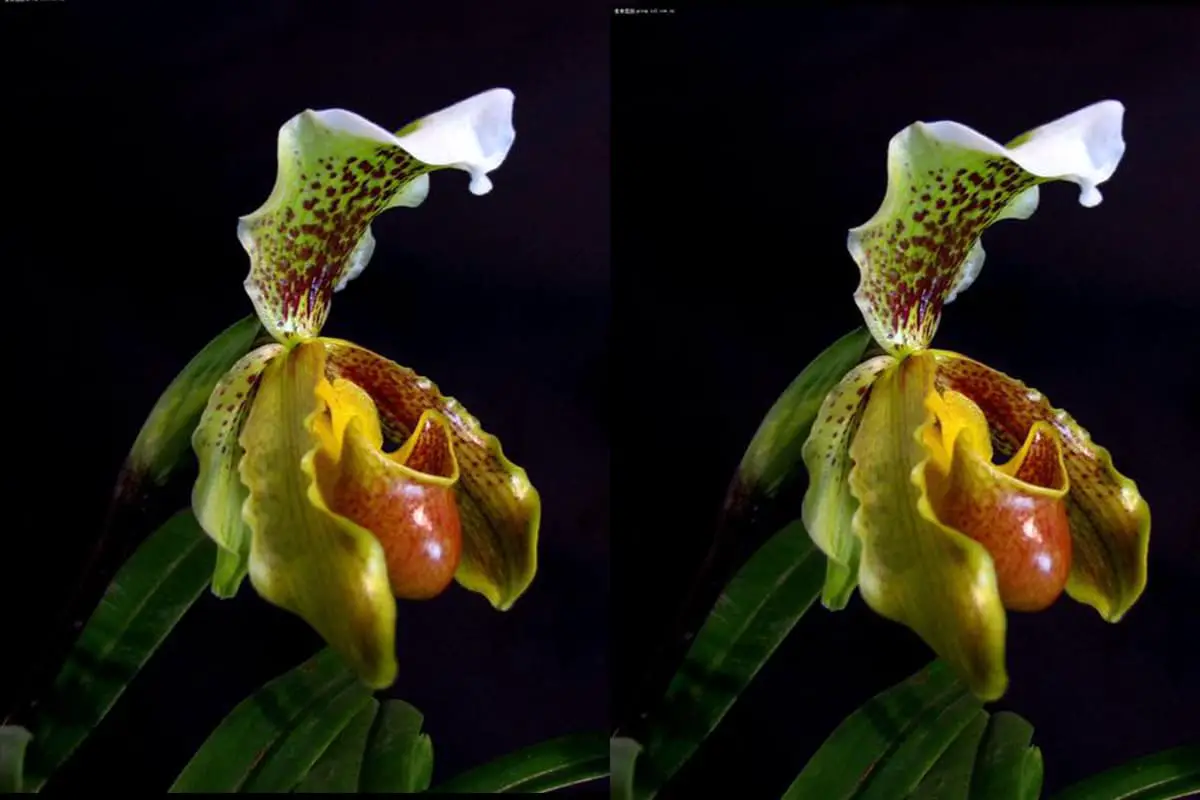
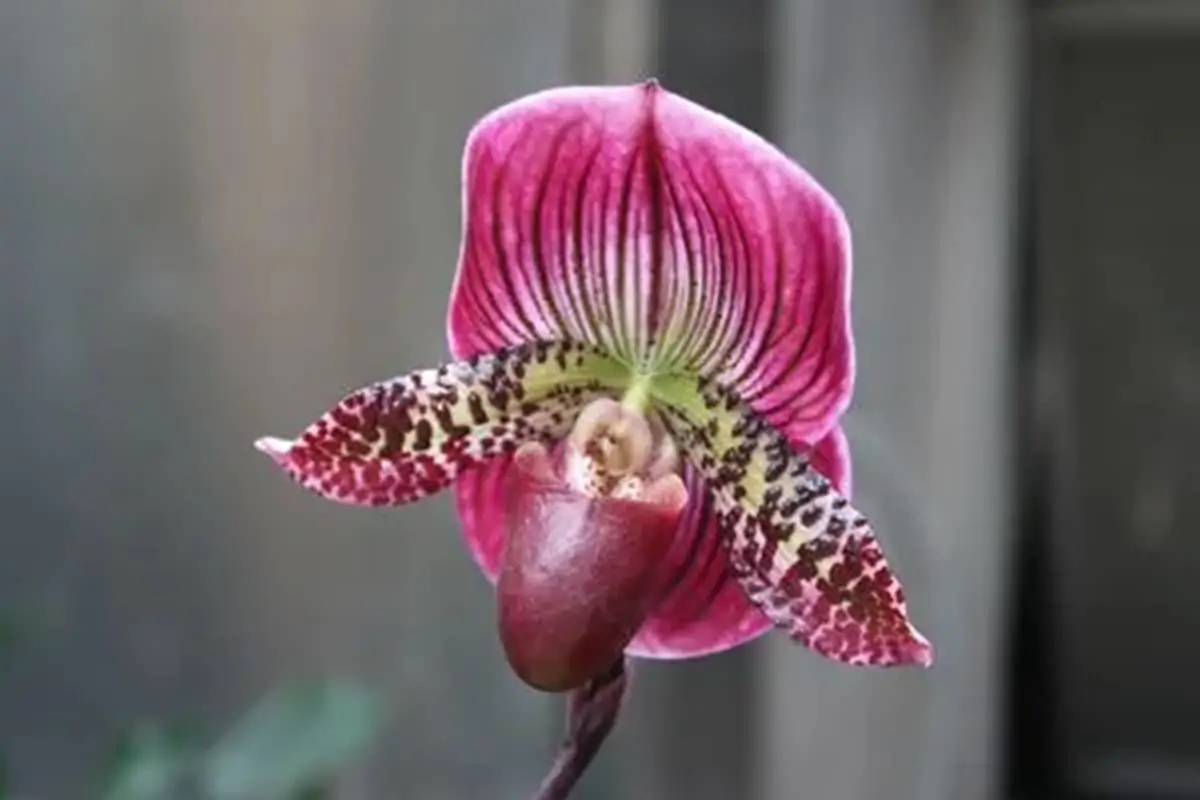
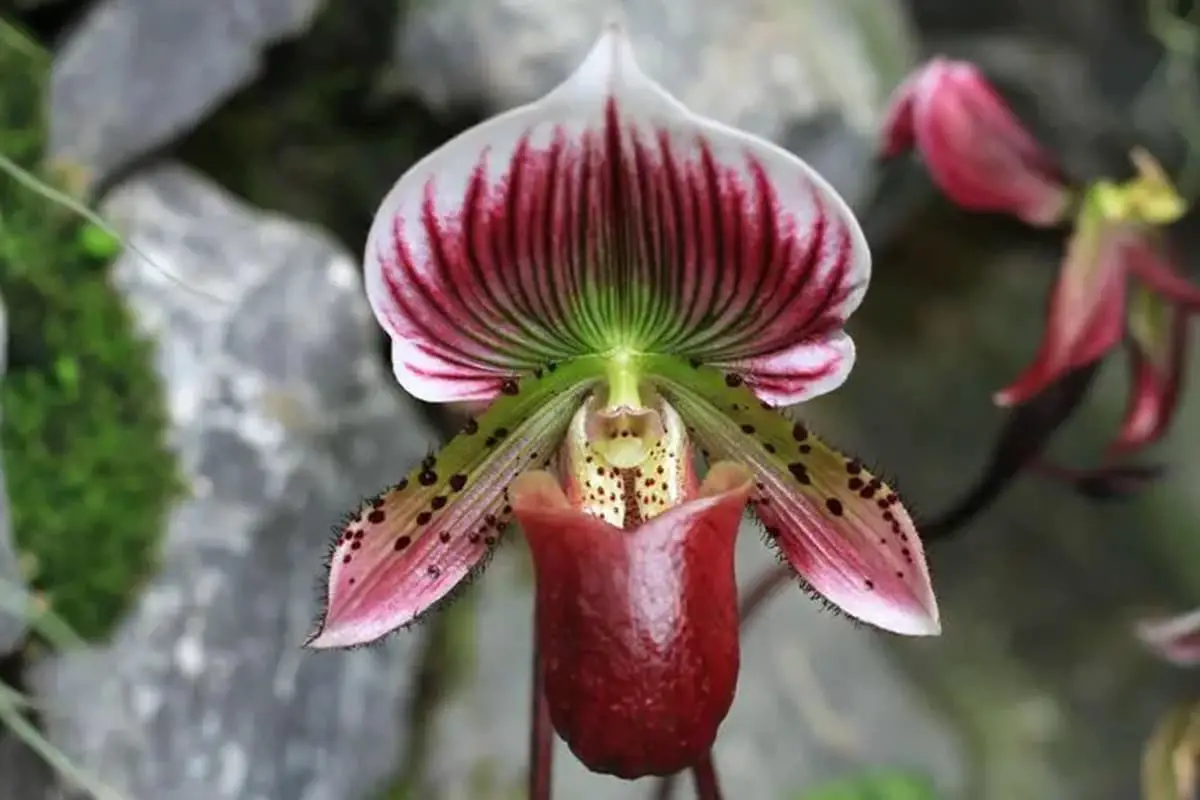
Flowers: Large and colorful, with complex patterns:
Dorsal sepal and synsepal: Pale green-yellow edges with dense purplish-brown spots in the center.
Petals: Spoon-shaped or narrowly oblong-spoon-shaped, 5-7.5 cm long and 2-2.5 cm wide. The lower half is yellow-green with purplish-brown spots, while the upper half is rose-purple with a white halo.
Lip: Inverted helmet-shaped, pale green-yellow with purplish-brown spots.
Staminode: Nearly square, 8-10 mm in length and width, with two white “eye spots.”
Blooming period: April to May.
II. Growing Environment
Paphiopedilum hirsutissimum thrives in specific conditions:
Habitat: Forest understories, rocky crevices at forest edges, and moist, stony soils.
Altitude: 700-1500 meters.
Temperature: Prefers cool to intermediate conditions, requiring a cool dormant period in winter.
Light: Moderate to bright, indirect light.
Humidity: High humidity, but with good air circulation to prevent disease.
Substrate: Well-draining mix that retains some moisture, such as fine bark mixed with perlite and sphagnum moss.
III. Distribution Range
Native to:
China
Northeastern India
Vietnam
Laos
Thailand
The type specimen was collected from northeastern India.
IV. Growth and Propagation
Propagation methods:
Seed propagation: The primary method for commercial production and conservation efforts.
Division:
Best performed every 2-3 years when the plant has 5-6 or more leaf clusters.
Divide in April or May, keeping the root system intact.
Plant 3 small divisions per pot for balanced growth.
Cultivation tips:
Repot every 2-3 years using a fresh, well-draining orchid mix.
Provide balanced fertilizer weekly at 1/4 strength during the growing season.
Reduce watering and fertilizing during the winter dormancy period.
V. Disease and Pest Control
Common issues and their management:
Fungal and Bacterial Diseases:
Brown rot
Bacterial soft rot
Fusarium wilt
Anthracnose
Black rot
Control: Maintain good air circulation, avoid overwatering, and use appropriate fungicides such as copper-based products or systemic fungicides as needed.
Pests:
Scale insects
Aphids
Thrips
Spider mites
Moth larvae
Snails and slugs
Control: Regular inspection, manual removal, and use of horticultural oils or insecticidal soaps. For severe infestations, consider systemic insecticides.
Preventive measures:
Maintain a clean growing environment with good ventilation.
Regularly inspect plants and isolate any showing signs of disease or pests.
Use sterile tools when handling plants to prevent disease spread.
Implement an Integrated Pest Management (IPM) approach, combining cultural, biological, and chemical controls as needed.
By understanding and implementing these cultivation practices, enthusiasts can successfully grow and enjoy the beautiful Paphiopedilum hirsutissimum while managing potential challenges effectively.
Share
Facebook
Twitter
LinkedIn
Email
Share is Caring.
Peggie
Founder of FlowersLib
Peggie was once a high school mathematics teacher, but she set aside her chalkboard and textbooks to follow her lifelong passion for flowers. After years of dedication and learning, she not only established a thriving flower shop but also founded this blog, “Flowers Library”. If you have any questions or wish to learn more about flowers, feel free to contact Peggie.
Before you go
You May Also Like
We picked them just for you. Keep reading and learn more!
Types Of Flowers By Names (A-Z) Types Of Flowers By Color Types Of Flowers By Season Types Of Flowers By Blooming Time 600+ Types of Flowers No. Flower Name No.…
Lonicera maackii, commonly known as Amur honeysuckle, is a deciduous shrub that often grows in clusters. Its fragrant flowers provide an excellent nectar source for pollinators, while its fruit serves…
Liriodendron chinense, also known as the Chinese tulip tree, is a magnificent deciduous tree belonging to the Magnoliaceae family and the genus Liriodendron. This impressive species can reach heights of…
Viola variegata, commonly known as the Variegated Viola, is a perennial herb belonging to the Violaceae family and Viola genus. I. Physical Features: This diminutive plant typically grows between 3-12…
The Lily, also known as Lilium, is a perennial herbaceous bulbous plant belonging to the Liliaceae family. It is primarily distributed in the temperate regions of the Northern Hemisphere, with…
The Lilium tsingtauense, also known as the Qingdao Lily or Laoshan Lily, is a rare and beautiful species of lily. This perennial monocotyledonous herb is characterized by its striking orange-red…
Viola cornuta, commonly known as Horned Pansy or Horned Violet, is a perennial herbaceous plant belonging to the Violaceae family. Native to the Pyrenees mountains of Spain and France, this…
Callistemon viminalis, commonly known as Weeping Bottlebrush, is a distinctive evergreen tree belonging to the Myrtaceae family, native to Australia. Its lanceolate leaves range from grayish-green to dark green, and…
Lavandula lanata, commonly known as Woolly Lavender, is a distinctive and captivating lavender species native to the mountainous regions of southern Spain. This semi-hardy, aromatic plant is characterized by its…


 English
  العربية
  Bahasa Indonesia
  Deutsch
  Français
  Italiano
  Nederlands
  Português
  Русский
  日本語
日本語