600+ Types of Flowers A To Z (With Names and Pictures)
Types Of Flowers By Names (A-Z) Types Of Flowers By Color Types Of Flowers By Season Types Of Flowers By Blooming Time 600+ Types of Flowers No. Flower Name No.…

The Papaver orientale is a perennial herbaceous plant from the poppy family, Papaveraceae. The plant is covered with stiff hairs and exudes a milky white sap. It has spindle-shaped, white roots.
A single stem, reaching 60-90 centimeters high (cultivated specimens can exceed 100 centimeters), stands erect and cylindrical, covered with stiff hairs that are either spreading or pressed close. The basal leaves are ovate to lanceolate in outline.
The flower is solitary; the peduncle is elongated and densely covered with stiff hairs; the flower buds are ovate or broadly ovate, 2-3 centimeters long, and covered with spreading stiff hairs; there are typically two sepals, sometimes three, green on the outside with their inner surface the same color; petals number 4-6, are broad obovate or fan-shaped.
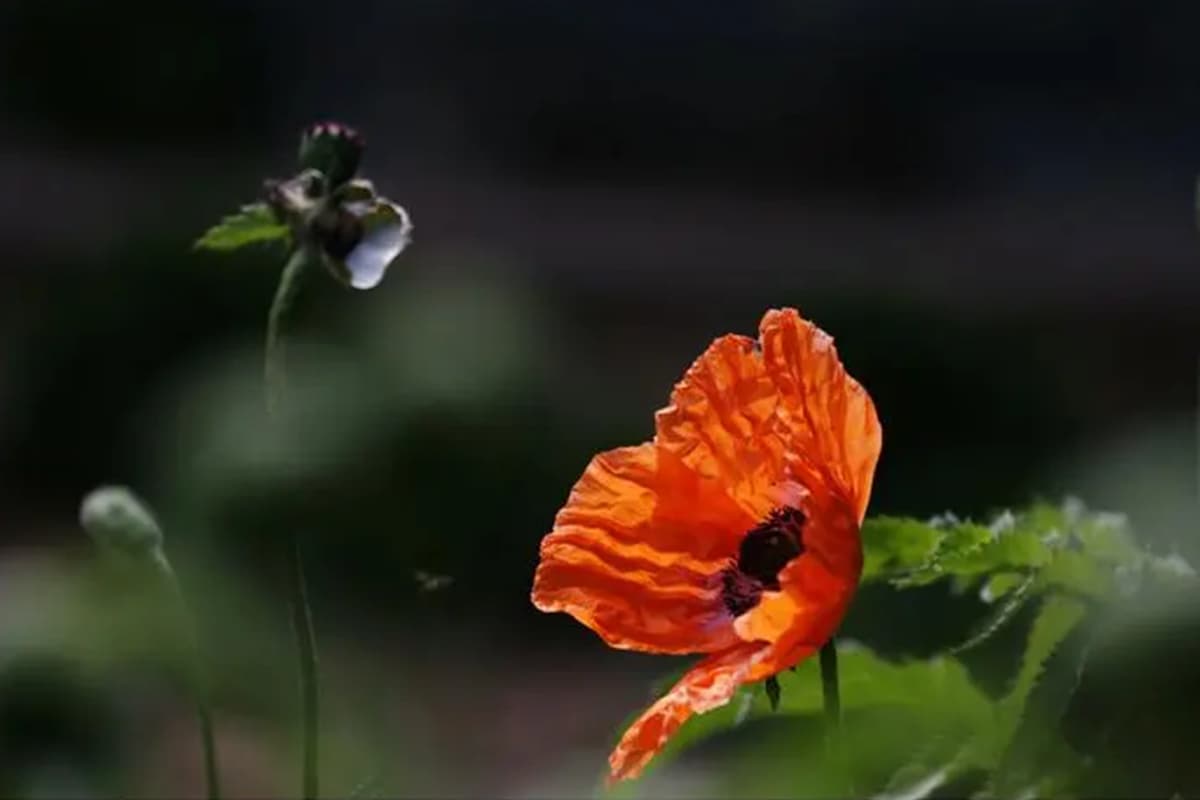
The capsule is nearly spherical, 2-3.5 centimeters in diameter, pale, and hairless. The seeds are round-reniform, brown, with broad stripes and small pits. The flowering period is June to July.
Native to the Mediterranean region, the Oriental poppy is widely cultivated in Taiwan, China, for ornamental purposes. It thrives in sunny and well-ventilated environments, preferring loose, fertile, well-drained sandy soil.
It is quite cold-hardy, with seedlings and rhizomes able to withstand short periods of temperatures as low as -10°C.
The Oriental poppy is an excellent plant material for beautifying environments and enriching garden landscapes, suitable for mass or patch planting.
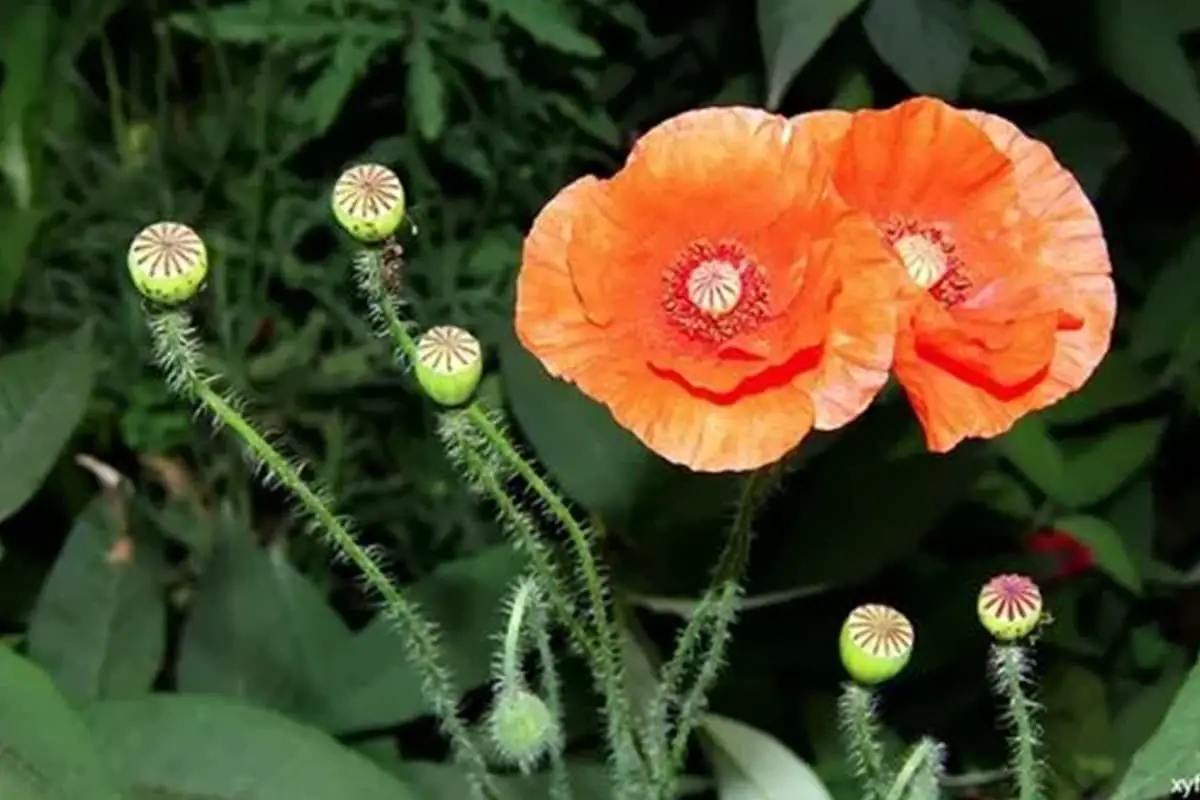
Although the name “poppy” is part of its common name, its capsules do not contain the narcotic alkaloids like morphine, making it a non-toxic, superior ornamental flower. Its flowers are larger and more vibrant than those of the common poppy.
The Oriental poppy is used medicinally, its fruit and entire plant possessing analgesic, antitussive, and antidiarrheal properties, primarily used to treat coughs and abdominal pain.
The Oriental poppy is a perennial herb covered with stiff hairs and containing milky white sap. Its roots are spindle-shaped and white.
The single stem grows 60-90 centimeters tall (cultivated ones can exceed 100 centimeters), erect and cylindrical, with stiff hairs that are nearly spreading or closely appressed.
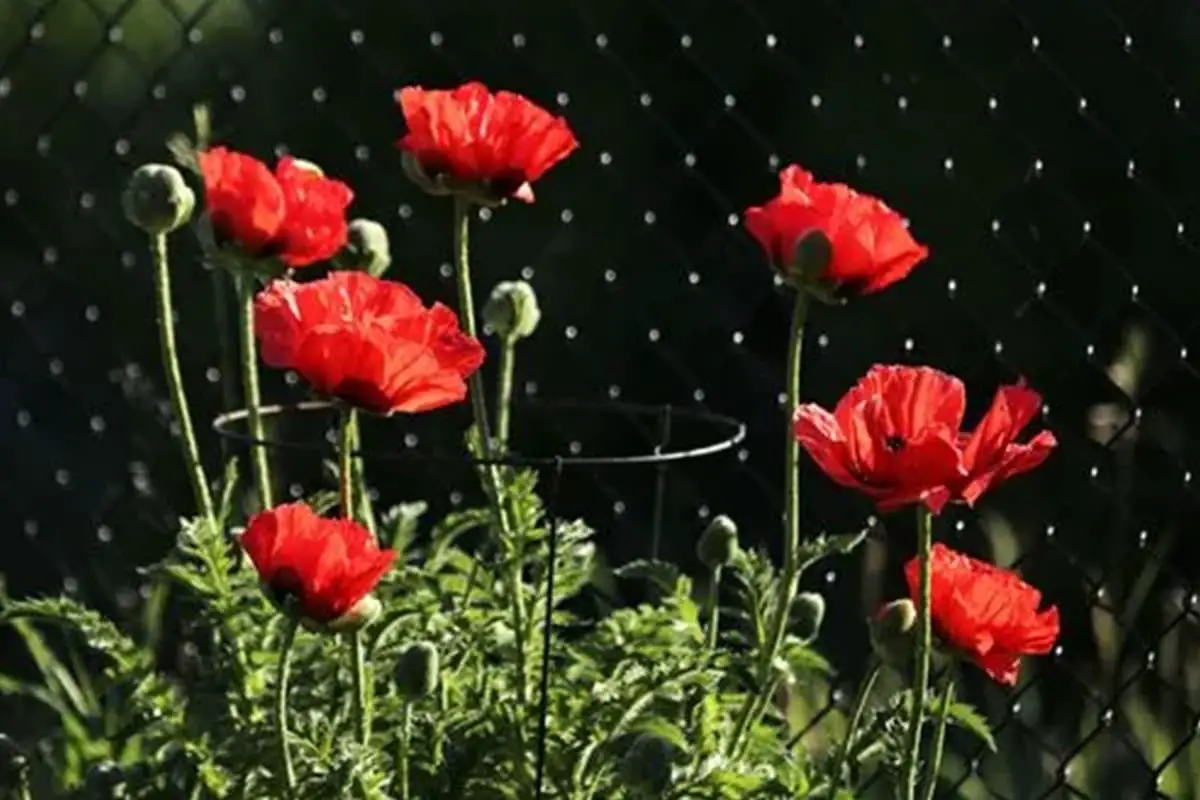
Basal leaves are ovate to lanceolate in contour, with petioles 20-25 centimeters long (longer in cultivated plants), deeply lobed in a bipinnate pattern, with small lobes being lanceolate or oblong, sparsely toothed or notched, green on both sides, and covered with stiff hairs.
There are many stem leaves, alternate, similar to the basal leaves but smaller, with the lower leaves having long petioles and the uppermost leaves being sessile.
The flower is solitary; the peduncle is elongated and densely covered with stiff hairs; the buds are ovate or broadly ovate, 2-3 centimeters long, covered with spreading stiff hairs; sepals are typically two, sometimes three, green on the outside with the inside matching in color; petals range from 4-6, are broad obovate or fan-shaped, measuring (3-)5-6(-8) centimeters long, with a short claw at the base, coarse veins on the back, and are red or deep red, occasionally with purplish-blue spots on the claw.
There are numerous stamens with thread-like filaments that are enlarged at the base and deep purple, with oblong, purplish-blue anthers. The stigma has 13-15(-18) radiating lobes, purplish-blue, fused into a flattened, marginally coarse-toothed disk.
The capsule is nearly spherical, 2-3.5 centimeters in diameter, pale, and hairless. Seeds are round-reniform, brown, with broad stripes and small pits. The flowering period is from June to July.
The Oriental poppy is native to the Mediterranean region and is widely cultivated in Taiwan, China, for ornamental purposes.
It thrives in sunny and well-ventilated environments, preferring to grow in loose, fertile, well-drained sandy soil. It is cold-hardy, with seedlings and rhizomes able to withstand short periods of temperatures as low as -10°C.
Seeding: Seeds can be sown from late August to September, and even from October to November. Since the seedlings have taproots and do not tolerate transplanting well, it is best to use small pots or nutrient cups for seedling cultivation.
Once they develop 3-4 leaves, they can be transferred to the ground, or seeds can be sown directly into the soil. Seedlings emerge within two weeks, and once they have 3-4 leaves, they should be spaced 20-30 centimeters apart without further transplanting.
Root Cuttings: Root cuttings should be taken either in early spring before sprouting or in autumn. If transplanting during the growing season, it should be done on an overcast day when the plant has 6-7 leaves.
Before transplanting, the soil should be thoroughly watered, and care should be taken to preserve as much soil around the roots as possible to minimize damage and ensure successful establishment.
When planting, ensure the plants are accompanied by soil. They favor ample sunlight, fertile, and well-drained sandy loam.
They are quite cold-hardy and are commonly cultivated in northern China. After planting, it is essential to fertilize, weed, and loosen the soil in time each year. Seedlings require plenty of water and fertilizer.
Applying fertilizer once or twice before the flowering can result in vibrant blossoms. During summer, it’s important to create a cool growing environment.
Promptly pruning spent branches and leaves after flowering encourages better subsequent blooms and can extend the blooming period.
After the flowers fade, the ovary quickly develops into a capsule 3-4 centimeters in diameter, maturing seeds within a month. The plant is frost-resistant, but its leaves gradually wither in severe winter.
In spring, fertilizing biweekly can strengthen the plant and enhance the flower’s size and color. Oriental poppies are prone to rot; any diseased plants should be immediately destroyed and the soil disinfected to prevent spread.
The Oriental poppy is an excellent plant for beautifying environments and enriching garden landscapes, suitable for parks, green spaces, roadsides, slopes, and front steps or windows of family courtyards.
It can be planted in clusters or in large swathes. With its strong cold resistance, it sprouts and blooms from early April in the spring.
After flowering, there is a brief dormancy period from mid-July to mid-August, followed by a resurgence of growth. Its verdant foliage can be admired until late November.
Despite having “poppy” in its name, the Oriental poppy’s capsule does not contain narcotic alkaloids like morphine; it is a non-toxic and superior ornamental flower.
Its blooms are larger and more vivid than those of the common poppy. In Northern China, while the common poppy is more frequently cultivated, the Oriental poppy is not as common.
However, both species share similar habits and growth ranges, and replacing the common poppy with the Oriental poppy in flower beds could yield superior ornamental results.
Parts Used for Medicine: The fruit and the whole plant are used.
Main components: Primarily contains alkaloids.
Properties and Functions: Pain relief, cough suppression, and anti-diarrheal.
Primary Applications: Coughs and abdominal pain.

Peggie was once a high school mathematics teacher, but she set aside her chalkboard and textbooks to follow her lifelong passion for flowers. After years of dedication and learning, she not only established a thriving flower shop but also founded this blog, “Flowers Library”. If you have any questions or wish to learn more about flowers, feel free to contact Peggie.
 English
  العربية
  Bahasa Indonesia
  Deutsch
  Français
  Italiano
  Nederlands
  Português
  Русский
  日本語
日本語