Paeonia suffruticosa, is one of the four most famous varieties of peonies. Originating from the family of Wei Renbo in Luoyang during the Five Dynasties period, this flower exhibits the ultimate beauty of double petals.
Its warm and passionate aesthetic adds a sense of success, celebration, wealth, and good fortune. With its long blooming period, large number of flowers, and full blossoms in a purplish-red color, Wei Zi is highly appreciated for its ornamental value and is often referred to as the “Queen of Flowers”.
I. Basic Introduction
Paeonia suffruticosa, is a deciduous shrub with a medium to tall stature and semi-spreading growth habit. Its branches are robust, with short annual twigs and short internodes.
Originating from the family of Wei Renbo in Luoyang during the Five Dynasties period, this peony is prized for the exceptional beauty of its double petals.
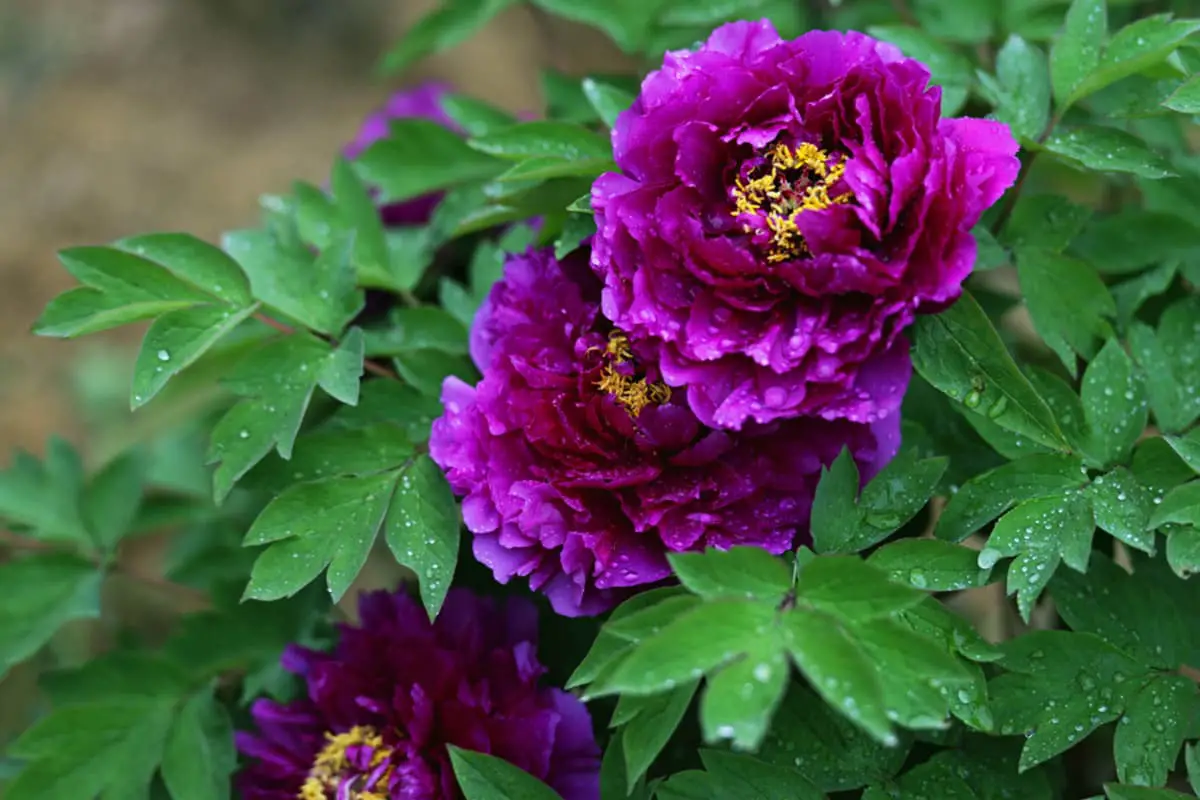
Its purplish-red blooms, taking the shape of a lotus or a crown, along with its long blooming period and large number of full blossoms, have earned it the title of the “Queen of Flowers”.
The flower conveys a warm and passionate aesthetic, adding a sense of success, celebration, wealth, and good fortune, and is greatly admired for its ornamental value.
II. Common Varieties
Paeonia suffruticosa is a traditional variety of peony.
III. Shape and Features
Paeonia suffruticosa is medium to tall in stature, with a semi-spreading and attractive form. Its branches are robust, with short annual twigs and short internodes.
The plant has medium-sized round leaves with 10-cm long petioles, and ovate leaflets with many notches, blunt ends, and light purplish-red edges.
The underside of the leaves are concave and rough, with a deep green color. The plant’s growth is strong, with a high rate of flowering, many branches, and numerous sprouts.
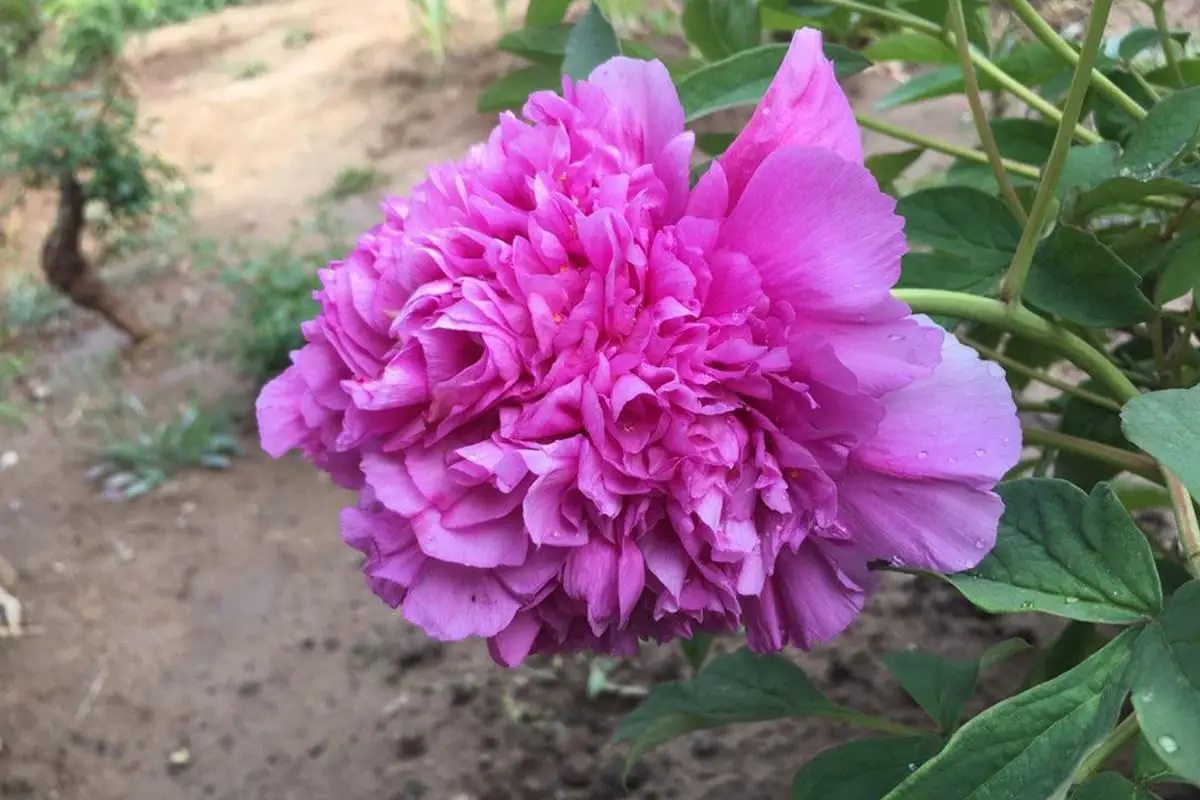
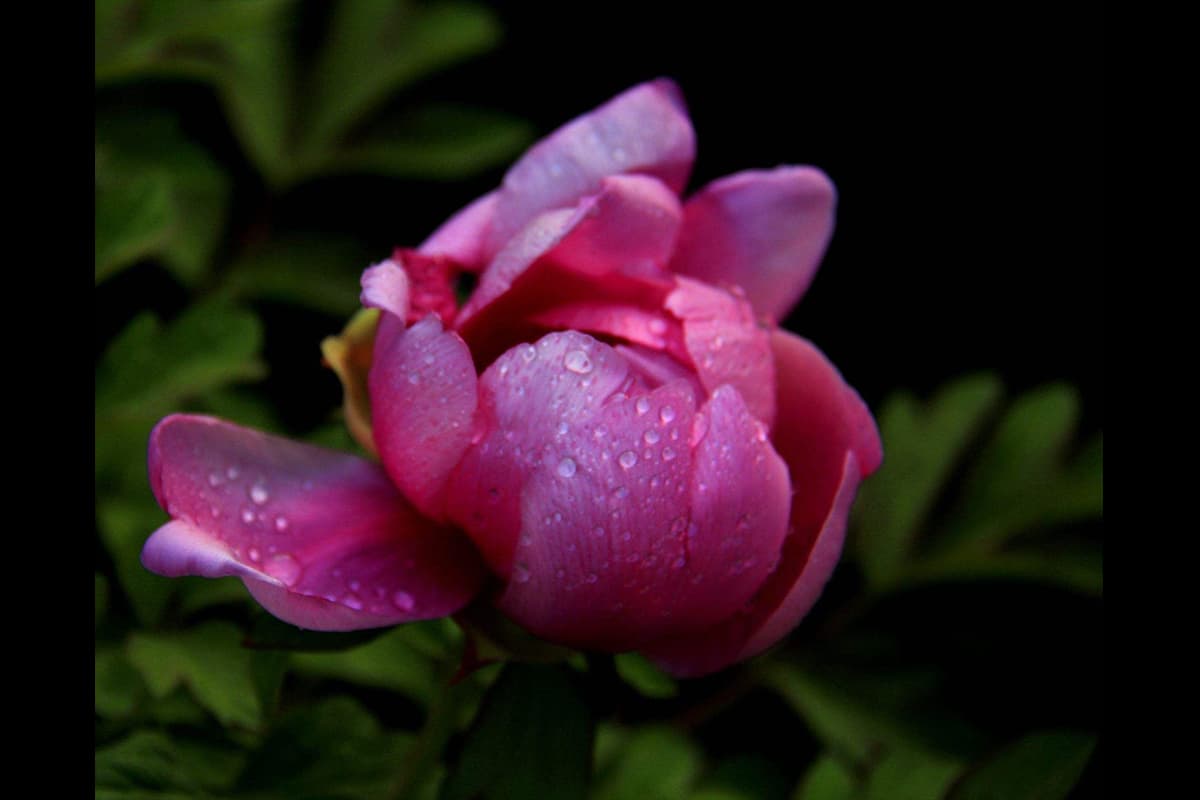
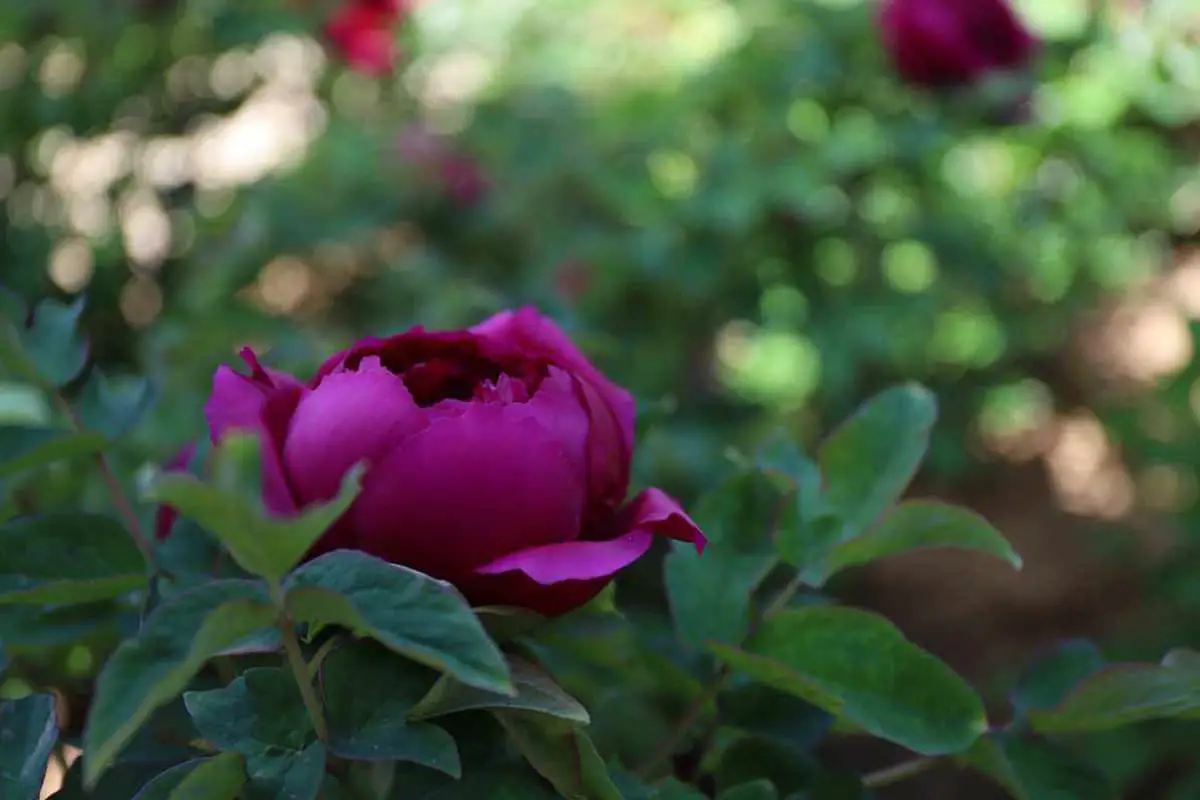
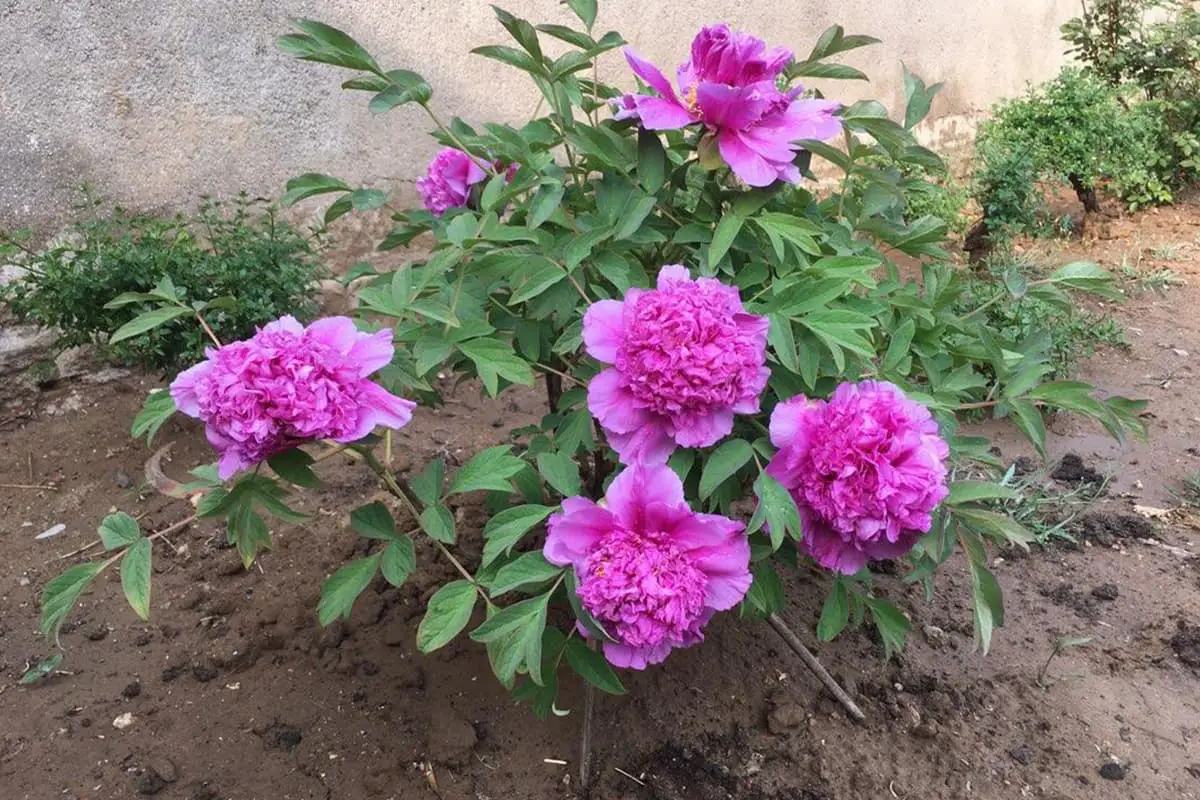
The large flowers are towering and stacked, resembling a crown. The buds are flat and round, and the stunning flowers are purple (72-D) with white tips on the petals, which have a slight gloss.
The diameter of the flower is about 18 cm x 12 cm. With the maximum number of petals, the outer petals are large and hard, while the inner petals are small and upright, thick and hard, forming dense wrinkles.
The stamens are reduced in number. The flower stem is thick and hard, and the flower stands upright. The medium-sized flowers have a rich fragrance and are often referred to as the “Queen of Flowers”.
The fruits are numerous and a bright, dripping red. Each plant produces between 200-1000 fruits, each the same consistent color, which contrasts sharply with the green leaves, creating a vibrant display.
IV. Living Habits
The plant prefers warm, cool, dry environments with plenty of sunlight. It can tolerate semi-shade, cold, drought, and weak alkaline conditions, but dislikes waterlogging, heat, and direct sunlight.
It thrives in loose, deep, fertile, well-drained neutral sandy loam soil on high and dry terrain. Growth is poor in acidic or heavy clay soils, with a pH of 6.5-7 being optimal.
While plenty of sunlight benefits its growth, it can’t tolerate the scorching sun in summer, and temperatures above 25°C will put the plant into dormancy. The optimal temperature for blooming is 17-20°C, but the plant must undergo a low temperature treatment of 1-10°C for 2-3 months before blooming.
It can withstand a minimum temperature of -30°C, but in cold northern regions, appropriate measures should be taken to prevent frost damage in winter.
V. Planting Method
Planting: The soil should be loose, fertile, and slightly alkaline. Trim any broken or diseased roots of the peony seedlings to be planted, then immerse them in insecticide and fungicide. Place them into a pre-prepared pot or hole, making sure the roots are spread out.
As you fill the pot or hole halfway with soil, gently lift and shake the seedlings to settle them in. The depth should be such that the root stem is slightly below the surface of the pot or ground.
Watering: Water thoroughly after planting. Peonies dislike waterlogging, so water as needed during the growing season. In the dry northern regions, water before flowering, after flowering, and when the ground freezes.
For potted plants, it’s easier to manage if you cut off the spent flowers after blooming and bury the pot underground.
Fertilizing: After the first year of planting, fertilize in the autumn, primarily with mature organic fertilizer. This can be combined with loosening the soil, spreading the fertilizer, and hole fertilization.
In spring and summer, use more chemical fertilizer, combined with watering, before and after flowering. For potted plants, water with a liquid fertilizer.
Pruning: In the planting year, prune evenly. After sprouting in the spring, leave about five branches and remove the rest to concentrate nutrients, making the flowers larger and brighter the following year.
In autumn and winter, clean up the garden by cutting off the dried flower stems, weak branches, and branches without flowers. For potted plants, trim to your preferred shape as needed.
Cultivation: During the growing season, timely cultivation is necessary to remove weeds and monitor for diseases and pests. In autumn and winter, turn the soil around peonies that are more than two years old.
Repotting: After three or four years of growth, repot the potted peony in the autumn into a larger pot filled with fresh fertile soil, or separate and replant the divisions.
Pesticide spraying: Spray with lime sulfur before budding in early spring, and with a mixture of insecticide and fungicide in summer, depending on the disease condition, every two weeks. This can be combined with fertilizing, adding chemical fertilizer and growth regulators as needed.
Forcing blooms: To coincide with festivals or celebrations, the peony can be warmed up about 50 days in advance, controlling the temperature at around 10-25°C, averaging 15°C daily.
Keep the plant moist in the early stage, ensure good ventilation and sunlight after the buds appear, and control the temperature according to the flowering period. Regularly apply foliar fertilizer and ensure sufficient water supply. This way, flowers can be seen in both winter and spring.
Viewing: A single peony plant’s natural flowering period lasts about 10-15 days and shortens with rising temperatures. It can be maintained for over a month at 3-8°C. For field-grown plants, temporary shelters can be built to shield from wind and light, extending the viewing period.
For potted plants, move them to a place where direct sunlight cannot reach, with a temperature of 5-10°C, and a well-ventilated and well-lit environment. Water as needed, depending on the appearance and soil moisture level, but avoid getting water on the flowers to prolong the flowering period.
When cutting for flower arranging, it’s best to cut or burn the wound underwater. Add preservative or a little sugar to the water for flower arranging to extend the bloom time.
VI. Methods of Propagation
Dividing
The specific method of propagation by division involves digging up a thriving peony bush and separating it at the intersection of the root system.
The amount of sub-bushes divided from the original bush depends on its size, with larger bushes yielding more divisions and smaller ones yielding fewer. Generally, every 3-4 branches form a sub-bush with a relatively complete root system.
The roots are then lightly coated with sulfur powder and mud, making it ready for planting. The ideal time for propagation by division is from the fall equinox to the first frost of the year.
During this period, the temperature is relatively high, and the peony is in a semi-dormant state, allowing it to grow nutritionally for a considerable period. Division does not severely affect root growth, and the plant can still generate some new roots and a small amount of new shoots.
If division is done too late, root growth is weak, or no new roots are produced. The following spring, the plant’s development is even weaker, making it susceptible to drought and possible death. If division is done too early, rapid growth can occur due to high temperatures, which can lead to premature sprouting.
The mother plant used for peony division is usually a robust bush. As much of the root tuber as possible should be retained on the mother plant used for propagation.
The roots of the new shoots should be kept intact, allowing for further division after five years. Such plants are more likely to survive after planting and grow more vigorously. The more roots are retained, the more vigorous the growth.
Grafting
Peony propagation by grafting can be divided into two types depending on the rootstock used: one uses wild peony; the other uses paeonia lactiflora roots. The commonly used peony grafting methods mainly include inlay grafting, whip grafting, and bud grafting.
Inlay grafting: Paeonia lactiflora roots are used as rootstock, which are soft and without a hard core, making grafting easier. They are thick and short, with adequate nutrition, and show vigorous initial growth after successful grafting.
If peony roots are used for grafting, the wood is harder, making grafting more challenging, but the lifespan is longer. The best time for grafting is from late September to early October each year. The rootstock is a robust and disease-free paeonia lactiflora root, 2-3 cm in diameter and 10-15 cm in length.
Whip grafting: This is a method to improve the varieties by high grafting. It uses inferior peonies or 8-10-year-old medicinal peony plants. Different quality varieties of colors are grafted onto the multiple branches.
The grafting time is from early July to mid-August. Choose high-quality, robust, disease-free peony plants, cut off the ground shoots, or short branches grown in the same year, 5-7 cm long. The scion should ideally have 2-3 robust buds and leave a petiole.
After choosing the scion, cut a diagonal cut on the back of the bud at the lower part of the scion to form a horse-ear shape. Then make a wedge shape on the other side of the horse-ear shape so that both sides can be grafted to the cambium tissue between the wood and the bark, making it easier to survive.
Except during the rainy season, the plant should maintain an appropriate humidity for normal growth before and after whip grafting. Bud grafting is an effective method for propagating and cultivating peonies with multiple varieties and colors on one plant.
Bud grafting: It is carried out between May and July. The grafting is best done on a sunny day. There are two methods: the bark grafting method and the bud-replacement method.
The bark grafting method involves cutting a rectangular or shield-shaped notch on the current year’s branches of the rootstock along with the wood. Then, a bud piece of the same size and shape is cut from the scion along with the wood.
The bud piece is then quickly attached to the notch on the rootstock and tied tightly with a plastic rope. The bud-replacement method involves removing the axillary bud at the grafting site on the rootstock along with the cambium, leaving an intact bud embryo on the wood.
Then, the axillary bud on the scion is peeled off in the same way and quickly placed on the bud embryo on the rootstock, ensuring that the two match. It is then tied tightly with plastic rope. After grafting, the plant should be watered, the soil should be loosened, and fertilizer should be applied to promote healing.
Cutting propagation
Cutting propagation is a method of cultivating new plants by taking advantage of the peony branch’s propensity for easy root generation. It is one of several asexual reproduction techniques.
This method involves cutting the branch for propagation, separating it from the parent plant, and then inserting it into soil or other substrates to root and become a new plant.
The branches used for peony cutting propagation should be chosen from the current year’s ground sprouts emitted from the base of the peony, or when pruning for shaping, select branches that are stem-filled, have full terminal buds, and are free of pests and diseases.
These branches should be 10-18 centimeters long. The peony’s roots are fleshy and prefer dry, non-humid conditions and are drought-tolerant.
Therefore, the seedbed should be located in a sunny, well-ventilated area, and raised beds should be built for seeding. When propagating by cutting, water each ridge after planting. The goal is to thoroughly water each bed in one go.


 English
  العربية
  Bahasa Indonesia
  Deutsch
  Français
  Italiano
  Nederlands
  Português
  Русский
  日本語
日本語