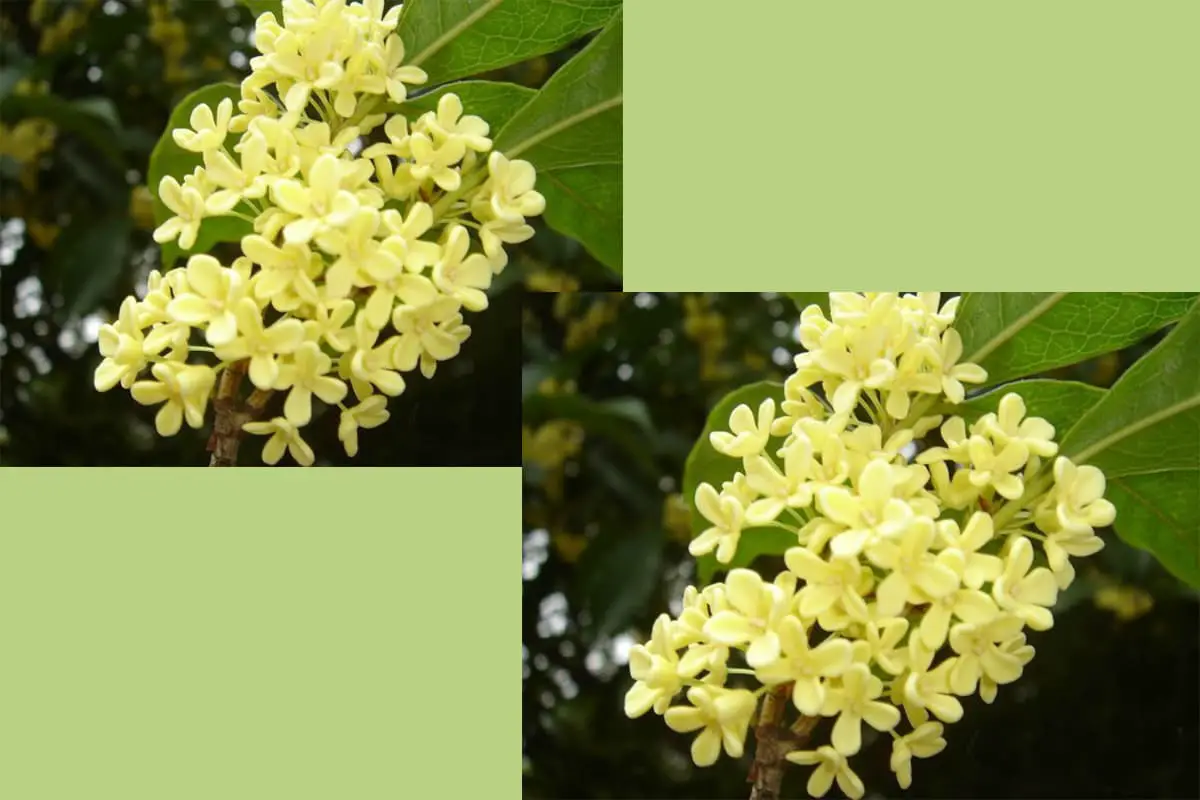
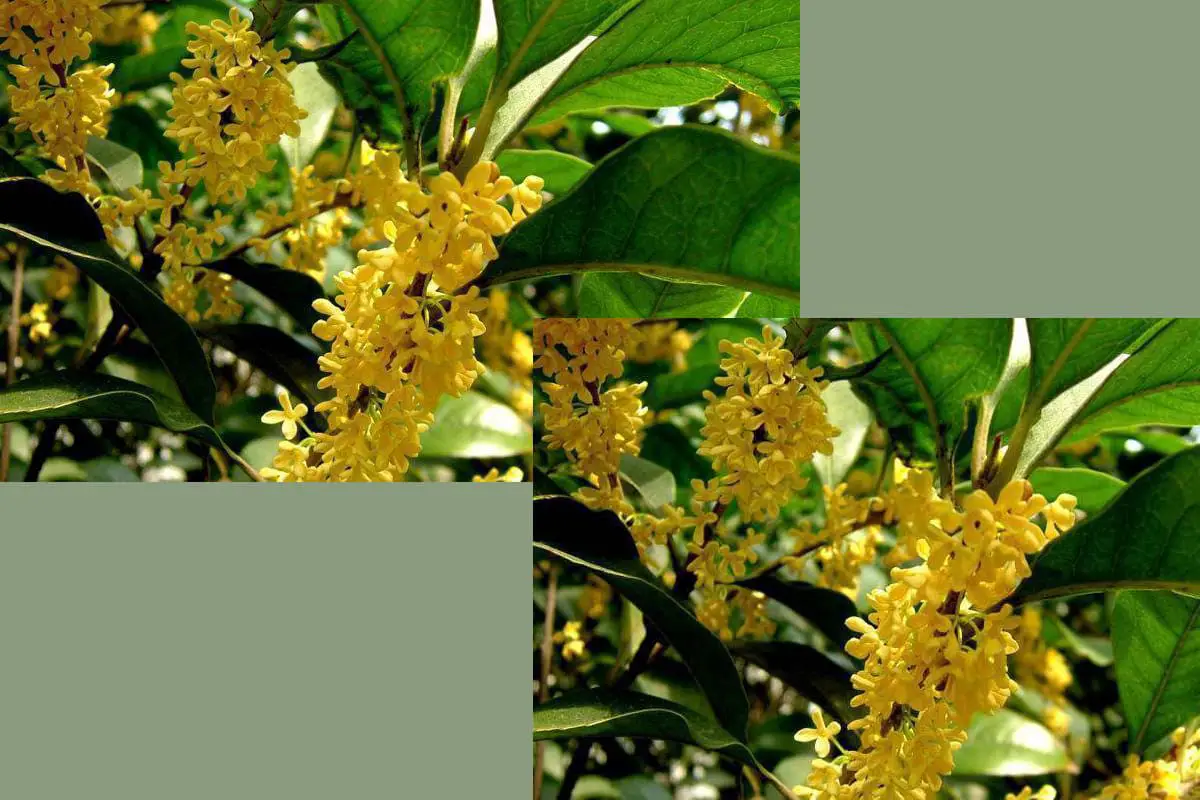
Osmanthus fragrans ‘Qiu Gui’, an esteemed ancient cultivar of sweet osmanthus, is extensively cultivated in the Hangzhou region of China. This variety is distinguished by its long, curved flower stems supporting clusters of small blooms that form large, evenly spaced flower balls.
The densely packed petals create brilliant golden flowers, offering exceptional ornamental value. Typically beginning its flowering cycle in the third year after planting, ‘Qiu Gui’ blooms 2-3 times annually, making it an outstanding choice for garden landscaping and urban greening projects.
I. Brief Introduction
Osmanthus fragrans ‘Qiu Gui’ is an evergreen shrub characterized by a spherical crown. Its bark features dense, variably sized oval and round lenticels. The leaves are oppositely arranged, exhibiting a leathery texture with entire margins and glandular dots on both surfaces.
The flowers are bisexual, with plants being either dioecious (separate male and female plants) or andromonoecious (having both male and bisexual flowers). Inflorescences cluster in leaf axils, forming small, terminal cymes. The calyx is campanulate (bell-shaped) with four lobes.
The corolla ranges from medium to golden yellow in color and is also bell-shaped, featuring four lobes that are imbricate (overlapping like roof tiles) in bud. Stamens are adnate to the upper portion of the corolla tube. The ovary is bilocular, with two pendulous ovules in each locule.
The fruit is a drupe, oval or obliquely oval in shape, containing a hard or bony endocarp (inner shell) that typically encloses a single seed. The embryo is flat with a superior radicle. The base chromosome number for the species is x=23.
As an ancient cultivar, ‘Qiu Gui’ typically begins flowering in its third year, producing abundant and visually striking blooms 2-3 times per year.
II. Morphology and Features
‘Qiu Gui’ is an evergreen shrub with a distinctive spherical crown. Its bark is characterized by dense lenticels of various sizes and shapes, primarily oval and round.
The standard plant typically develops an average of 2.9 branches. Spring shoots average 9.7 cm in length, with a mean of 7.0 nodes per shoot and 24.5 axillary buds per shoot. Each node usually bears 2-3 overlapping buds on one side, ranging from a minimum of 1 to a maximum of 4.
Leaves are dark green, thin-leathery in texture, and slightly glossy. The leaf shape is predominantly elliptic, with some leaves being oblong-elliptic. Average leaf dimensions are 10.9 cm in length and 4.1 cm in width, yielding a length-to-width ratio of 2.6.
The leaf surface is characterized by an uneven texture, typically featuring 7-9 pairs of lateral veins. The abaxial surface displays prominent reticulate venation. While the leaf margin is generally entire, occasional coarse serrations may be present at the apex. The leaf edge exhibits a noticeable undulation, with a short acuminate apex and a broadly cuneate base. The petiole is relatively long, averaging 1.3 cm.
The corolla is spreading, with 3-4 lobes that are thick, spoon-shaped or rounded, and curve inward. The average flower diameter is 9.4 mm. A distinctive feature of ‘Qiu Gui’ is its long, curved pedicel, averaging 11.7 mm in length.
The flowers weigh an average of 1.872g per hundred blooms. The corolla color ranges from medium to golden yellow, corresponding to color 8A on the Royal Horticultural Society Color Chart. The flowers emit a moderate fragrance. Notably, the pistils are vestigial, rendering the plant sterile and incapable of fruit production.
Flowering typically commences in the plant’s third year, with the initial bloom period concentrated in late September annually.
III. Living Habits
The Osmanthus fragrans is a heliophytic species characterized by a relatively dense outer canopy and sparse inner foliage. It thrives in warm, humid climates and prefers well-draining, fertile, slightly acidic soils with a pH range of 5.5-6.5. This species is notably intolerant of alkaline conditions.
As a long-day plant, Osmanthus fragrans flourishes in locations that offer abundant sunlight, deep soil profiles, and excellent drainage. However, it exhibits sensitivity to waterlogged conditions and air pollution.
IV. Cultivation Methods
Nursery Propagation
Select a nursery site with superior drainage properties, ideally consisting of sandy loam or light loam soil. If the existing soil is excessively clay-like, incorporate sand to improve its texture. To mitigate the risks of damping-off and root rot, apply an appropriate fungicide to disinfect the soil prior to planting.
Construct raised nursery beds to optimize drainage. Empirical evidence suggests that standing water after rainfall can readily induce cutting rot, particularly before root establishment. Therefore, prompt water management is critical.
The nursery setup should comprise a double-layered structure: an inner plastic enclosure within an outer shade structure. Design nursery beds to be 1.10 meters wide, with an effective planting area of 1.0 meter.
Create the inner enclosure by inserting sharpened, bow-shaped bamboo slats into the ground, forming an arch 0.5 meters above the bed surface. Secure these arches by binding them with thin bamboo strips. Cover this frame with plastic film, ensuring the sides are weighted down with soil to prevent gaps. The ends of the plastic enclosure should remain unsealed to allow for ventilation.
For the outer shade structure, construct a framework 1 meter high, leaving a 50-centimeter gap between the plastic enclosure and the shade material for air circulation and temperature moderation. Use double-layered reed mats as the shade material. Additionally, install a single-layer curtain around the sides of the plastic enclosure to prevent lateral sun exposure.
Ground Planting
Typically, Osmanthus plants are transplanted to their permanent locations in early spring. Select a site that offers ample sunlight, excellent drainage, and deep soil. Prior to planting, excavate a generously sized hole and amend it with copious organic matter and a small quantity of wood ash.
When transplanting, preserve the root ball to minimize transplant shock. After planting, irrigate thoroughly. Once the plant shows signs of establishment, apply a liquid fertilizer. During July and August, administer 1-2 applications of a water-soluble fertilizer.
Before the onset of winter, apply a layer of well-decomposed compost. Implement an annual fertilization regimen as follows: apply a fast-acting nitrogen fertilizer in late March, a quick-release phosphorus and potassium fertilizer in July, and organic fertilizer in October.
After each fertilization, promptly water and remove any weeds. Regularly monitor and manage pests and diseases to promote vigorous growth and ensure prolific, fragrant blooming each year.
V. Propagation Method
Osmanthus propagation through cuttings is most successful in early summer, with high survival rates. Young plants require careful management, particularly concerning moisture and temperature.
Seedlings are vulnerable to drought and cold, necessitating mist sprays for humidity during summer and autumn, and frost protection in winter. While young trees exhibit rapid growth, producing 2-3 new shoots annually, they have weak branching strength, low pruning tolerance, and are unsuitable for container cultivation.
The optimal time for taking cuttings is from mid-May to late June, with a secondary window from mid-August to late September for autumn propagation. Although some regions suggest April for cutting due to early spring shoot emergence, practice has shown that despite increased lignification, lower air and soil temperatures at this time hinder rooting and increase the risk of decay.
Cuttings should be sourced from current year’s growth on well-nourished parent trees. To ensure robust cuttings:
- Apply quick-acting fertilizer 2-3 times in the 1-2 months before taking cuttings.
- Increase watering if spring conditions are dry.
- Select full, well-structured branches for higher rooting success and survival rates.
Cutting preparation:
- Cut 8-10 cm lengths, retaining 5-6 top leaves.
- Trim leaves in half to prevent overcrowding during insertion.
- Ensure 1-2 nodes are inserted into the soil, as rooting primarily occurs at nodes.
- Treat cuttings with 500 PPM naphthalene acetic acid to promote earlier and faster rooting.
Insertion and care:
- Insert cuttings halfway into the soil, spaced 6×10 cm apart (200 cuttings per square meter).
- Maintain in a cool, well-ventilated area with regular misting to preserve freshness.
- Cover with plastic film and place in a shaded area for optimal rooting conditions.
Rooting process:
- Root primordia form first, followed by indeterminate roots.
- Rooting occurs primarily at nodes, with some between nodes in the cortical region.
- On average, each cutting produces 19 lateral roots (13 at nodes, 6 between nodes).
- Healing tissue forms at the cutting base 15-20 days after insertion, with new roots emerging 7-10 days later.
Understanding the physiological basis of Osmanthus regeneration is crucial for successful propagation. By following these detailed guidelines and providing attentive care, propagators can achieve high success rates in Osmanthus cultivation from cuttings.
VI. Disease Prevention and Control
Brown Spot Disease
Brown Spot Disease is a fungal infection affecting Osmanthus leaves. It initially manifests as small yellow spots that develop into near-circular or irregular brown or gray-brown lesions, ranging from 2-10mm in diameter, with a characteristic yellow halo.
The adaxial leaf surface exhibits numerous small, black, mold-like spots, which are the conidia and conidiophores of the causative fungus. As lesions coalesce, they can cause leaf necrosis but typically do not cross leaf veins.
Disease progression is influenced by environmental factors:
- Spread: Wind, rain, and irrigation
- Growth cycle: Begins in March, peaks April to October, then subsides
- Favorable conditions: High temperature and humidity
- Susceptibility: More severe in mature leaves
Resistance varies among species, with Cinnamomum cassia showing greater resistance compared to C. japonicum and C. sieboldii.
Control Strategies:
- Cultural practices:
- Winter sanitation: Remove and destroy infected plant debris and fallen leaves
- Quarantine: Prune diseased leaves from newly acquired seedlings
- Environmental management: Ensure good ventilation and adequate light exposure
- Irrigation: Avoid overhead watering during peak infection periods
- Soil management: Prevent waterlogging
- Chemical control:
- Preventive treatment: Spray nursery stock with 0.1% potassium permanganate solution before transplanting in high-risk areas
- Fungicide applications: • Pre-winter treatment: Apply 70% Mancozeb (1:500 dilution) twice before indoor storage • Outbreak control: Use 90% Carbendazim (1:500) or 50% Thiram (1:500) • Regular sprays during disease periods:
- Bordeaux mixture (1:2:100-200 lime equivalent)
- 50% Benomyl (1:1000-1500)
- Prochloraz (1:500)
- 50% Mancozeb (1:600)
- Plant health management:
- Nutrition: Apply organic and potassium-rich fertilizers to enhance disease resistance
- Pest control: Manage sucking insects like scale insects and aphids promptly
Leaf Blight
Leaf Blight, also known as Blight Spot Disease, is a significant pathogen affecting Osmanthus. The disease progression typically follows this pattern:
- Initial symptoms: Small, pale brown spots appear, often starting at leaf tips or edges
- Lesion development: Spots expand into circular or irregular shapes, sometimes curling or cracking
- Advanced stage: Lesions merge, covering up to 1/3 to 1/2 of the leaf surface, turning gray-brown with green margins
- Final stage: Small black spots (likely fungal fruiting bodies) appear within lesions
The disease can occur year-round but is most severe from July to November, especially under conditions of high temperature, high humidity, and poor ventilation. Weakened plants are particularly susceptible.
Control Strategies:
- Sanitation:
- Late autumn/early winter: Thoroughly remove and destroy (burn or bury) infected leaves to reduce overwintering inoculum
- For transplants or imported seedlings: Remove and destroy diseased leaves, apply preventive fungicide treatments if necessary
- Cultural practices:
- Soil management: Loosen soil regularly, control weeds, prevent soil crusting and waterlogging
- Fertilization: Apply phosphorus and potassium-rich fertilizers to enhance plant vigor
- Irrigation: Maintain adequate soil moisture during hot, dry periods to support plant health
- Chemical control:
- Preventive sprays: Begin in late June, repeat every two weeks
• 70% Mancozeb (1:500 dilution)
• 75% Carbendazim (1:800 dilution)
• Bordeaux mixture (1:2:100)
- Continue for 3-4 applications
- Alternative: 25% Propiconazole emulsion (1:5000 dilution) at 48-day intervals
Sooty Mold Disease
Sooty Mold is a secondary fungal infection that develops on the honeydew excreted by sap-feeding insects. It thrives in hot, humid conditions and poorly ventilated environments.
Characteristics:
- Appearance: Gray-black powdery to membranous coating on leaves and branches
- Causal factors: Secretions from aphids, scale insects, and mealybugs
- Impact: Reduces photosynthesis, impairs plant growth, causes premature leaf yellowing and abscission
Control Strategies:
- Cultural practices:
- Pruning: Maintain open canopy structure to improve air circulation and light penetration
- Sanitation: Regular leaf cleaning for potted plants
- Pest management:
- Monitor and control sap-feeding insects promptly
- Chemical control:
- Early intervention: Apply one of the following fungicides:
• 50% Thiophanate-methyl (1:500 dilution)
• 50% Mancozeb (1:800 dilution)
• 75% Chlorothalonil (1:500 dilution)
VII. Value and Others
Main Value
‘Globe Osmanthus’ is an heirloom cultivar of Osmanthus with distinctive characteristics:
Morphological features:
- Abundant spring shoots (7 per node)
- Compact growth habit (short internodes, 1.4 cm)
- Dense floral bud placement on nodes
Floral attributes:
- Long, curved flower stems
- Clustered small flowers forming large, evenly spaced floral spheres
- Thick, inward-curling corolla lobes
- Exceptionally abundant blooming among golden osmanthus varieties
Horticultural significance:
- High ornamental value due to unique growth habit and prolific flowering
- Excellent choice for garden landscaping and urban greening projects
- Potential economic value for cut flower or ornamental plant markets
- Recommended for cultivation and promotion in floriculture-focused regions
This cultivar’s distinctive features make it a valuable addition to ornamental plant collections and landscape designs, offering both aesthetic appeal and potential commercial applications.


 English
  العربية
  Bahasa Indonesia
  Deutsch
  Français
  Italiano
  Nederlands
  Português
  Русский
  日本語
日本語