FlowersLib Logo

Osmanthus ‘Jin Qiu Gui’: A Golden Delight for Your Garden

Osmanthus fragrans ‘Jin Qiu Gui’ is an exceptional cultivar developed through decades of meticulous breeding by horticulturists. This superior variety stands out for its striking golden hue and rich, long-lasting fragrance that captivates the senses.

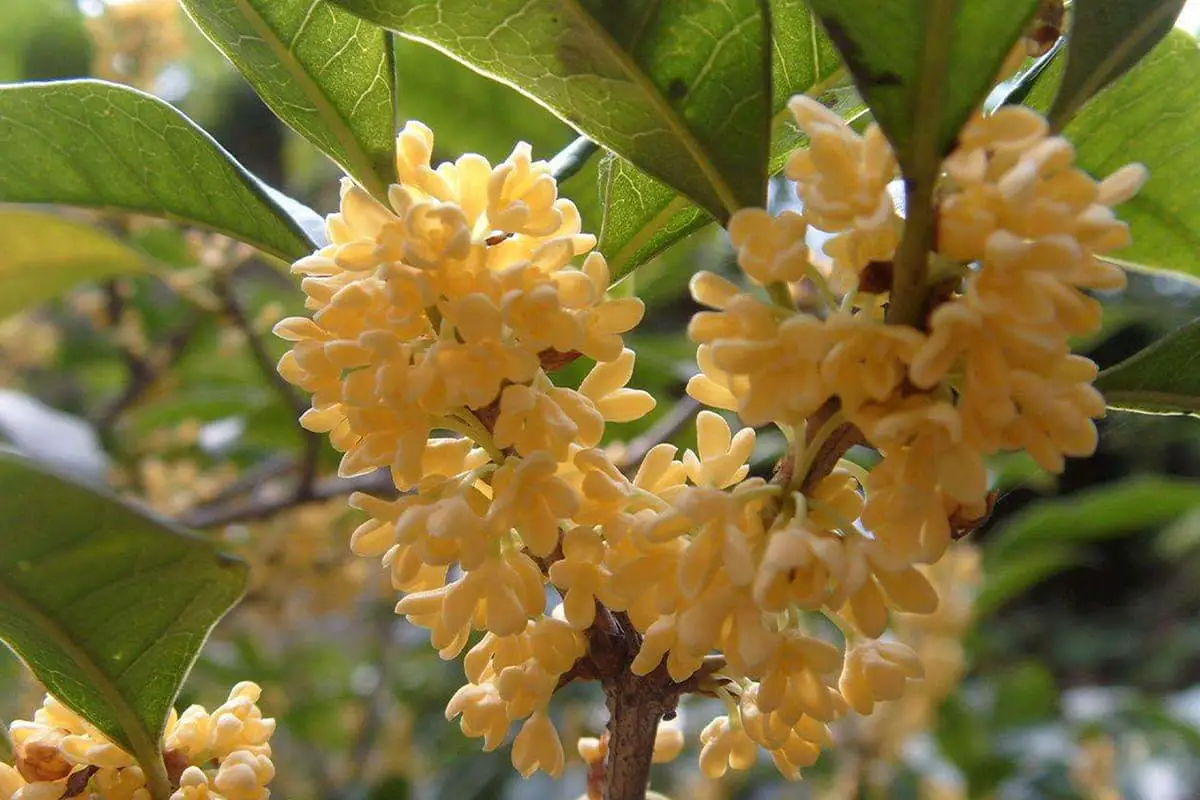
‘Jin Qiu Gui’, which translates to “Golden Autumn Osmanthus,” is distinguished by its dense flower buds, numerous blooming nodes, short internodes, and concentrated inflorescences. In terms of floral characteristics – including flower size, petal count, color vibrancy, and fragrance intensity – ‘Jin Qiu Gui’ surpasses other Osmanthus varieties.

This cultivar offers significant ornamental and economic value, making it ideal for both landscape design and floral industries.

I、Basic Introduction

‘Jin Qiu Gui’ is a distinct Osmanthus cultivar with consistent and notable characteristics. Its superiority over other Osmanthus varieties is evident in several key aspects:
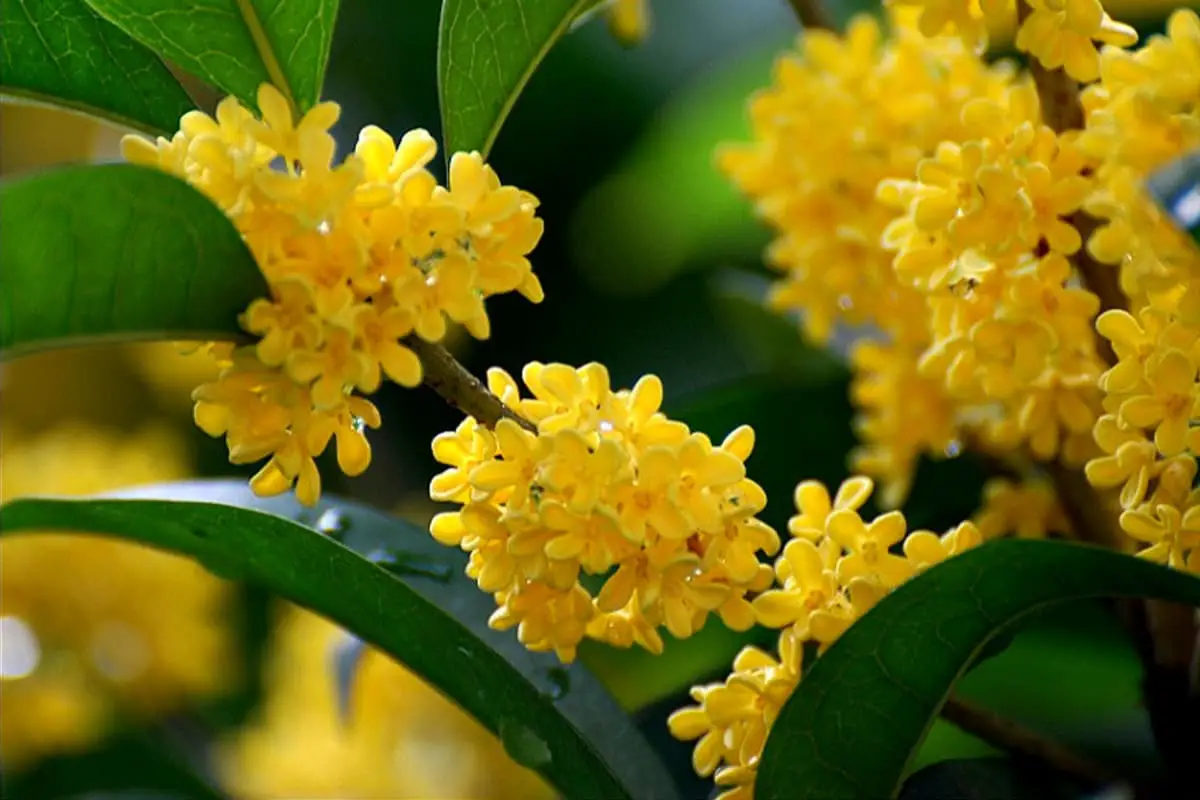
Osmanthus fragrans 'Jin Qiu Gui’

Floral density: Each node typically produces 4-5 overlapping flower buds, which is 2-4 times more than most Osmanthus varieties.

Extended blooming: Uniquely, branches from the previous two years can also produce flower buds, resulting in inflorescences that extend deep into the shrub’s structure.

Spectacular display: During peak bloom, the entire tree is adorned with flowers, creating a breathtaking visual spectacle.

The high density of buds is a defining feature of ‘Jin Qiu Gui’. At the height of flowering, each node bears 4-5 buds on both sides, all of which open. This results in dozens of small flowers clustered at each node, forming eye-catching miniature floral spheres that justify its name, which evokes the golden splendor of autumn.

II、Botanical Characteristics

‘Jin Qiu Gui’ is an evergreen small tree with a naturally rounded crown. Its main branches grow straight, while the smaller branches often spread in various directions, creating a full and aesthetically pleasing form.

Bark: Dark gray with a moderate number of circular or elliptical lenticels.

Branching: On average, a mature tree produces 5.3 main branches, with the potential for up to 11. Spring shoots average 31.1 cm in length.

Nodes and Flowers: Each shoot averages 8.0 nodes (up to 10), with an average of 54.0 axillary flowers per shoot. Notably, 72% of nodes bear 4 or 5 flower buds.
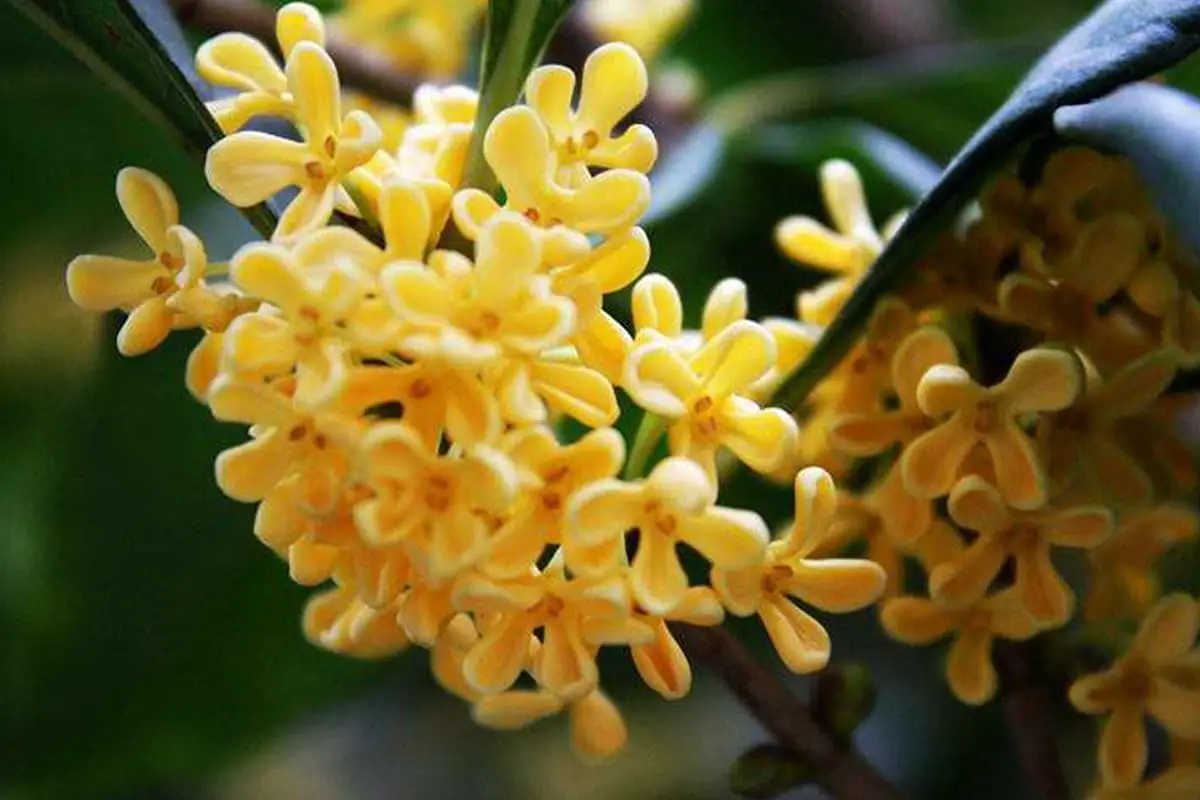
Osmanthus fragrans 'Jin Qiu Gui’

Foliage:

  • Leaves are dark green, leathery, and glossy with a long elliptical shape.
  • Average leaf dimensions: 11.6 cm long, 4.2 cm wide (length-to-width ratio of 2.8).
  • Leaf surface is slightly textured with 7-11 pairs of prominent lateral veins on both sides.
  • Leaf margins are generally entire, occasionally with coarse serrations near the tip, slightly wavy, and distinctly revolute.
  • Leaf tips range from short to long acuminate; leaf bases are broadly cuneate.
  • Petioles are relatively thick, averaging 1.1 cm in length.

Flowering:

  • Blooming period: Late September to early October.
  • Flowers feature a nearly flat corolla with elliptical lobes.
  • Flower color is lemon yellow (International Color Chart: 8B).
  • Strongly fragrant.
  • Does not produce fruit.

Comparison to ‘Bo Ye Jin Gui’:

Osmanthus fragrans 'Jin Qiu Gui’


While ‘Jin Qiu Gui’ shares many similarities with ‘Bo Ye Jin Gui’, there are notable differences:

  1. ‘Jin Qiu Gui’:
    • Longer spring shoots
    • Moderately wavy leaf margins
    • Shorter flower stalks
    • Smaller flower diameter
    • Lighter flower color (8B)
  2. ‘Bo Ye Jin Gui’:
    • Shorter spring shoots
    • Deeply wavy leaf margins
    • Longer flower stalks
    • Larger flower diameter
    • Darker flower color (15B)

Based on these characteristics, it is likely that ‘Jin Qiu Gui’ is an exceptional cultivar selected from ‘Bo Ye Jin Gui’ through careful breeding and selection.

III. Habitat Preferences

The Golden Osmanthus (Osmanthus fragrans ‘Jingui’) shares similar environmental requirements with other autumn osmanthus species. It thrives in locations that offer:

  • Abundant sunlight
  • Deep soil profiles
  • Good drainage
  • Warm, humid climatic conditions
  • Loose, fertile, slightly acidic soil (pH 5.5 to 6.5)

The plant is adversely affected by alkaline soils, waterlogged conditions, and air pollution from coal smoke. Optimal planting zones include:

  • Regions above 800 meters altitude in Southern China
  • Areas below 500 meters altitude in the Yangtze River Basin

IV. Cultivation Techniques

Propagation of Golden Osmanthus through stem cuttings requires careful attention to detail:

Cutting Selection and Timing

  • Use semi-mature branches grown within the current year
  • Optimal cutting temperature: 25-28°C
  • Best cutting period: Late June to mid-July
  • August cuttings are possible but challenging when temperatures exceed 30°C

Cutting Preparation

  • Length: 6-10 cm
  • Retain two complete, healthy leaves at the top
  • Remove damaged or incomplete leaves to improve survival rates

Propagation Bed Preparation

  • Use sandy soil (clay-heavy soil hinders survival)
  • First year: Perform winter ploughing
  • Spring: Conduct fine tillage
  • Create raised beds 20 cm high with a convex shape
  • Cover with grass to protect from rain
  • Place a large water tank nearby to equilibrate water temperature with soil temperature

Cutting Methods

  1. Semi-mature branch heel cutting:
    • Cut 0.1 cm below the node at the junction of new and old growth
    • Separate multiple branches if present
    • Retain 6-10 cm length
    • Remove tender top leaves, keep one pair at the top
    • Insert immediately after cutting, leaving 1.5 cm exposed
    • Compact surrounding soil and water thoroughly
  2. Single bud cutting:
    • Split short branches with opposite leaves
    • Insert each bud node with a 1.5 cm section of half-branch into soil
    • Suitable for large-scale propagation

Post-Cutting Care

  • Provide shade for the first month (crucial for survival)
  • Use double-layer shade sheds or place under eaves
  • Avoid overwatering to prevent rot
  • Spread crushed grass on soil surface before watering
  • Spray leaves with water 2-3 times daily in hot weather
  • Root nodules form after about one month
  • Substantial root development occurs after two months

Gradual Light Exposure

  • After two months, introduce morning and evening sunlight
  • Gradually increase sunlight exposure
  • Remove shade completely in October

Winter Care and Transplanting

  • Implement cold protection measures in November
  • Water around 10 a.m. during dry winters to prevent freezing
  • Remove cold protection in late March or early April
  • Transplant in spring of the third year

V. Disease and Pest Management

Golden Osmanthus is susceptible to several diseases and pests:

Leaf Blight and Anthracnose

  • Symptoms: Yellowing and browning of leaves from base and edges
  • Control:
    • Remove and destroy infected leaves
    • Apply potassium and humus fertilizer to enhance resistance
    • Spray ferrous sulfate and lime solution (1:2:150) during disease period
    • Preventive measure: Spray 50% methyl tobujin (800-1000 times dilution)

Mealybugs

  • Occurrence: Common in rainy seasons
  • Symptoms: Leaf spots, curling, and shrinkage
  • Control: Spray 80% diazinon emulsion (1000-1500 times dilution)

Scale Insects

  • Symptoms: Yellowing and leaf drop
  • Control: Manually remove from leaves

Spider Mites

  • Symptoms: Leaves lose green color, turn yellow or gray-white
  • Control:
    • Early infestation: Spray 20% avermectin (700-fold dilution)
    • Mid-stage: Use 80% diazinon oil emulsion (2000 times dilution) or 40% omethoate emulsion (3000 times dilution)

Red Spiders

  • Occurrence: Hot, dry climates
  • Symptoms: Leaf curling, scorching, and drop
  • Control: Spray 40% omethoate emulsion (2000-2500 times dilution) weekly for 3-4 weeks

VI. Value and Applications

Botanical Significance

Golden Osmanthus is a precious variety among osmanthus cultivars, offering high developmental value and significant ornamental appeal.

Economic Value

  • Ideal for urban garden landscaping due to its full shape, lush foliage, and dense, fragrant flowers
  • Higher fragrance content (18%) compared to general osmanthus varieties (16%)
  • Recommended as a preferred aromatic tree species for reforestation in suitable mountainous areas

Ornamental and Processing Potential

  • Offers substantial social and economic benefits in cultivation and utilization
  • Widely applicable in garden design and urban greening projects
  • Valuable for flower processing industries
Share is Caring.
Peggie

Peggie

Founder of FlowersLib

Peggie was once a high school mathematics teacher, but she set aside her chalkboard and textbooks to follow her lifelong passion for flowers. After years of dedication and learning, she not only established a thriving flower shop but also founded this blog, “Flowers Library”. If you have any questions or wish to learn more about flowers, feel free to contact Peggie.

Before you go
You May Also Like
We picked them just for you. Keep reading and learn more!
© 2025 FlowersLib.com. All rights reserved. Privacy Policy