600+ Types of Flowers A To Z (With Names and Pictures)
Types Of Flowers By Names (A-Z) Types Of Flowers By Color Types Of Flowers By Season Types Of Flowers By Blooming Time 600+ Types of Flowers No. Flower Name No.…

Orchis chusua grows between 5-45 cm in height. The tuber is oblong or spherical, fleshy, and undivided. The stem is erect and cylindrical. The leaves are lanceolate, linear-lanceolate, or linear, with no purple spots on the surface.
The inflorescence has 1-20 flowers, mostly leaning to one side; the flowers are purple-red or pink. The petals stand erect, are narrowly ovate, ovate, or oblong-ovate, measuring 5-7 mm in length and 3-4 mm in width with a blunt tip.
The edges of the petals are smooth and without cilia. The lip of the flower protrudes forward, longer and wider than the sepals, with smooth edges and is three-parted. The flowering period is from June to August.
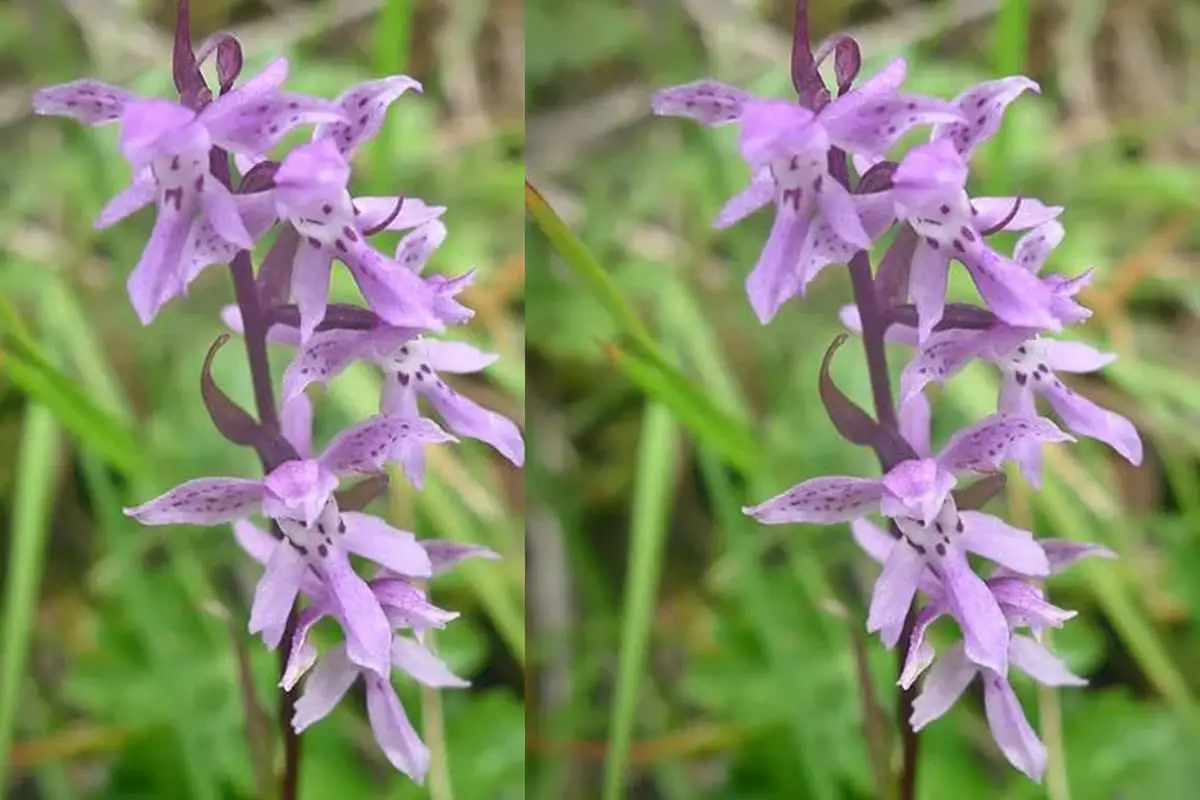
It is found on mountain slopes, under shrubs, alpine shrub grasslands, or alpine meadows at altitudes ranging from 500-4500 meters.
This species is distributed in China, the Korean Peninsula, Japan, Siberia in Russia, Nepal, Sikkim, Bhutan, northern India, and northern Myanmar. The flower is cultivated and holds significant horticultural value.
Orchis chusua grows between 5-45 cm in height. The tuber is oblong or spherical, 1-1.5 cm in length, and about 1 cm in diameter. The stem is erect, cylindrical, slender or robust, with 1-3 tubular sheaths at the base.
Above the sheath, there are 1-5 leaves, typically 2-3, and sometimes 1-3 smaller, lanceolate bract-like leaves. The leaves are lanceolate to linear, 3-15 cm long, and 0.2-3 cm wide, with no purple spots on the surface. The flowering period is from June to August.
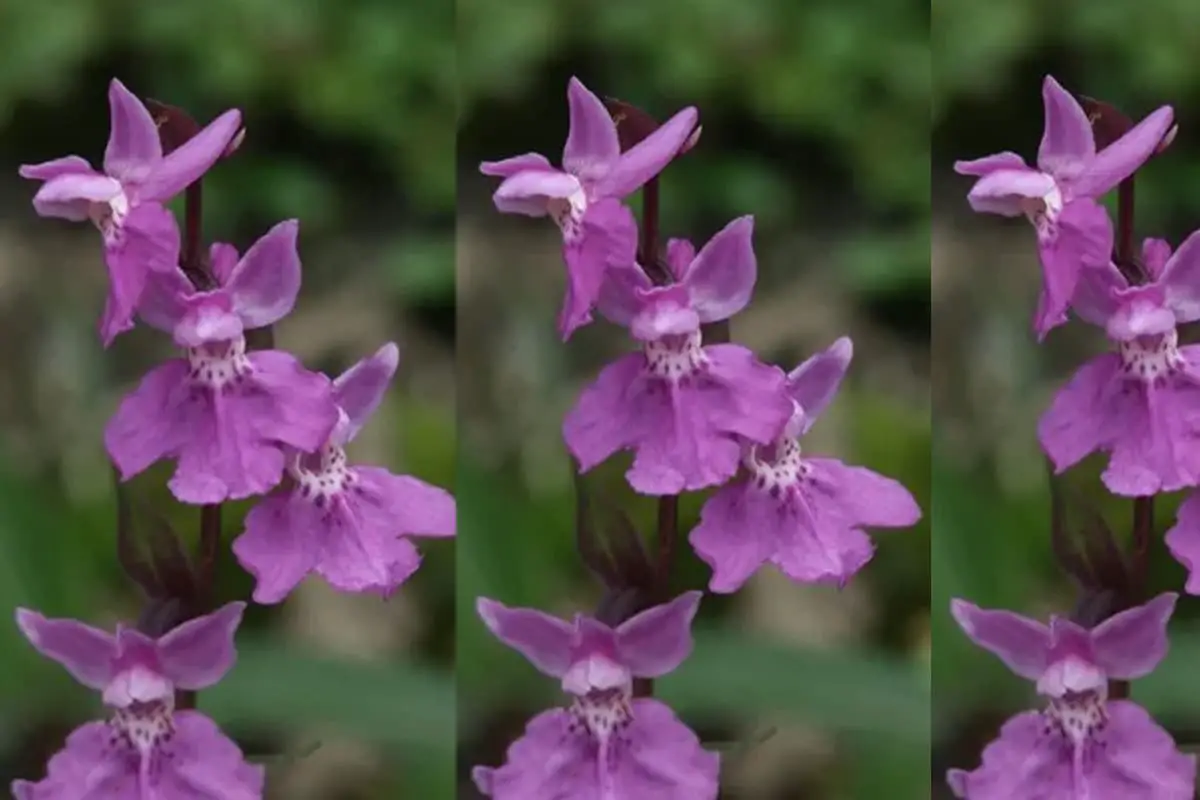
Orchis chusua is found on mountain slopes, under shrubs, alpine shrub grasslands, or alpine meadows at altitudes ranging from 500-4500 meters. It’s native to China.
Orchids typically grow on the sides of secluded mountain valleys, on sloping hillsides or rock crevices with good water permeability and retention, beside sparse mountain grass, and under secondary mixed forests. They prefer shaded places with short sun exposure or scattered light.
Orchids thrive in areas with high humidity and good air circulation, sometimes also on cliffs beside mountain streams.
Orchids should be planted in a well-ventilated environment. They prefer shade and avoid direct sunlight. They thrive in humid conditions, not in dry ones, and grow best between 15℃ to 30℃. Growth is hampered at temperatures above 35℃.
Reproduction can be done in both spring and autumn, typically every three years. Healthy plants with dense pseudobulbs are suitable for division.
After division, at least 5 connected pseudobulbs should be retained in each clump. Before division, water should be reduced to keep the soil slightly dry. After dividing, the plants should be repotted using humus-rich sandy loam soil.
The planting depth should be such that the pseudobulbs are just buried. Leave a 2 cm rim at the edge of the pot, top with moss or fine gravel, then water thoroughly.
Place the pot in a shaded area for 10-15 days, keep the soil moist, gradually reduce watering, and proceed with regular maintenance.
The orchid shelter or greenhouse should be oriented with its back to the west and facing the east. It’s ideal if the southeast direction is open, and the west is shielded by a high wall or large trees. This arrangement allows for morning sunlight but blocks intense afternoon sun.
The surrounding environment should be clean with a certain level of humidity. It’s important to ensure good ventilation, exposure to dew, shade from intense sun, and avoid smoke.
If constructed on a rooftop or balcony, besides shading from above, curtains should be hung on the northwest side to prevent the setting sun from scorching the leaves in the afternoon.
The best time for repotting or changing pots is generally in the spring months of March-April or in the autumn months of October-November. Flower pots with a smaller opening, deeper base, and larger drainage holes are preferable.
Wild seedlings freshly dug from mountains should initially be planted in clay pots, as they allow for better moisture evaporation and air circulation, facilitating root growth. After 2-3 years, they can be transferred to finer clay pots or porcelain pots.
During the peak growth period of the orchid in summer, if it lacks water, its growth is stunted. Orchids prefer conditions that are 80% dry and 20% wet. Watering should be thorough when the soil is dry and reduced when it’s wet. The number of watering sessions should be adjusted according to the potting medium used.
Farmyard manure is an excellent organic fertilizer, but it should be decomposed for at least a year before use. This fertilizer can be diluted 10-20 times with water before application.
When using chemical fertilizers, it’s crucial to maintain a balance of nitrogen, phosphorus, and potassium and to control concentration levels.
For orchids meant for leaf aesthetics, nitrogenous fertilizers and those containing manganese or magnesium should be avoided as they enhance chlorophyll synthesis.
For floral orchids, especially those bred for larger petals, a slight increase in nitrogenous fertilizer is beneficial.

Peggie was once a high school mathematics teacher, but she set aside her chalkboard and textbooks to follow her lifelong passion for flowers. After years of dedication and learning, she not only established a thriving flower shop but also founded this blog, “Flowers Library”. If you have any questions or wish to learn more about flowers, feel free to contact Peggie.
 English
  العربية
  Bahasa Indonesia
  Deutsch
  Français
  Italiano
  Nederlands
  Português
  Русский
  日本語
日本語