600+ Types of Flowers A To Z (With Names and Pictures)
Types Of Flowers By Names (A-Z) Types Of Flowers By Color Types Of Flowers By Season Types Of Flowers By Blooming Time 600+ Types of Flowers No. Flower Name No.…

The Oncidium hybridum, or Dancing Lady Orchid, also known as the Fortunate Orchid, Golden Butterfly Orchid, or Lump Petal Orchid, is one of the “Five Beauties” in the cut flower industry.
There are over 750 native species of Oncidium worldwide, but commercially, most are hybrid species. The plant is unique, light, and graceful with delicate, dangling flower stems. The peculiar and lovely flowers resemble flying golden butterflies and are one of the world’s important potted and cut flower species due to their high ornamental value.
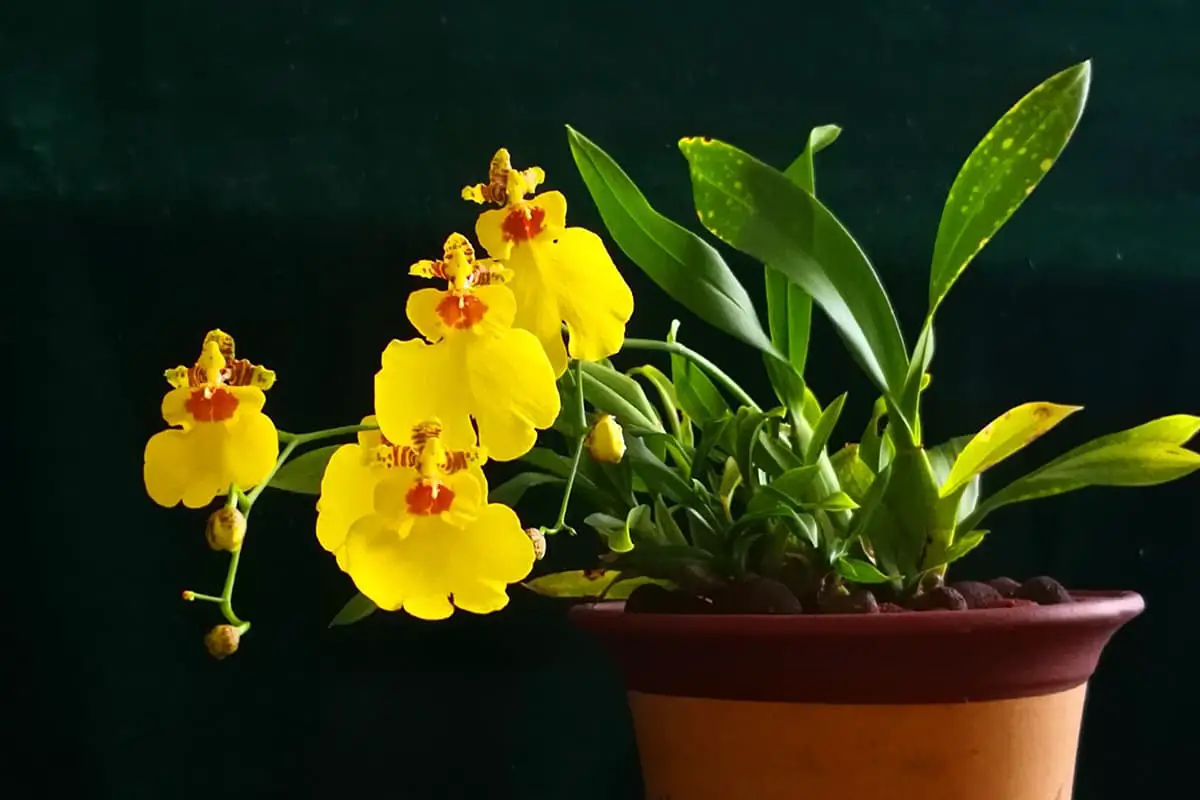
The Dancing Lady Orchid (Oncidium hybridum), also known as the Auspicious Orchid, Butterfly Orchid, and Warty-Petaled Orchid, has 1-3 leaves, which can be categorized into thin-leaf, thick-leaf, and sword-leaf types. It is a term for plants in the Oncidium genus of the Orchid family, with over 750 native species worldwide.
The commercially utilized varieties are hybrids, small and graceful, with light flower stems and cute, unique flowers that resemble flying golden butterflies, making it one of the world’s significant potted and cut flower types.
Legend has it that when Soong May-ling visited the White House, she fell in love with this flower because the petals resembled the Chinese character for “auspicious,” hence the name “Auspicious Orchid.”
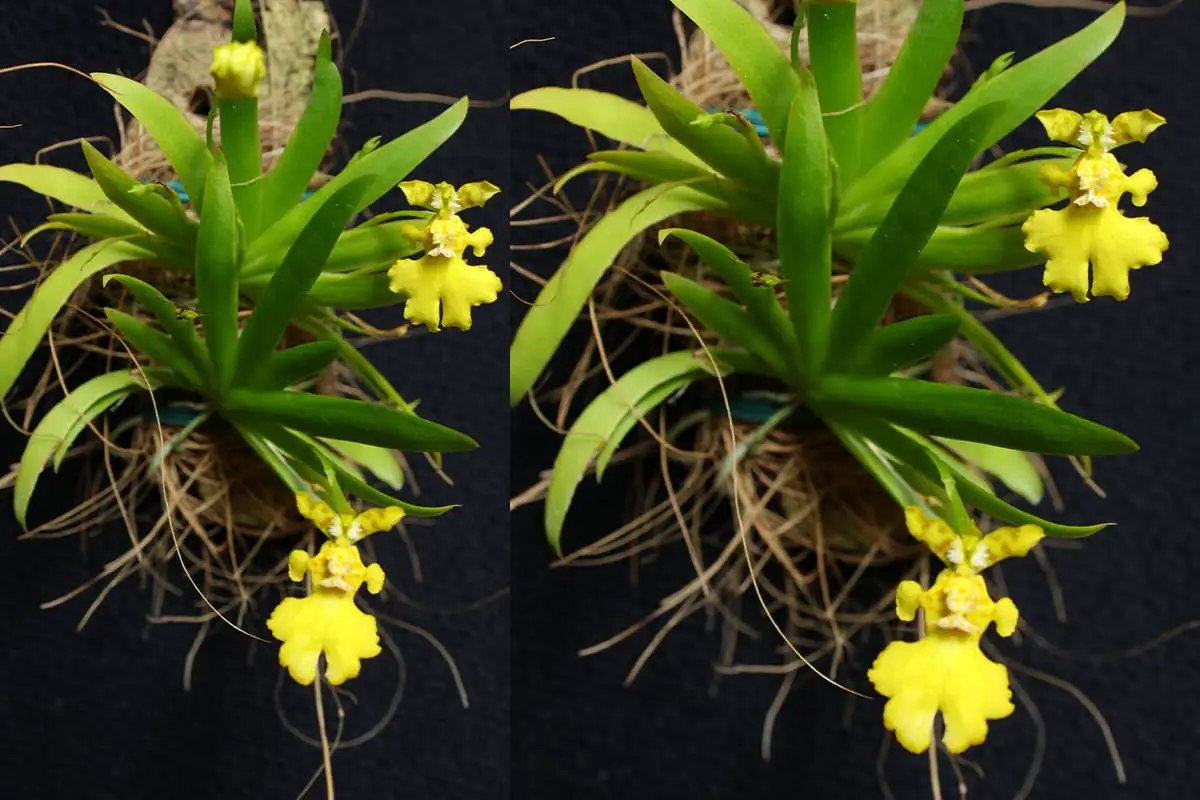
The Dancing Lady Orchid is a common ornamental plant with a rich variety. Some of the most common types are Sweet Fragrance, Volcano Queen, Everlasting No.1 and No.2, Large Dancing Lady Orchid, Wrinkled Dancing Lady Orchid, Same-Color Dancing Lady Orchid, and Golden Butterfly Orchid.
Sweet Fragrance is a unique type of Dancing Lady Orchid. Unlike most, its flowers are red with white labellum. Its slender, glossy green leaves make it a popular choice for decorating courtyards or homes, and it adapts well to various environments.
The Volcano Queen is a common variety of Dancing Lady Orchid, with a long blooming period. It has delicate, smooth leaves and tender yellow flowers, making it suitable for moderate climates. Care should be taken when watering and fertilizing.
The Everlasting No.1 is a popular Dancing Lady Orchid variety in the flower market. Its unique name comes from its cultivation process. The flowers are yellow with red spots, of medium size, and often used for ornamental purposes.
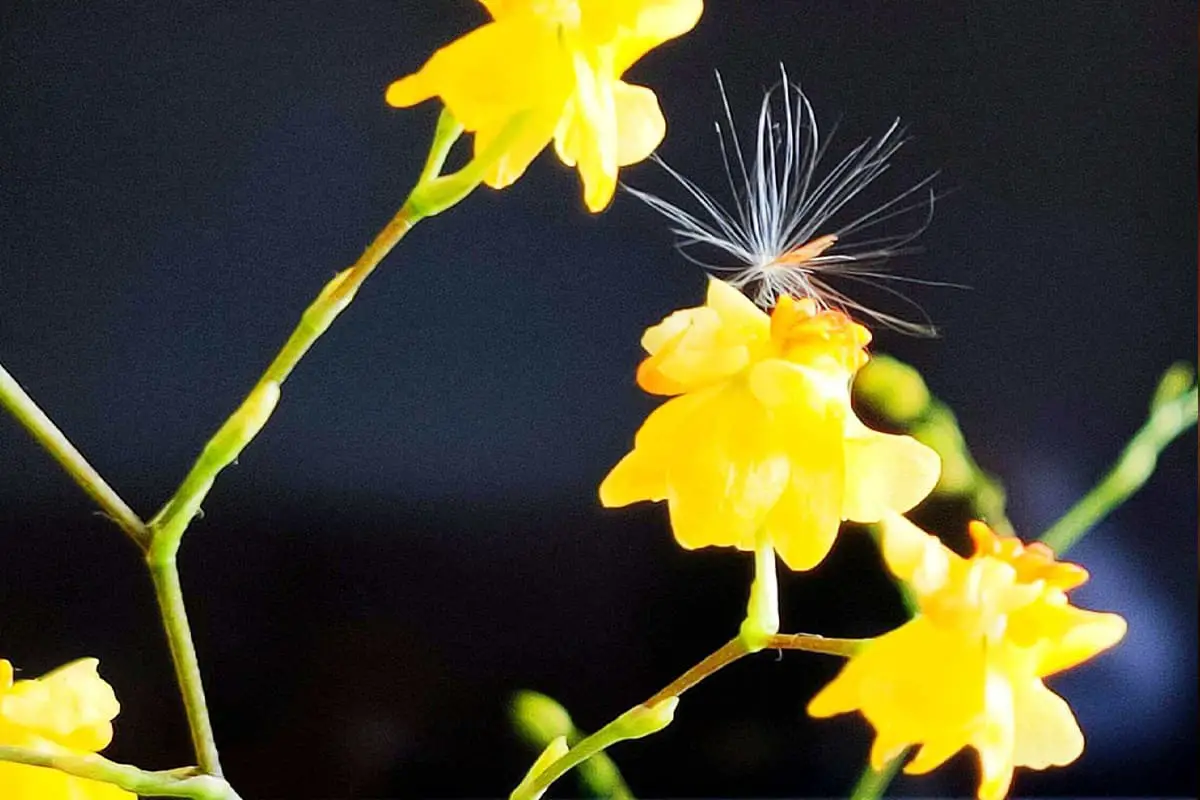
Everlasting No.2, part of the same series as Everlasting No.1, has red flowers with a white labellum. It thrives in warm, humid environments but should not be waterlogged or left in intense light for long periods.
The Large Dancing Lady Orchid is not only bigger in size, but also has densely packed flowers. From a distance, it appears like a blanket of golden snowflakes, making it highly ornamental. It can be easily identified by its large petals and red spots on the flower core.
The Wrinkled Dancing Lady Orchid is often grown in pots for home decoration. Its tender yellow petals make it very eye-catching. Moreover, it has excellent air purification capabilities, absorbing impurities and harmful gases like sulfur dioxide from the air.
The Same-Color Dancing Lady Orchid is a large-flowered variety with lemon-yellow petals and a red-brown flower core. Its vibrant flowers are densely scattered on the branches, making it an attractive ornamental feature in parks and botanical gardens.
The Golden Butterfly Orchid’s petals resemble fluttering butterflies. The flower core at the top of the petal is red-brown with yellow stripes, while the bottom is trumpet-shaped and yellow. The flowers are sparsely distributed on the branches, making it incredibly cute.
Oncidiums originate from the United States, Mexico, Guyana, and Peru. The thick-leaved (also known as hard-leaved) Oncidiums thrive in warm climates, while the thin-leaved (or soft-leaved) and sword-leaved Oncidiums prefer cooler climates.
The optimal growing temperature for the thick-leaved Oncidiums is 18-25°C, and they should not be exposed to temperatures below 12°C in winter. The thin-leaved Oncidiums grow best at 10-22°C, and should not be exposed to temperatures below 8°C in winter.
Oncidiums are native to the tropical regions of America, with the greatest variety found in countries like Brazil, the United States, Columbia, Ecuador, and Peru.
Oncidiums are epiphytic orchids with pseudobulbs that are oval, spindle-shaped, round, or flattened. Pseudobulbs serve as nutrient storage and supply organs, enlarging with nutritional growth and shrinking with reproductive development.
Around February, new buds sprout from the base of the original pseudobulbs and gradually form new pseudobulbs. Anatomical observations show that the newly formed nutrient buds contain 13-14 sections, with the sections below the first one forming the pseudobulbs.
After the pseudobulbs mature, the axillary buds at the original base differentiate into flower stems. The flower stems grow rapidly after July and bloom in mid-October. The leaves can be categorized into thin-leaved, thick-leaved, and sword-leaved types.
Oncidiums have a unique floral structure, offering high ornamental value. The flower colors can be pure yellow, magenta, pink, or have tea-brown patterns or spots. The inflorescences are diverse, ranging from upright single or double flowers to hundreds of flowers.
Its inflorescences branch well, with beautiful flower shapes and bright colors. Up close, the flower’s structure resembles the Chinese character for “luck,” hence its alternate name, Lucky Orchid.
When many small flowers bloom simultaneously, they resemble a group of dancing ladies in the breeze, hence the names Dancing Lady Orchid or Dance Orchid.
It is a new favorite among exotic orchids, celebrated for its elegant flower form and gentle image, and is considered one of the “five beauties” in the floral arrangement world.
Some types of Oncidiums have only one or two flowers per stem, while others can have hundreds. For instance, the small-flowered varieties used for cut flowers can have dozens of flowers on a single stem, with multiple stems carrying hundreds of flowers.
The size varies greatly, from tiny mini Oncidiums to large ones, with flower diameters exceeding 12 cm. The structure of the flower is quite special, with equal-sized sepals and petals that are almost equal or slightly larger than the dorsal sepal.
The lip of the flower is usually three-lobed, large or small, violin-shaped, with a ridge at the base of the middle lobe. The ridge has small raised spots, which is quite unique, hence it is also called the Warted Lip Orchid.
Soil
Oncidium prefers loose and breathable soil. When cultivating, you can spread a layer of broken tiles or bricks at the bottom of the flower pot, then mix the broken fern root, peat soil, and broken charcoal in a ratio of 4:1:2, and add a small amount of base fertilizer to the soil to ensure the later growth and development of Oncidium.
Light and Temperature Requirements
Oncidium prefers a semi-shade environment. It can be maintained under full sunlight in winter without shading, which can promote the flowering of the plant. Shading treatment should be done in other seasons to avoid leaf burns.
Different varieties of Oncidium have different temperature requirements. Thick-leaf varieties cannot be lower than 12℃, and the most suitable growth temperature is 18~25℃; thin-leaf varieties have the most suitable growth temperature of 10~22℃, and the lowest temperature cannot be lower than 8℃.
Water and Fertilizer Requirements
Oncidium prefers a drier environment and can be watered when the soil surface is dry. The amount of watering can be appropriately increased during the growing season, water once in the morning and evening, ensuring no water accumulation.
Reduce the amount and frequency of watering in winter, controlling water is beneficial to flowering. Stop watering when the temperature is below 10℃ to avoid frost damage.
Apply organic fertilizer every 20 days in spring and autumn, with balanced elements, either root irrigation or leaf spraying. Do not fertilize when the temperature is too low in winter.
Replanting Time
The replanting of Oncidium is usually after blooming, and the seedlings should be selected before the growing period, such as in the cool weather of early spring and late autumn. When replanting, change to a larger pot or replace some of the soil according to the growth of the plant.
Watering Method
In summer, pay attention to shading and cool down in time when the temperature is high. Water once a day in the hot summer season, water thoroughly, that is, water until it flows out of the bottom of the flower pot. At ordinary times, water when the soil is half dry.
Orchidaceae, such as the Miltoniopsis, is a sympodial orchid that produces offshoots from the main plant. When the offshoots develop pseudobulbs, they can be cut away from the parent plant.
A pseudobulb with two buds can be cut off and directly planted in a pot with sphagnum moss. Keeping a high humidity level will help the plant quickly develop new buds and roots.
Division propagation is typically carried out after blooming or during the spring and autumn seasons. It’s best to divide the plants before the new buds sprout in spring.
For tissue culture propagation, select the tender buds sprouting from the base of the orchid as explants. Sterilize the surface with 70% alcohol, rinse off the sterilant with sterile water, and cut the stem tips into thin slices of 1 to 1.5 millimeters.
Inoculate these slices onto prepared culture media, and maintain the temperature at 26±2°C, with a light intensity of 500 lux for 16 hours. On a Murashige and Skoog (MS) medium supplemented with 1 milligram/liter of 6-benzylaminopurine, the formation of protocorms is fastest, taking only about 45 days.
Continue cultivating the protocorms in the propagation medium, and after about 20 days, buds will form at the top of the protocorms, with roots differentiating at the base. After approximately 100 days, plants with 2 to 3 leaves will grow, forming complete seedlings.
Tissue culture propagation of Miltoniopsis is relatively easy, typically using seeds, stem tips, or inflorescences as nutrition organs for propagation. In seed culture, a medium composed of 3 grams of Hanabao No.1, 2 grams of peptone, and 35 grams of table sugar is effective for seed germination.
Adding 15% coconut juice can enhance seed germination. The stem tip culture and inflorescence culture of Miltoniopsis generally don’t experience browning.
The best primary culture medium for stem tip and inflorescence cultures is 1/2 MS, modified Knudson C, V&W medium, or seed culture medium, with no hormones required in principle.
This requires cultivation in a professional hydroponic flower cultivation base for more than six months, allowing the newly formed aquatic roots to fully adapt to the static water environment, which is the trend in the flower industry.
Common pests of Miltoniopsis include snails, scales, and mealybugs. During the rainy seasons of spring and summer, snails are particularly active. At this time, lime powder should be regularly spread around the orchid garden and at the base of the cultivation stand.
The main pest of Miltoniopsis is the scale insect, which parasitizes the edges of the leaves or leaf surface to extract sap, causing the plant to wilt. In serious cases, the whole plant can wither and die.
A solution of 40% parathion emulsion diluted 1,000 times or a 50% malathion emulsion diluted 2,000 times can be sprayed to kill the pests. Mealybugs can be killed with a 3,000 times diluted solution of imidacloprid or aphid-chrysanthemum.
After pest infestation, agricultural streptomycin can be sprayed in the morning or evening for prevention, with no more than three applications per year.
The primary diseases that affect Miltoniopsis are soft rot and leaf spot diseases. Leaf spot disease damages the leaves of the plant, while soft rot can kill the entire plant. A solution of 50% mancozeb diluted 1,000 times or a 50% methotrexate soluble wetting agent diluted 800 times can be used for prevention and control.
Aesthetic Value
The Dancing-Doll Orchid is an extremely beautiful and highly ornamental flower. It is one of the most important cut-flower orchid varieties in the world, ideal for home and office vase arrangements. It’s also a high-grade material for creating bouquets and small flower baskets.
Cut-Flower Variety
The Dancing-Doll Orchid is an extremely beautiful and highly ornamental flower. It is one of the most important cut-flower orchid varieties in the world. It can be planted in homes and offices, and it’s also a high-grade material for making bouquets and small flower baskets.
Nowadays, it’s cultivated worldwide. The Dancing-Doll Orchid, with its vibrant yellow blooms, resembles beautiful dancing girls with twirling skirts. Its flower language symbolizes carefree happiness, suggesting a forgetting of worries.
Combination Ornamentation
If the Dancing-Doll Orchid is used as the main material, coupled with American morning glory, hanging heliconia, Chinese bamboo, green palm, and wood lily for wall arrangements, it presents a colorful and festive atmosphere.
Using the Dancing-Doll Orchid as the primary flower in a basket arrangement, paired with red palm, lily, Swallowtail, and Asparagus Fern, results in an excellent festive gift basket. It can embellish a room with its elegant and luxurious appearance, drawing attention.
Flower Language of the Dancing-Doll Orchid
The flower language of the Dancing-Doll Orchid is hidden love and happiness. Its flowers are as beautiful as young girls, symbolizing good fortune and carefree joy.
It’s an orchid with high ornamental value, not only suitable for pot cultivation but also an important cut-flower variety, considered a high-grade flower material. With its lush branches and leaves, and blooming stems with many flowers, it has a long flowering period and is widely beloved.
Historical Background
The oldest event in the White House is the Easter Egg Roll, and the oldest flower is the Dancing-Doll Orchid.
James Hoban, an Irish-born architect, designed the White House in the style of 18th-century English country architecture and placed the Dancing-Doll Orchid from Latin America on the White House desk.
The story goes that Soong May-ling, visiting the White House, accidentally noticed this Dancing-Doll Orchid. She found that the petals closely resembled the Chinese character for “luck,” symbolizing good fortune.
Hence, she named the Dancing-Doll Orchid from Latin America, growing in the White House, “Luck Orchid.” Afterward, dignitaries started planting Luck Orchids in their mansions. This flower gradually became popular among Chinese Americans and in Taiwan.

Peggie was once a high school mathematics teacher, but she set aside her chalkboard and textbooks to follow her lifelong passion for flowers. After years of dedication and learning, she not only established a thriving flower shop but also founded this blog, “Flowers Library”. If you have any questions or wish to learn more about flowers, feel free to contact Peggie.
 English
  العربية
  Bahasa Indonesia
  Deutsch
  Français
  Italiano
  Nederlands
  Português
  Русский
  日本語
日本語