Neofinetia falcata, also known as the Wind Orchid or Samurai Orchid, is a miniature orchid species that packs a wealth of charm into its diminutive stature. This exquisite plant, prized for centuries in East Asian horticulture, offers gardeners a unique opportunity to cultivate a living piece of botanical history.
I. Morphological Characteristics
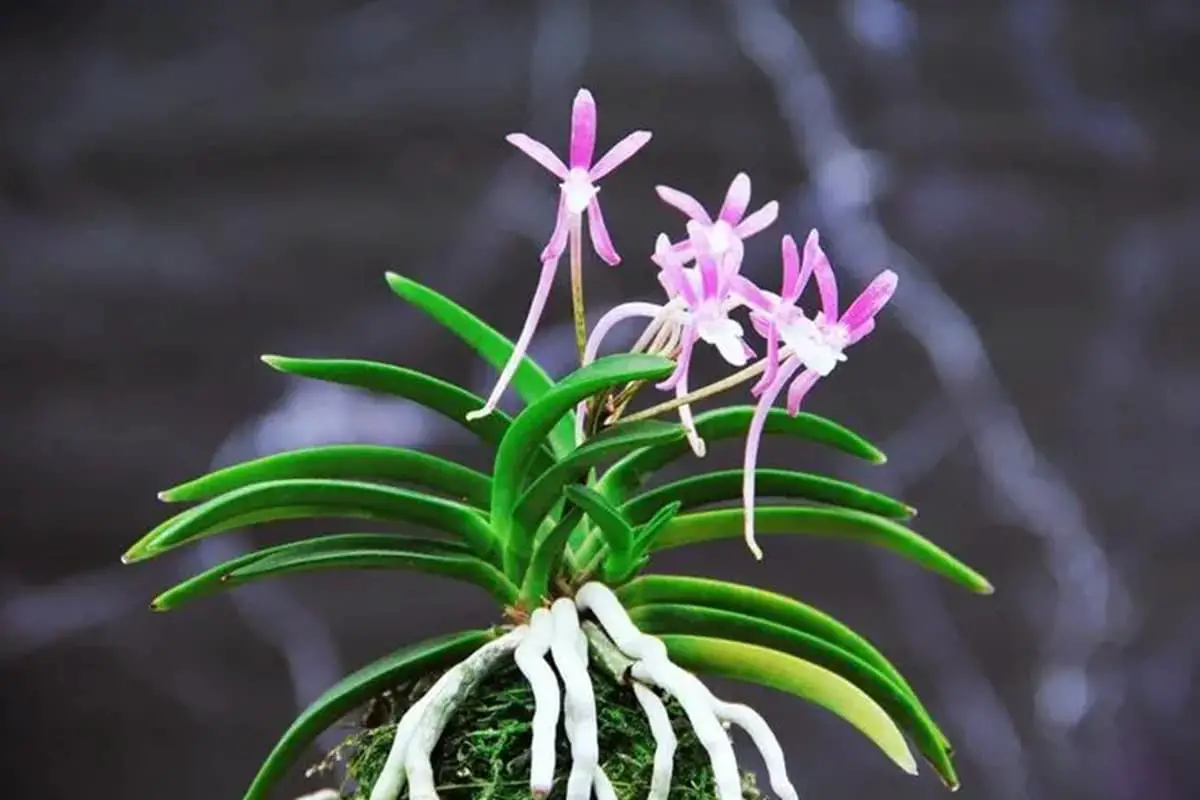
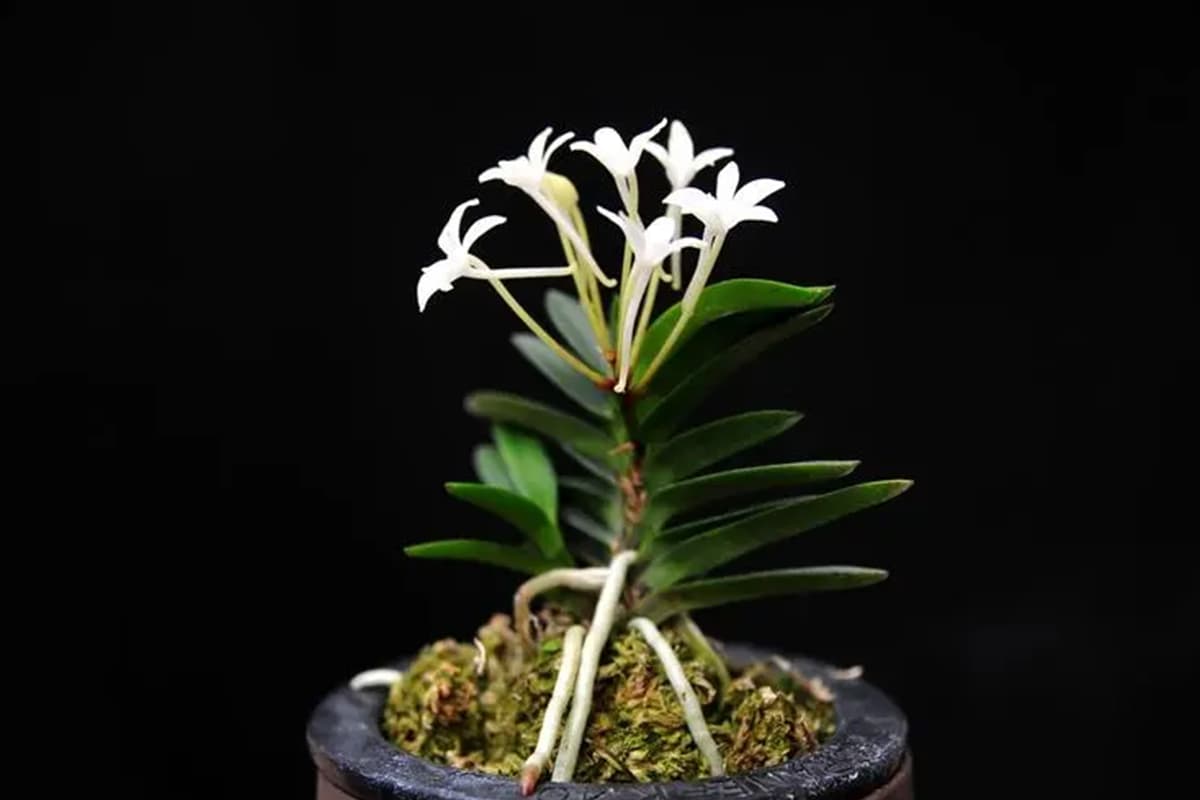
Neofinetia falcata is a compact epiphytic orchid, typically reaching heights of 8-10 centimeters (3-4 inches). Its stem, measuring 1-4 centimeters long and slightly flattened, is sheathed by leaf bases.
The leaves are distinctive: thick, leathery, and narrow, resembling slender crescent-shaped blades. They measure 5-12 centimeters in length and 7-10 millimeters in width, with nearly acute tips and bases forming overlapping V-shaped sheaths.
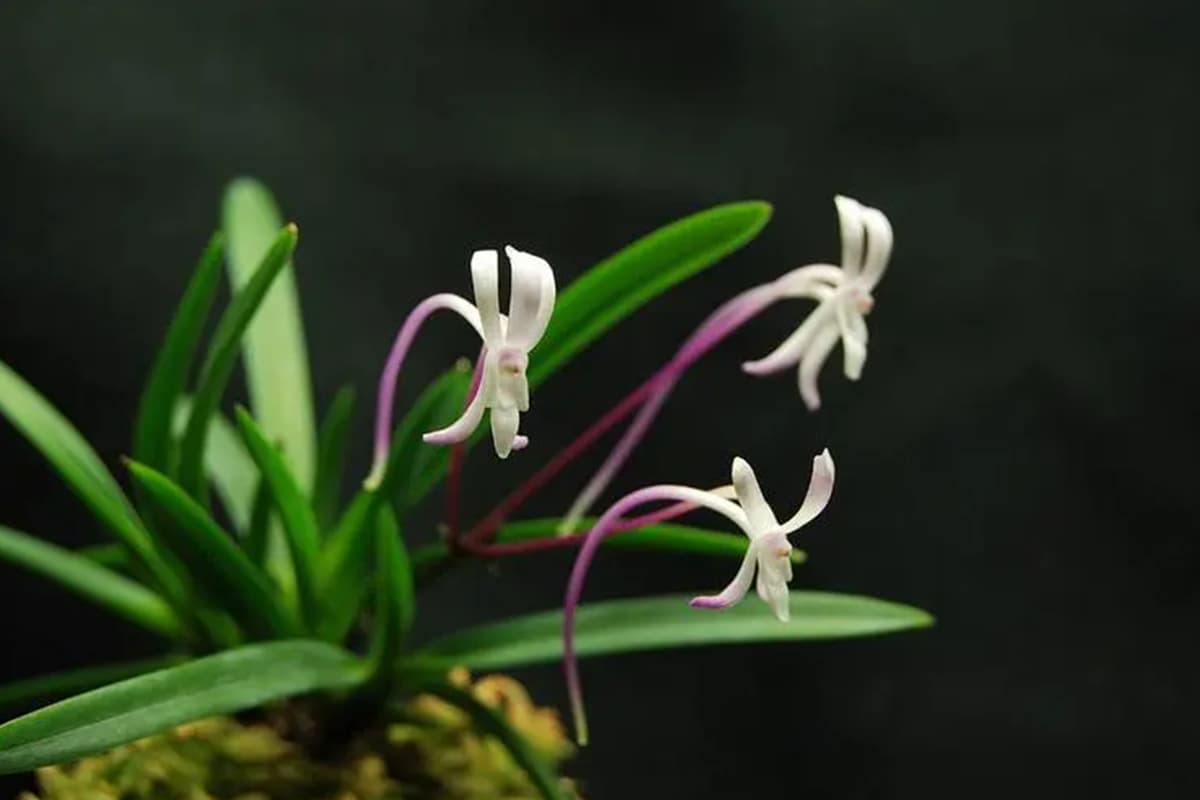
The inflorescence is a short raceme, about 1 centimeter long, bearing 2-5 fragrant white flowers. Each flower is a masterpiece of miniature architecture:
- Sepals: The median sepal is nearly obovate, 8-10 millimeters long and 2.5-4 millimeters wide, with a blunt tip and three veins. Lateral sepals are similar in size but fork forward, with the upper half curving outward.
- Petals: Reverse lanceolate or nearly spoon-shaped, 8-10 millimeters long and 2.2-3 millimeters wide, with blunt tips and three veins.
- Lip: Fleshy and trifurcated. Side lobes are oblong, 3.5-4 millimeters long and 0.8-1 millimeter wide. The middle lobe is tongue-shaped, 7-8 millimeters long and 2-2.5 millimeters wide, featuring a triangular callus at the base and three slightly raised ridges.
- Spur: Slender and curved, 3.5-5 centimeters long and 1.5-2 millimeters thick.
- Column: About 2 millimeters long, with wings expanded into a triangular shape at the upper part.
- Anther cap: White with brown sides, narrowing to a triangular shape at the front.
The flowering period typically occurs in late spring to early summer, with April being the peak month in many regions.
II. Distribution and Natural Habitat
Neofinetia falcata is native to East Asia, found naturally in:
- Japan (including the Ryukyu Islands)
- Southern Korean Peninsula
- Parts of eastern China (including Zhejiang, Fujian, and Taiwan)
In its natural habitat, this orchid grows as an epiphyte on tree trunks in mountain forests, thriving at elevations up to 1520 meters (5000 feet) above sea level. It prefers humid, shaded environments with good air circulation, often found in secluded mountain valleys or on cliffs above mountain streams.
III. Optimal Growing Conditions
To successfully cultivate Neofinetia falcata, recreate its natural environment as closely as possible:
- Light: Prefers bright, indirect light. Avoid direct sunlight, which can scorch leaves.
- Temperature: Optimal growth occurs between 15°C to 30°C (59°F to 86°F). Can tolerate brief periods below 10°C (50°F) but should be protected from frost.
- Humidity: Thrives in high humidity (60-80%). Use humidity trays or room humidifiers if needed.
- Air Circulation: Essential for preventing fungal diseases. Ensure good airflow around the plant.
- Water: Keep consistently moist during the growing season, reducing slightly in winter. Never allow to dry out completely.
- Substrate: Use a well-draining orchid mix. A combination of fine-grade fir bark, perlite, and sphagnum moss works well.
- Fertilizer: Feed weekly with a balanced, water-soluble orchid fertilizer at 1/4 strength during the growing season.
IV. Cultivation and Propagation
Neofinetia falcata can be propagated through division or keiki (plantlet) production:
- Division: Best done in spring or fall. Separate robust plants with at least 5 connected pseudobulbs per division.
- Keiki propagation: Small plantlets sometimes form on the mother plant. When they develop roots about 2-3 cm long, they can be carefully removed and potted separately.
When repotting:
- Use a pot with ample drainage holes.
- Place a layer of coarse material (like pottery shards) at the bottom for drainage.
- Fill with the orchid mix, planting the pseudobulbs just below the surface.
- Top with live sphagnum moss to retain moisture.
V. Pest and Disease Management
While generally hardy, Neofinetia falcata can be susceptible to common orchid pests and diseases:
- Scale insects: Treat with horticultural oil or manually remove.
- Root rot: Prevent by ensuring proper drainage and avoiding overwatering.
- Fungal leaf spots: Improve air circulation and reduce humidity. Treat with a copper-based fungicide if necessary.
Regular inspection and maintaining optimal growing conditions are key to preventing most issues.
VI. Cultural Significance
Neofinetia falcata, known as ‘Furan’ or ‘Fūki’ in Japan, has been cultivated there for centuries. It was particularly prized by samurai warriors during the Edo period (1603-1868), leading to its common name “Samurai Orchid.” The cultivation and appreciation of this orchid became a refined art form, with prized specimens fetching high prices.
Today, Neofinetia falcata continues to be highly regarded in Japanese culture and is popular among orchid enthusiasts worldwide for its compact size, fragrant flowers, and rich cultural history.
VII. Horticultural and Medicinal Value
Beyond its ornamental value, Neofinetia falcata has been used in traditional East Asian medicine. The whole plant or pseudobulbs are believed to have properties that:
- Clear heat and soothe the throat
- Activate blood circulation
- Alleviate pain
It has been traditionally used to treat conditions such as coughs due to lung heat, sore throat, hernia, and injuries from falls or blows. However, it’s important to note that these medicinal uses are based on traditional practices and should not replace professional medical advice or treatment.
In conclusion, Neofinetia falcata offers gardeners and orchid enthusiasts a unique blend of horticultural challenge, aesthetic beauty, and cultural significance. Its compact size makes it ideal for small spaces or as part of a larger orchid collection.
With proper care, this “pint-sized floral wonder” can provide years of enjoyment, connecting the grower to centuries of botanical appreciation and artistry.


 English
  العربية
  Bahasa Indonesia
  Deutsch
  Français
  Italiano
  Nederlands
  Português
  Русский
  日本語
日本語