600+ Types of Flowers A To Z (With Names and Pictures)
Types Of Flowers By Names (A-Z) Types Of Flowers By Color Types Of Flowers By Season Types Of Flowers By Blooming Time 600+ Types of Flowers No. Flower Name No.…

The Grape Hyacinth, or Muscari botryoides, is a perennial herbaceous flowering ground cover plant introduced from Europe. It is a small bulbous flower plant. Although its name is Grape Hyacinth, it actually belongs to the lily family.
It is also known as the Blue Bottle Flower, Bell String Flower, Grape Lily, Blue Vase Flower, and Blue Jar Flower, among others. The plant grows to a height of 15-30cm and has a bulbous root covered by a white skin.
The flower stem protrudes from the leaf cluster, it is cylindrical and about 15cm long, densely covered in small bell-shaped flowers.
Most of these flowers hang densely, their small crowns are urn-shaped and taper at the top, the flowers are purple, blue or white at the top, with varieties in white, flesh-colored, pale blue, and double-flowered.
Its inflorescence is dignified, the flowers are beautiful, and the colors are dazzling, making it the most eye-catching flower in the garden.
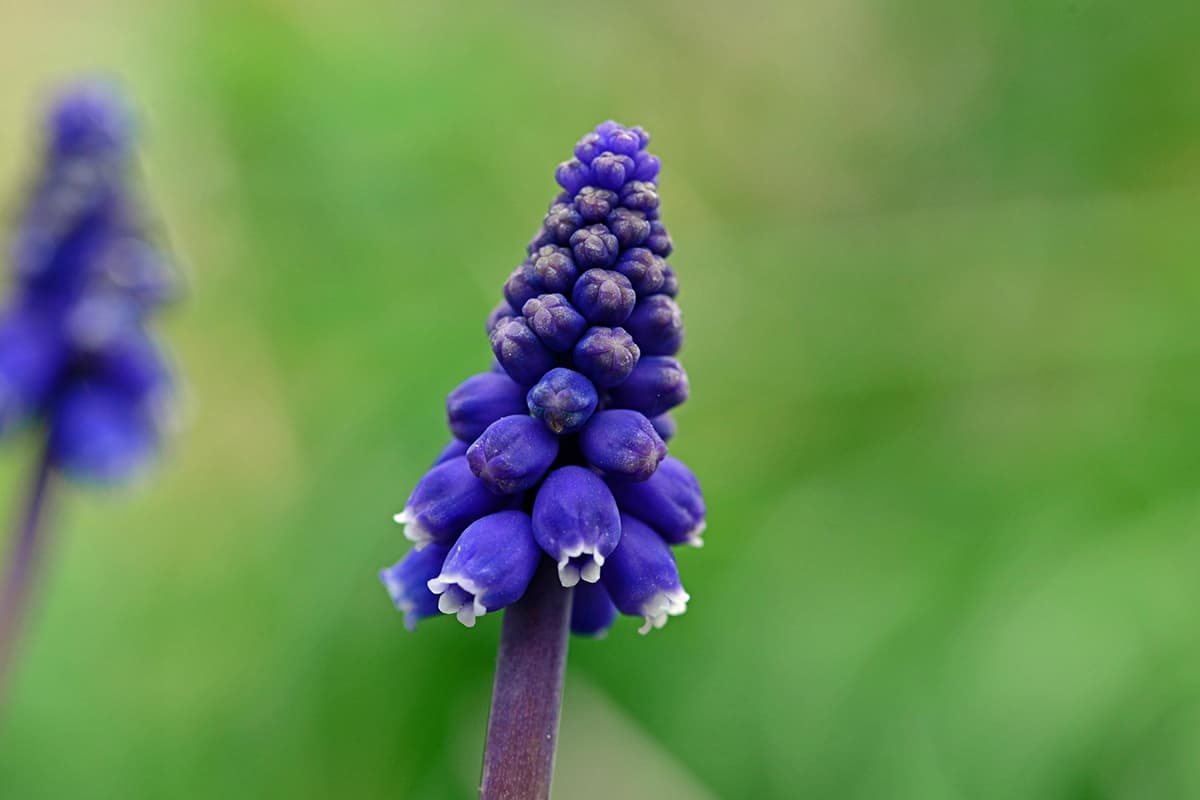
Cantat is a purple flower variety with tall plants that produce blue-purple grape-like flowers, but the tips of the flowers are white, alternating blue and white and very beautiful.
Heavenly Blue is a purple flower variety with dwarf plants that produce sky-blue grape-like flowers, resembling a bunch of ripe grapes, elegant and beautiful.
Valerie Finis is a purple flower variety with densely clustered grape-like flowers. The flowers are light blue and slightly silver-reflective, producing dreamlike colors.
Neglectum is a purple flower variety, characterized by its flowers initially being sky blue, which then turn to deep purple-blue, creating a two-tone inflorescence. Coupled with a white ring at the tip of the flower, the color contrast is striking.
Album is a white flower variety, characterized by its dwarf form, and white flowers that cluster into grape-like formations, which are very fragrant.
White Beauty is a white flower variety characterized by its strap-like, fleshy leaves, and clusters of pure white grape-like flowers. The dense clusters contrast sharply with the dark green flower stem and leaves.
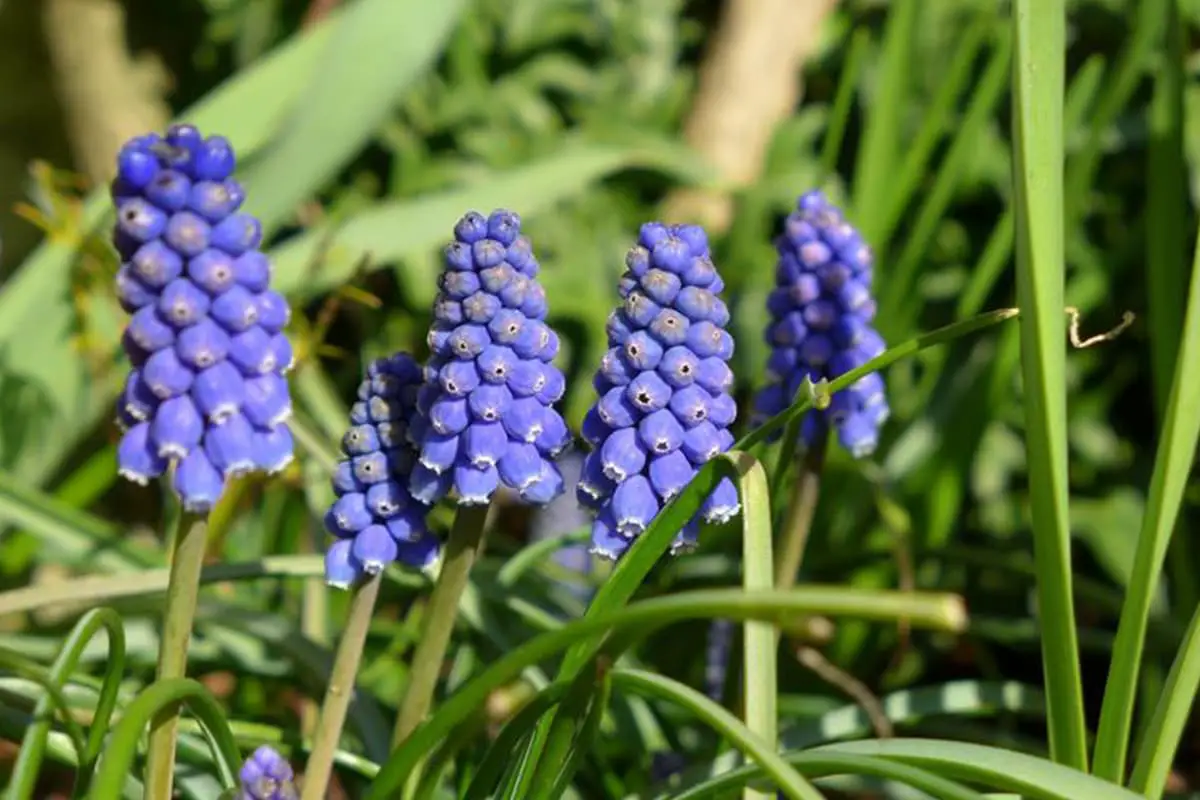
This plant thrives in warm, cool climates, tolerates both sunlight and shade, and grows best in temperatures between 15°C and 30°C. It prefers loose, fertile, sandy loam with good drainage. The plant goes dormant in the summer, with leaves remaining green in winter.
It is highly frost-resistant, with only the leaf tips turning yellow in the Beijing area. The Grape Hyacinth is native to central Europe, particularly France, Germany, and southern Poland.
This perennial herb has linear, slightly fleshy, dark green leaves that often curl inwards, reaching approximately 20cm in length. The plant is 15-30cm tall with underground bulbs covered in a white film, with a diameter of 1-3cm and a height of about 1.5cm.
The blooming period is from March to May. The flower stem grows from the leaf cluster, is cylindrical, about 15cm long, and densely populated with small, bell-shaped flowers in shades of purple, light blue, and white.
The flowers are densely packed and drooping, with a small crown and a constricted apex, in shades of blue or white. There are also white, flesh-colored, light blue, and double-flowered varieties.
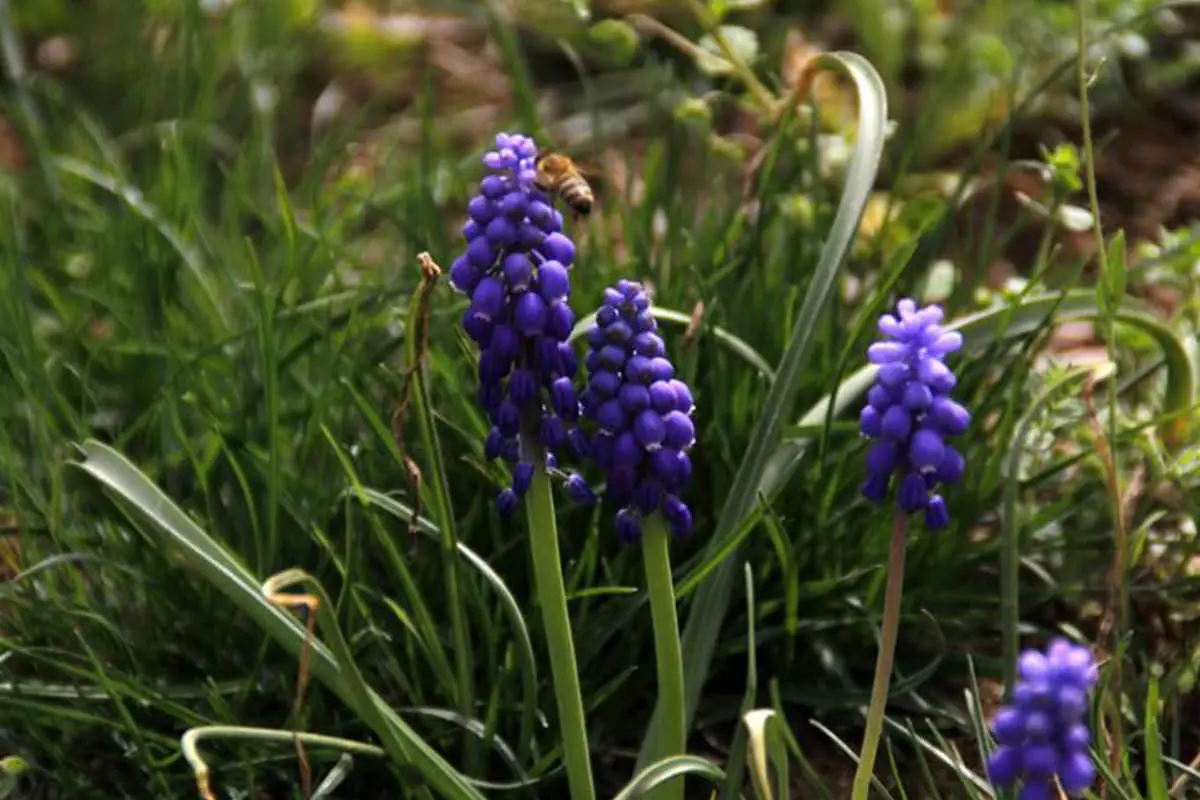
Overseas imported bulbs can be planted in the autumn and winter. The soil should be leafy or sandy loam, and the soil moisture should be maintained after planting.
Once the leaves have grown, a diluted solution of nitrogen, phosphorus, and potassium can be applied to promote development. When the flower buds appear in the spring, move the plant to a location with 60%-70% sunlight to encourage rapid stem growth.
Grape Hyacinths are adaptable and easy to manage. They can be transplanted at any time and are also suitable for winter cultivation.
Grape Hyacinths can be used as ground cover under trees, or for edging flower beds or creating flower borders. They prefer a warm, cool climate, tolerate semi-shade, require soil rich in humus, loose, fertile, and well-drained, and are also frost-resistant.
In North China, only the leaf tips wilt in winter, and the plant can survive outdoors. Due to its low height, vibrant colors, long blooming period, and lengthy green leaf period, the Grape Hyacinth is an excellent ground cover plant for landscaping.
It is often used to cover the ground under sparse forests, or for flower beds, lawns, strips, and edging. It is also used for rock gardens and pot plantings in homes, providing good ornamental effects.
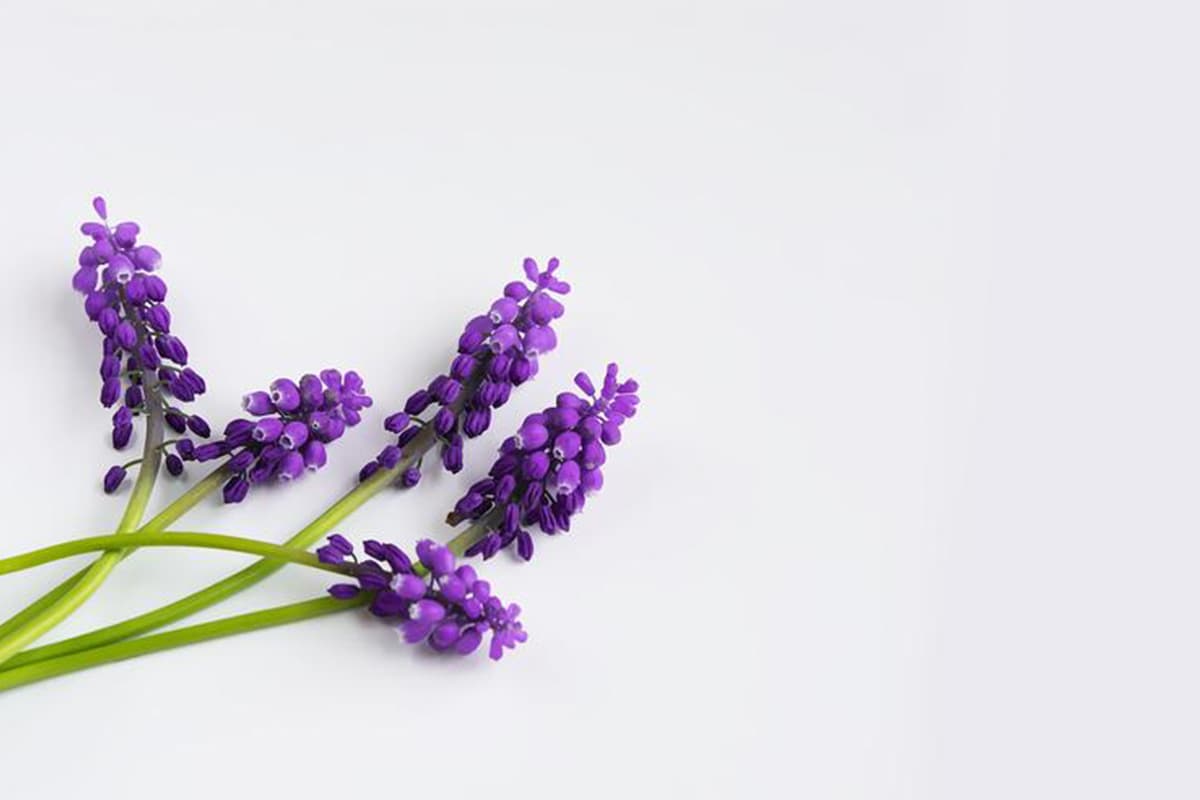
After buying the bulb, plant it in a suitable flower pot. For better ornamental effect, several plants can be planted in one pot. The soil should be loose, breathable, sandy, or ordinary flower cultivation soil.
Clay balls or stones can also be used for soilless cultivation. After planting, water thoroughly and place in a sunny spot. Water regularly and do not let the soil dry out.
Once the flower spike emerges, move the pot to a semi-shaded area to encourage rapid growth. During the cultivation process, the temperature should be maintained between 15°C and 20°C.
Since the bulb stores enough nutrients to meet its flowering needs, fertilization is generally not required during cultivation.
However, to promote larger, more vibrant flowers, a 0.5% solution of potassium dihydrogen phosphate can be sprayed on the plant every 10 days or so. When the flowers bloom, move the plant to a cool, shaded area to extend the flowering period.
The creation of a miniature daffodil bonsai involves the following steps:

Based on the concept, select an appropriate-sized and styled Bogu rack. Next, choose a suitable small pot according to the size of the Bogu rack’s compartments, with small purple clay pots being the most commonly used. Subsequently, select several bulbils with flower buds from 10 or 20 main bulbs.
Depending on the concept and the size, height, and disparity of the compartments in the Bogu rack, carve the leaves and flower stems with varying intensity. The carving method is the same as for ordinary daffodil bonsais, often involving heavy or relatively heavy carving.
This is largely the same as for ordinary daffodil bonsais. The difference is that the maintenance location’s temperature should be slightly lower. The average daytime temperature should be around 10°C, and the lowest nighttime temperature should be around 4°C. In the Beijing area, the flowers can bloom after about 45 days of aqua-culture.
Initial shaping occurs during the maintenance process. When some flower buds open, adjust the leaves, flowers, and roots according to the concept. Trim any overly dense or poorly growing leaves, adjust the position of the flowers, and remove the degreasing cotton covering the roots to reveal the snow-white root system.
Grape hyacinths enjoy both light and semi-shade, and require humus-rich, loose, fertile, and well-drained soil. They also have a strong cold resistance. Generally, they reproduce through seeding or by dividing small bulbs.
Prevention methods:
① Choose robust bulbs for planting.
② Disinfect the soil with formaldehyde solution before planting.
③ Spray a 1000-fold dilution of 50% carbendazim when the disease appears.
Prevention methods:
① Choose healthy, full, disease-free bulbs.
② Disinfect the soil with 0.2% pentachloronitrobenzene of the pot soil weight before planting, mix it thoroughly with the soil before planting.
③ Remove and destroy or deeply bury diseased plants as soon as they are discovered.
Grape hyacinths are highly ornamental perennials. They have low, neat plants, elegant flower clusters, beautiful flower shapes, and vibrant colors. Set against glossy, fresh green leaves, they are serene and elegant, making them a famous early-spring flowering perennial.
Used in garden flower beds and courtyards.
The most eye-catching feature of grape hyacinths in the garden is their pure blue color. They can be densely planted in large areas or used as blending material for other bulbous flowers. Densely planting blue grape hyacinths among various colors of tulips, white daffodils, and yellow fritillaries can naturally form a unified landscape.
Used as garden ground cover.
Ground cover plants should be low-growing, able to cover the ground, easy to maintain, and have strong ornamental leaves, flowers, fruits, etc. Modern garden ground covers have a trend towards colorization and beautification.
Flowering ground covers are an important choice. Grape hyacinths, due to their small plant size, early flowering period, long blooming time, and ability to be continuously planted for more than a year without digging up, are excellent under-tree ground cover flowers.
They are most suitable for planting under trees and on slopes, making them widely used as ground cover plants.
Grape hyacinths can be used for large-scale, belt, and edging planting on lawns, dotted planting in rock gardens, and also have good ornamental effects as potted plants at home.
In addition, grape hyacinths are a kind of perennial flower that is more shade-tolerant. They can be widely used in places with weak light such as under overpasses, shady slopes, under large trees, etc., and have good performance effects.
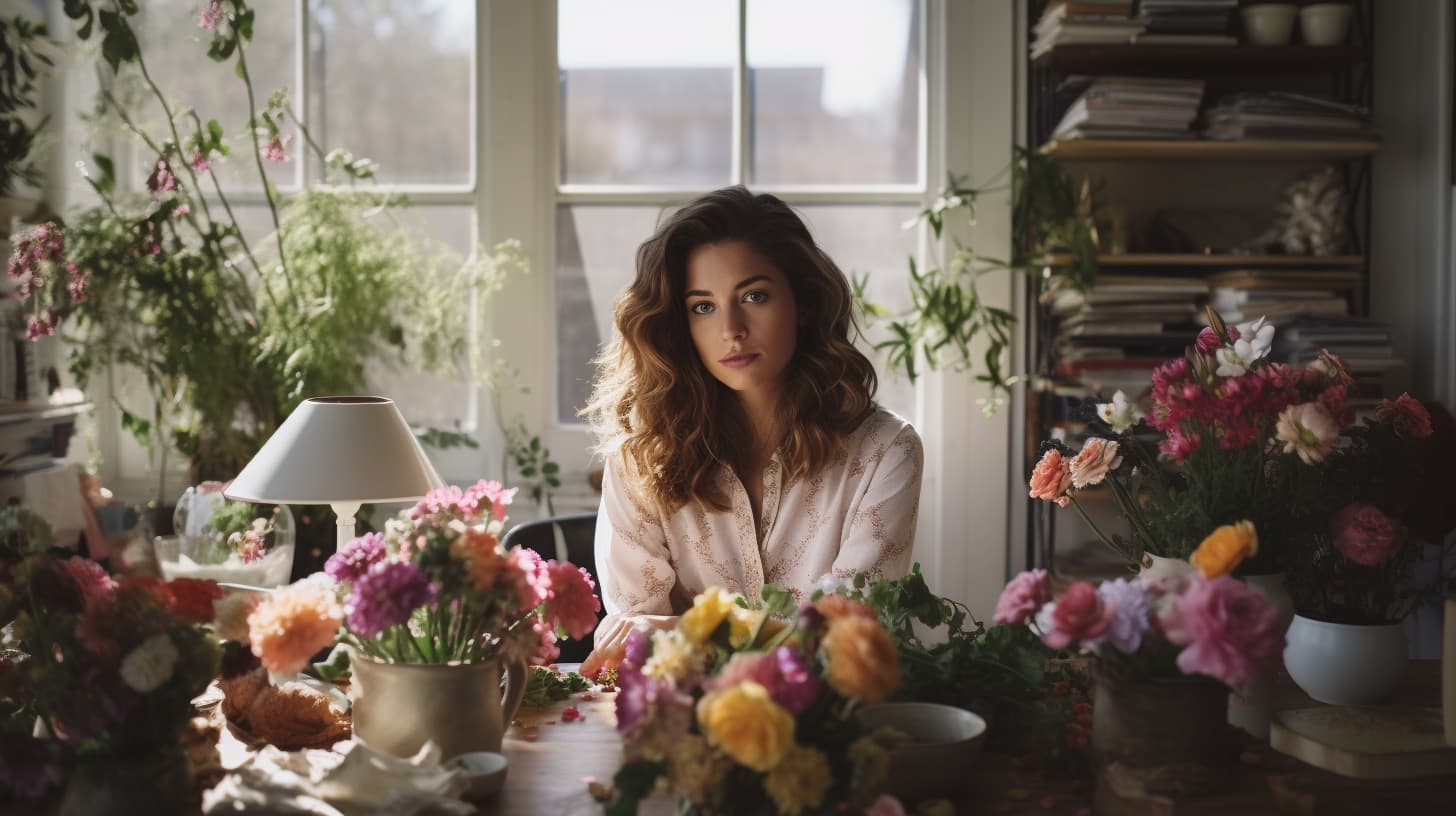
Peggie was once a high school mathematics teacher, but she set aside her chalkboard and textbooks to follow her lifelong passion for flowers. After years of dedication and learning, she not only established a thriving flower shop but also founded this blog, “Flowers Library”. If you have any questions or wish to learn more about flowers, feel free to contact Peggie.
 English
  العربية
  Bahasa Indonesia
  Deutsch
  Français
  Italiano
  Nederlands
  Português
  Русский
  日本語
日本語