Mirabilis jalapa, commonly known as the Four O’Clock or Marvel of Peru, is a perennial herbaceous flowering plant that typically grows between 60 to 100 centimeters high. This vibrant species is known for its colorful, fragrant blooms and interesting growth habits.
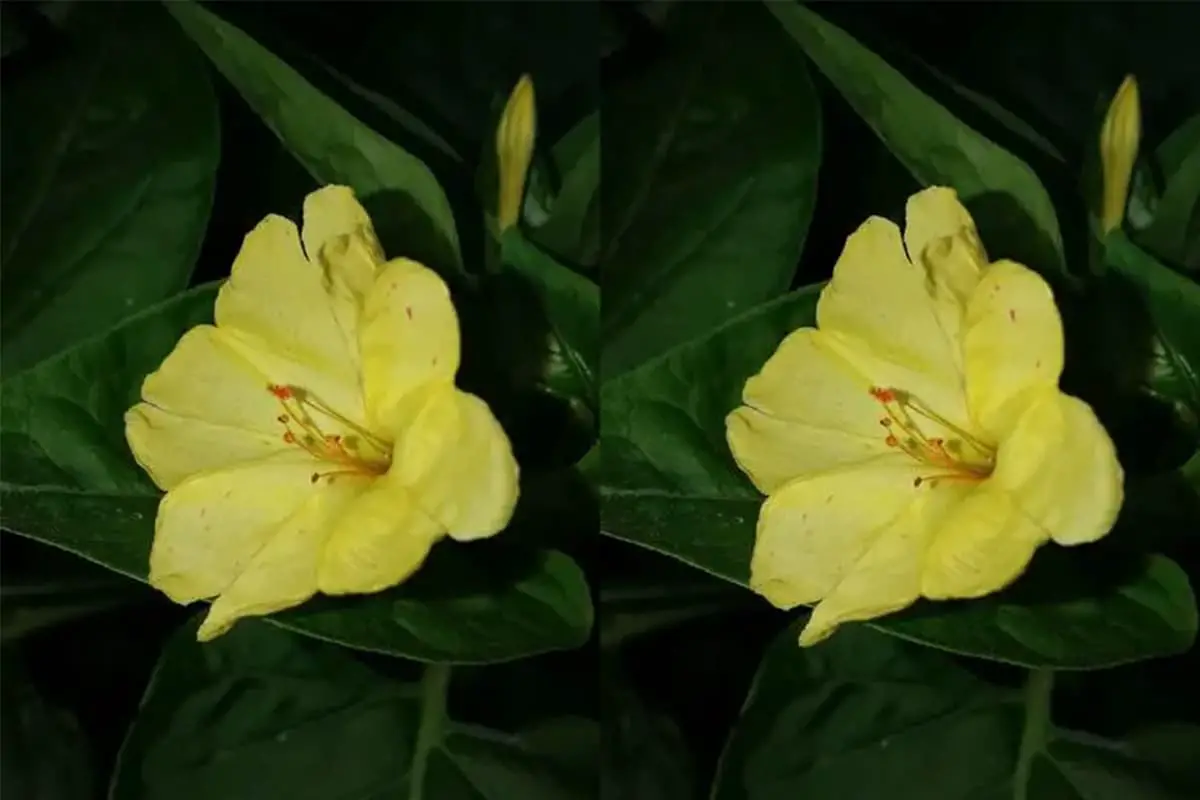
Its flowers usually open in late afternoon, hence the name “Four O’Clock”, and close by the following morning. The blooms appear in clusters at the branch tips and come in a variety of colors including yellow, pink, red, magenta, and white, often with multiple colors on the same plant. The flowers have a funnel-shaped corolla with a wavy, shallowly cleft edge, but are not divided into distinct petals.
The plant emits a sweet, pleasant fragrance, especially in the evening. The fruit is a small, spherical, black, and ridged achene. Mirabilis jalapa thrives in warm and moist climates but has limited cold tolerance.
I. Characteristics and Features
The Four O’Clock is a bushy, perennial plant that grows 60 to 100 centimeters tall, though it’s often grown as an annual in colder regions. Its flowers open in late afternoon and close by the next morning, blooming in clusters at the branch tips. The plant is known for its multi-colored flowers, even on the same plant, with hues ranging from yellow and pink to red, magenta, and white.
The corolla is funnel-shaped with a wavy, shallowly cleft edge but is not divided into separate petals. The flowers emit a sweet fragrance, particularly noticeable in the evening. The fruit is a small, black, ridged achene that somewhat resembles a tiny landmine.
II. Cultivation Methods
For best results, sow Mirabilis jalapa seeds directly in the garden after the last frost date, typically between March and April. The plant thrives in mild to warm climates with consistent moisture, but it does not tolerate prolonged cold.
In colder regions, the above-ground parts die back in winter, but in warmer areas, the tuberous roots can safely overwinter, allowing the plant to grow as a true perennial. These overwintered plants will sprout new growth in the following spring.
Four O’Clocks are relatively easy to grow and maintain. They prefer full sun to partial shade and well-draining, moderately fertile soil. Regular watering is important, especially during dry spells, but avoid overwatering as it can lead to root rot. Fertilize monthly with a balanced, water-soluble fertilizer during the growing season to promote healthy growth and abundant blooms.
These plants can self-seed readily, so deadheading spent blooms can help control their spread if desired. In colder climates, you can dig up and store the tuberous roots over winter, similar to dahlias, and replant them in spring.
Due to their drought tolerance once established and their ability to thrive in various soil conditions, Four O’Clocks are excellent choices for low-maintenance gardens, borders, or as colorful additions to wildlife gardens, attracting pollinators like hummingbirds and moths with their fragrant, nectar-rich flowers.



 English
  العربية
  Bahasa Indonesia
  Deutsch
  Français
  Italiano
  Nederlands
  Português
  Русский
  日本語
日本語