600+ Types of Flowers A To Z (With Names and Pictures)
Types Of Flowers By Names (A-Z) Types Of Flowers By Color Types Of Flowers By Season Types Of Flowers By Blooming Time 600+ Types of Flowers No. Flower Name No.…

The Malus ‘Sparkler’, a stunning variety of crabapple, is native to the United States. This deciduous, small tree has a compact form with upright branches. Its twigs are dark purple and sparsely covered with soft hairs.
New leaves are purple-red, maturing into bright green on top and a lighter green underneath. The leaves are ovate with a nearly round base, gradually tapering to a point at the top and serrated along the edges.
It produces an umbrella-shaped flower arrangement that blooms from early to mid-April. The flower buds are purple-red, with rose-red flowers that are densely packed and upright.
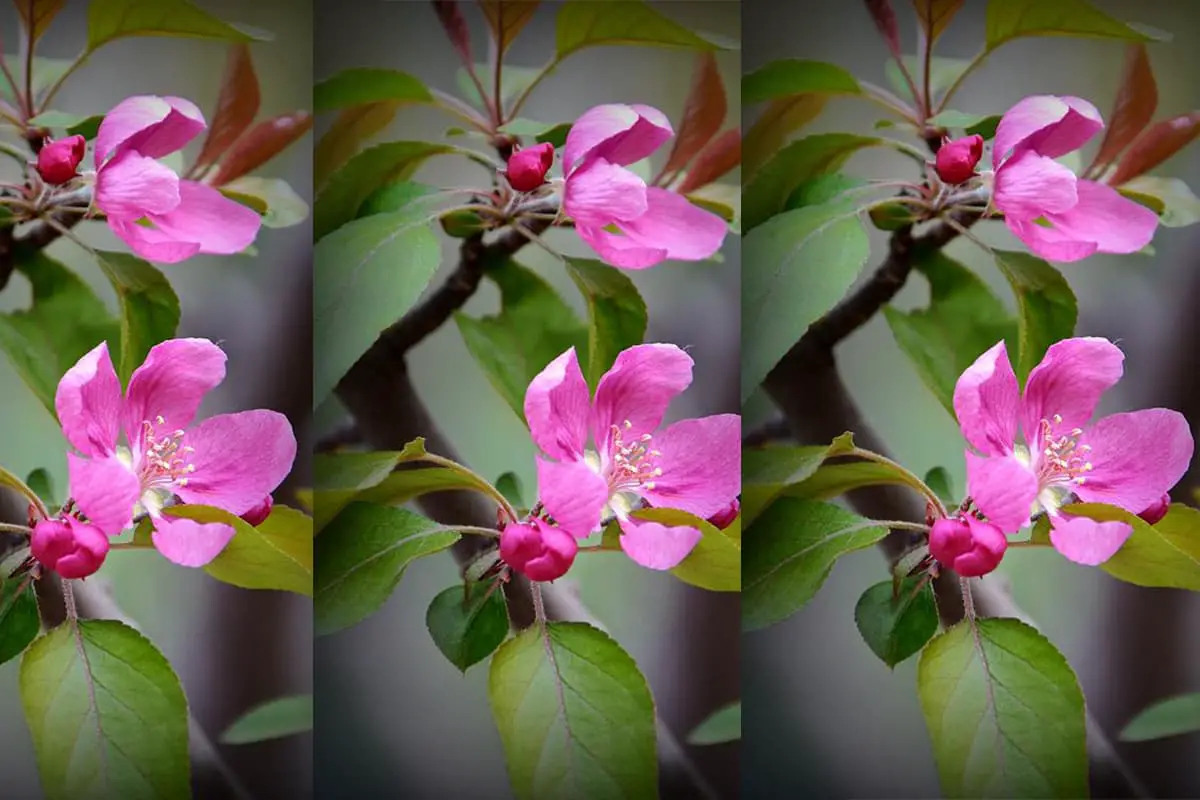
To go further into detail, the Malus ‘Sparkler’ is a cultivated variety of the North American crabapple in the Rosaceae family.
The fruit ripens between June and October, producing small, abundant, spherical fruits that are bright red. The top of the fruit is flat, the stalk is upright, and the calyx persists. The fruit does not fall in winter.
Originating in the United States, this variety is disease and frost resistant, thrives in poor soil, and grows quickly. It is highly tolerant to barren conditions and has strong resistance to cold, salt, and alkali.
Its adaptability to environmental conditions is exceptional, able to endure winters as cold as 36 °C and summers reaching 40 °C.
The Malus ‘Sparkler’, with its beautiful flowers and fruits, can be planted alone or in groups. It can be cultivated around residential areas, high-end villas, public buildings, or planted in various parks, street green spaces, and median strips of highways, providing decorative, embellishing, and isolating functions.

Originally from the United States, this plant is disease resistant, early-bearing, and able to tolerate poor soil. It is a fast grower, resistant to cold and alkaline conditions.
This plant has a high level of environmental adaptability, able to withstand winter temperatures of 36 degrees Celsius and summer temperatures as high as 40 degrees Celsius.
This deciduous shrub has a compact form, typically reaching a height of 4-6 meters and a crown width of 6 meters, with upright branches. The twigs are dark purple and thinly covered in soft hairs.
New leaves are purplish-red, mature leaves are clear green on the top and light green below; the leaves are ovate, with a nearly circular base, gradually pointed at the top, and serrated edges.
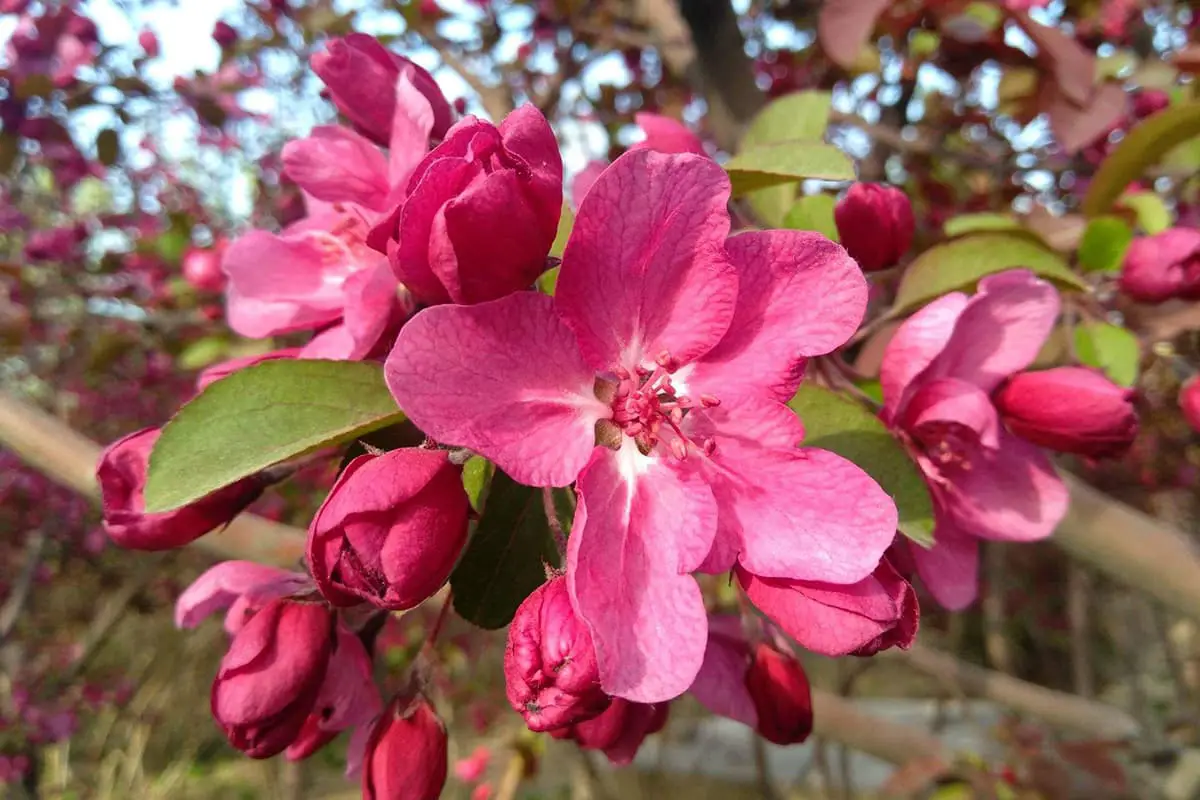
The flowers are arranged in clusters, blooming in mid-April, with purplish-red buds and rosy flowers. Each flower has 6-10 petals, with a diameter of 4.0-4.5 cm. The flowers are densely arranged and upright, with 4-5 flowers per cluster.
The fruit ripens from June to October, is small and dense, 1.0 cm in diameter, spherical, bright red, with a flat top, upright stems, and persistent sepals. The fruit remains on the tree throughout the winter.
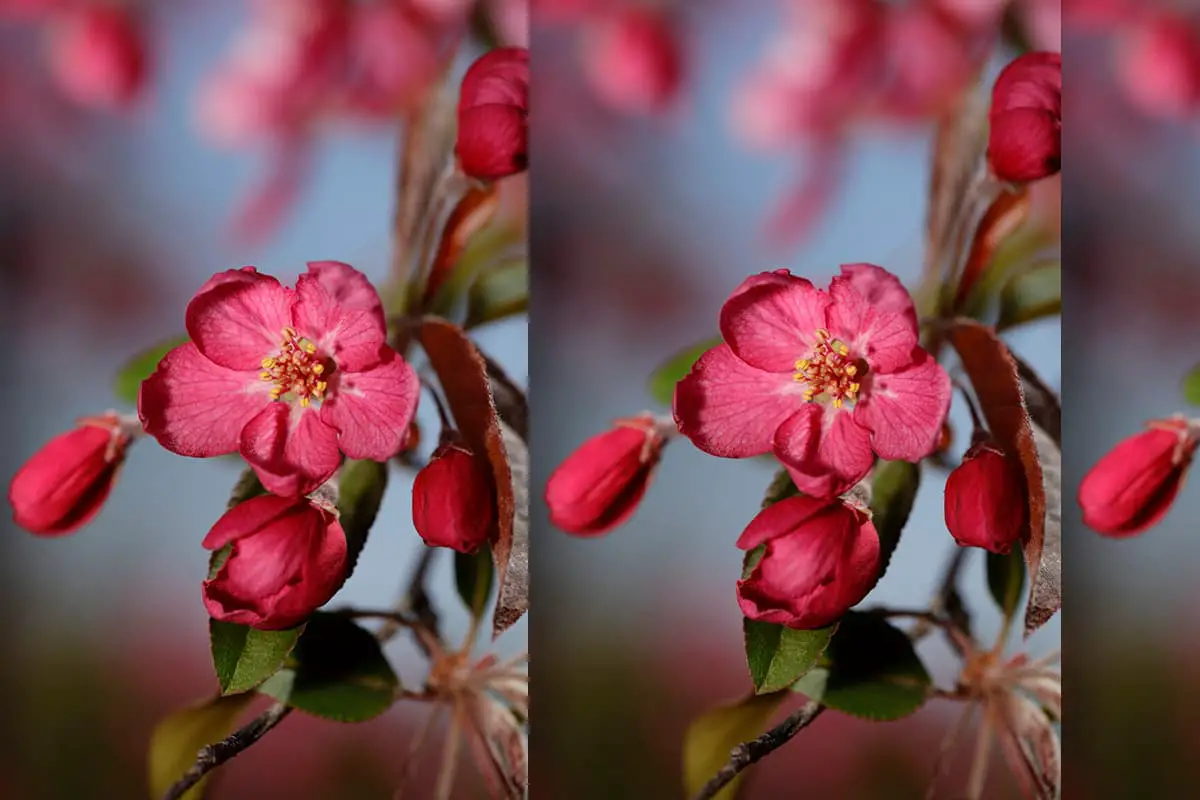
This plant is highly adaptable to various soil conditions, but it grows best in neutral, organic-rich soil. A moist, warm, and well-ventilated environment helps maintain vibrant leaf color and prolongs the leaf retention period.
Before planting, apply 375 kg/hectare of diammonium phosphate, 4500 kg/hectare of cake fertilizer, and 37500 kg/hectare of farmyard manure, then deeply plow and level the soil.
In Harbin, the plant begins to bud in late April and by early May, two tender red buds appear on the branches. The bark and twigs are purplish-red and smooth.
Leaf expansion begins in early May, with young leaves being bright red, marking the start of the ornamental period. By late May, the plant enters a vigorous growth period.
Single leaves are alternately arranged, oval-shaped, 5-8 cm long, 3-5 cm wide, gradually pointed at the top, wedge-shaped at the base, with sharp, serrated leaf margins. The entire plant is dominated by a bright red color.
Leaf fall begins in early October, with an average plant height of 1.5 meters and a trunk diameter of approximately 1.35 cm. When planting, choose robust, uniform seedlings free of pests and diseases. The plant spacing should be 60 cm x 60 cm.
The plant requires high levels of water and fertilizer during the seedling stage. After planting, water thoroughly, then water again 10-15 days later to establish roots. Afterward, loosen the soil regularly to prevent compaction.
About 30 days after planting, apply 52.5 kg/hectare of urea with the third watering to promote seedling growth. Every 10-15 days, spray a solution of monopotassium phosphate, for a total of four applications, to stimulate thickening of the branches.
In the second year of growth, the plant should be lightly pruned. The method involves cutting off diseased, dead, and weak branches. For a pleasing plant shape, side branches within 1.0-1.5 meters from the ground are removed, leaving only the main stem.
In subsequent years, pruning should be done annually, removing diseased, dead, and weak branches, thinning out the inner branches, and “topping” overgrown branches.
The most common method of propagation is grafting, mainly using the “T” bud grafting method, also known as shield bud grafting. The steps are as follows:
Choosing the rootstock: Select a 1-2 year old vigorous and disease-free seedling of Sophora japonica, requiring a diameter of more than 0.5 cm at a height of 5-6 cm from the ground.
About 10 days before grafting, the branches of the selected Sophora japonica that are 7-8 cm above the ground should be cut off to facilitate operation.
Selecting and cutting the scion: The scion should be a branch that has flowered and has full buds. After selecting the branch, immediately cut off the leaves, leaving only the petioles.
Holding the branch in your left hand and the grafting knife in your right hand, make a horizontal cut about 0.5 cm above a chosen bud, about 0.8 cm long, completely severing more than one-third of the scion’s bark.
Then, make a horizontal cut 1-2 cm below the bud, shave upwards from the lower end of the cut, sticking close to the woody part of the branch, until reaching the upper cut, shaping a shield-like bud piece – the scion.
The bud piece is 1.5-2.5 cm long and 0.6-0.8 cm wide, without the woody part. To maintain the humidity of the scion, it can be kept in the mouth or covered with a wet cloth.
Cutting the rootstock: On the shaded side of the rootstock (choose the leeward side if it’s windy), about 3-8 cm above the ground, make a horizontal cut about 1 cm long, deep enough to sever the bark of the rootstock.
Then, make a vertical cut down the middle of the previous cut, about 1.0-1.2 cm long, shaping a “T”. Use the grafting knife handle to lift the bark of the rootstock, ready for inserting the scion.
Inserting the scion: Use the grafting knife to lift the “T” shaped cut on the rootstock, and insert the scion into the cut. The petiole of the scion should be facing upwards when inserted.
After insertion, align the top of the scion with the horizontal cut of the “T”. If the scion is too long, trim some off the top.
Binding: Using a plastic strip or other binding material, start binding from the bottom of the junction, winding upwards, pressing each round to seal the cut. Ensure the bud and petiole are left outside for inspection of survival.
Post-graft management: Check the graft for survival after 3-4 days. If the petiole of the scion falls off immediately when lightly touched, and the scion’s skin is bright green, it indicates successful grafting.
If the petiole does not fall off and the scion is dry, the graft has failed and needs to be redone. Ten days after survival, the binding should be removed to avoid hindering the growth of the graft union.
After this, pruning of the rootstock is required. Grafts made in the summer should be pruned in the same year, while those made in the fall can be pruned before budding in the spring of the second year. The pruning location is about 2 cm above the “T” cut.
When the grafted scion grows to a certain height, a stake should be driven next to it, and the scion branch should be tied to the stake to keep it upright, and to protect it from being broken by the wind.
The main disease of the Diamond Begonia is black spot disease. The symptoms are brown to dark brown circular or nearly circular wheel spots on the leaves, with black mold-like substances growing on them, which are the asexual spores of the pathogen.
This affects the normal photosynthesis and respiration of the leaves. In severe cases, it causes leaf discoloration, early death, and falling off, affecting growth.
Prevention methods:
Strengthen cultivation management, timely pruning and complete removal of dead branches;
During the rainy season from August to October, spray a 700-800 times solution of 70% methyl tobujin wettable powder or a 600-800 times solution of 50% carbendazim wettable powder every 7-10 days, a total of 3 times.
The main pest of the Diamond Begonia is the yellow thorn moth, which mainly harms the leaves of plants, causing the plant’s growth to weaken, the leaves to turn yellow and fall, the branches to wilt, and even the whole plant to die.
Prevention methods:
Hang lights to kill the adult moths;
Picking or digging cocoons in winter can have a certain effect;
Spray a 500-800 times solution of 50% chlorpyrifos emulsion, or a 300-500 times solution of 25% wettable cypermethrin powder, or a 1000-1200 times solution of 90% crystal trichlorfon;
Protect and use natural enemies – the thorn moth purple princess bee, thorn moth broad-shouldered little bee, etc.
In 1945, the University of Minnesota bred a magenta variety – Diamond Begonia – from the self-cross offspring of the Hobart Begonia.
The Diamond Begonia is a variety of begonia that can be appreciated for both its flowers and fruit.
It can be planted individually or in groups. It can be planted in residential communities, upscale villas, around public buildings, or in various parks, street green spaces, and road dividers to provide decorative, embellishing, and isolating functions.

Peggie was once a high school mathematics teacher, but she set aside her chalkboard and textbooks to follow her lifelong passion for flowers. After years of dedication and learning, she not only established a thriving flower shop but also founded this blog, “Flowers Library”. If you have any questions or wish to learn more about flowers, feel free to contact Peggie.
 English
  العربية
  Bahasa Indonesia
  Deutsch
  Français
  Italiano
  Nederlands
  Português
  Русский
  日本語
日本語