The Leucanthemum maximum, belongs to the Asteraceae family and is a perennial or biennial herb. It can grow up to 70 cm tall and has a smooth, hairless surface.
The plant has upright stems covered with long hairs, and its leaves are arranged alternately, with elongated, inverted lanceolate shapes, blunt rounded tips, and gradually narrowing bases.
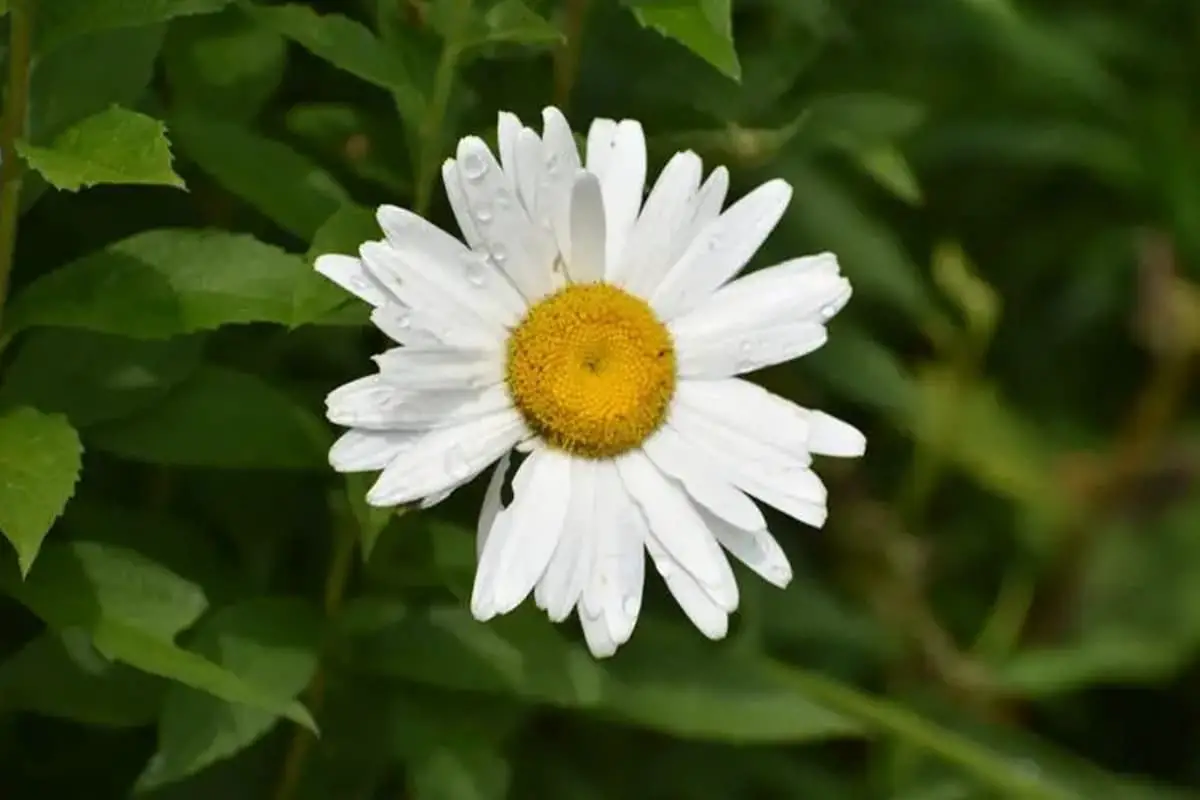
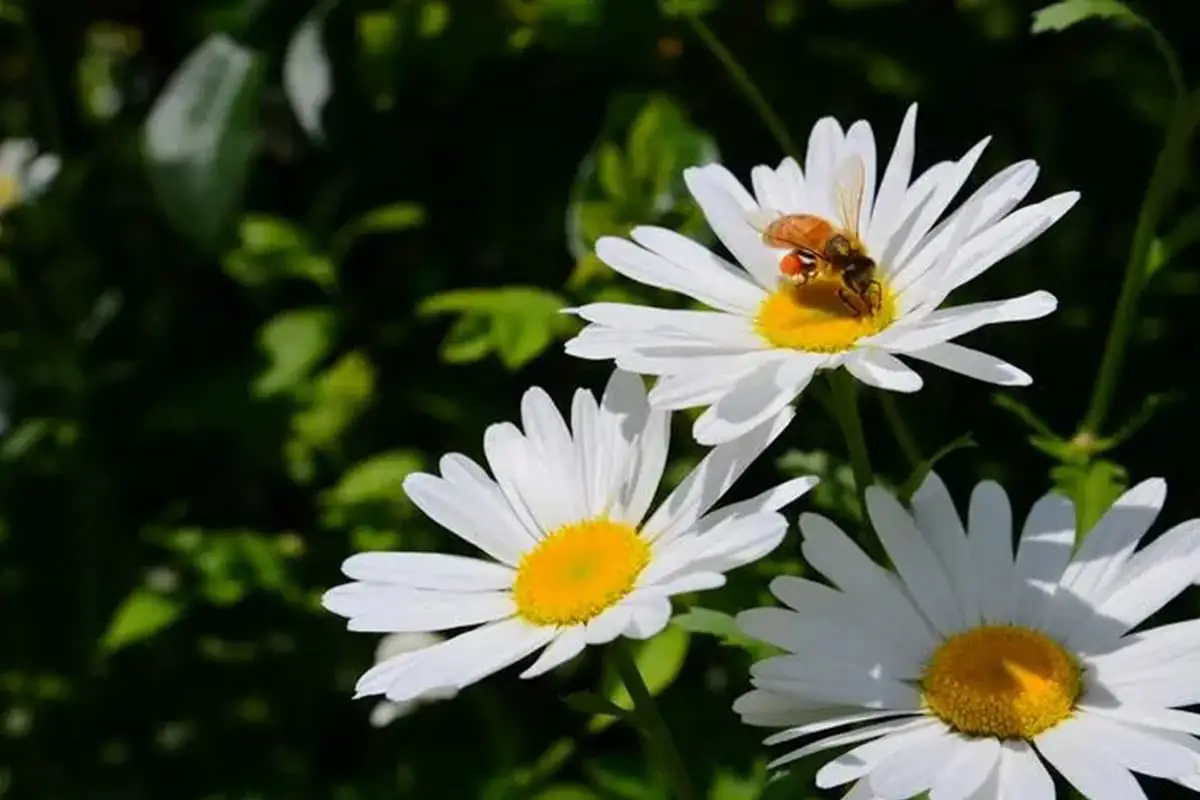
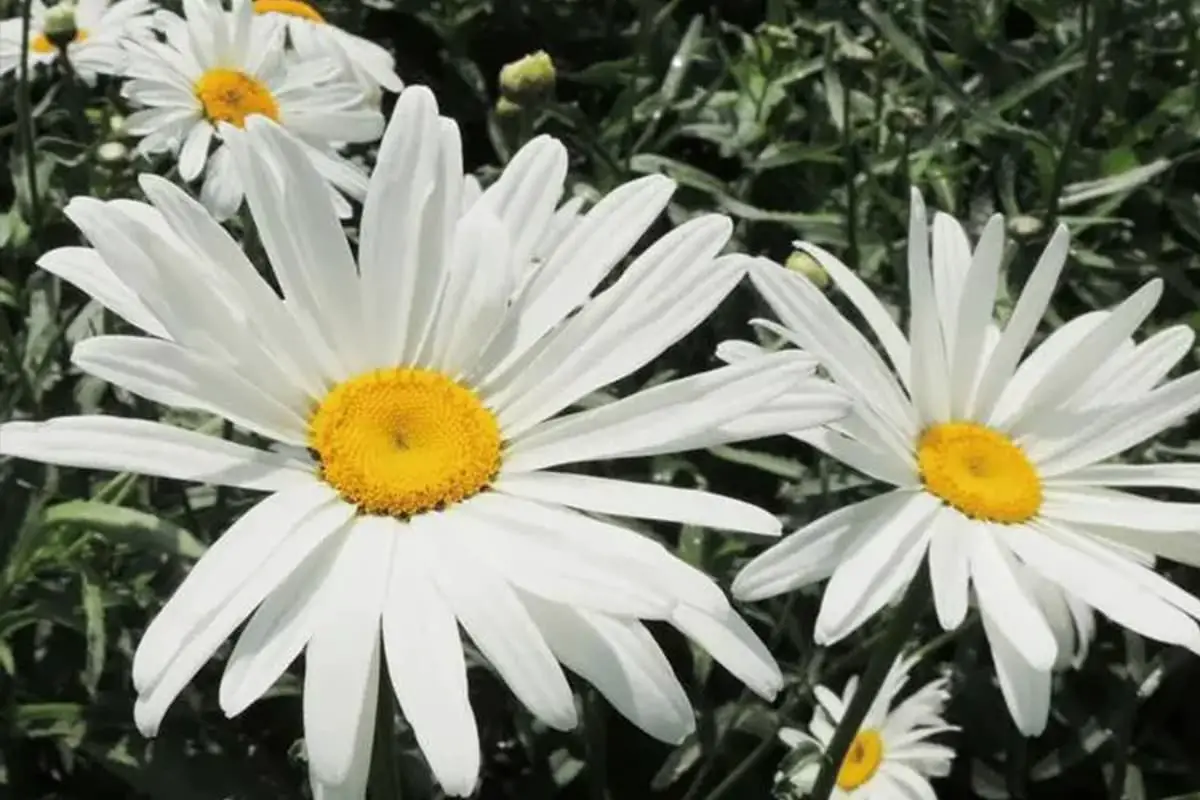
The flower heads are solitary at the end of the branch, with white ligulate flowers and broadly oblong bracts with blunt ends.
It flowers and fruits from July to September; originating from Europe, it has recently been introduced to China for cultivation. The Shasta daisy thrives in sunlight and can grow in temperatures ranging from 15 to 30°C.
It is not particular about soil types and can grow in garden soil, sandy loam, slightly alkaline, or slightly acidic soil.
With its delicate and pretty flowers that bloom for about five months, the Shasta daisy is highly valued for its ornamental appeal; its pure white, elegant flowers and dense clumps make it ideal for planting in the foreground or mid-ground of flower beds, forest edges, or slopes, as well as for accentuating gardens or rock gardens.
It can also be potted for decoration or used as a fresh cut flower.
I. Morphological Characteristics
The stem leaves are sessile and linear. The flower heads are solitary at the stem’s apex, with white ligulate flowers that are fragrant; the tubular flowers are hermaphroditic and yellow. The fruit is an achene that ripens from August to September.
The Shasta daisy is a perennial herb. It has an upright stem with few branches, reaching 30 to 60 cm in height, and is smooth and hairless throughout.
The leaves are alternate, with the basal leaves being lanceolate with long petioles; the stem leaves are linear, slightly shorter than the basal leaves, and lack petioles.
The flower heads are solitary at the top of the stem, with white ligulate flowers arranged in two whorls and fragrant; the tubular flowers are yellow. The blooming period is from May to July.
It is a perennial or biennial herbaceous plant that grows 30 to 70 cm tall and is smooth and hairless. The upright stem is either unbranched or sparsely branched from the base and covered with long hairs.
The leaves are alternately arranged in elongated, inverted lanceolate shapes, with basal leaves up to 30 cm long, upper leaves gradually shortening, lanceolate, with blunt rounded tips and gradually narrowing bases.
The flower heads are solitary at the end of the branch, with a diameter of 5 to 8 cm. The ligulate flowers are white with broad petals and blunt tips; the bracts are broadly oblong with blunt ends, membranous edges, and often a central brown or green color.
The fruit is an achene without pappus. It flowers and fruits from July to September and is native to Europe.
II. Growth Environment
The Shasta daisy is cold-hardy and loves sunlight. It requires loose, fertile, well-drained sandy loam rich in humus.
III. Distribution Range
Native to Europe, it has recently been introduced to China for cultivation.
IV. Growth and Propagation
Seeds are sown in autumn or early spring, with germination occurring in about seven days at 15 to 18°C. Established plants should be divided in the autumn of the following year. Dead flowers should be pruned promptly after blooming.
Seeding: As an Asteraceae flower, the Shasta daisy often produces seeds. However, due to being a hybrid of various sources, sexual reproduction over many generations can lead to variations.
To maintain its desirable characteristics, asexual reproduction is primarily used. Seeding is typically done in spring, with germination occurring evenly in about 7 to 10 days.
Division: Division can be done in both spring and autumn. It is relatively easy and has a high survival rate, with flowering occurring quickly.
Divisions are usually made in spring when the buds are large, making it easier to determine the number of buds and the size of the divisions.
Cuttings: Softwood cuttings tend to root easily and are usually done in spring. Cuttings are taken from the basal sprouts of the mother plant when the buds grow to 5 to 8 cm, inserted into a sand bed, and kept at the right temperature with appropriate shading.
Roots develop in about two weeks, after which the rooted plants can be transplanted directly.
V. Pest and disease control
Leaf spot and stem rot are common afflictions; a 600-fold solution of 65% dithiocarb zinc wettable powder can be sprayed for treatment.
Insect pests such as the green stink bug and leaf miner fly can be controlled with a 500-fold solution of 25% cypermethrin wettable powder.
VI. Main value
The Shasta daisy’s pristine white flowers and dense clumps make it suitable for planting in the foreground or mid-ground of flower beds, forest edges, slopes, as well as for enhancing gardens or rock gardens.
It can also be grown in pots for ornamental viewing or used as fresh cut flowers.


 English
  العربية
  Bahasa Indonesia
  Deutsch
  Français
  Italiano
  Nederlands
  Português
  Русский
  日本語
日本語