The Iris, also known as the Blue Butterfly, Purple Butterfly, or Flat Bamboo Flower, is a perennial herbaceous plant of the Iris genus, belonging to the Iris family under the Lily order. Its rhizomes are robust, with a diameter of around 1 cm, extending diagonally.
The leaves are 15 to 50 cm long and 1.5 to 3.5 cm wide. The flowers are bluish-violet with a diameter of about 10 cm. Its fruit is either a long oval or an inverted ovate, 4.5 to 6 cm long and 2 to 2.5 cm in diameter. Originating from central China and Japan, it is primarily distributed in Central and Southern China.
Appreciated for its aesthetics, the flower emits a subtle, elegant fragrance suitable for perfume creation. Its rhizomes can be used in traditional medicine, harvested throughout the year, and known for their anti-inflammatory properties.
Growth and Distribution
The Iris is found in China, Myanmar, and Japan. It grows in shrub forest edges, sunny hill slopes, forest edges, and wetlands near bodies of water, between altitudes of 800-1800 meters. It has been cultivated in gardens for a long time.
Morphology and Characteristics
The base of the plant is surrounded by membranous leaf sheaths and fibers left from old leaves. The robust rhizomes branch dichotomously and extend diagonally; its adventitious roots are relatively thin and short. The leaves are basal, yellow-green, slightly curved, wider in the middle, and sword-shaped. They taper off towards the top and have a few indistinct longitudinal veins at the sheath-like base.
The smooth flower stem often has 1 to 2 short lateral branches at the top, and 1 to 2 stem leaves in the middle and lower parts. The plant has 2 to 3 bracts, green, herbaceous, with membranous edges, lighter in color, lanceolate, or long ovate, gradually pointed or long pointed, each enclosing 1 to 2 flowers.
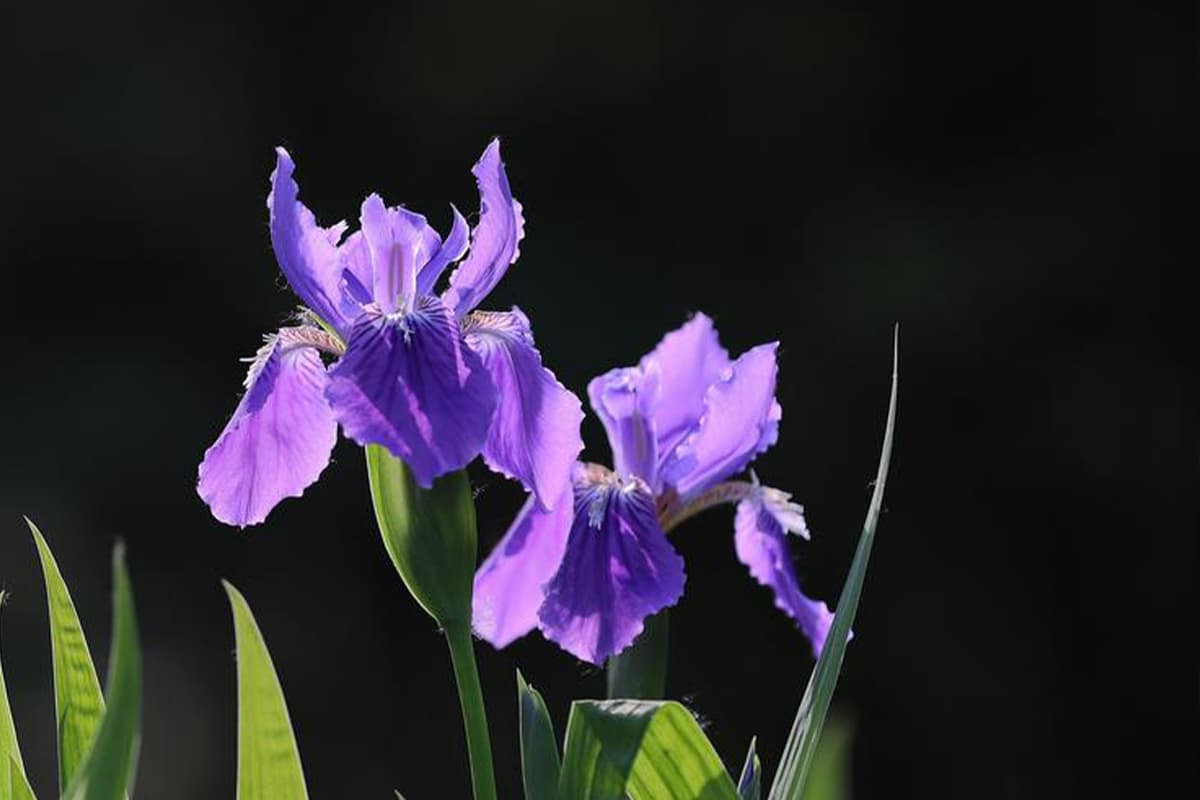
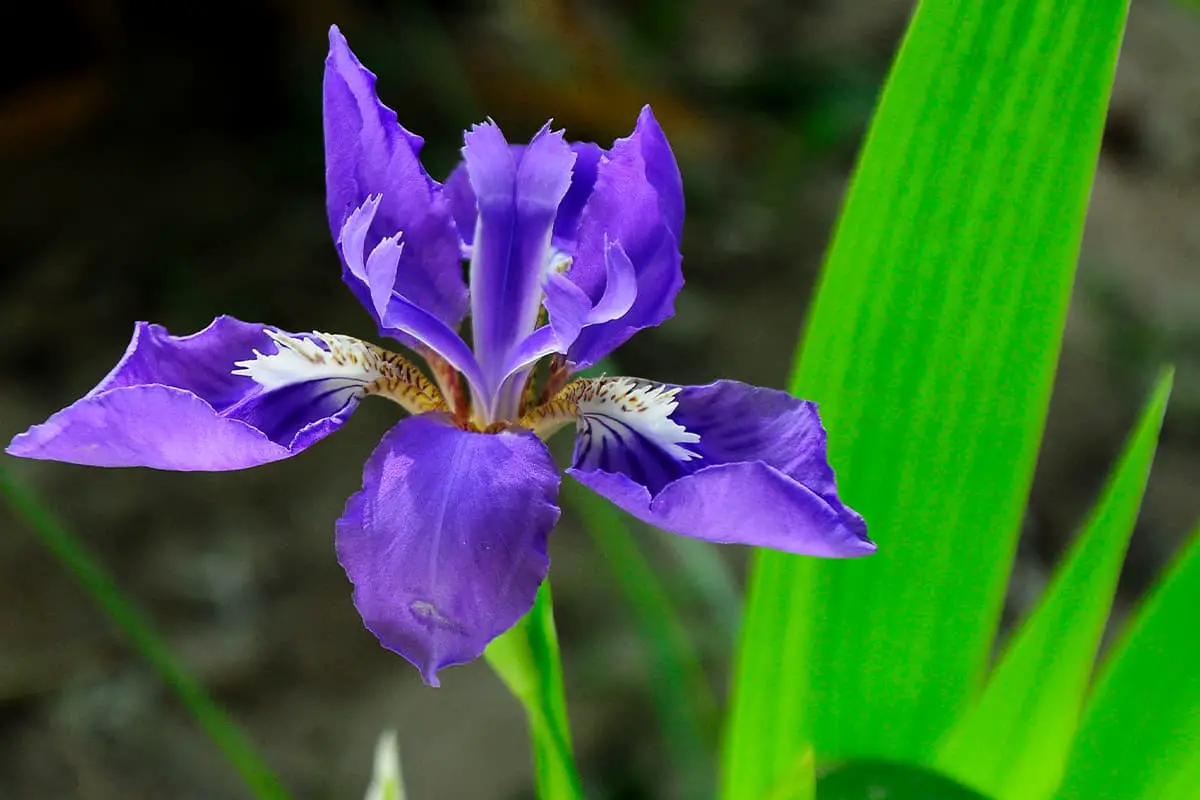
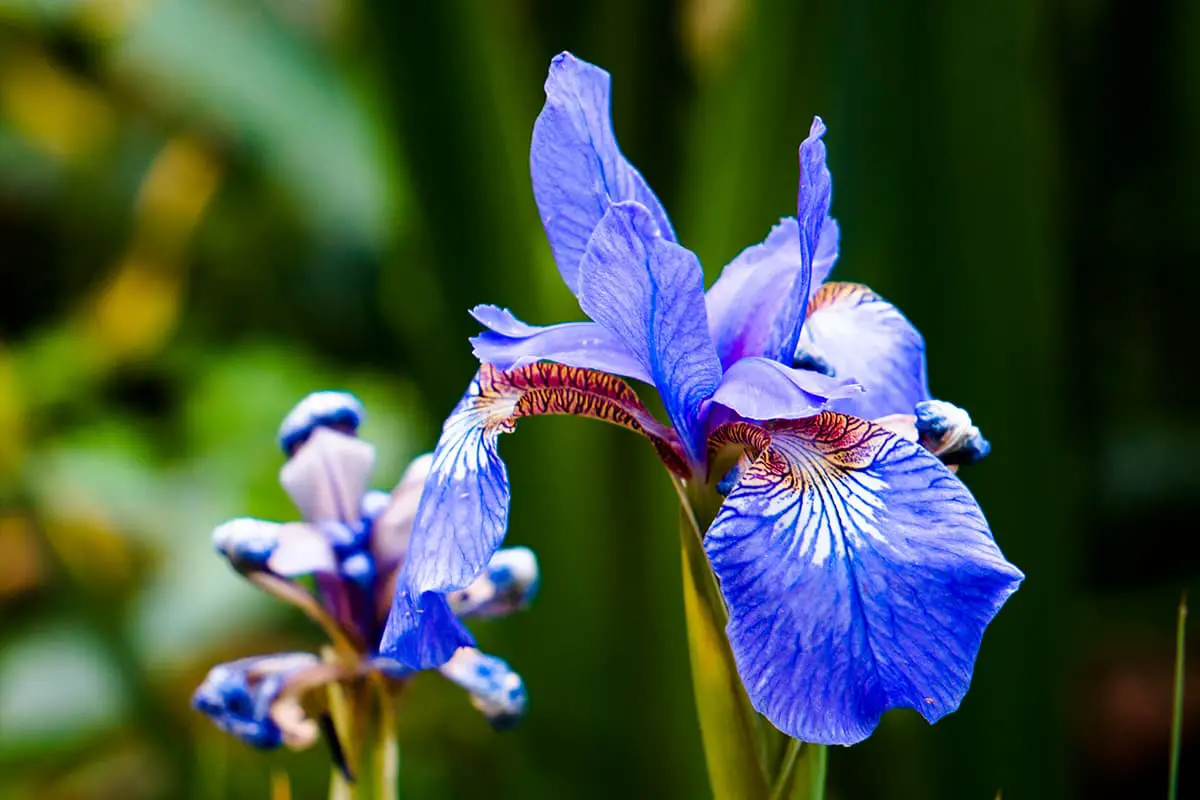
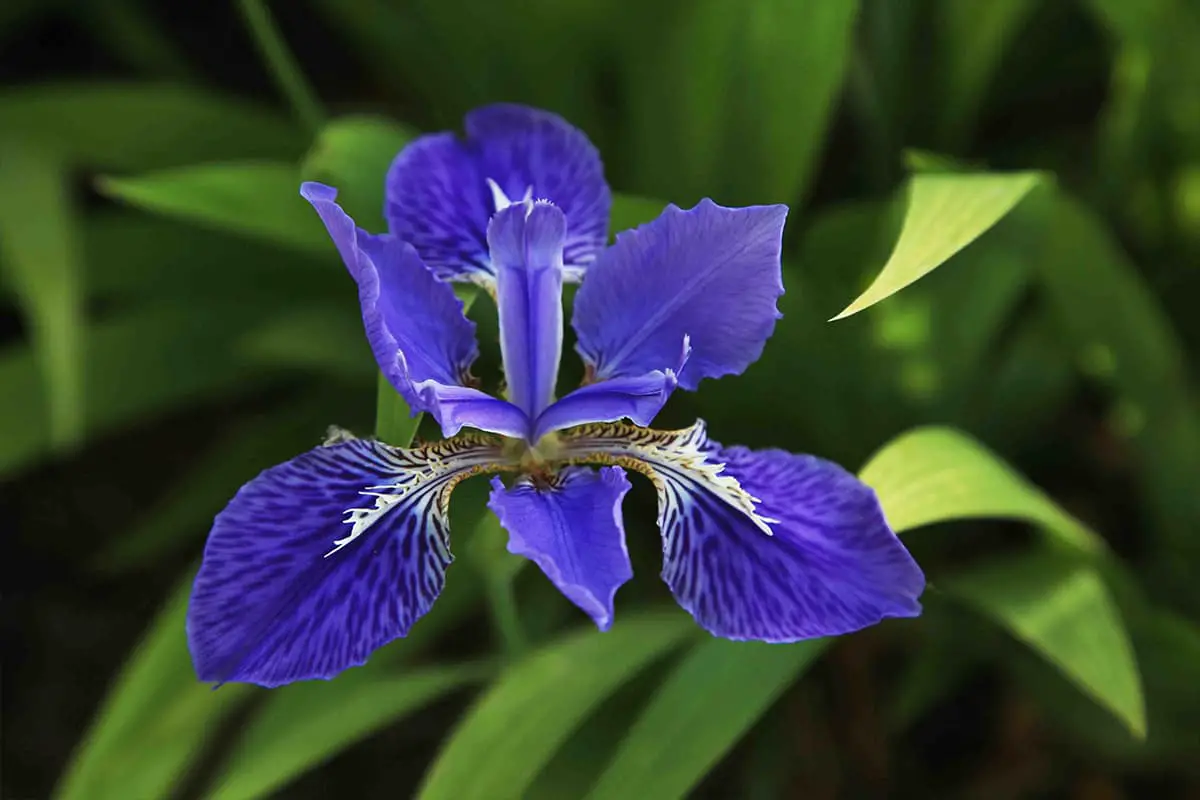
The flowers are bluish-violet; the pedicels are very short; the perianth tube is slender and flares into a bell shape at the top. The outer perianth lobes are circular or wide ovate, slightly concave at the top, with a narrow wedge-shaped claw part. The midvein has irregular comb-like appendages, forming an unevenly serrated edge.
The inner perianth lobes are elliptical and flatten out when the flower is in full bloom; the claw part suddenly becomes thin. The stamens are about 2.5 cm long, with bright yellow anthers and slender white filaments. The column branches are flat, pale blue, about 3.5 cm long, the apex is nearly square and toothed, and the ovary is fusiform cylindrical, 1.8 to 2 cm long.
The fruit is a long ellipse or inverted ovate shape, with 6 prominent ribs and splits into three lobes from top to bottom when mature. The seeds are black-brown, pear-shaped, and without appendages. The plant blooms in April to May and fruits in June to August.
Living Habits
Iris has a strong cold tolerance, and according to its habits can be divided into:
- Preferring moderately moist, well-draining, humus-rich, slightly alkaline, and sticky soil;
- Living in marshy soil or shallow water layers;
- Growing in shallow water;
- Thriving in sunny, cool climates with strong cold resistance, also tolerating semi-shaded environments.
In gardening, rhizomatous irises are divided into four categories based on their ecological habits:
- The Iris with robust rhizomes, strong adaptability, sunlight-loving, prefers fertile, moderately moist, well-draining, lime-rich, and slightly alkaline soils, and shows strong drought tolerance.
- Morphological Features: The central fall (lower petal) has beards (whisker-like) and markings (e.g., German Iris, Sweet Iris, Silver Spoon Iris, Dwarf Iris).
- Preferring moist conditions, mildly acidic soil, tolerating or preferring semi-shade (suitable for waterside planting).
- Morphological Features: The central fall has crest-like structures (e.g., Butterfly Flower, Iris).
- Preferring sunlight, and aquatic conditions (emergent water, water depth 5-10cm) (suitable for shallow water planting).
- Morphological Features: The fall is hairless (e.g., Stream Orchid, Yellow Flag Iris, Flowering Rush, Swallow Flower).
- With vigorous growth, strong adaptability, both drought and water logging tolerant (amphibious) (suitable as a ground cover under trees).
- Morphological Features: The fall is hairless (e.g., Mat rush, Iris-like).
Cultivation Methods
Iris blooms in the spring, with a flowering period of around three months, from April to June. Propagation is usually through division or sowing. Division can be performed after the spring bloom or in autumn, typically every 2 to 4 years.
When dividing the rhizomes, each piece should have 2 to 3 buds. The seeds should be sown immediately after maturation, and seedlings require 2 to 3 years to bloom. The planting distance should be 45 to 60 cm, and the planting depth should be 7 to 8 cm. Forced cultivation can also be performed.
Soil Requirements
Iris can be grown not only in glass or plastic greenhouses but also outdoors. Outdoor planting can be combined with temporary coverings or movable houses, especially in spring and autumn.
For the production of Iris cut flowers, it can be performed in any type of soil, as long as it drains well, has good moisture retention, and doesn’t compact (which would restrict plant growth). Good soil structure is a basic requirement, especially for frequently planting irises with short growth periods.
In heavy clay soils, it is advisable to add substances such as peat, vermiculite, or coarse sand and mix them with about 25 cm deep soil to improve the soil. If the soil is prone to compaction, a layer of materials such as rice husks, rice straw, pine needles, black peat, or similar can be used to cover the soil surface after planting to prevent soil compaction. This method can also prevent the soil from drying out quickly.
Temperature Control
After planting, soil temperature is the most crucial factor, with a minimum temperature of 5~8°C and a maximum temperature of 20°C. The soil temperature directly affects the germination rate. If the soil temperature is too low, the flowering capacity will decrease. Therefore, the optimal soil temperature is controlled between 16~18°C.
For greenhouse production of iris, the ideal temperature is 15°C. To shorten the growth period, newly harvested bulbs can be used at planting, and the greenhouse temperature is maintained at 18°C for the first 3 to 4 weeks. This temperature can be maintained until January 1st, but it can lead to weak plants. Temperatures of 13°C or lower prolong the growing period, increase plant weight, but also increase the chance of flower wilting.
In the fall, when plants are growing, particularly in temperate regions, when the sunlight is insufficient, greenhouse temperatures must be reduced to prevent flower wilting. It’s usually controlled at 10~13°C, trying to ensure plant growth. If the leaves seem excessive at all stages, then consider pruning some leaves.
The average day-night temperature during production can be 20~23°C, and the minimum temperature is 5°C. In a high-temperature and weak-light greenhouse, the lack of light is the main cause of flower wilting.
In areas where frost is frequent, production can only be carried out in greenhouses. The suitable growth temperature should be arranged at night. Therefore, unheated greenhouses should be closed early to make the night temperature as appropriate as possible.
During the day, ventilation should be initiated early to avoid the temperature rising above 18°C and causing damage. Shading can also achieve temperature control, but the appropriate level of illumination still needs to be maintained.
The optimum temperature for outdoor growth is 15~17°C, and continuous high temperatures during the day can be blocked by shading nets. They can not only reduce direct solar radiation but also increase the temperature.
Drainage System
To quickly remove excess water, a well-functioning drainage system should be set up. This also makes it possible to use water to rinse the greenhouse soil. This process can prevent the problem of salt accumulation caused by less water use during the planting of fat-loving crops or certain growth stages.
Planting Density
The planting density varies according to different varieties, bulb size, planting period, and planting location. To make the planting distance appropriate, a planting grid with 64 squares per square meter is usually used.
Fertilization Tips
Generally speaking, applying base fertilizer before planting is not advisable as it can increase the concentration of salts in the soil and delay the root growth of iris. Soil sampling should be done before planting to ensure the soil contains the correct nutrients.
Sampling must be done after soil treatment and rinsing. This way, the missing nutrients can be supplemented directly into the soil through subsequent fertilization. Iris is sensitive to fluorine, so fluorine-containing fertilizers and tripolyphosphate fertilizers are prohibited. Conversely, diphosphate fertilizers should be used.
Weed Control
The growth process of iris only takes 8~12 weeks. In such a short growth time, if the soil has been treated by steaming, flooding, plowing, etc., then there is no need to consider weeding during plant growth. After planting, chemical herbicides are mainly used to eliminate weeds. However, care should be taken not to harm the plants when applying.
If weeds start to grow in the field after planting, herbicides can only be applied when the bulbs are buried deep enough. The new buds of the bulbs must be at least 2 cm below the soil to avoid damage from herbicides.
Before the plants unfold their leaves, the grass in the greenhouse or outdoors can be controlled by spraying appropriate herbicides. If common herbicides cannot effectively control some annual grassy weeds, a compound herbicide should be used. Apply it at dusk, spray it on the plants, and then spray enough water. The next morning, thoroughly rinse from the top of the plants.
Due to the residual nature of herbicides, several points should be noted. The amount of herbicides applied to each plot in a year should be limited, preferably not more than twice; use herbicides only when absolutely necessary; do not plant varieties sensitive to herbicides.
Bulb Storage
The storage temperature of the bulbs must be 30℃, and bulbs for cut flower production should be planted immediately. If the bulbs cannot be planted immediately, they must be stored at an appropriate temperature during this transition period.
The temperature must meet the growth requirements of the bulbs and should be frequently adjusted to ensure the growth of the bulbs. Keeping the temperature at 2°C and not exceeding 2~3 weeks is the best choice. Storage temperatures higher than 2°C will prolong the treatment period and have a negative effect on flowering.
Carefully place the bulbs in a container with gaps at the bottom. Store at 2°C and ensure good ventilation. Bulbs are not suitable for long-term storage, as prolonged storage will adversely affect future stem and leaf growth and increase the risk of root tip infection by Penicillium.
Ensuring an adequate water supply during the planting period of irises for cut flower production is particularly important. The soil a few days before planting should be moist enough to ensure rapid and healthy early root growth and to avoid root damage during planting.
Using cold water for irrigation is particularly suitable when the soil temperature is high. High soil temperatures accelerate bulb growth, leading to decreased cut flower quality. Planting should be chosen in lower soil temperature areas. Additionally, a heat-insulating cover material can be laid on the ground before the summer arrives to prevent the soil from receiving excessive solar radiation.
Value and Other Aspects
Ornamental Value
The leaves of iris are green and lush, and their large and unique flower shape resembles a fluttering colorful butterfly. It is one of the important flowers in gardens and is also an elegant potted flower, cut flower, and flower bed flower. Its rich flower color and unique flower shape make it a good material for flower beds and courtyard greening. It can also be used as a ground cover plant, and some types are excellent fresh cut flower materials. Abroad, there is a custom of making perfume from this flower.
Medicinal Value
Taste and Characteristics
Cold in nature, with a spicy and bitter taste.
Main Functions
Activate blood and remove stasis, dispel wind and relieve dampness, detoxify, and eliminate food accumulation. It is used for injuries from falls, rheumatic pain, throat swelling and pain, food accumulation and abdominal distension, and malaria; external use for abscesses, poisonous swelling, and external bleeding.


 English
  العربية
  Bahasa Indonesia
  Deutsch
  Français
  Italiano
  Nederlands
  Português
  Русский
  日本語
日本語