600+ Types of Flowers A To Z (With Names and Pictures)
Types Of Flowers By Names (A-Z) Types Of Flowers By Color Types Of Flowers By Season Types Of Flowers By Blooming Time 600+ Types of Flowers No. Flower Name No.…

The Iris wilsonii is a perennial herbaceous plant with fibrous remnants of old leaves at its base. Its rhizome is thick and slanted, with sparse, yellowish-white roots that have wrinkled horizontal stripes.
The leaves are basal, grey-green, and broadly strap-shaped, featuring 3 to 5 indistinct longitudinal veins.
The flower stem is hollow, reaching heights of 50-60 centimeters, and bears 1 to 2 stem leaves; there are three green, grass-like, lanceolate spathes, each containing two flowers.
The flowers are yellow, 6-7 centimeters in diameter, with the outer tepals being inverted ovate, marked with purple-brown stripes and spots, and a narrow wedge-shaped claw.
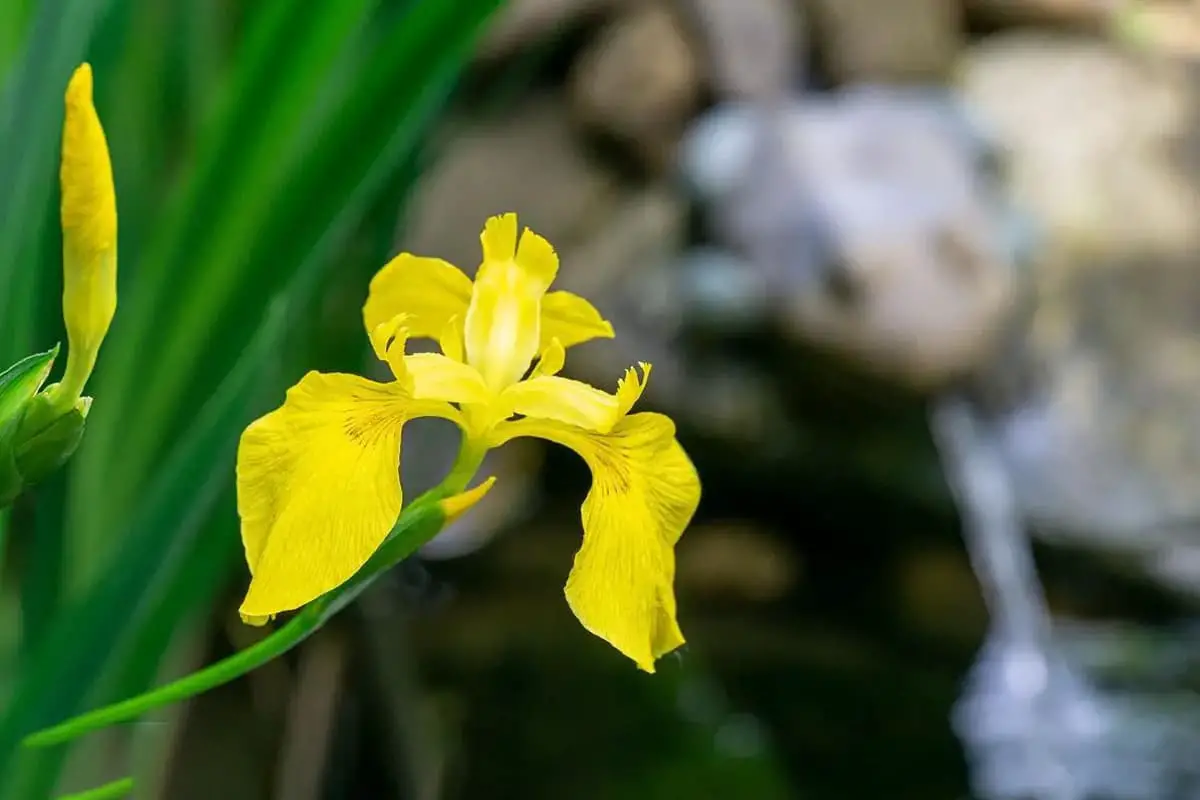
The inner tepals are inverted lanceolate and tend to lean outward when the flower is in full bloom. The capsule is an elliptic columnar shape with six distinct ribs and a beakless top; the seeds are brownish, flattened, and semicircular.
The flowering season runs from May to June, with fruiting from July to August. This plant is found on grassy slopes, at the edges of forests and wetlands beside rivers and ditches. It is cultivated for its significant horticultural value.
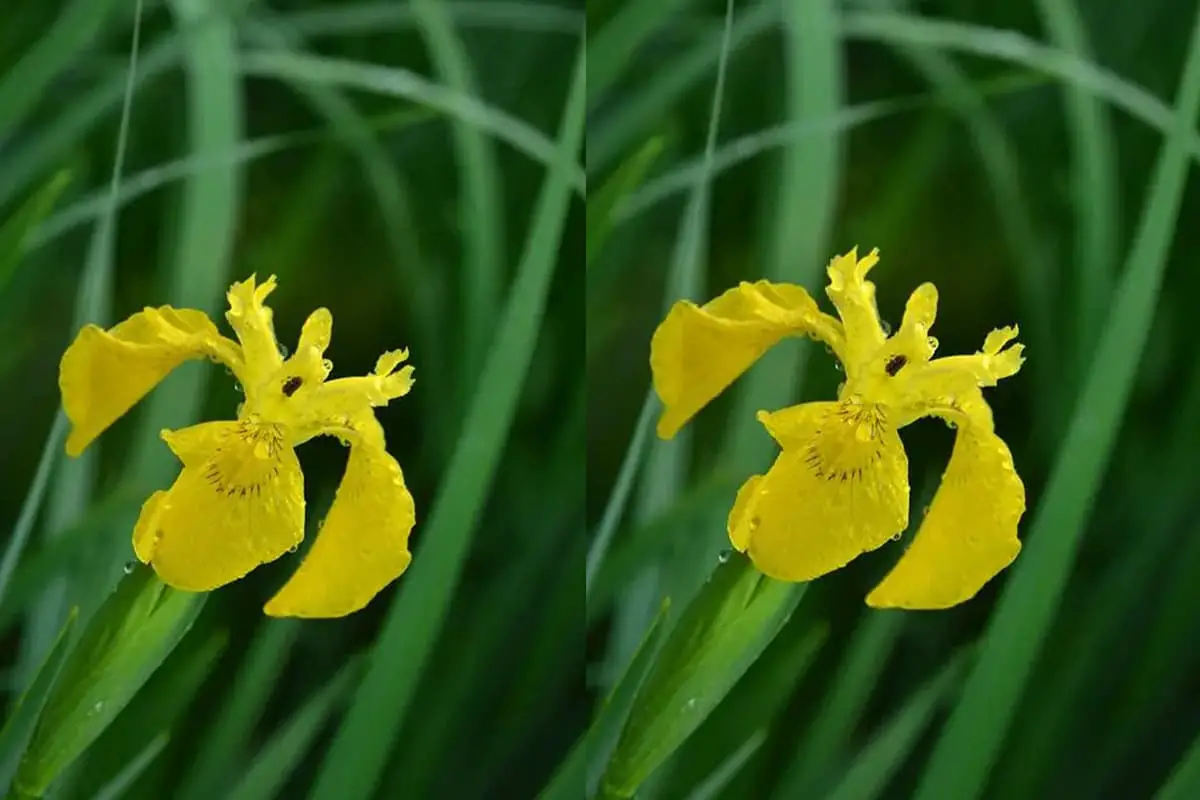
The Wilson’s Iris is a perennial herb with fibrous remnants of old leaves at its base. The rhizome is robust and slants outward with few-branched, yellow-white roots that display constricted, horizontal wrinkles.
The basal leaves are grey-green, wide and strap-shaped, measuring 25-55 centimeters in length and 5-8 millimeters in width, tapering to a pointed tip with 3 to 5 faint veins.
The flower stem is hollow, standing 50-60 centimeters tall, with 1 to 2 leaves growing on the stem; there are three green, grass-like, lanceolate spathes, measuring 6-9 (16) centimeters in length and 0.8-1 centimeter in width, tapering to a pointed tip with a prominent midvein and enclosing two flowers.
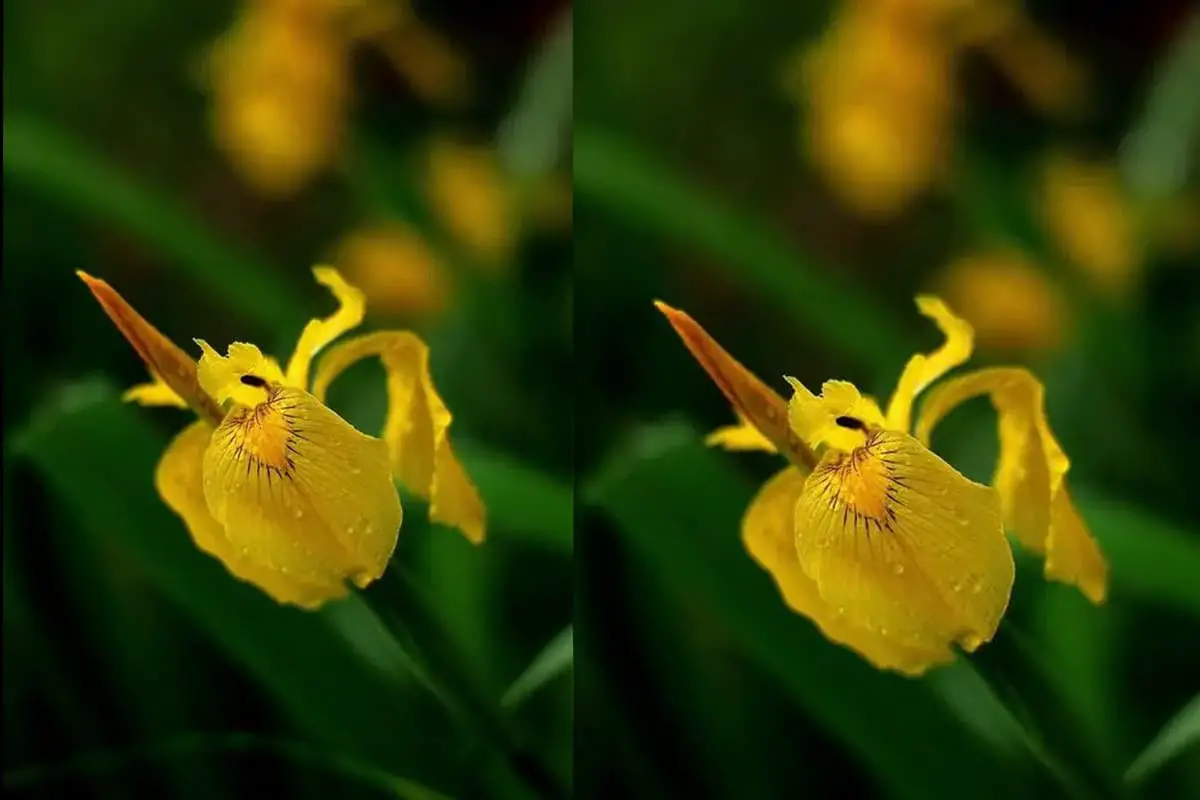
The yellow flowers have a 6-7 centimeter diameter; the pedicels are slender, ranging from 3-11 centimeters in length; the perianth tube is 0.5-1.2 centimeters long.
The outer tepals are inverted ovate, 6-6.5 centimeters long, about 1.5 centimeters wide, with purple-brown stripes and spots, a narrow wedge-shaped claw, and purple-brown auriculate protrusions along the edges.
The inner tepals are inverted lanceolate, 4.5-5 centimeters long, about 7 millimeters wide, leaning outward at peak bloom. The stamens are approximately 3.5 centimeters long, with the anthers nearly the same length as the filaments.
The deep yellow style branches are 4.5-6 centimeters long, with the terminal lobes being bluntly triangular or semicircular with sparse dentition, and the ovary is green, 1.2-1.8 centimeters long.
The capsule is elliptic and columnar, measuring 3-4 centimeters in length and 1.5-2 centimeters in diameter, with six prominent ribs, beakless at the top, and splitting from the top down to the middle when mature.
The seeds are brownish, flattened, and semicircular. The flowering period is from May to June, with the fruiting period from July to August.
The Wilson’s Iris grows in grassy slopes, forest edges, and wetlands near rivers and ditches.
In the wild, the iris thrives at the edge of shrublands, on sunny slopes, forest margins, and wetlands near water. It prefers a moist yet well-drained environment with sandy loam or light clay soil rich in humus.
It has a certain tolerance for salinity and can grow normally in mildly saline-alkaline soil with a pH of 8.7 and a salt content of 0.2%.
It favors sunlight but can also tolerate shade well, growing normally in semi-shaded areas. It enjoys a cool climate and has strong cold resistance.
Division propagation is generally conducted every 2 to 4 years, ideally in spring, fall, or after blooming.
For irises, this should be done post-bloom (avoiding the rainy season) so that by winter, the flower buds have sufficiently differentiated, allowing for blooming the following year.
When dividing rhizomes, it is best to have clusters of 3 to 4 buds. Too fine a division can adversely affect the blooming in the subsequent year. During division, trim the leaves on the upper part of the plant, leaving about 8 inches for planting.
Most iris varieties prefer being planted shallowly. The spacing varies by species, with robust types at about 20×20 inches, while standard varieties are generally around 8×8 inches.
If propagation is done by seed, it should be carried out immediately after the seeds mature, as this facilitates easier germination and flowers can bloom within 2 to 3 years.
After a year of planting and flowering, a single bulb will exhaust its nutrients and produce new roots. Around the new bulb, many bulblets will form, which, after 1 to 2 years of planting, can develop into flowering bulbs.
World flower planting experts have cultured different parts of bulbous irises, such as axillary buds, corms, stem plates, and flower stems, through tissue culture.
This technique generates new corms, providing a new method to speed up propagation and cultivate robust mother bulbs free from disease.
White rot is a common disease that primarily affects the stems or bases of the leaves of the plant, and in severe cases, can lead to the death of the entire plant.
It thrives in high humidity and temperature, especially in poor and compacted soil. Control methods include crop rotation over periods longer than 4 years, adequate ventilation, and avoiding overly dense planting.
Before the onset of the disease, regularly spray with a 500-fold diluted solution of 50% carbendazim or 50% tolclofos-methyl wettable powder.
Leaf scorch is a highly infectious common disease significantly affecting the growth of irises.
Symptoms typically begin at the leaf tips, with initial signs being gray-brown lesions or dry patches, which gradually progress towards the base of the leaf, eventually causing the whole leaf to appear scorched with black granular deposits.
The disease spreads from spores that overwinter in the soil or on plant debris, transmitted by rain, wind, or watering during early spring, with the potential to occur throughout the growing season and peaking from June to September.
Control methods include strict quarantine to prevent the introduction of diseased plants, soil and plant sterilization before planting, and enhanced routine maintenance to prevent waterlogging.
Early removal and disposal of infected leaves can reduce the spread. In winter, trim and burn fallen leaves.
If an outbreak occurs, alternate sprays of a 800-fold diluted solution of 75% chlorothalonil and a 1500-fold diluted solution of 70% thiophanate-methyl wettable powder, applying 4 to 5 times at 8 to 10-day intervals.
Plants afflicted with basal rot undergo a softening at the base of the bulb scales, which subsequently turn a gray-brown color.
This is overlaid with a white, mold-like substance, eventually leading to complete decay. The disease is primarily caused by spore infection, with higher temperatures accelerating its development and spread.
Control methods include:
The yellow iris, with its sword-like green leaves and brilliantly large flowers, resembles a group of swallows in flight, offering an incomparable and charming display.
It brings interest to gardens when arranged by the banks of ponds, rivers, or shallow water areas, offering both foliage and floral beauty. Accentuating the edges of water with stones or rocks, it stands out with an elegant and refreshing natural grace.
Rhizomes: Used for treating swollen and sore throats.

Peggie was once a high school mathematics teacher, but she set aside her chalkboard and textbooks to follow her lifelong passion for flowers. After years of dedication and learning, she not only established a thriving flower shop but also founded this blog, “Flowers Library”. If you have any questions or wish to learn more about flowers, feel free to contact Peggie.
 English
  العربية
  Bahasa Indonesia
  Deutsch
  Français
  Italiano
  Nederlands
  Português
  Русский
  日本語
日本語