600+ Types of Flowers A To Z (With Names and Pictures)
Types Of Flowers By Names (A-Z) Types Of Flowers By Color Types Of Flowers By Season Types Of Flowers By Blooming Time 600+ Types of Flowers No. Flower Name No.…

The Iris japonica is a biennial or perennial herbaceous plant from the genus Viola, in the family Violaceae.
Its basal leaves are ovate or lanceolate with long petioles, whereas the stem leaves are ovate, oblong or lanceolate, with rounded or blunt tips and sparse round teeth or blunt serrations along the edges.
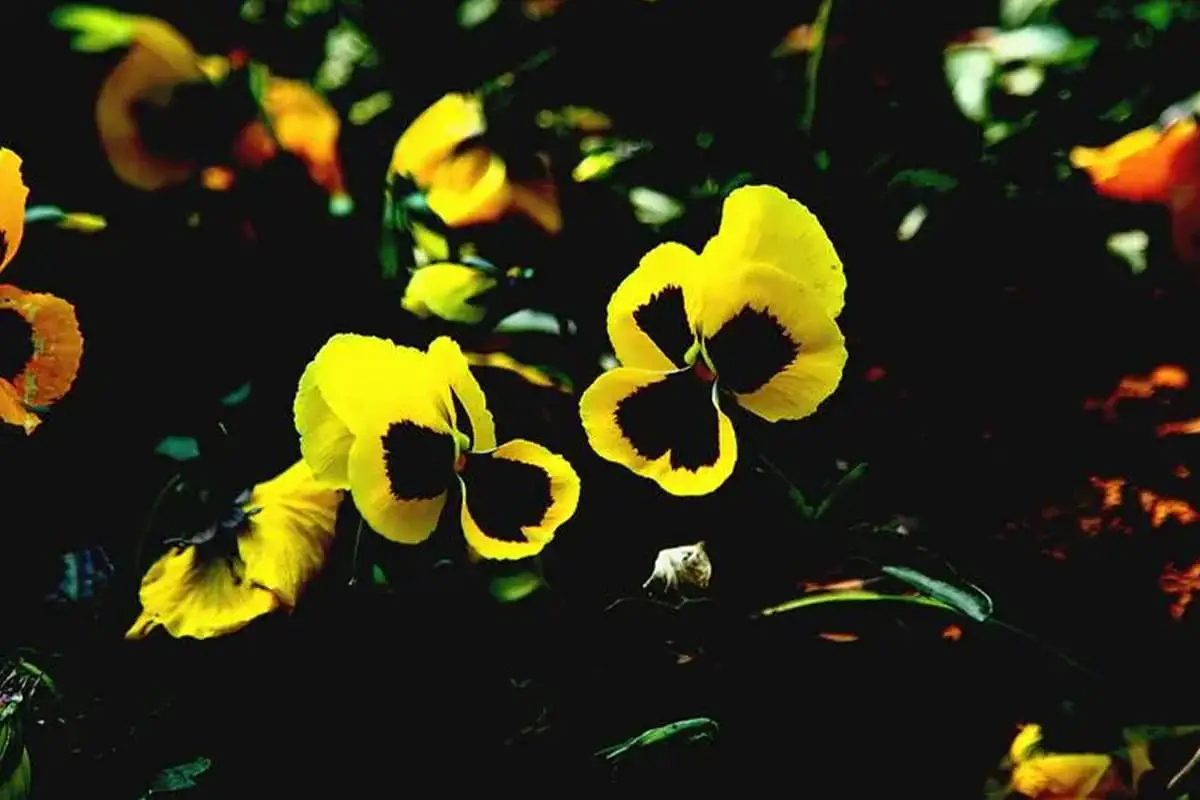
The tri-colored violet is a common wildflower in Europe, often cultivated in parks, and is the national flower of both Iceland and Poland. The flower typically features three colors – purple, white, and yellow, hence the name.
This species is cold-resistant, prefers cool conditions and is greatly affected by sunlight exposure. It is widely cultivated in parks throughout China for viewing. Originally from Northern Europe, it is now commonly cultivated in both the southern and northern regions of China.
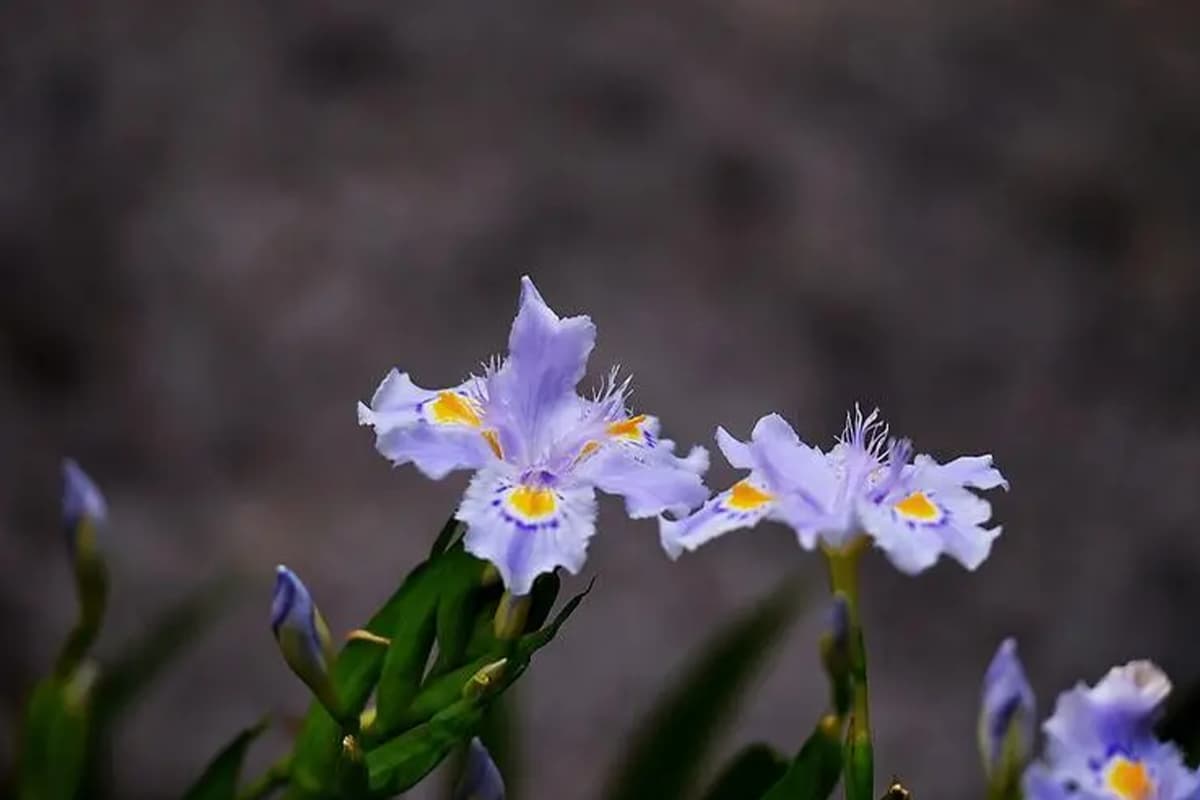
As a medicinal plant, it is grown in small quantities in Hebei province. The tri-colored violet is often planted in flower beds in courtyards, suitable for carpet flower beds, cluster flower beds, and can be planted in patches, lines or round edging.
It is used to treat coughs, pediatric scrofula and unidentified swellings and poisons. The deep purple flowers are fragrant and can be used to extract essential oils.
The stem is 10-40 cm high and the whole plant is smooth. The above-ground stem is relatively thick, erect or slightly inclined, with edges, and single or multiple branches.
The basal leaves are ovate or lanceolate with long petioles; the stem leaves are ovate, oblong or lanceolate, with rounded or blunt tips, round bases, sparse round teeth or blunt serrations along the edges, and the upper leaves have longer petioles, while the lower ones are shorter; the stipules are large, leaf-like, deeply pinnate, and 1-4 cm long.
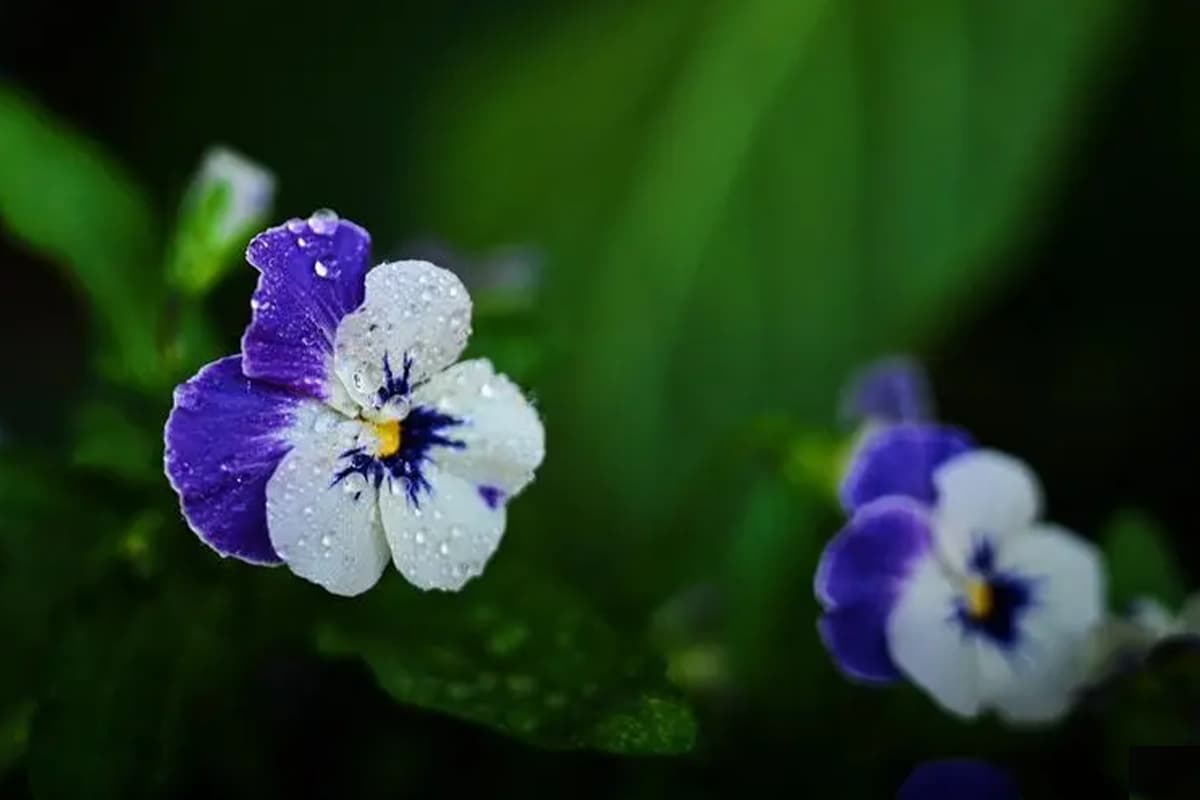
The flowers are large, with a diameter of about 3.5-6 cm, each stem has 3-10 flowers, usually each flower is purple, white, and yellow; the pedicel is slightly thick, single born in the leaf axil, the upper part has 2 pairs of small bracts; the small bracts are very small, ovate-triangular; the sepals are green, oblong-lanceolate, 1.2-2.2 cm long, 3-5 mm wide, with pointed tips, narrow membranous edges, and well-developed appendages at the base, 3-6 mm long, with uneven edges; the upper petals are deep violet, the side and lower petals are tri-colored, with purple stripes, the base of the inner side of the side petals is densely hairy, the lower petals are thinner, 5-8 mm long; the ovary is hairless, the style is short, with a clear knee bend at the base, the stigma is swollen, spherical, with a large stigma hole in front.
The capsule is elliptical, 8-12 mm long. Hairless. The chromosome number is variable, 2n=20, 26, 42, 46.
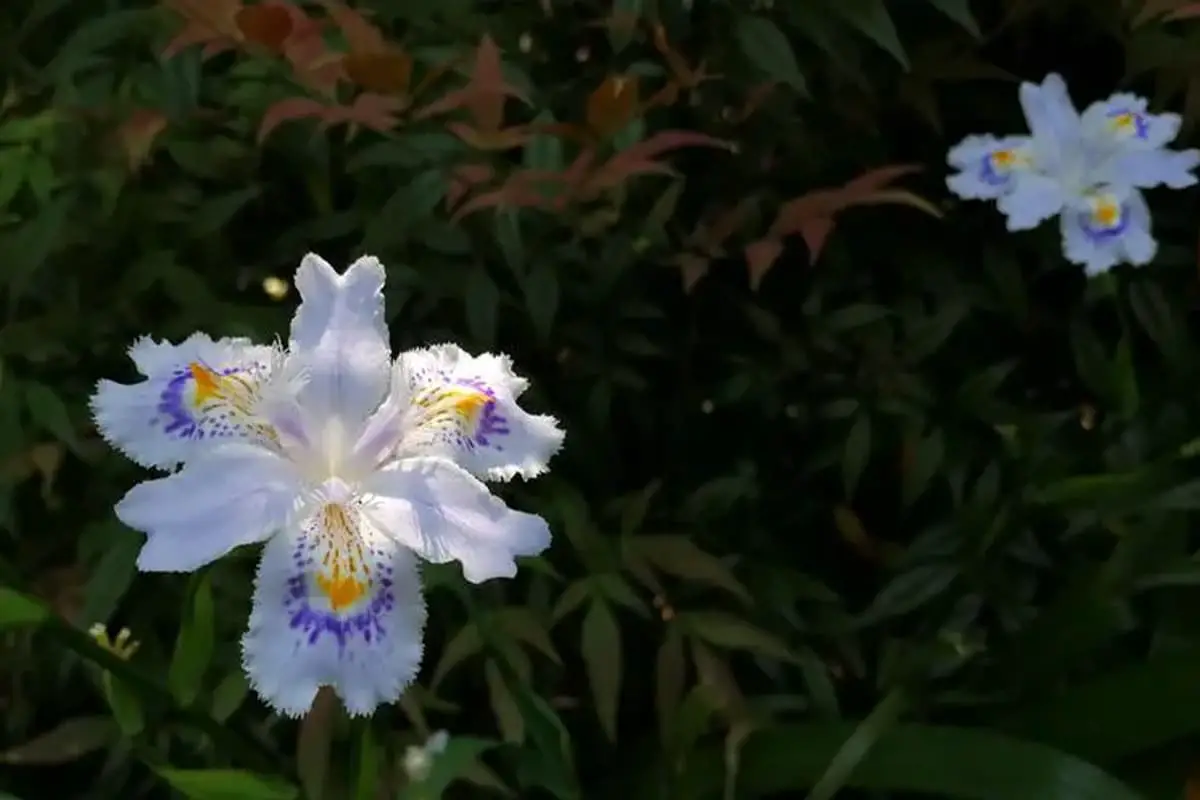
It is cold-resistant, cool-loving, sun-loving, and grows well under daytime temperatures of 15-25°C and nighttime temperatures of 3-5°C.
It dislikes high temperatures and waterlogging, is frost-resistant, and if the daytime temperature continuously exceeds 30°C, the flower buds disappear or do not form petals; at a continuous daytime temperature of 25°C, it only blooms but does not bear fruit, even if it does, the seeds do not develop well.
The root system can withstand low temperatures of -15°C, but below -5°C, the leaf edges are frozen and turn yellow.
The duration of sunshine has a greater impact on flowering than light intensity, and poor sunlight results in poor flowering. It prefers fertile, well-drained, organic-rich neutral loam or clay loam soil, with a pH of 5.4~7.4. It is a perennial flower, often cultivated as a biennial.
Originally found in Northern Europe
Seeds should be sown in loose, artificial medium. This can be done by broadcasting in beds or boxes. If conditions allow, seedlings can be raised in hole trays.
The medium should have a pH value of 5.5~5.8, be treated for disinfection, and maintain a temperature of 18℃~22℃ after sowing. Cover to avoid light for 5~7 days until sprouting begins.
After sowing, always keep the medium moist. Cover with coarse vermiculite or medium sand until the seeds are no longer visible. Pansy seeds often have uneven germination and may take up to a week to sprout. During this time, keep the soil medium sufficiently moist.
Carry out in 5-6 months, cut sprouting branches from the base of the plant and insert into peat keeping the air moist. The cuttings will root in 15-20 days with high survival rates.
Carry out after flowering. Cut the side branch or rootstock with roots and pot it and place it in semi-shade for recovery.
Enhance ventilation, control planting density, avoid overhead watering, and ventilate after watering. Clean up fading and aging tissues in time to avoid wounds. Use fumigants and alternate use of medicines.
Ventilate promptly after spraying to disperse moisture. In the early stages of the disease, spray with 50% carbendazim 1000 times liquid or polyoxin 500~1000 times liquid, or 700-800 times liquid of carbendazim, or 50% methyl tobutin 500~600 times liquid. You can also use smoke agents.
In late autumn and early winter, burn the diseased plant residues in the nursery. Remove diseased leaves and flowers promptly during the growing period.
In the early stages of the disease, spray with 80% mancozeb wettable powder 500~800 times liquid, or 75% carbendazim wettable powder 600~800 times liquid, or 60% anthracnose fungicide 800~1000 times liquid, or 50% polyoxin 500~600 times liquid.
Mainly transmitted by aphids. To control aphids, use 50% anti-aphid power wettable powder 3000 times liquid and 2.5% rotenone emulsion 800~1000 times liquid for spray control, alternating use 3~4 times, every 7-10 days.
For initial diseased plants, use 1.5% prochloraz emulsion 700 times liquid or 5% bactericidal cleanser 200 times liquid, every 7~10 days, continuous use 3~4 times.
Remove diseased residues and burn them. Use 53.8% kasugamycin 2000 dry suspension 1000 times liquid or 47% carbendazim wettable powder 700 times liquid, 30% copper oxychloride suspension 600 times liquid, 27% copper hydroxide suspension 600 times liquid, 50% metyl thiophanate-sulfur suspension 800 times liquid for spray control.
Clear and burn fallen leaves. In the rainy season, use 27% copper hydroxide suspension 600 times liquid or 47% carbendazim wettable powder 1000 times liquid, or kasugamycin 800~1000 times liquid, or 50% methyl tobutin 800 times liquid for spray control.
In severe cases, use 50% prochloraz wettable powder 1000 times liquid, or 75% carbendazim wettable powder 600 times liquid, or 70% mancozeb manganese, or 80% penconazole wettable powder 500 times liquid for spray control, every 10 days, continuous use 2-3 times.
Butterfly flowers are often planted in garden beds, suitable for carpet beds, cluster beds, and mass, line, or round edging planting. They are also suitable for arranging flower borders and lawn edges.
Different varieties combined with other flowers can create a unique early spring landscape. They can also be potted or arranged on balconies, window sills, steps, or used to decorate living rooms, studies, and guest rooms, adding charm and elegance.
The whole plant is used for its heat-clearing, detoxifying, hemostatic, cough-relieving, and diuretic properties. It is used for coughs, scrofula in children, and unnamed swellings and toxins.
The deep purple flowers have a fragrant aroma and can be used to extract essence.

Peggie was once a high school mathematics teacher, but she set aside her chalkboard and textbooks to follow her lifelong passion for flowers. After years of dedication and learning, she not only established a thriving flower shop but also founded this blog, “Flowers Library”. If you have any questions or wish to learn more about flowers, feel free to contact Peggie.
 English
  العربية
  Bahasa Indonesia
  Deutsch
  Français
  Italiano
  Nederlands
  Português
  Русский
  日本語
日本語