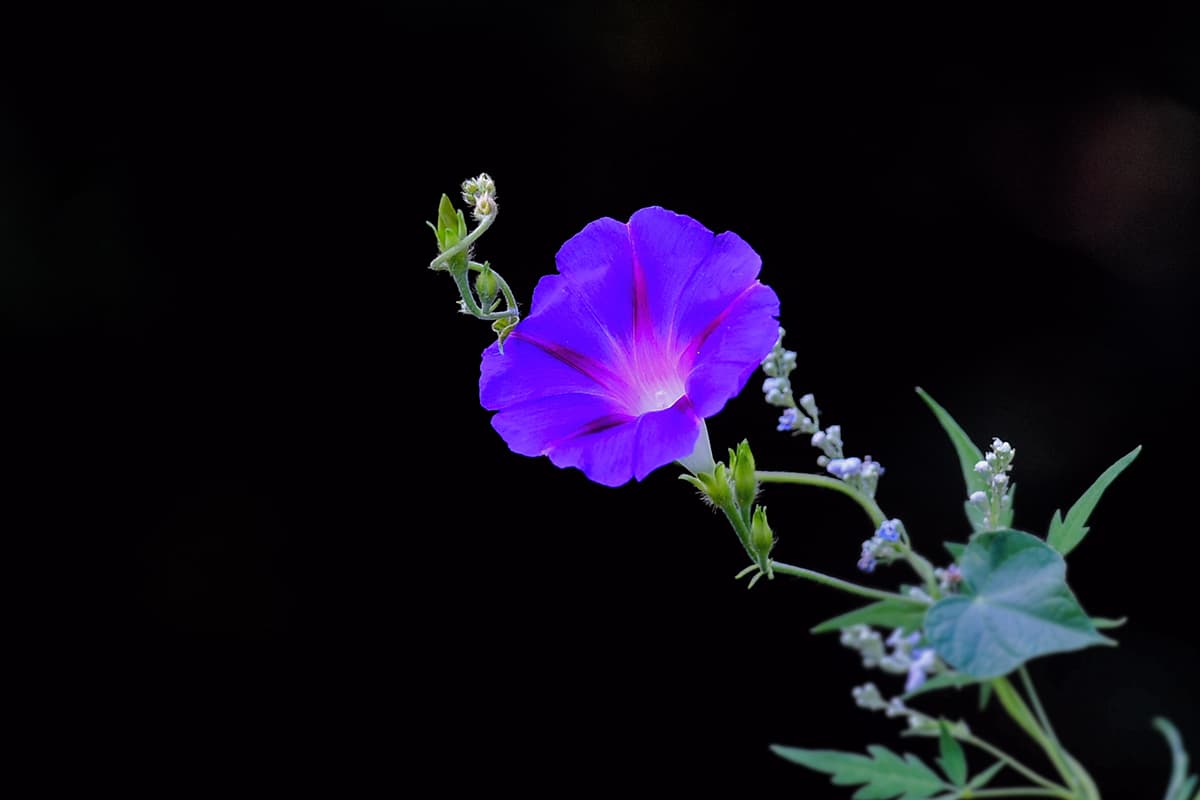
The Ipomoea nil is a perennial herb of the Convolvulaceae family. It has a twining stem, with broad oval to round leaves that taper at the top and have a heart-shaped base. The flowers grow from the axil and are blue-violet or purple-red, hairless.
The fruit is nearly spherical, and the seeds are egg-shaped, trihedral, black-brown or beige, and covered with short brown fluff. The blooming period is from June to September, while the fruiting period is from September to October.
Originally from tropical America, the Morning Glory is now widely cultivated in tropical and subtropical regions. In China, it is found in most areas except for some parts of the northwest and northeast.
It is a sun-loving plant that prefers moist, warm conditions. It is drought-resistant and tolerates low temperatures, but not cold. Propagation is mainly through seeding.
The Morning Glory is bitter and cold in nature and toxic. It is used for diuretic and laxative purposes, to reduce phlegm and quench thirst, and to kill parasites and alleviate accumulation.
It can be used to treat edema, cough and asthma caused by qi reversal, and abdominal pain caused by parasites. It is a common vine flower in summer and autumn, suitable for small courtyards and indoor window shading, as well as beautifying small pergolas. It can also be used as ground cover.
I. Morphological features
It is a one-year twining herb, with stems covered in backward-pointing short soft hairs and scattered with backward or spreading long hard hairs.
The leaves are broad ovate or nearly round, deeply or lightly 3-lobed, occasionally 5-lobed, 4-15 cm long, 4.5-14 cm wide, with a round and heart-shaped base.
The central lobe is oblong or ovate, tapering or abruptly pointed, and the side lobes are shorter, triangular, sharp or round. The leaf surface is sparsely or densely covered with slightly hard soft hairs. The petioles are 2-15 cm long, with hair coverage similar to the stem.
The flowers grow from the axil, either singly or usually two on top of the pedicel. The pedicel length varies from 1.5-18.5 cm, usually shorter than the petiole, sometimes longer, with hair coverage similar to the stem.
The bracts are linear or leaf-like, covered with spreading slightly hard hairs. The pedicel is 2-7 mm long, with linear small bracts. The calyx is nearly equal in length, 2-2.5 cm long, lanceolate-linear, with the inner two slightly narrower.
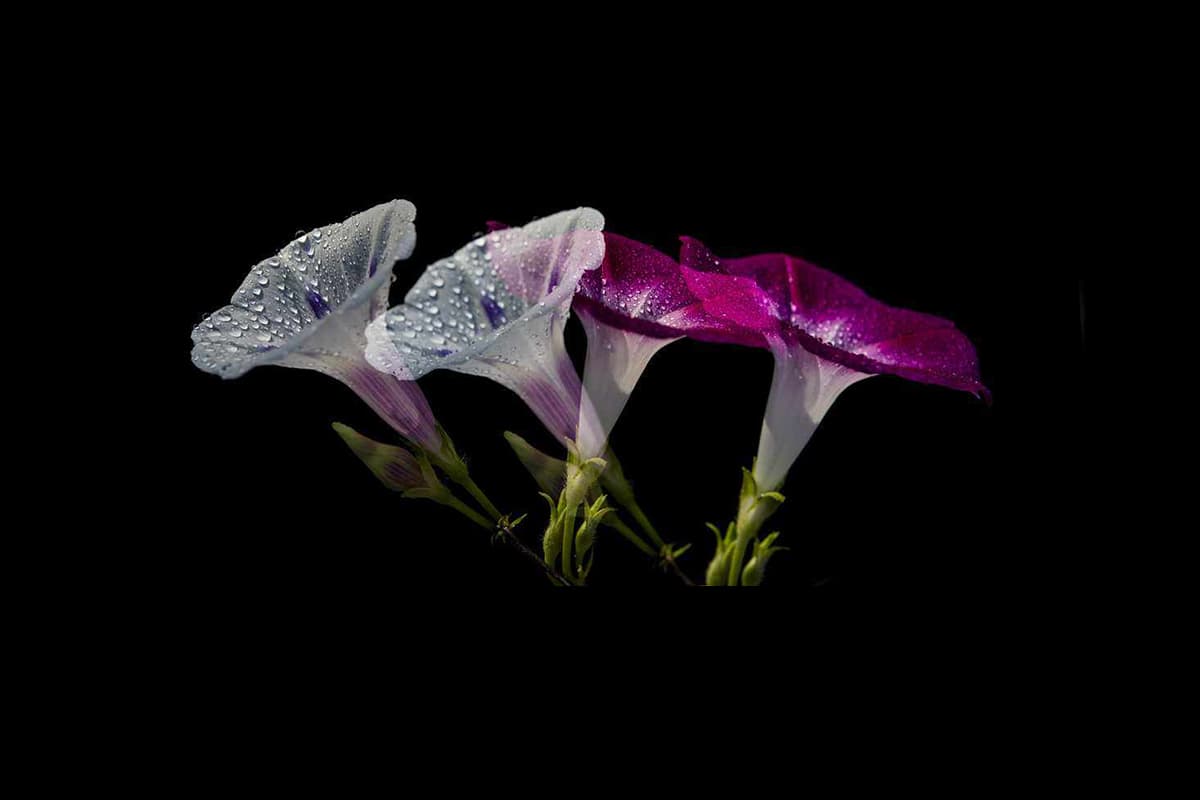
The outer surface is covered with spreading stiff hairs, denser at the base, sometimes also mixed with short soft hairs. The corolla is funnel-shaped, 5-8 (-10) cm long, blue-violet or purple-red, with a lighter colored corolla tube.
The stamens and pistil are hidden; the stamens are unequal in length; the filament base is covered with soft hairs; the ovary is hairless, with a head-shaped stigma.
The fruit is nearly spherical, with a diameter of 0.8-1.3 cm, 3-valved. The seeds are egg-shaped trihedral, about 6 mm long, black-brown or beige, covered with short brown fluff.
II. Growth Environment
This plant thrives at elevations of 100-200 (up to 1600) meters in moist stream sides, shrubbery on slopes, dry valley roadsides, near gardens and homes, and mountain roads, or it can be cultivated.
It is highly adaptable, enjoys full sun but can also tolerate semi-shade. It prefers warm and cool climates, can withstand high heat, but is not frost-resistant.
It thrives in fertile, loose soil, can withstand both waterlogged and dry conditions, and is somewhat salt and alkaline tolerant. Seeds germinate best at temperatures between 18-23°C, and seedlings can grow at temperatures above 10°C.
III. Distribution Range
This species is native to tropical America, and is now widely planted in tropical and subtropical areas.
IV. Propagation Methods
Morning glory propagation is primarily through seeding.
Seeding
The ripening period of morning glory fruit varies, and they tend to crack open after ripening, so they should be harvested as they ripen.
The harvested fruit should be air-dried indoors, and once the fruit has cracked open, the seeds can be removed and stored in a cool, dry place. In the warm regions of the south, seeds can be sown in any season for continuous flowering, but primarily in autumn for spring flowers and in spring for summer flowers.
In the northern regions, to promote early flowering, seedlings can be grown in greenhouses or large sheds in the spring, with a seedling period of 35-45 days.
Since morning glory seeds have a hard outer shell, the seed coat should be cut or soaked for 24 hours before sowing; or after soaking, the seeds can be germinated at a temperature of 20-25°C, and sown after sprouting.
Seeds treated in this way germinate faster and more uniformly than seeds sown directly. Morning glory seeds are large, but the germination rate is not high, so they are usually sown individually in the open air, 3-5 seeds at a time, with thinning after germination.
After sprouting, the germinated seeds can be directly sown in containers, with each container, 7-8 cm in diameter, containing one germinated seed. The seedbed should be sown with 200-250 grams of seeds per square meter.
The soil cover should be about 2 cm thick, and not too thin, otherwise the seedlings may emerge with their seed coats attached. Seeds sown directly without pre-treatment should germinate in 7-8 days under suitable conditions.
After germination, the seedlings should be moved to containers as soon as possible. 5-7 days before planting, the seedlings should be hardened by reducing the temperature, and finally, they should be planted outdoors after the frost.
As morning glory roots run deep, direct sowing without transplanting is preferred if conditions allow.
Cutting
Morning glory can also be propagated by cutting, by pressing a vine node into the soil, and after it has rooted, it can be cut and planted.
V. Cultivation Techniques
Seedling Cultivation
Morning glory seeds germinate best at temperatures between 68-86°F, typically sown in late April or early May (earlier in the south). Depending on the variety, the seeds are sowed in rows in a seedbed of fine sand soil.
Germination usually occurs within approximately 10 days when the humidity is moderate. About another 10 days later, the cotyledons are fully open. Once the true leaves begin to sprout, the seedlings should be transplanted into small pots.
Transplanting too early can result in weak seedlings, and too late can damage the roots, both are detrimental to future growth. Each pot should be marked to indicate the variety.
Watering and Fertilizing
For potted plants, choose a sandy loam rich in humus. Incorporate 4 parts leaf mold, 5 parts garden soil, 1 part river sand, and a small amount of bone meal at the bottom of the pot as a base fertilizer.
Start applying a thin liquid fertilizer one week after potting. During the remaining period, apply a thin cake fertilizer water or compound fertilizer every 2-3 weeks.
During the bud formation period, spraying 1-2 times with a 0.2% solution of potassium dihydrogen phosphate results in larger, more vibrant flowers.
Water frequently, especially in the summer, but avoid waterlogging in the pot. Morning glories love sunshine, so place them in a sunny spot in the yard, on a south-facing balcony, or on a windowsill.
Planting
When potting morning glories, wait until the seedlings in the small pot have grown two or three true leaves. At this point, the root system is well developed and the plants can be transplanted into medium pots, with pre-added base fertilizer.
According to Japanese researchers, the root system of morning glories needs heat and black pots absorb heat better than red ones. Rotate the pot regularly to ensure even sunlight exposure and complete root system development.
Pinching
Once three or four true leaves have grown on the morning glory, the center will start to vine, which should be removed. After the first pinching, new vines will grow between the leaf axils.
Once these vines have grown three or four leaves, pinch again, shaping the plant at the same time. After each pinching, apply additional fertilizer, similar to the one used for chrysanthemums.
Be careful not to get fertilizer water or mud on the leaves (including cotyledons) to avoid leaf drop. Once the vines grow, the plant enters the flowering phase (generally a month after planting).
Ideally, the first leaf of the vine will produce an axillary bud, and flower buds will emerge from the axils of the second and third leaves.
Seed Preservation and Hybridization
It’s crucial to save good quality seeds, categorizing and preserving them after they mature in the fall. Special attention should be given to preserving any variants that appear.
For morning glory hybridization, after selecting the female and male parents, the tip of the flower bud is cut off on the evening before blooming, then the stamens are removed, and the bud is wrapped in wax paper.
The next morning, remove the wax paper bag, perform artificial pollination with the male parent’s stamens, then wrap it again in wax paper. After one or two weeks, the wax paper bag can be removed, but the pollinated ovule should be marked and recorded.
The following year, all hybrid seeds should be planted, and once they flower, the results can be observed to study the effects of various genetic factors.
Plant Training
Dwarf Cultivation
When morning glory seedlings or the first or second true leaves unfold, promptly remove the top bud, enforcing dwarf and upright growth. This way, the cotyledon and true leaves can bud and bloom.
Support Frame Building
When the plant reaches a certain height, it should be supported with thin bamboo sticks, allowing it to grow in a climbing manner. The support can be fashioned into various shapes for artistic modeling according to personal preferences.
When modeling, take note that the direction of the lead wire wrap should correspond with the plant stem winding from right to left on the support.
VI. Pest and Disease Control
Symptoms
The main parts of the plant affected are the leaves, petioles, and tender stems. Initially, the afflicted leaf spots are pale green. They gradually turn pale yellow, with indistinct edges. In severe cases, these spots may develop into large patches of disease.
Later, white, scar-like protrusions form on the back of the diseased part. When these burst, they release a white, powdery substance, the fungal spores. When tender stems are affected, flower and stem distortion occurs.
When the disease surrounds the petioles and tender shoots, the parts of the host above the girdle suffer poor growth and may wither and die.
Pathogen and Disease Pattern
The disease is caused by the morning glory white rust fungus, a type of fungus in the white rust genus. The fungus overwinters as oospores in the diseased tissue.
The following spring, the oospores germinate and produce sporangia, which infect morning glory and other Convolvulaceae plants. The disease is most prevalent in August and September. Morning glory seeds can carry the fungus and become the source of infection in the following year.
Control Methods
Infected plants should be promptly uprooted and destroyed to minimize seed infection.
Disease-free seeds should be selected for reproduction, and seeds should be disinfected before sowing. Avoid crop rotation with Convolvulaceae plants.
Spraying with 1% Bordeaux mixture or a 500-fold dilution of 50% metalaxyl every 10-15 days when the disease first appears can effectively control the disease.
VII. Subcategories
Morning glory consists of over 60 species. The commonly cultivated ones are divided into three categories:
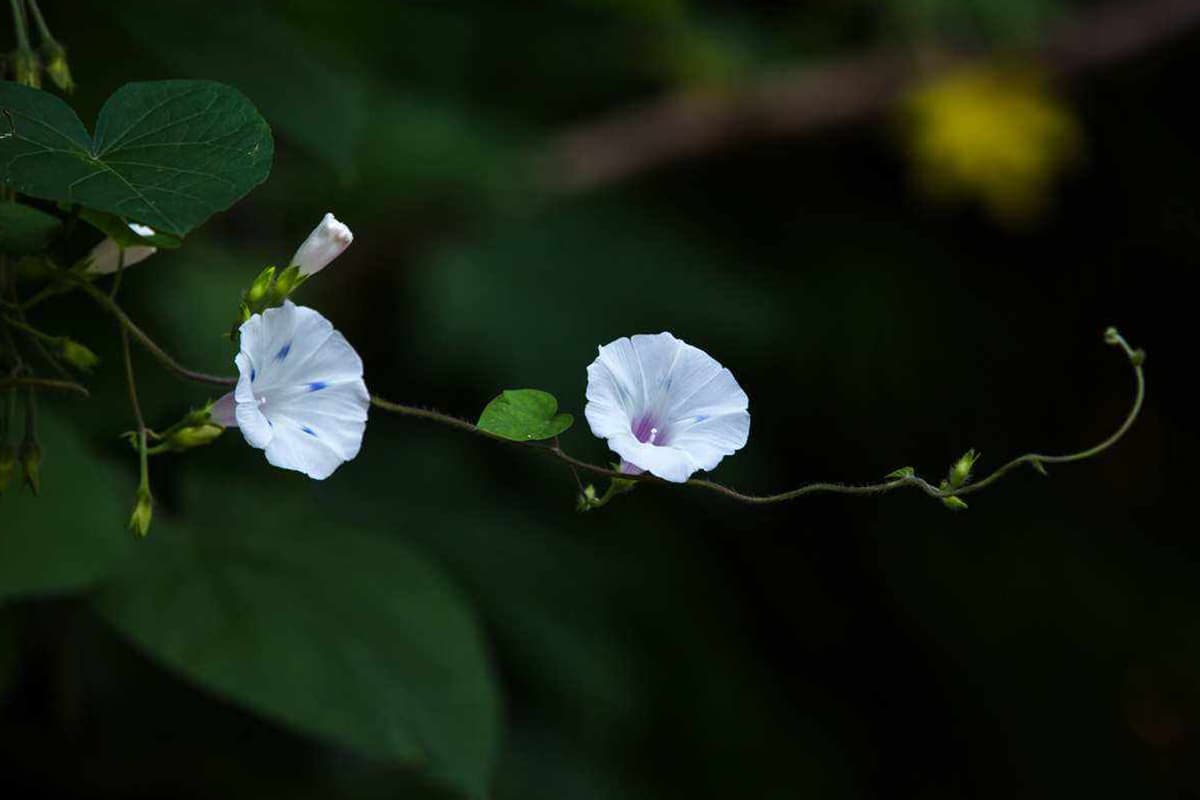
Split-leaf morning glory has deeply tri-lobed leaves and medium-sized flowers, ranging from 1-3 in the axil, in glowing blue, rose red, or white.
Round-leaf morning glory features broad, heart-shaped leaves with entire margins and small flowers in white, rose red, or glowing blue.
Large-flower morning glory has large, long-stalked, tri-lobed leaves with the central lobe larger, and the leaves often have irregular yellow-white patches.
It bears 1-3 axillary flowers, the overall flower stalk is shorter than the leaf stalk, and the flowers are large, with diameters reaching 10 cm or more, originating from the tropics of Asia and Africa.
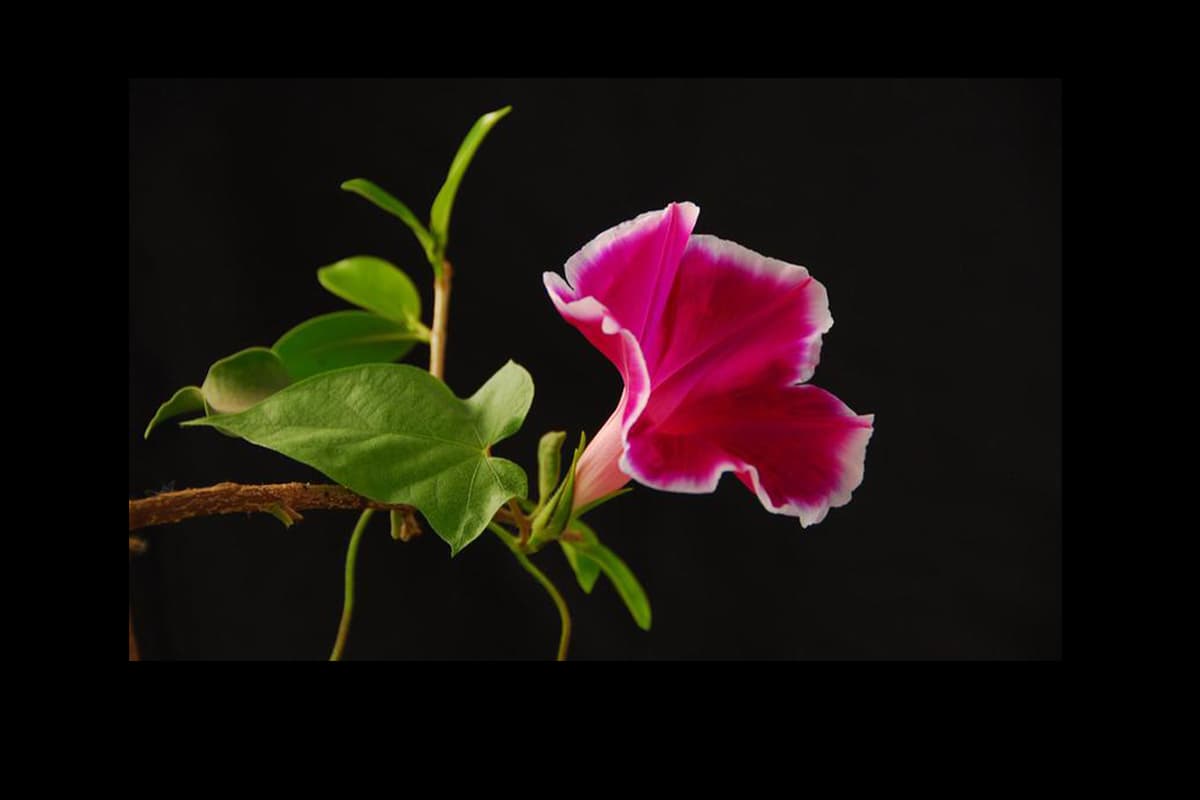
This species is most popular in Japan, known as Asagao, and numerous horticultural varieties have been bred with diverse flower types and rich, colorful hues, widely popular everywhere.
VIII. Primary Value
Ornamental
Morning glory is a common vine flower in the summer and autumn, suitable for beautifying small courtyards and shading in front of windows or small trellises. It can also be used as ground cover.
Medicinal
Morning glory is bitter, cool, and toxic, with the effects of promoting urination and bowel movements, expelling phlegm, and killing parasites. It can be used to treat edema, coughing due to adverse flow of qi, and abdominal pain due to parasites.
In addition to being cultivated for ornamental purposes, the seeds are commonly used in traditional medicine, known as “ugly cow seeds” , “black ugly,” “white ugly,” and “two uglies” (a mixture of black and white seeds).
The black seeds are often used in medicine, while the white ones are used less frequently. They have the effects of promoting urination, expelling phlegm, and killing parasites.
IX. Plant Culture
Flower Language
The morning glory is the birthday flower for August 6th.
The language of the morning glory: Honor/Love is everlasting.
Morning glory flower divination: You are naturally playful, but you enjoy mimicking the shrewdness and competence of adults, making you very interesting.
You are popular with the opposite sex and enjoy pursuing mature love like adults. But how can you, who are not deeply worldly, understand the world of adults? Just be natural, and your heart will be more at ease.
Morning glory flower motto: A child playing the adult, posturing.
Morning glory flower symbolism: Older women allure younger men. There is the old saying, “old cow eating tender grass,” and now there is “old grass leading tender cow” in contrast. When you see a woman like this, you can say, “Oh, you must be a morning glory.”
X. Species Differences
Difference from Dwarf Morning Glory
Family: Morning glory belongs to the Convolvulaceae family, while dwarf morning glory belongs to the Solanaceae family.
Habit: Morning glory is an annual twining herb, while dwarf morning glory is a perennial herb.
Flowers: Morning glory blooms in autumn; round-leaf morning glory has smaller flowers, and split-leaf morning glory has slightly larger flowers; the flowers are solid-colored.
Dwarf morning glory has a blooming period lasting several months (from May to July), with a bell-shaped corolla; the flower shape includes single petal, double petal, fringed or irregular serrated edges; the flower colors include red, white, pink, purple, and various spotted, netted, and striped patterns.
Ornamental and usage value: Morning glory is often used for beautifying courtyard walls and greening and beautifying the slopes of highways; dwarf morning glory has a wider range of uses, it can be used for potted plants, hanging pots, flower stands and flower bed beautification, and can also be planted on a large scale.



 English
  العربية
  Bahasa Indonesia
  Deutsch
  Français
  Italiano
  Nederlands
  Português
  Русский
  日本語
日本語