The seeds of the hyacinth resemble an onion, and while many people believe flowering plants are hard to keep alive, the hyacinth is an exception. It is a very easy-to-maintain indoor flower that can be grown in water or soil, just like other green plants.
However, like any plant, it has its own cultivation methods and precautions, and the hyacinth is no exception. So, how do you grow a hyacinth? Let’s take a look at the cultivation methods and precautions for hyacinths.
Plant Introduction
The hyacinth is a perennial herbaceous bulbous plant with an egg-shaped bulb covered by a membranous skin. The color of the skin corresponds directly to the color of the flower. When not in bloom, it resembles a large garlic clove.
Originally from the Mediterranean coast and a region in Asia Minor, it is known to be one of the most fragrant flowering plants. It prefers a sunny and relatively humid growing environment and requires good drainage and fertile sandy loam soil.
There are over 2000 horticultural varieties of hyacinths worldwide, mainly divided into “Dutch” and “Roman” types. The former is the authentic variety, with most plants only growing one flower stem, robust and with larger flowers.
The latter are mostly variegated hybrids, each plant capable of producing two or three flower stems, more delicate with smaller flowers. Most consumers prefer Dutch hyacinths.
Other Names
Foreign Narcissus, Western Narcissus, Five-Color Narcissus, Time Pattern Brocade.
Morphological Characteristics
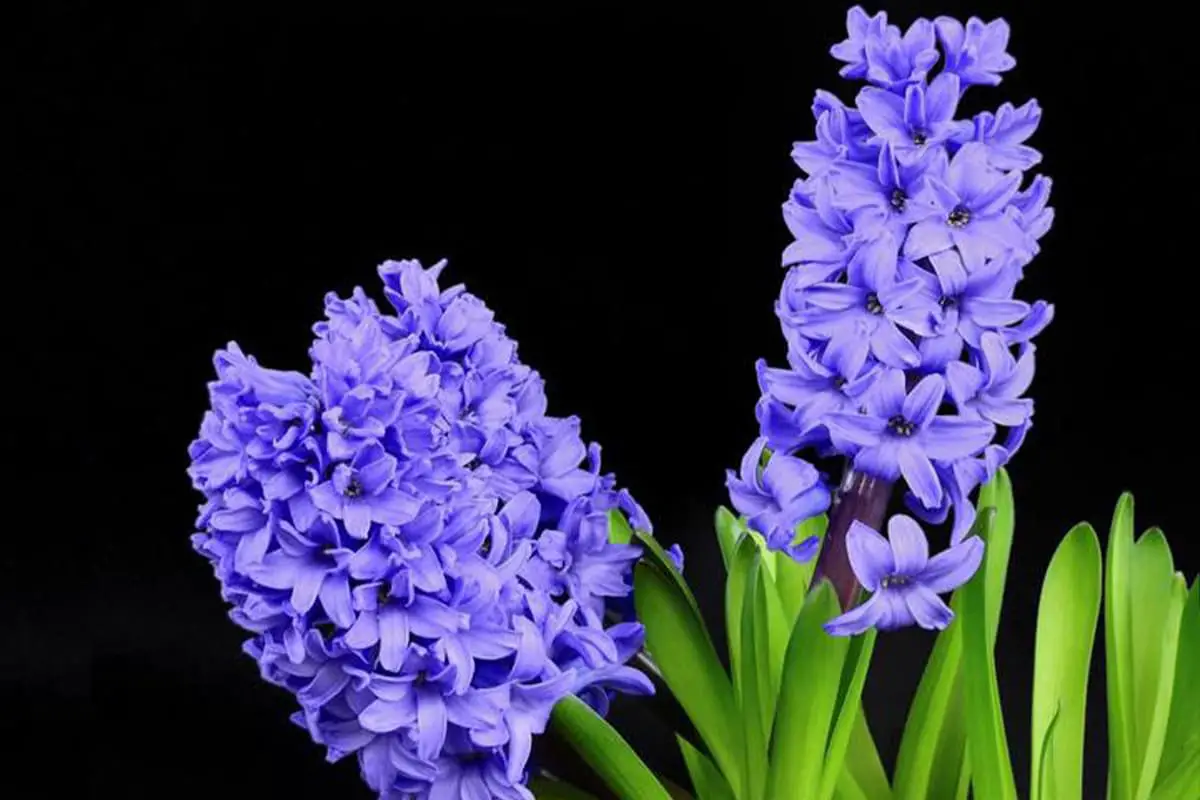
The hyacinth is a perennial herbaceous bulbous plant. The bulb is spherical or flattened spherical with a membranous skin, which is purplish-blue, white, etc., and the skin color directly corresponds to the flower color. Before blooming, it resembles a large garlic clove.
It has 4-9 leaves, lanceolate, fleshy, basal, thick, linear lanceolate, with shallow longitudinal grooves, glossy green.
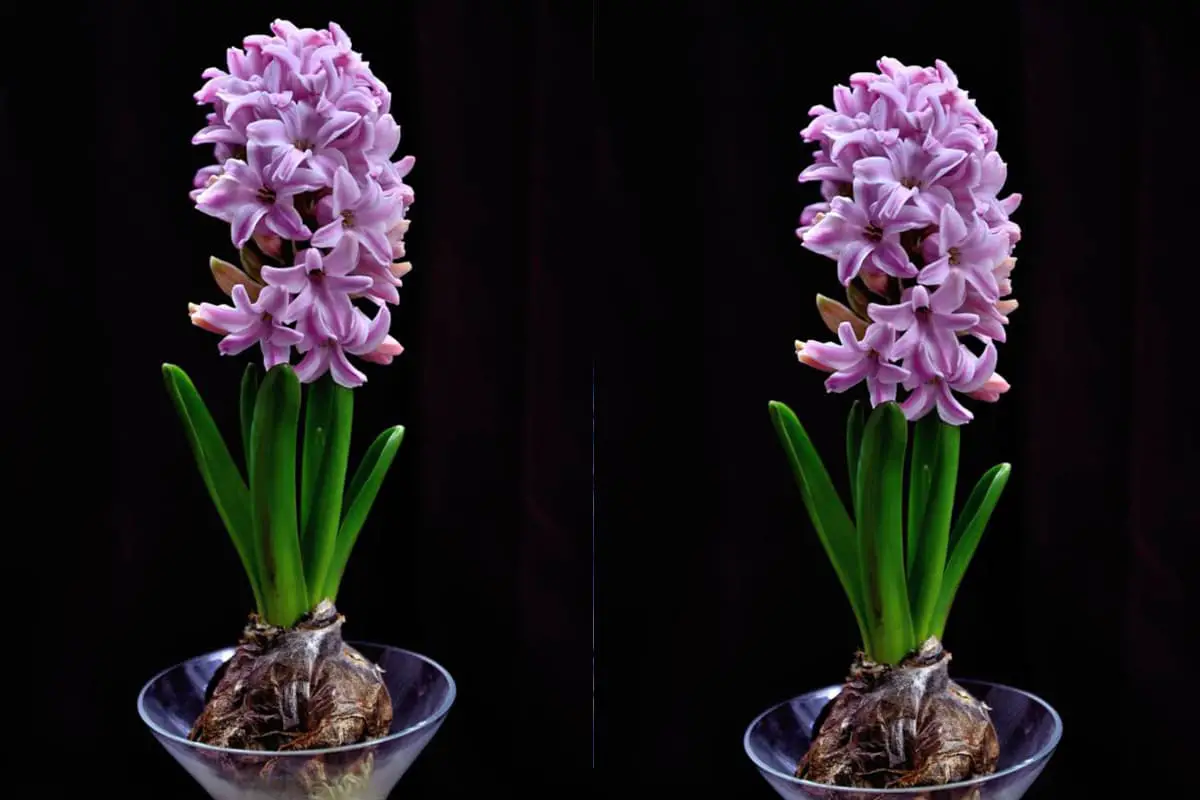
The flower stem is fleshy, with the flower spike 15-45 cm high, hollow, with a raceme at the end; there are 10-20 small flowers densely grown at the top, mostly growing horizontally, and a few hanging down, funnel-shaped, with a tubular perianth, and the upper part is four-lobed.
The corolla is funnel-shaped, with a longer base and 5 lobes. Rolled outwards and downwards. According to its flower color, it is roughly divided into blue, pink, white, goose yellow, purple, yellow, scarlet, red and other eight series.
The original species is light purple and fragrant. Capsule. The flowering period is in early spring, with a natural flowering period of March to April.
Varieties
Very Early Blooming Varieties
Amsterdam, Flower Red, Jan Bos.
Early Blooming Varieties
Anna Marie, Flower Pink, Pink Pearl, Innocence, White Pearl, Atlantic, Flower Blue, Huge Blue, Large Flower, Blue Star, Color Blue, Ostara, Anna Lisa.
Middle Blooming Varieties
Lady Derby.
Late Blooming Varieties
Macroni, Soft Candy, Pink Queen, Carnegie, Blue Dress, Mary, Flower Deep Blue, Amethyst, Flower Purple, Purple Pearl, Gypsy Queen, Flower Orange, Harlem City, Flower Yellow.
Other Varieties
Domestically, there is less cultivation: Middle blooming varieties, Red Rocket, Late blooming varieties, Wilbaka, Flower Red, Red Magic, Flower Heart White, Mulberry Red Rose, Corn Sugar, Flower Pink.
Double Hyacinths
After a long period of hybridization and breeding cultivation, hyacinths have gradually produced some special double varieties, and China has some of these varieties.
Rosette, Flower Pink, Neapolitan Rose, Royal Pink, Hollyhock, Flower Red, Red Diamond, Annabelle, Chestnut Flower, Flower Light Pink, General Kohler, Flower Light Blue, Isabelle, King Codor, Flower Deep Blue, Fearless Warrior, Flower Blue, Ben Nevis, Flower White.
Suitable Places
The hyacinth plant is short and neat, with dignified inflorescences, rich flower colors, and beautiful flower shapes. It is one of the famous bulbous flowers that bloom in early spring, and also an important variety of potted flowers.
It is suitable for decorating flower beds, flower borders, and flower troughs. It can also be used as a cut flower, potted or water-grown for ornamental purposes.
Is the Hyacinth Poisonous?
The hyacinth is poisonous, and the poisonous part is its seed ball. But it is also quite suitable for indoor cultivation. Because its other parts are non-toxic, you won’t be poisoned as long as you don’t take out its seed ball and put it in your mouth during maintenance.
In addition, keeping it at home can also play a role in decorating the room, and it can release some oxygen to improve indoor air quality.
Is the Hyacinth suitable for indoor cultivation?
Indeed, the Hyacinth is perfect for indoor cultivation for three main reasons:
It has stunning aesthetics that can beautify any room.
It releases oxygen, improving the quality of the room’s air, making it healthier to breathe. A brief sniff of its fragrance can also have a revitalizing effect.
It’s safe to cultivate indoors, as long as one doesn’t consume its bulbs, which can cause poisoning.
Functions and Uses
Decorative Value
The Hyacinth’s primary function is for decoration. In spring, it can be used to adorn flower beds, planted on the edges of lawns, or even potted for indoor placement. Regardless of the method, it contributes to beautifying the environment.
Fatigue Relief
The Hyacinth has a unique fragrance that stimulates the human nerves, enabling relaxation, stabilizing emotions, and reducing depressive moods.
Placing it in a well-ventilated indoor area can help invigorate and reduce fatigue. However, it is not advisable to place it in bedrooms, as it could lead to insomnia.
Essential Oil Production
The rich fragrance of the Hyacinth can be extracted into essential oils through professional techniques. This oil can soothe and relax the mind and body.
However, use it sparingly and not too frequently. The scent, stimulating to the nerves, doesn’t last long and frequent usage can trigger a relapse of old ailments.
Cultivation Method
Light
The Hyacinth requires over 5000Lx to maintain regular physiological activities. Inadequate light can lead to weak plants, elongated stems, small buds, early wilting flowers, and yellowing leaves. Incandescent lamps can be used for supplemental lighting about 1 meter away.
However, excessive light can cause leaf and petal burn or shorten the flowering period.
Humidity/Watering
Soil humidity should be kept between 60-70%. If too high, root respiration is inhibited, leading to rot. If too low, the above-ground part may wilt or even die.
Air humidity should be maintained at about 80%, and can be increased by misting or ground watering. Ventilation can be used to reduce humidity.
Temperature
When temperatures exceed 35°C, flower bud differentiation may be inhibited, leading to abnormal growth and increased blind flower rates. Low temperatures can cause frost damage to the buds.
Like tulips and other bulbous plants, its bulbs need a period of low-temperature maintenance to produce high-quality flowers and stems of sufficient length.
The Hyacinth’s growth process includes a leaf formation period, a flower formation period, and an elongation period. By advancing the flower formation period and providing the most effective low-temperature period, the bulb can be induced to flower.
This is why Hyacinths planted in the Mediterranean region often bloom early. Maintaining higher temperatures during the bulb planting stage can accelerate the leaf formation period, and hence, the flower formation period is advanced.
Compared with other bulbous plants, the Hyacinth forms flowers earlier due to the special temperature treatment. One way to achieve this is by increasing the soil temperature during the bulb growth period.
However, because of the high cost of this method, it is rarely used. It is more common for bulbs to be dug up earlier and treated in air-conditioned rooms to promote flower formation.
The timing of digging and the temperature of treatment distinguish the potted and cut-flower Hyacinths.
Soil
The Hyacinth should be grown in well-drained, slightly dry sandy soil. The soil should be fertile, high in organic matter, with good granular structure, neutral to slightly alkaline, and a pH level of 6-7.
Before planting, the soil can be treated with chemicals such as formalin at a soil temperature of 10-15°C. Immediately after applying the chemical on the soil surface, cover with a film.
Remove the film three days later in warm weather, air dry for one day, and then plant, keeping the soil moist. Prior to planting, apply sufficient base fertilizer. Continuous cropping is not recommended.
Planting should be done in October-November. The most important condition is well-drained soil. Apply sufficient base fertilizer before planting, add a thin layer of sand, then arrange the bulbs with a distance of 15-18 cm between each, and cover with 5-8 cm of soil.
Cover with straw to keep the soil loose and moist. Generally, no other management is required before flowering. If seeds are not intended to be collected, the flower stem should be cut off after flowering to promote bulb development.
The cut should be made as high up on the flower stem as possible. In early June, the bulbs can be dug up, spread out, graded, and stored in a cold storage. The summer temperature should not exceed 28°C.
Fertilizing
During the autumn and winter growth period, apply phosphorus and potassium-based fertilizers 1 to 2 times.
Fertilizer is unnecessary during the blooming period, but do fertilize once before and after blooming. Ensure adequate base fertilizer is applied before potting.
Common Problem Handling
Propagation Methods
Bulb Separation
In June, after digging up the bulbs, separate the larger bulbs from the smaller ones. The larger bulbs, once planted in autumn, can bloom in early spring of the following year. The smaller bulbs require 3 years of cultivation before they bloom.
Due to the low rate of natural bulb separation in hyacinths, a mother plant can only produce 1-2 small bulbs a year.
To improve the propagation rate, castration surgery can be performed on the larger bulbs during the dormant summer period to stimulate the growth of smaller bulbs.
Seeding
This is mostly used when cultivating new varieties. Seeds are sown into cold beds in autumn, covered with 1 cm of soil, and germinate at the end of January or early February of the next year.
Small bulbs cultured from seedlings bloom 4-5 years later. Under general conditions, the germination ability of seeds can be maintained for 3 years when stored.
Pest and Disease Control
Parasitic Top Rot
This refers to the rotting of the upper part of the plant’s inflorescence, called “top rot”. It often occurs alongside brown spots appearing on the leaf tips. The rot is usually caused by parasites that naturally exist under normal conditions.
These include plants that only start being infected after their small flowers have dried up (physiological bud rot) or those that have been pre-infected by parasitic fungi (parasitic fungal bud rot). The parasites can cause the initial infection.
Rhizoctonia
This fungus begins infecting plants from contaminated soil (even before planting). The symptoms of infection are irregular, bright brown, sawtooth-like scars on some small flowers. The degree of occurrence on the outer leaves is slightly less.
More severe infections show larger spots, browning of leaf tips, and spider-web-like traces of fungal growth on plants grown in greenhouses. This infection often occurs regionally and intensifies as soil temperature rises.
Prevention Method: Regularly use new soil for potting. Treat contaminated soil using conventional methods before use. Maintain the prescribed temperature for natural cold treatment and rooting rooms.
Penicillium
This is a storage rot, the initial symptoms of which can be seen immediately before planting. The root tips are dried up due to fungal infection.
When the root base is cut open, you can see the surrounding tissue is light brown. The same colored tissue can also be seen where the small seed bulbs have fallen off.
The seed bulbs will continue to rot during storage and subsequent planting. Infected seed bulbs have shorter buds and very few or no roots at all. The plants are prone to lodging.
This fungal infection also occurs in the damaged parts of the seed bulbs. The infected parts show white to blue-green fungal growth, under which the tissue turns brown and soft.
However, this infection does not extend to the root pan and does not negatively affect the quality of the flowers.
This infection is caused by different Penicillium species such as P. verrucosum. “Pink Pearl” and its variants are prone to infection through the root tips.
This infection mainly occurs in low-temperature storage rooms (below 17℃), and when humidity is above 70%. Another reason is injury to the seed bulbs.
Prevention Method: Prevent early maturity or formation of roots. Plant immediately upon arrival (especially “Pink Pearl” and its variants).
Maintain a constant temperature and air circulation in the storage room. Humidity should be kept below 70% throughout the storage period.
Erwinia
Soft rot, in greenhouses, severely infected seed bulbs no longer germinate. The seed bulbs become soft, the bulb tissue is transparent with white or yellow spots, and these infected bulbs also emit an unpleasant smell.
Symptoms of less severe infections include damp, dark green areas forming from the leaf base, which initially hinder growth and then cause the plant to wilt and eventually die.
This disease is caused by Erwinia bacteria. These bacteria are mostly parasitic and mainly infect tissues that have been frozen or overly watered.
When the temperature is too high or the soil is too wet, another form of infection occurs from the wounds where premature roots or small seed bulbs have fallen off.
This problem is mainly due to the soil temperature being too high or too wet during natural cold treatment in the fall. “DelftBlue” and “Carnegie” are highly susceptible varieties.
This disease is not contagious in greenhouses, and although infected tissues usually appear buttery, the infection does not occur elsewhere.
Prevention Method: Plant the seed bulbs under recommended conditions, i.e., maintain a low temperature (9℃) in the natural treatment or rooting room, and do not overwater.
During planting and throughout the greenhouse period, remove infected seed bulbs and plants. This can prevent Erwinia from spreading to nearby bulbs through irrigation water.
Physiological Bud Rot
The last small flower is dehydrated, a consequence of inadequate cold treatment. The sensitivity to this type of bud rot varies depending on the variety and bulb size.
Prevention: Ensure the rooting room of the planting bulbs and the natural treatment temperature is maintained at 9°C, use compensatory measures for treatments not at 9°C.
Do not move the bulbs indoors too early, provide the necessary cold treatment for each variety.
Maintain a constant temperature of 23-25°C during the greenhouse period, and don’t reduce the temperature by more than 1-2°C during planting to avoid Penicillium infection caused by high relative humidity in the greenhouse climate.
Never water the inflorescence, especially in the final stages. Before shipping, if storage cannot be provided, do not overwater the soil in the pot, and ensure sufficient air circulation between the plants.
Green Tipping
Some small flowers at the top of the inflorescence remain green, and in severe cases, this can spread to the entire top of the flower.
Cause: Imbalances caused by improper cold treatment; too short treatment time or incorrect temperature will produce such results. Some varieties, like “Pink Pearl” and its variants and “Jan Bos”, are more sensitive to this imbalance than others.
Prevention: After planting, follow the prescribed cold treatment period and low temperature operation.
Inflorescence Skew
After the bulbs are moved into the greenhouse, the top of the hyacinth flower stem grows skewed. In large hyacinth inflorescences, a part of the flower stem and its attached small flowers grow relatively faster than others, such as “Delft Blue” and its variants, “Carnegie” and “L’Innocence”.
This characteristic is not desirable and this imbalance is common in early planted and large inflorescences of hyacinths.
Prevention: After planting, use the prescribed cold treatment and low temperature standards. Maintaining a slightly lower greenhouse temperature (18-17°C) can also prevent the occurrence of inflorescence skewing symptoms.
Top Flowering
Unlike the normal growth state, the small flowers at the top bloom earlier than those at the lower parts. These types of inflorescence are usually short and robust.
This imbalance is caused by not providing the necessary cold treatment for the variety before moving the plants indoors. The sensitivity of each variety to this symptom varies.
Prevention: After planting, follow the prescribed cold treatment and low temperature standards.
Gray Mold Disease
In the early stages of the disease, the tips of the affected leaves change color, and the leaves shrink and rot. Under cold and wet conditions, rot can also occur in the flowers.
In the later stages of the disease, gray mold and black fungal nuclei are produced on the affected parts. The pathogen overwinters in diseased residues and soil as fungal nuclei, and produces conidia under suitable conditions. Conidia spread with wind and rain for infection.
Low temperature and high humidity are conducive to disease occurrence.
Prevention:
Reduce infection sources: timely removal and centralized destruction of diseased flowers and leaves.
Drug prevention: At the early stage of the disease, spray Bordeaux mixture 1:1:100, or 65% zinc dimethyldithiocarbamate wettable powder 500-800 times liquid, or 50% carbendazim wettable powder 1000 times liquid, or 800-1000 times liquid of patch rust spray for prevention.
Root Knot Disease
Hyacinth root swelling disease, also known as root knot disease. When the root system is initially affected, it is normal. When it extends to a certain extent, small white nodules are produced, the growth is weakened, sometimes small flower dry rot occurs, which affects growth and development, and in severe cases, the whole plant dies.
Prevention:
Strictly disinfect and sterilize during the storage period, pay attention to strengthening ventilation, check frequently, turn frequently, pick out diseased plants in time for centralized incineration. Strictly carry out soil disinfection and sterilization, avoid continuous cropping, and do not reuse the planting soil.
During the planting period, remove diseased plants in time, and disinfect and sterilize the soil. Strictly quarantine, do not let diseased bulbs and plants enter the field.
Over-summering and Storage
During the later stages of cultivation, control fertilization and watering to avoid bulb “bottom cracking” and subsequent rotting during the rainy season.
Harvest bulbs in time. Early harvesting leads to incomplete growth, while late harvesting often encounters the rainy season, making the soil too wet.
The storage environment must be kept dry and cool, and the bulbs should be layered for better ventilation.
Bulbs should not be left in the soil over summer. They must be dug up for storage every year and the bulbs should be thoroughly dried in the shade, otherwise, they are not storage-resistant.
Breeding Precautions
Hyacinths like moist soil but are afraid of waterlogging. During the growing season, water to keep the soil moist. Water-cultivated hyacinths should change the clear water every 2-3 days.
Hyacinths like fertility, but can also tolerate infertility. During the growth period and before flowering, apply 10 times rotten liquid fertilizer 1-2 times, or 1000 times “flower multi-purpose” universal fertilizer 2-3 times, after flowering, apply 10 times rotten liquid fertilizer mixed with an equal amount of 500 times liquid potassium dihydrogen phosphate, or 1000 times “flower multi-purpose” universal fertilizer 1-2 times, which is beneficial to the enlargement of the underground bulbs. Water-cultivated hyacinths do not need to be fertilized, just cultivate with clear water, before flowering, add a few grains of urea to the water to make the leaves greener.
Share
Facebook
Twitter
LinkedIn
Email
Share is Caring.
Peggie
Founder of FlowersLib
Peggie was once a high school mathematics teacher, but she set aside her chalkboard and textbooks to follow her lifelong passion for flowers. After years of dedication and learning, she not only established a thriving flower shop but also founded this blog, “Flowers Library”. If you have any questions or wish to learn more about flowers, feel free to contact Peggie.
Before you go
You May Also Like
We picked them just for you. Keep reading and learn more!
Introduction to Black-Eyed Susan Vine Did you know that the Black-Eyed Susan Vine (Thunbergia alata), with its striking eye-like center, can transform any garden into a vibrant oasis? This tropical…
Introduction to Blue Lechenaultia Blue Lechenaultia (Lechenaultia biloba) is a stunning flowering plant native to the southwestern regions of Western Australia. Renowned for its vibrant blue flowers, this perennial shrub…
Marguerite daisies (Argyranthemum frutescens), a member of the Asteraceae family, are beloved for their long blooming period from early spring through autumn. Commonly cultivated in parks and botanical gardens, these…
Plum Blossom Varieties Classification Based on branches and growth habits: Leaf plum, right-angle plum, water-reflecting plum, and weeping plum. Based on flower color and type:Palace pink plum, red plum, water-reflecting…
The Ipomoea nil is a perennial herb of the Convolvulaceae family. It has a twining stem, with broad oval to round leaves that taper at the top and have a…
As the weather gets hotter, many flower enthusiasts have been asking about which plants are suited for summer. Today, I’m going to introduce you to 18 types of flowers that…
As the weather is getting colder, many plant enthusiasts are asking, “What kind of flowers should we keep at home during the cold season?” Why not fill the house with…
What kind of plants should you grow at home? In fact, there are many flowers suitable for home cultivation. Today, I’ve compiled a list of 128 flowers that can be…
Hydroponically grown plants exude elegance and have strong ornamental value. They are easy to maintain and care for. During the dry winter season, they can serve as natural humidifiers at…


 English
  العربية
  Bahasa Indonesia
  Deutsch
  Français
  Italiano
  Nederlands
  Português
  Русский
  日本語
日本語