15 Common Roadside Flowers
Flora indeed surrounds us in our daily lives; we encounter a diverse array of plants and flowers in various settings – from urban streets and rural fields to manicured parks…

Houttuynia cordata, During the summer, when the stems and leaves of Houttuynia cordata are lush and the spikes are abundant, they are harvested, impurities are removed, and the plant is dried.
Herbal Characteristics: The stem is a flattened cylinder, twisted, 20–35cm in length, and 0.2–0.3cm in diameter; the surface is brownish-yellow with several longitudinal ridges and distinct nodes, with residual fibrous roots present on the lower nodes; it is brittle and easily broken.
The leaves are alternate, with the blades crinkled and shrunken, but heart-shaped when flattened, 3–5cm long and 3–4.5cm wide; they taper to a point, with smooth edges; the upper surface is dark yellow-green to dark brown, the underside grey-green or grey-brown; the leafstalk is slender, with the base and stipules fused to form a sheath.
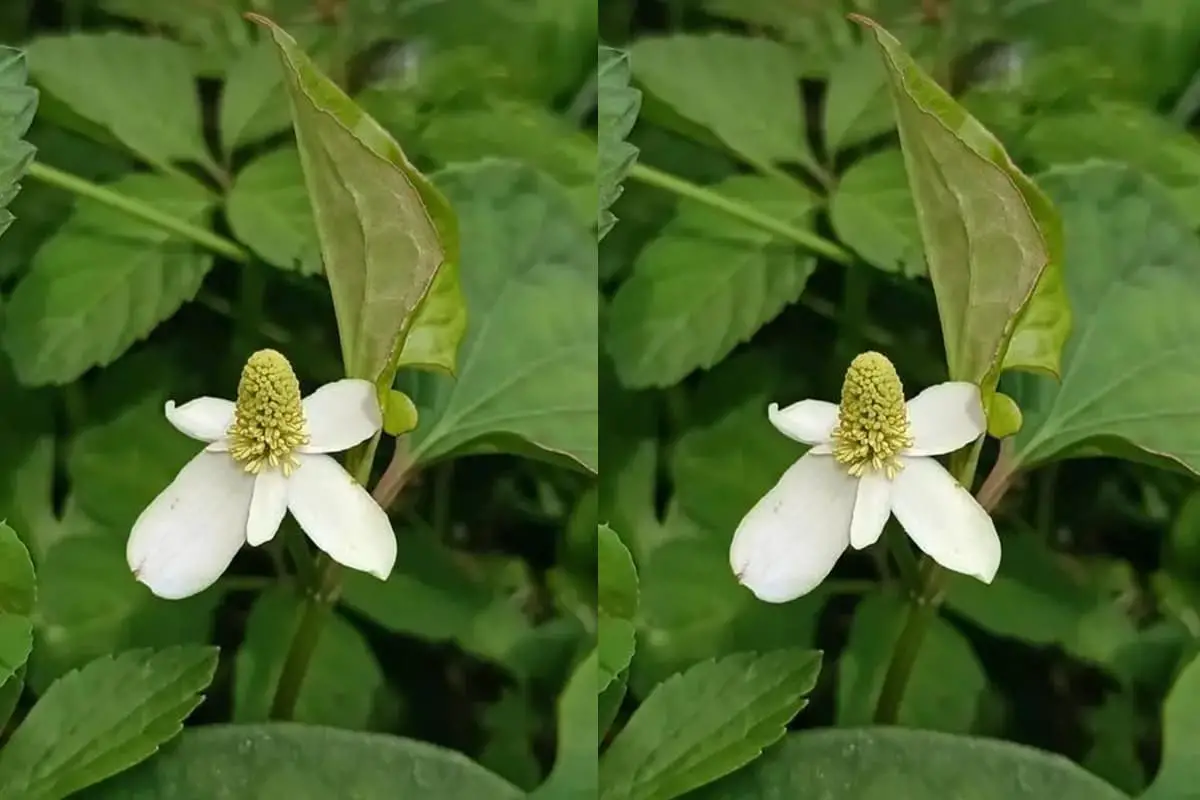
The spicate inflorescence is terminal and brownish-yellow. When crushed, it emits a fishy smell.
Houttuynia cordata has a pungent taste and a cool nature, associated with the lung meridian. It can clear heat, detoxify, reduce swelling, heal sores, promote urination and relieve dampness, clear heat and stop dysentery, and aid digestion and appetite.
It is used to treat conditions such as high fever, toxic heat, damp evil, lung abscesses, sores and swellings, hemorrhoids with bleeding, and accumulated heat in the spleen and stomach.
Modern pharmacological experiments indicate that this herb has antibacterial, antiviral, immune-boosting, and diuretic effects.
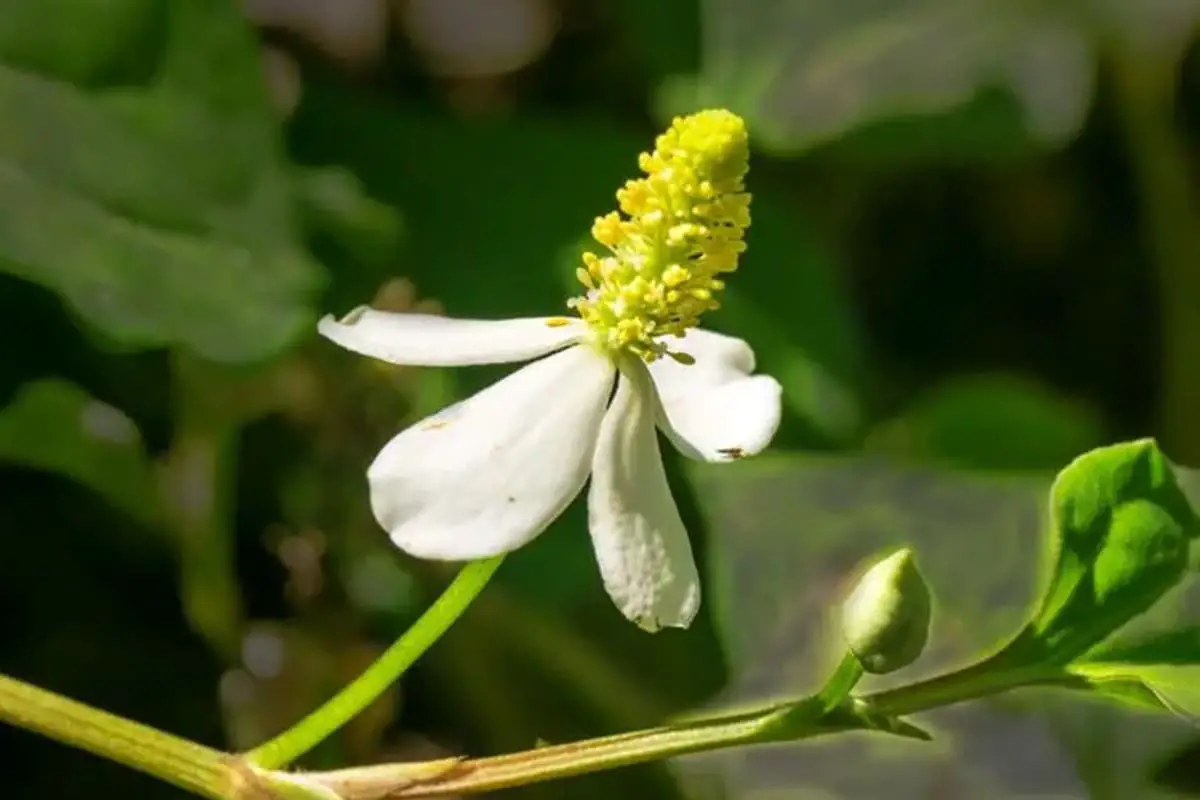
This herb is utilized for its heat-clearing and detoxifying effects and is particularly effective in promoting urination and reducing swelling.
It is prescribed for the treatment of pneumonia, lung abscesses, dysentery, malaria, edema, gonorrhea, leucorrhea, carbuncles, hemorrhoids, prolapse of the rectum, eczema, alopecia, and scabies.
For oral use: Decoct in water, taking 9 to 15 grams of the dried herb (30 to 60 grams fresh); alternatively, the juice can be extracted and consumed. For external use: Use the decoction for steaming and washing affected areas, or apply the crushed herb directly.
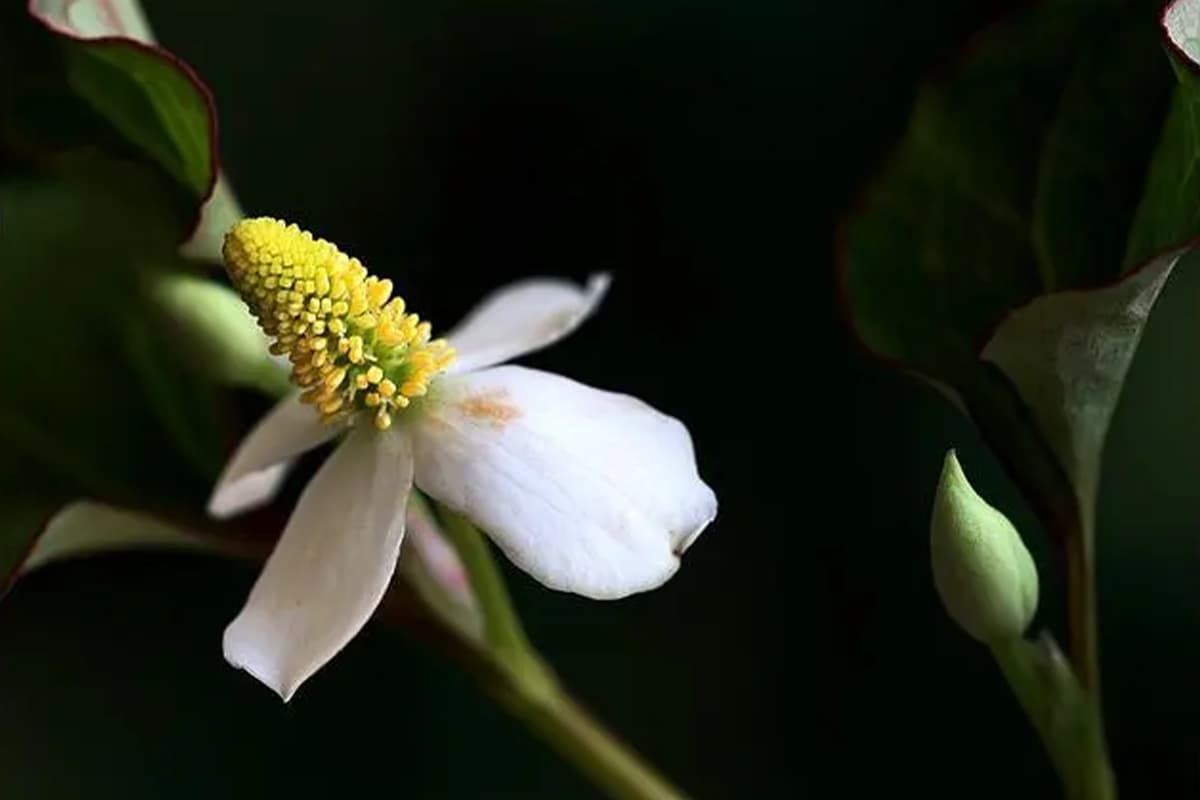
Those with deficiency-cold syndromes and yin-type ulcers should avoid using this herb.
The aerial parts contain volatile oils and antibacterial components such as decanoyl acetaldehyde, lauric aldehyde, α-pinene, and linalool, with the first two imparting a distinctive odor.
Other components include methyl nonyl ketone, camphene, myrcene, limonene, bornyl acetate, and caryophyllene. The compound typically referred to as “fish mint factor” is the addition product of decanoic ethanal with bisulfite.
Additionally, there are compounds like afzelin, hyperin, rutin, chlorogenic acid, β-sitosterol, stearic acid, oleic acid, and linoleic acid present. The leaves contain quercitrin, while the flowers and fruit spikes contain isoquercitrin.
Fish mint enhances the phagocytic ability of white blood cells (WBC) and increases serum opsonin levels.
In the treatment of chronic bronchitis, a synthetic fish mint compound significantly improves the patients’ WBC phagocytosis of Staphylococcus aureus and raises serum opsonin levels.
Rabbits injected intramuscularly with fish mint essence at 8mg per day show a marked increase in serum opsonins after three consecutive days of treatment.
Fish mint’s ability to boost the body’s immune system has significant implications for the treatment of infectious diseases.
A yellow, oily substance extracted from fish mint has an inhibitory effect on a variety of microorganisms, particularly yeast and mold.
It significantly inhibits hemolytic streptococci, Staphylococcus aureus, Haemophilus influenzae, Klebsiella pneumoniae, and pneumococcus. It is also effective against Escherichia coli, Shigella, and Salmonella typhi.
The sodium bisulfite adduct of synthetically produced decanoyl acetaldehyde is known as synthetic fish mint essence.
The sodium bisulfite adduct of synthetic dodecanoyl acetaldehyde is called new fish mint essence, which has shown significant inhibitory effects on various bacteria in both in vivo and in vitro experiments: MIC for penicillin-resistant Staphylococcus aureus is between 62.5 to 80mcg/ml, and for Haemophilus influenzae, it is 1.25mg/ml.
On Lowenstein-Jensen medium, the MIC for Mycobacterium tuberculosis H37Rv is 16mcg/ml, and on a modified Sauton’s semi-solid medium, it is 25mcg/ml, while its potassium salt has an MIC of 12.5mcg/ml.
Synthetic fish mint essence isoniazid has a strong effect on TB bacteria, with an MIC of 0.78 to 3.1mcg/ml, and can significantly prolong the life of mice infected with TB.
Intraperitoneal injection of 1mg per mouse extends survival by 62 days, and oral administration has even better therapeutic effects.
Fish mint decoction (1:10) inhibits the Influenza A/Jingke 68-1 strain on primary human embryonic kidney epithelial cell monolayers and can delay the growth of the orphan virus ECHO11.
Zhu Yutong reports that several non-volatile oil fractions obtained through ethanol extraction, including fish mint essence III, provide preventive protection against influenza virus infections in mice, though their effects on EMC and HSV II are not significant.
Synthetic derivatives of fish mint essence also exhibit strong antiviral activity. Fish mint extract (4g crude drug/ml) has a significant prophylactic protective effect on mice infected with parainfluenza virus.
However, it does not offer significant protection against encephalomyocarditis virus and herpes simplex virus type II infections. It has been demonstrated that the anti-influenza virus components of fish mint are not found in the volatile oil fraction but in the non-volatile substances.
In vitro experiments have confirmed that fish mint aqueous extract can inhibit herpes simplex virus types 1 and 2 infections, the specific mechanism being the inhibition of transcription factor activity necessary for viral replication.
The perfusion of toad kidneys or frog webbing with Houttuynia cordata extract causes capillary dilation, increased blood flow, and urine secretion, resulting in a diuretic effect.
This effect may be due to organic compounds, with potassium playing a supportive role in increasing diuresis.
Direct application can reduce the activity of the spirochete Leptospira until death and dissolution, and it can also delay the onset of illness in guinea pigs artificially infected with Leptospira.
In vitro, Houttuynia cordata decoction significantly enhances the phagocytic ability of human peripheral blood leukocytes against Staphylococcus aureus.
Synthetic Houttuynia cordata element increases the phagocytic function of leukocytes in patients with chronic bronchitis and raises the level of opsonins in the serum of rabbits and patients.
Houttuynia cordata extract has been shown to inhibit Ehrlich’s ascites carcinoma, potentially through the elevation of cAMP levels in cancer cells.
Studies indicate that intraperitoneal injections of the extract in mice at various dosages and intervals significantly reduced the total number of cancer cells, the cell division index, and the volume of ascitic fluid, while the levels of cAMP within the cancer cells increased.
Houttuynia cordata decoction significantly reduces inflammation in rats with formaldehyde-induced paw swelling and also inhibits the thermal denaturation of human γ-globulin in the presence of Cu++.
Houttuynia components significantly suppress ear swelling in mice caused by croton oil and xylene, as well as the increase in skin capillary permeability. They also markedly inhibit the leakage of dye from peritoneal capillaries induced by HCA.
Flavonoid compounds in Houttuynia, such as quercetin, quercitrin, and isoquercitrin, also exhibit significant anti-inflammatory effects, notably inhibiting early-stage capillary hyperpermeability during inflammation.
Houttuynia oil effectively antagonizes the action of slow-reacting substance A (SRS-A) on isolated guinea pig ileum and markedly inhibits the allergic contraction of the ileum in sensitized guinea pigs.
It counters the contractile effects of histamine and acetylcholine on guinea pig ileum and offers significant protection against allergic asthma in guinea pigs.
Subcutaneous injection of Houttuynia aqueous solution has mild sedative and anticonvulsant effects, suppressing spontaneous movement in mice, prolonging sleep induced by hexobarbital sodium, and countering convulsions caused by strychnine.
Intravenous doses of 20-40mg/kg in dogs can reduce blood pressure by 40-50mmHg (5.32-6.65kPa), and inhibit the heart of an isolated toad. Houttuynia decoction can suppress serous secretion, promote tissue regeneration, and has analgesic and hemostatic properties.
Intraperitoneal injection alleviates cough induced by ammonia spray in mice but does not provide expectorant or asthma relief.
Furthermore, Houttuynia possesses analgesic and cough-suppressing qualities, stops bleeding, inhibits serous secretion, fosters tissue regeneration, and enhances the healing of wounds.
It aids in improving conditions like erythema and psoriasis. Dekanin in Houttuynia can cause skin blistering.
Subcutaneous injection of a Houttuynia aqueous solution also has mild sedative and anticonvulsant effects, can suppress spontaneous activity in mice, extend sleep time induced by hexobarbital sodium, and counteract convulsions caused by strychnine.
Intravenous doses of 20-40mg/kg in dogs can lead to a 40-50mmHg drop in blood pressure.
The stem is flattened and circular, wrinkled and curved, measuring 20 to 30 cm in length; the surface is yellow-brown with longitudinal ridges, and the nodes are distinct with vestigial fibrous roots remaining at the lower nodes.
The texture is brittle and it breaks easily. Leaves are arranged alternately, often wrinkled, and heart-shaped when flattened, measuring 3 to 5 cm in length and 3 to 4.5 cm in width; the upper surface is dark green or yellow-green, while the underside is green-brown or gray-brown.
The petiole is slender, with the base and stipule forming a sheath. Spicate inflorescences grow at the top. When crushed, the plant emits a fishy smell and has a slightly astringent taste.
The best quality is indicated by an abundance of leaves, a green color, the presence of a flower spike, and a strong fishy odor.
Observing the leaf surface, both the upper and lower epidermal cells are polygonal with dense wavy textures. The stomata are anomocytic with 4 to 5 subsidiary cells.
Oil cells are scattered, nearly circular, with 7 to 8 epidermal cells arranged radially around them. Glandular trichomes are sessile, with a head composed of 3 to 4 cells containing light brown matter, often with the top cell shriveled or devoid of secretions.
Non-glandular trichomes (on the veins) consist of 2 to 4 (up to 10) cells, measuring 180 to 200 μm in length with a base diameter of about 40 μm and striated surfaces.
The lower epidermis has more stomata and non-glandular trichomes. The leaf mesophyll contains small druse crystals measuring 6 to 10 μm in diameter.
Food Name: Houttuynia cordata
Reference Content: Per approximately 100 grams of the food
Insoluble Dietary Fiber: 0.3 g

Peggie was once a high school mathematics teacher, but she set aside her chalkboard and textbooks to follow her lifelong passion for flowers. After years of dedication and learning, she not only established a thriving flower shop but also founded this blog, “Flowers Library”. If you have any questions or wish to learn more about flowers, feel free to contact Peggie.
 English
  العربية
  Bahasa Indonesia
  Deutsch
  Français
  Italiano
  Nederlands
  Português
  Русский
  日本語
日本語