600+ Types of Flowers A To Z (With Names and Pictures)
Types Of Flowers By Names (A-Z) Types Of Flowers By Color Types Of Flowers By Season Types Of Flowers By Blooming Time 600+ Types of Flowers No. Flower Name No.…

Hippeastrum rutilum, also known as the red lily, huazhou orchid, line brocade huazhou, pillar top red, zhu top orchid, solitary flower, huazhou orchid, hundred son lotus, hundred branch lotus, pair red, and pair red, etc., is a perennial herb of the Amaryllidaceae family.
The hippeastrum rutilum has a nearly spherical bulb, 6-8 leaves, and sprouts after flowering. The leaves are fresh green, with a hollow, slightly flattened flower stem covered in white powder.
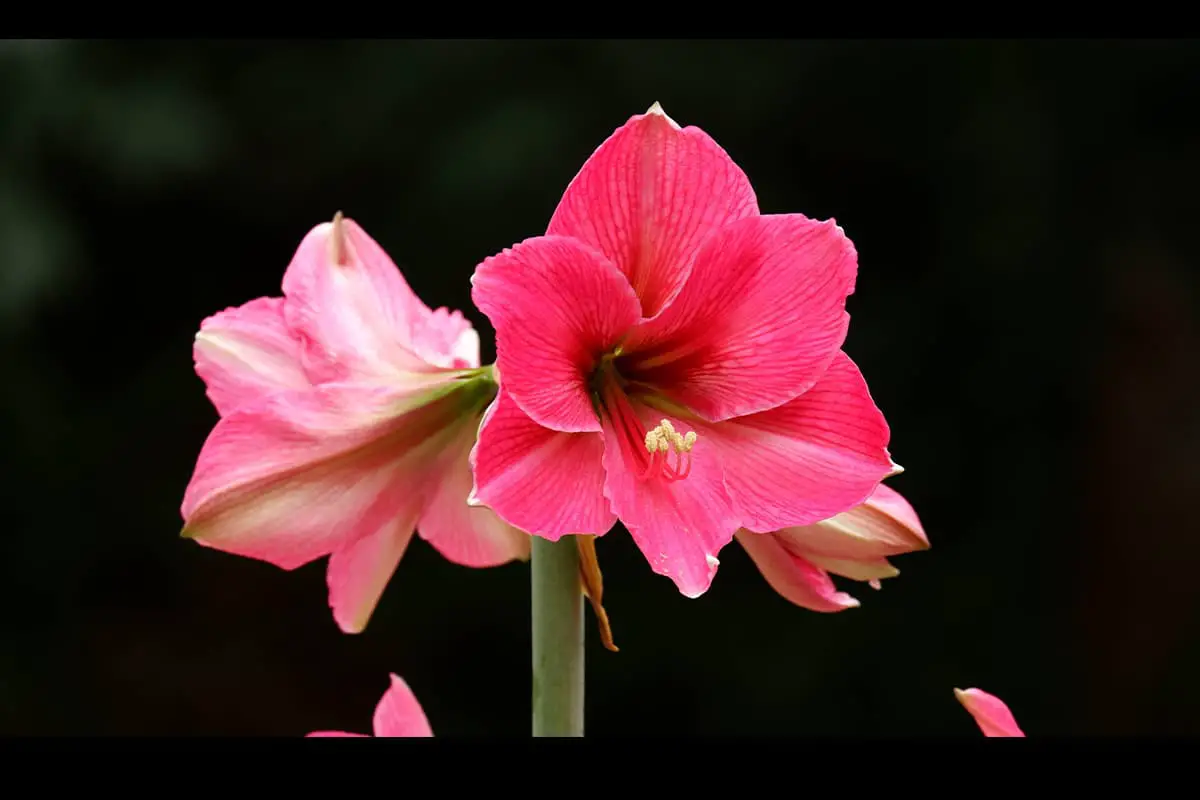
The floral tube is green and cylindrical, with oval petals that are pointed at the top, magenta in color, slightly green, with small scales at the throat. To facilitate flower growers, horticulturalists in Europe and America produce canned hippeastrum rutilum.
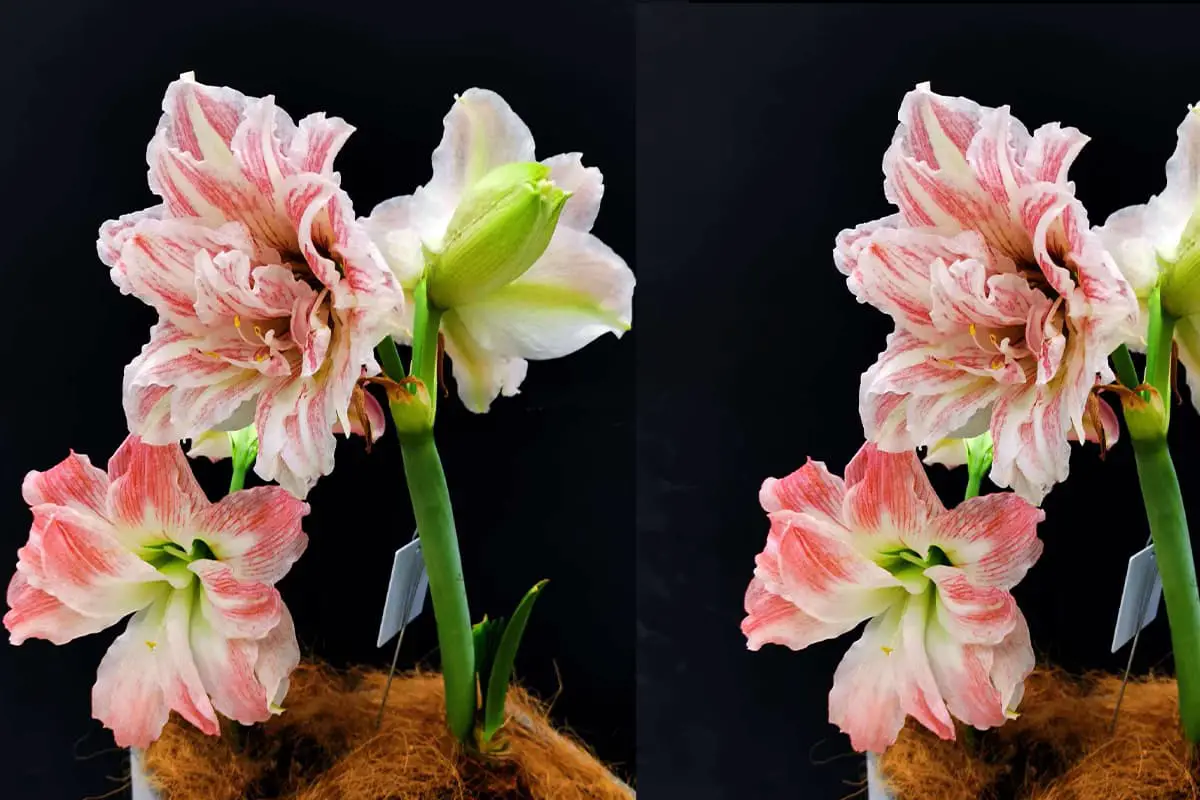
The bulb is nearly spherical, with a diameter of 5-7.5 cm, and has creeping branches. There are 6-8 leaves, which sprout after flowering. They are fresh green, belt-shaped, about 30 cm in length, with a base width of about 2.5 cm.
The flower stem is hollow, slightly flattened, about 40 cm high, about 2 cm wide, and covered with white powder.
There are 2-4 flowers; the bracts are lanceolate, about 3.5 cm long; the pedicel is thin, about 3.5 cm long; the floral tube is green, cylindrical, about 2 cm long.
The petals are oval, pointed at the top, about 12 cm long, about 5 cm wide, magenta, slightly green, with small scales at the throat; there are 6 stamens, about 8 cm long, with red filaments, anther linear-oblong, about 6 mm long, about 3 mm wide; the ovary is about 1.5 cm long, the style is about 10 cm long, the stigma is 3-lobed.
The flowering period is summer.

Hippeastrum rutilum prefers a warm, moist climate, with a suitable growth temperature of 18-25℃. It does not like extreme heat, and the sunlight should not be too strong, it should be kept under a large shed.
It is afraid of waterlogging. During the dormant period in winter, it requires a cold and humid climate, with a suitable temperature of 10-12℃, not less than 5℃. It likes humus-rich, well-drained sandy loam soil.
If the soil humidity is high in winter and the temperature exceeds 25℃, the stem and leaf growth will be vigorous, hindering dormancy, and will directly affect normal flowering next year. Light also has a certain effect on the growth and flowering of Hippeastrum rutilum.
Avoid strong light for long periods of time in summer, and sufficient sunlight is needed for winter cultivation. The soil needs to be loose and fertile sandy loam, with a pH of 5.5-6.5, and waterlogging should be avoided.
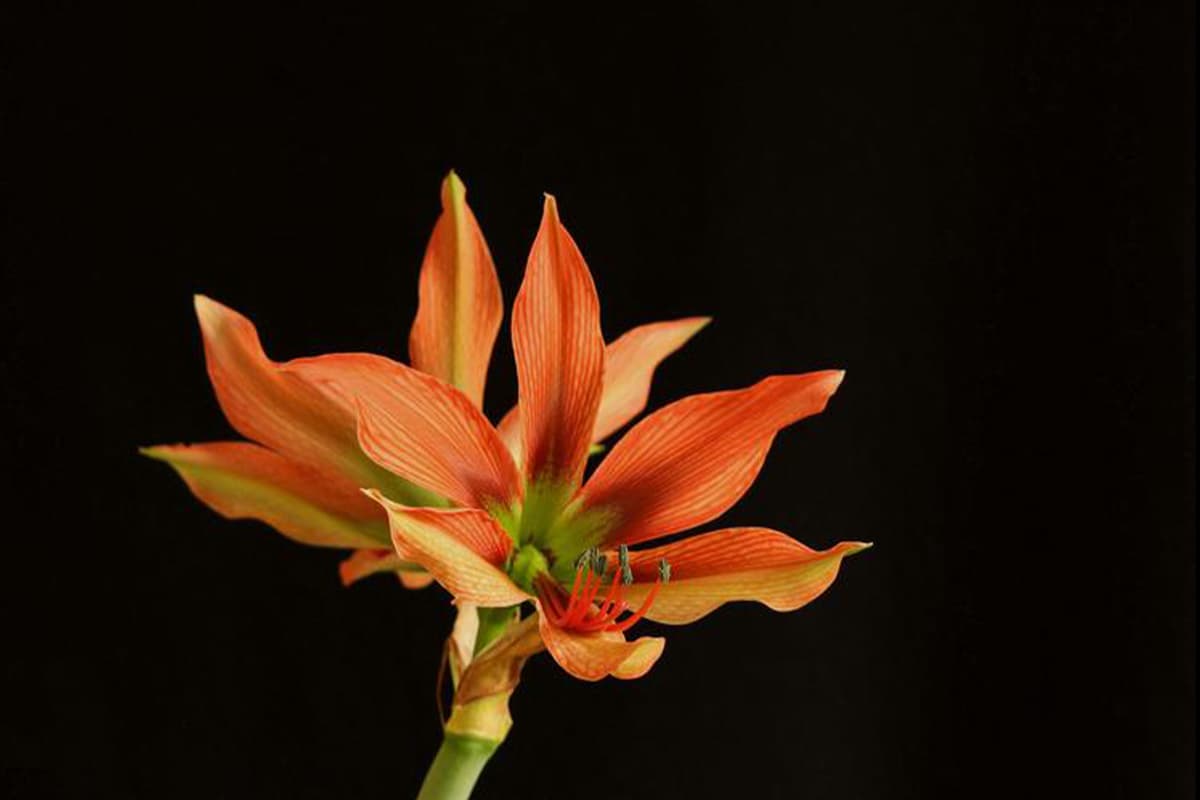
Native to Brazil. The United States bred a precious pure white variety in 1920. The Netherlands and Japan have also achieved great success in breeding work. There are many horticultural varieties of Hippeastrum rutilum.
There is also the Hippeastrum rutilum flower native to the Andes in Peru, which was introduced to Europe in 1769; and the solitary flower native to the Cape of Good Hope in South Africa, which was introduced to Europe in 1633.
The Scarlet Sage is typically propagated through sowing, bulb division, and cutting.
Its seeds should be sown immediately after collection to ensure a high germination rate. The ideal seedbed mixture is two parts peat soil and one part river sand. The seeds are large and best sowed individually, with a spacing of 2-3 cm.
The optimal germination temperature is 15-20°C, and seedlings should appear within 10-15 days. Transplanting should occur when two true leaves have formed. The plant should bloom within 2-3 years from sowing.
Mature bulbs can produce 2-3 small bulbs each year, which can be removed and planted separately. Care should be taken not to damage the roots of the small bulbs, and their tops should be left exposed. The small bulbs are expected to bloom within 2 years.
Artificial bulb cutting is commonly used for mass propagation. This involves longitudinally dividing the mother bulb into several parts, then splitting them in half so that each piece has a portion of the bulb disc for rooting.
These sections are then inserted into a cutting bed made of a mixture of peat soil and sand, watered appropriately, and after about 6 weeks, 1-2 small bulbs should have formed between the scales, with roots developing at the bottom.
This way, nearly a hundred small bulbs can be obtained from a single mother bulb.
The Scarlet Sage is prone to seed formation. artificial pollination can be conducted during the flowering period, and seeds mature within 2 months. Each fruit capsule contains approximately 100 seeds.
These seeds should be sown immediately after collection to ensure a high germination rate. After sowing, the seeds should be kept in a semi-shaded area at a moist and cool temperature of 15-18°C, and they should germinate within half a month.
If the temperature reaches 18-20°C, germination can occur within 10 days. Plants propagated from seeds are expected to bloom within 3-4 years.
Bulb division propagation should be done during March and April, small bulbs around the mother bulb should be removed and planted, and the top of the small bulb should be left exposed when planting.
The mother bulb is divided into several parts and its scales are further divided before being diagonally inserted into zeolite or sand. The seedlings should be transplanted after two true leaves have formed.
If the potting soil is too loose when planting pseudobulbs, it can delay blooming or reduce the number of flowers.
A mixture of five parts sandy loam, two parts peat soil, and one part sand is recommended for planting, and the bulb should be planted at a depth that leaves one third of it exposed.
The Scarlet Sage is suitable for potted indoor decoration in living rooms, corridors, and hallways. It can also be cultivated in courtyards or used in flowerbed arrangements. It also serves as a beautiful fresh cut flower.

Peggie was once a high school mathematics teacher, but she set aside her chalkboard and textbooks to follow her lifelong passion for flowers. After years of dedication and learning, she not only established a thriving flower shop but also founded this blog, “Flowers Library”. If you have any questions or wish to learn more about flowers, feel free to contact Peggie.
 English
  العربية
  Bahasa Indonesia
  Deutsch
  Français
  Italiano
  Nederlands
  Português
  Русский
  日本語
日本語