600+ Types of Flowers A To Z (With Names and Pictures)
Types Of Flowers By Names (A-Z) Types Of Flowers By Color Types Of Flowers By Season Types Of Flowers By Blooming Time 600+ Types of Flowers No. Flower Name No.…

Hibiscus syriacus, also known as rose of Sharon, althea, trumpet flower, and white hibiscus, is a deciduous shrub of the mallow family, Malvaceae. It’s a common garden shrub species.
The rose of Sharon tree can grow up to 3-4 meters high with grayish-brown bark and an upright posture; the leaves are rhomboid to triangular ovate; flowers are borne singly in the leaf axils, the corolla is bell-shaped, in white, light purple, light red, and purplish red, etc., and bloom from July to October.
Rose of Sharon is vibrant and an excellent plant for free-growing hedges, suitable for planting on both sides of roads, parks, courtyards, etc., and can be planted singly, in rows, or in groups.
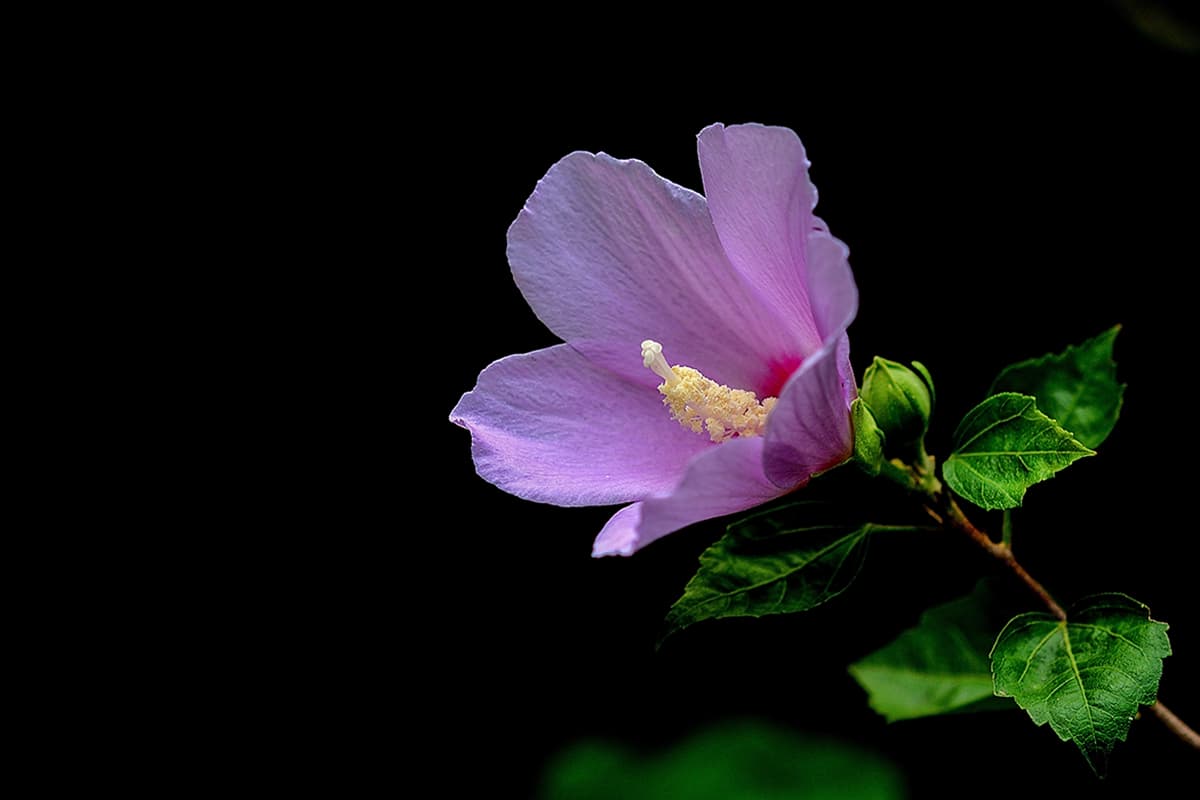
Rose of Sharon: A deciduous shrub, 3-4 meters tall, with small branches densely covered with yellow stellate tomentum.
The leaves are diamond-shaped to triangular ovate, with varying depths of 3-lobed or non-lobed, blunt tips, wedge-shaped bases, and irregularly dentate margins.
The underside of the leaves is slightly hairy or nearly hairless along the veins. The flowers are borne singly between the leaf axils at the branch ends.
The corolla is bell-shaped, 14-20mm long, densely covered with stellate short tomentum, with 5 lobes, triangular; the flowers are pure white, light pink, light purple, purplish red, etc., with single, double, and multiple petals.
The outer side is sparsely covered with fine hairs and stellate long soft hairs.
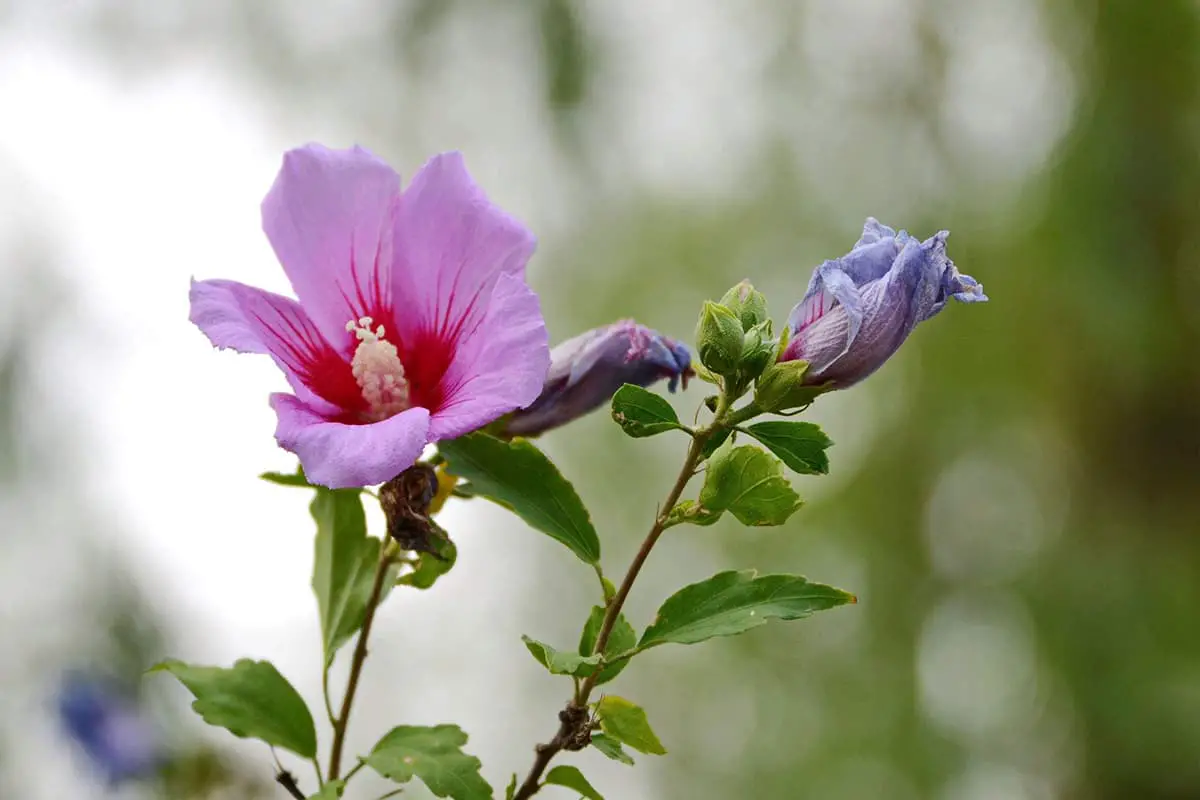
The fruit is ovate, about 12mm in diameter, densely covered with yellow stellate tomentum; the seeds are kidney-shaped, with the back covered with yellowish-white long soft hairs. The flowering period is from July to October.
Rose of Sharon is a very common shrub flower species in gardens. It is native to the central provinces of China and is cultivated everywhere. In gardens, it can be used as a hedge-style green hedge, either planted singly or in clumps.
The seeds of the rose of Sharon are used in medicine, known as “Chao Tian Zi.” The Rose of Sharon is the national flower of South Korea and Malaysia.
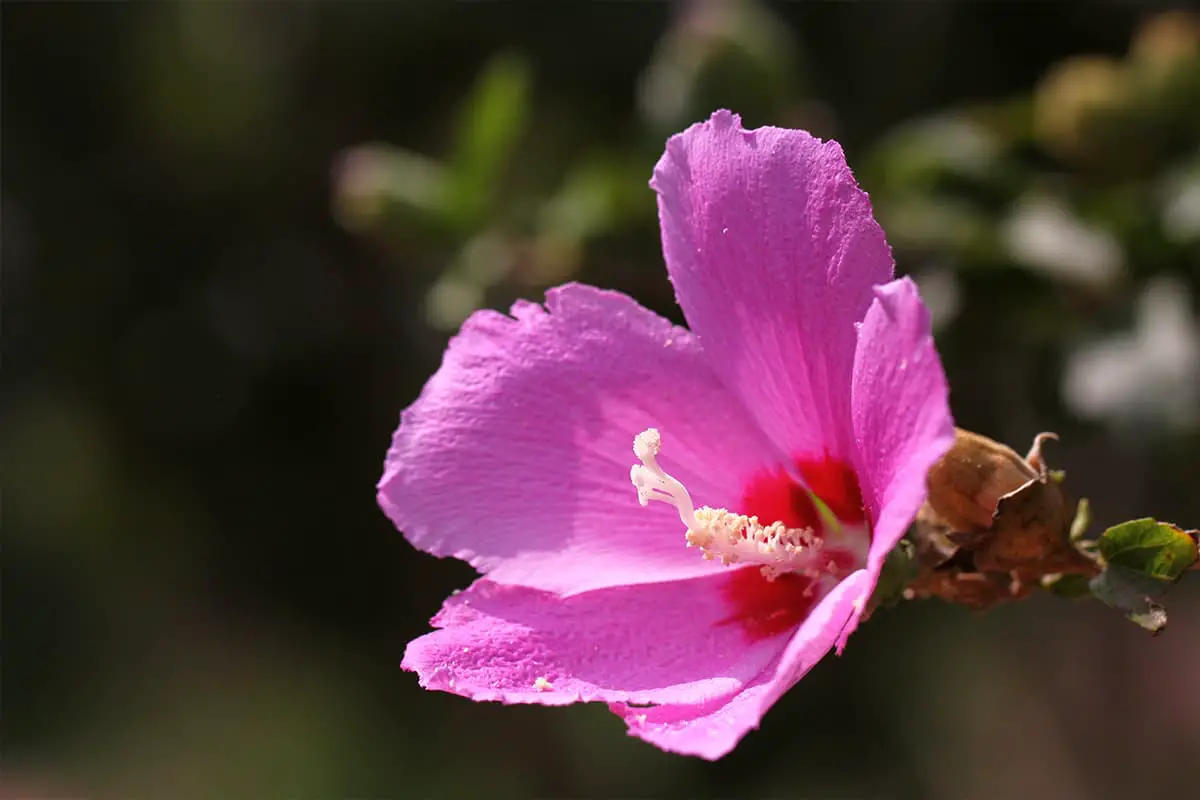
The White Double-Blossom Rose of Sharon, Guilin ceremony, has white double flowers, with a diameter of about 6-10cm. This flower is produced in the provinces of Guangdong, Guangxi, Sichuan, and a series of southern provinces in China.
The White Double-Blossom Rose of Sharon is often used for garden ornamental cultivation; in addition, it can be used as a vegetable, providing a unique flavor.
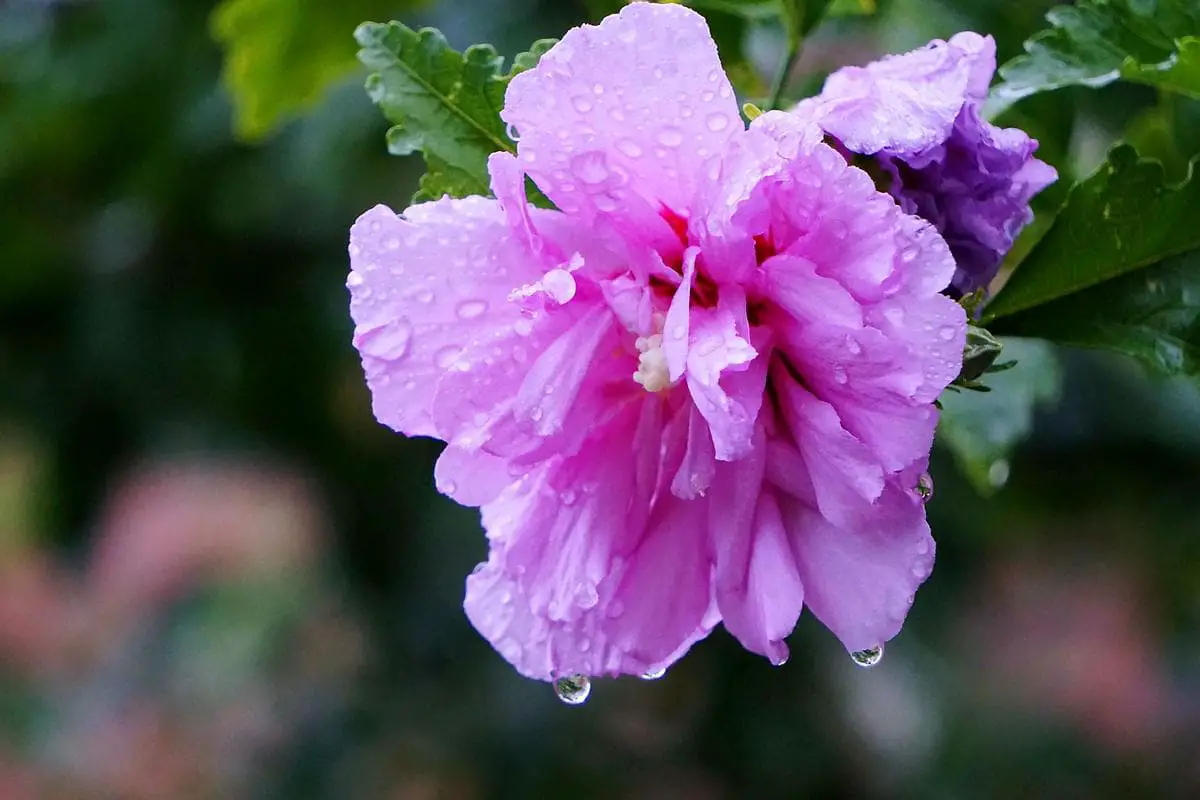
This type of rose of Sharon has light purple flowers, with the base of the inner side of the calyx magenta, double petal. It is mostly produced in Shandong Province, China, and can be cultivated for garden viewing.
The Short-Bract Rose of Sharon has rhombic leaves, a wedge-shaped base, and small bracts, filamentous, about 3-5mm long and 0.5-1mm wide; the flowers are light purple double-blossoms, suitable for courtyard ornamental cultivation, and are mostly produced in Guangdong, Fujian, Shandong, and other places in China.
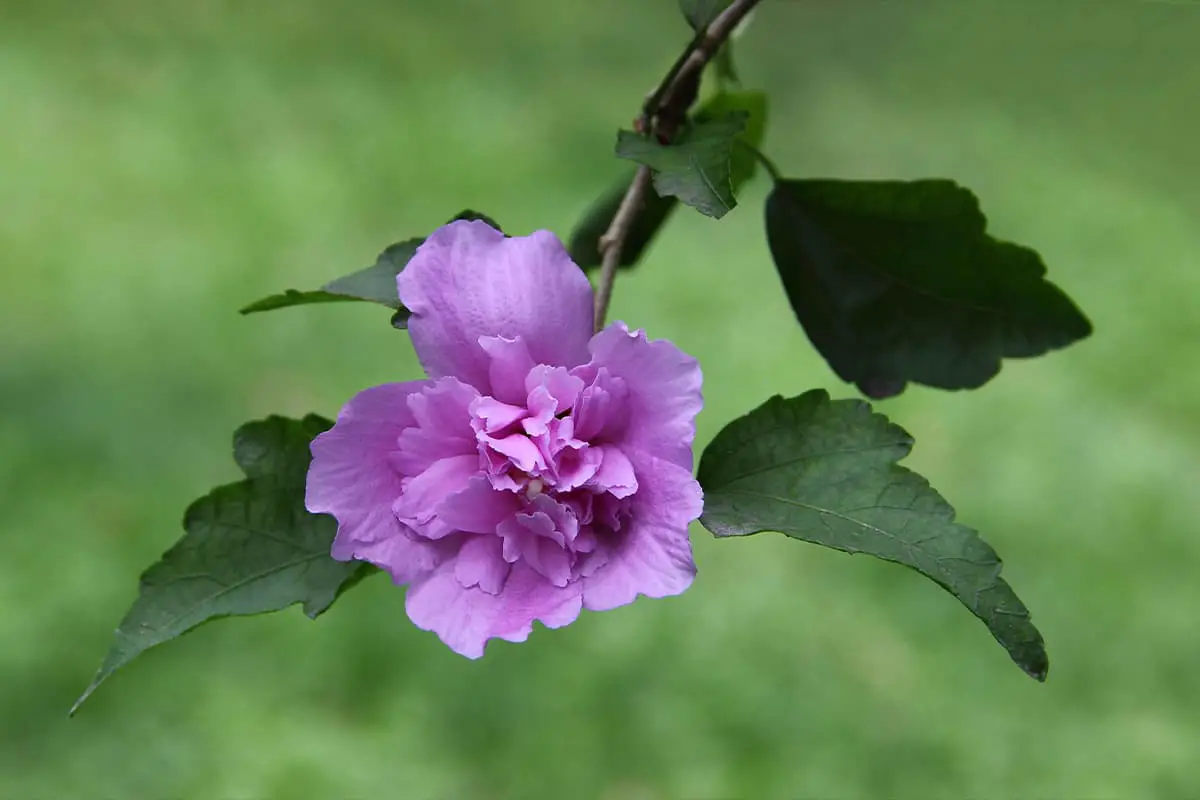
The Elegant Rose of Sharon has pink, double flowers, with a diameter of about 6-7cm. It is cultivated in Hebei, Hunan, Jiangxi and other regions in China.
The Large Flower Rose of Sharon has peach-red flowers and is a single-petal variant of rose of Sharon. It is produced in Guangxi, Fujian, and Jiangxi in China.
The Long-Bract Rose of Sharon has bracts nearly as long as the sepals, about 1.5-2cm in length and 1-2mm wide; the flowers are light purple and single-petal. It is found in Taiwan, Sichuan, Guizhou, Yunnan, and other regions in China.
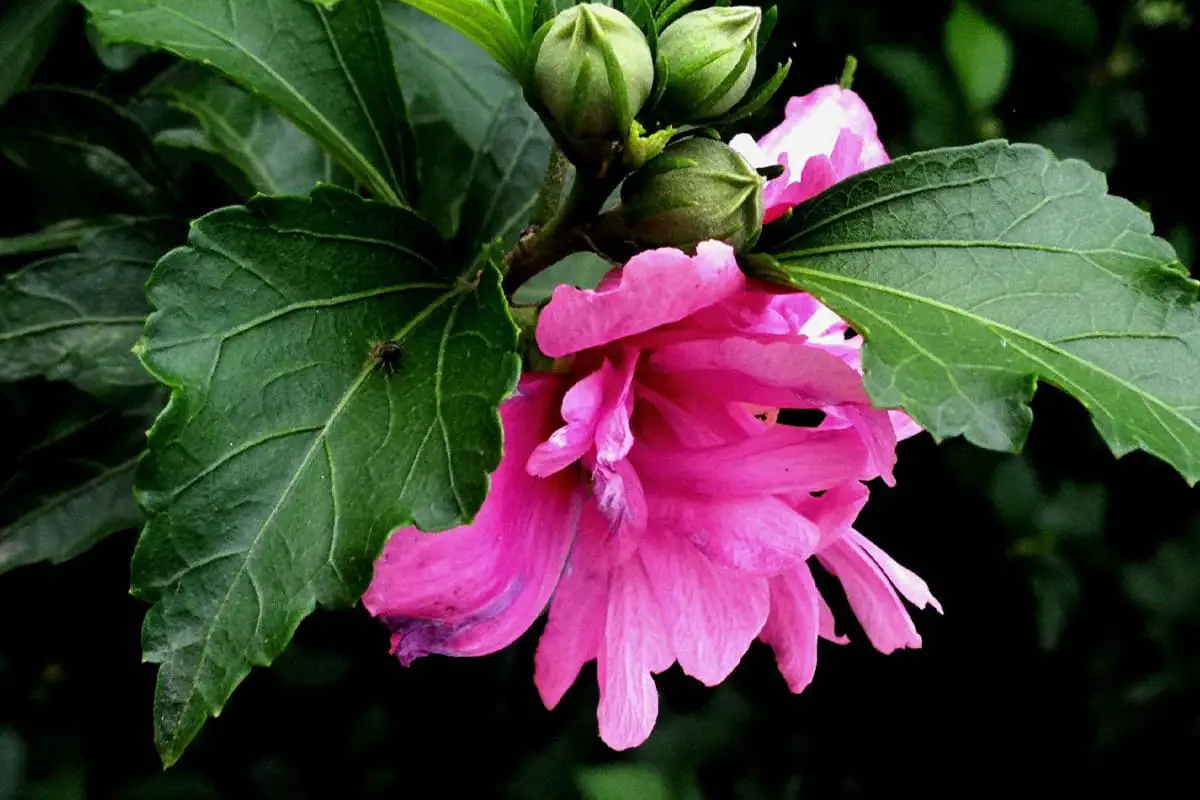
The Peony Rose of Sharon has pink or light purple flowers, double petal, with a diameter of 7-9cm. It is cultivated in Zhejiang, Jiangxi, Shanxi and other regions in China.
The variant type of flower is pure white and single-petal. This type is cultivated in most provinces and regions in China.
This type of flower is blue-purple, double petal. It is cultivated in Sichuan, Guizhou and other southern regions and Tibet in China.
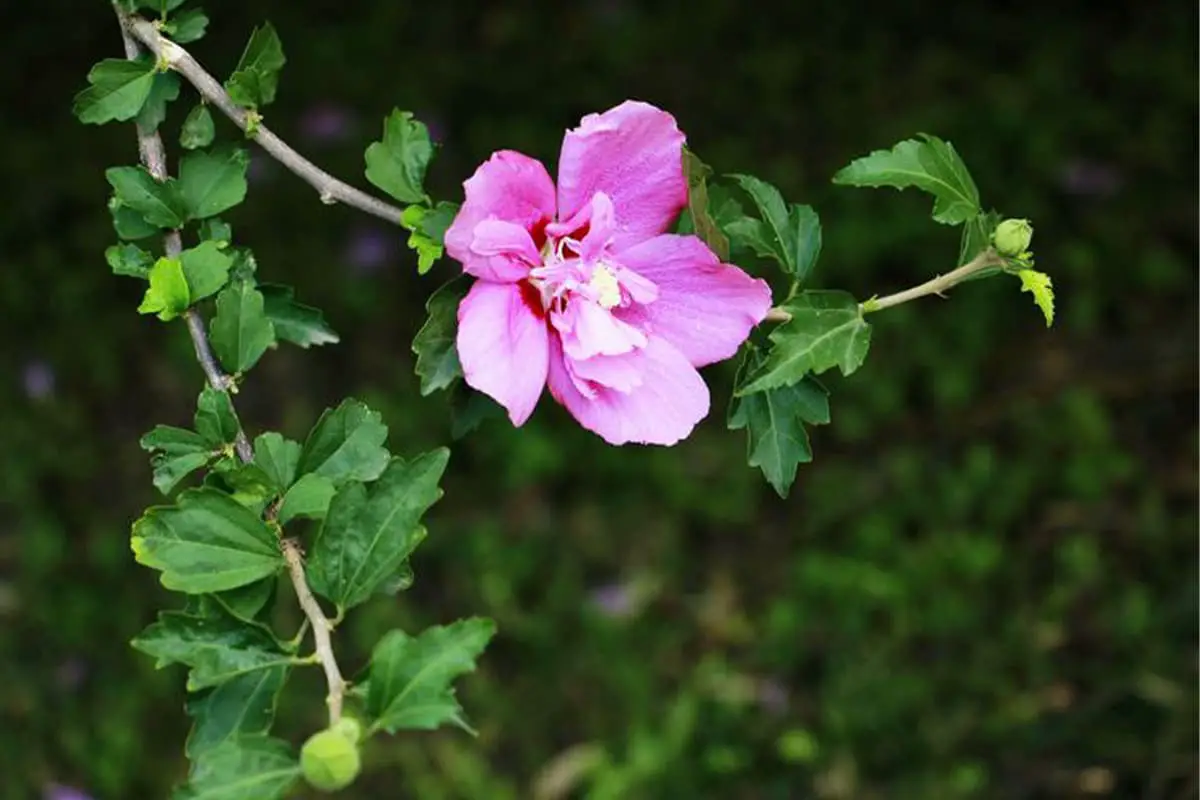
Rose of Sharon has strong adaptability to the environment, is tolerant to drought and infertility, and does not require strict soil conditions. It particularly likes light and warm, moist climates.
It tolerates some shade, likes warm and humid climates, tolerates pruning, heat and cold, but needs winter protection when cultivated in northern regions.
It likes moist soil but is also drought-tolerant, and it doesn’t require specific soil types, being able to grow even in heavy clay soil. It has strong sprouting ability.
The genus Hibiscus mainly distributes in tropical and subtropical regions.
The species of the genus Hibiscus originated on the African continent, and African hibiscus species are diverse, showing rich genetic diversity. It is native to the central provinces of China and is cultivated everywhere.
Rose of Sharon is a deciduous shrub, 3-4 meters tall, with small branches densely covered in yellow stellate tomentum.
The leaves are rhombic to triangular-ovate, with varying degrees of 3-lobed or unlobed divisions, with clear three main veins, blunt tips, cuneate bases, and irregularly dentate margins.
The undersides of the leaves are sparsely hairy along the veins or nearly glabrous. The petiole is 5-25 millimeters long, covered with stellate soft hairs. Stipules are linear and sparsely hairy.
Flowers are singular, situated between the branch tips and leaf axils. The pedicel is 4-14 millimeters long, covered with stellate short tomentum.
There are 6-8 small bracts, which are linear, 6-15 millimeters long, 1-2 millimeters wide, and densely covered with stellate sparse tomentum. The calyx is bell-shaped, 14-20 millimeters long, densely covered with stellate short tomentum, with 5 triangular lobes.
The flower is bell-shaped, in colors of pure white, light pink, light purple, purple-red, etc. The flower shapes can be single-petal, double-petal, and multi-petal, with a diameter of 5-6 centimeters.
The petals are obovate, 3.5-4.5 centimeters long, sparsely covered with fine hairs and stellate long soft hairs on the outside. The stamen column is about 3 centimeters long. The style branches are hairless.
The capsule is ovate, with a diameter of about 12 millimeters, densely covered with yellow stellate tomentum.
The seeds are kidney-shaped, mature seeds are dark brown, and the back is covered with yellow-white long soft hairs. The flowering period is from July to October.
Rose of Sharon has good adaptability and does not demand much from the soil. It can still survive in infertile or slightly alkaline soils. However, deep, fertile, and loose soil is best for its growth.
Rose of Sharon likes light and can tolerate semi-shade. It needs to ensure sufficient sunlight during the growing period, but the sunlight should not be too strong.
In the sunny summer, it should be shaded in time when the sunlight is strong. It can also be moved indoors to prevent the flowers and leaves from losing water due to direct sunlight and causing wilting.
When it sprouts, timely additional nutrients should be added, mainly quick-acting fertilizers, to promote nutritional growth. Before budding, 1-2 times of phosphorus and potassium nutrients should be added to promote the plants to bud.
During the flowering period from May to October, nutrients should be added twice in conjunction with activities such as weeding, mainly phosphorus and potassium substances, supplemented by nitrogen substances, to ensure the quantity of flowers and the growth of the tree.
Rose of Sharon is suitable for places with a lot of water and moderate temperature, so it is necessary to maintain the moisture of the soil.
If there is little water or no rain for a long time, more water should be added. However, it also does not like too much water.
After the rain, the water in the pot should be drained in time. Preventing excessive water during the rainy season is the main task for its healthy growth.
During its growth period, Rose of Sharon doesn’t suffer much from diseases and pests, but they do occur occasionally. Harmful insects mainly include bagworms, moths, and longhorn beetles.
The way to prevent harmful insects is to ensure proper ventilation and maintain moderate temperatures.
When harmful insects are found, immediate action should be taken to deal with them collectively, using non-toxic, effective medicines or fungicides to prevent and kill them.
The propagation methods of Rose of Sharon include seeding, layering, cutting, and division, but cutting and division propagation are mainly used in production.
Before budding in early spring, dig up the vigorously growing adult clumps and plant them in clusters of 3 main branches, with a plant and row spacing of 50×60 centimeters.
Method One: Spring cuttings are generally used for propagation, and the plant will bloom in the same year in summer and autumn.
The cutting method is as follows: after the local temperature stabilizes above 15℃, select 1-2-year-old robust un-sprouted branches and cut them into small segments 15-20 centimeters long.
When cutting, prepare a small stick, pre-drill small holes according to the plant row distance, then insert the Rose of Sharon branches.
The depth of soil insertion should be about 10-15 centimeters, i.e., the soil insertion depth is 2/3 of the cutting. Compact the soil and water it thoroughly after insertion. Note that no base fertilizer is needed when cutting.
Method Two: The density of cuttings depends on whether the seedlings are transplanted or directly planted.
Seedling transplantation: for easy operation, make a ridge with a width of 130 centimeters and a height of 25 centimeters, and plant cuttings at a plant and row spacing of 15 centimeters × 30 centimeters.
Direct planting: make a ridge with a width of 60 centimeters and a height of 25 centimeters, plant at a spacing of 50 centimeters, and plant in a single row on a single ridge; or make a ridge with a width of 90 centimeters and a height of 25 centimeters, plant at a spacing of 60 centimeters.
In cultivation, take advantage of the characteristic of cuttings blooming in the same year, plant at the density of seedling transplantation, and thin the seedlings to a certain density before budding each year in spring, ensuring that the Rose of Sharon has sufficient nutritional area for growth that year and capturing high yield of fresh flowers.
Method Three: Cutting requires a trench depth of 15 centimeters, a trench distance of 20-30 centimeters, and a plant distance of 8-10 centimeters.
The tip of the cutting should protrude 3-5 centimeters above the soil surface or be inserted to a depth of 2/3 of the cutting. After insertion, cover the soil and compact it, and water it promptly.
Cuttings usually take root and bud in about a month. Using warming facilities such as plastic greenhouses, cuttings can also be made after leaf fall in autumn.
Soak the prepared cuttings in a solution of 100-200 mg/liter NAA for 18-24 hours, insert them into a sand bed, water them promptly, cover them with agricultural film, maintain a temperature of 18-25℃, and a relative humidity of more than 85%.
After rooting, move them to a nursery for cultivation.
Pests that commonly occur in Rose of Sharon include aphids, leafrollers, inchworms, and thorn moths.
Control methods:
(1) Aphids: In spring, when the nymphs first hatch, spray 200 times dilution of 80% imidacloprid emulsion, or 2000 times dilution of 40% imidacloprid to kill the nymphs on the branches.
For aphids that have formed galls or produced on trees in autumn, the concentration of the pesticide should be appropriately increased.
(2) Leafrollers: At the initial hatching of the larvae or when they are in the state of leaf rolling damage but not yet fallen to the ground, spray 1000 times dilution of 50% phoxim or 1000 times dilution of 90% trichlorfon.
(3) Inchworms: During the occurrence of larvae, spray 1000 times dilution of 90% trichlorfon or 40% imidacloprid to kill the larvae and protect and release parasitic wasps.
(4) Thorn moths: Collect the insect cocoons by picking, knocking, and digging, and deeply bury them in pits, which can effectively reduce the density of insect mouths.
The small larvae of thorn moths often group together to cause damage, which can be manually removed and eliminated. The phototaxis of the adults can also be used to set up black light lamps for trapping, which works well.
Medicinal Value
The flowers, fruits, roots, leaves, and bark of Rose of Sharon can all be used as medicine. They have the effect of preventing viral diseases and reducing cholesterol.
Rose of Sharon flowers can be taken internally to treat indigestion, dysentery, prolapse of the rectum, hematemesis, bloody stool, mumps, excessive leucorrhea, etc. External application can treat carbuncles and swellings.
Rose of Sharon flowers contain saponin, isovitexin, and saponins, which have certain inhibitory effects on Staphylococcus aureus and Salmonella typhi, and can treat intestinal wind and bloody diarrhea.
Ornamental Value
Rose of Sharon is an important flowering shrub in summer and autumn. It is often used as a flower hedge or green hedge in the south; it is used for garden embellishment and indoor potting in the north.
Rose of Sharon has a strong resistance to harmful gases such as sulfur dioxide and chlorides, and it also has a strong dust retention function. It is a major greening tree species in polluted factories.
Edible Value
The nutritional value of Rose of Sharon flowers is extremely high, containing proteins, fats, crude fibers, reducing sugars, vitamin C, amino acids, iron, calcium, zinc, etc., and flavonoid active compounds.
The buds of Rose of Sharon have a crisp taste, and the fully bloomed flowers have a smooth texture.
Rose of Sharon juice made from Rose of Sharon flowers has a health effect of quenching thirst and refreshing the brain. Hypertensive patients often eat Rose of Sharon flower soup, which has a good diet therapy effect.
The symbol of Rose of Sharon is eternal love. Rose of Sharon is a flower that blooms in the morning and withers at dusk, but it will bloom again after the sun rises the next day. It perseveres day after day, so the symbol of Rose of Sharon is eternal and unceasing love.
It is very suitable to give to one’s beloved, expressing that one’s love is as eternal as the blooming and fading of Rose of Sharon every day.

Peggie was once a high school mathematics teacher, but she set aside her chalkboard and textbooks to follow her lifelong passion for flowers. After years of dedication and learning, she not only established a thriving flower shop but also founded this blog, “Flowers Library”. If you have any questions or wish to learn more about flowers, feel free to contact Peggie.
 English
  العربية
  Bahasa Indonesia
  Deutsch
  Français
  Italiano
  Nederlands
  Português
  Русский
  日本語
日本語