600+ Types of Flowers A To Z (With Names and Pictures)
Types Of Flowers By Names (A-Z) Types Of Flowers By Color Types Of Flowers By Season Types Of Flowers By Blooming Time 600+ Types of Flowers No. Flower Name No.…

The Daylily, also known as Forget-Me-Not, Golden Needle, Deer Onion, and River Grass Flower, belongs to the lily family and the Daylily genus. It is a perennial herbaceous plant that is appreciated by both connoisseurs and the public.
The leaves of the Daylily spring from the base, and the flowers grow at the top, with petals slightly curling outwards and drooping. It typically blossoms in the summer, around May to July, commonly in shades of orange and red-orange.
In the southern gardens, courtyards, and valley mountains, one can often see clusters of Daylilies, their green leaves vibrant, yellow flowers vivid, presenting an elegant and pleasing sight that makes one forget their worries.
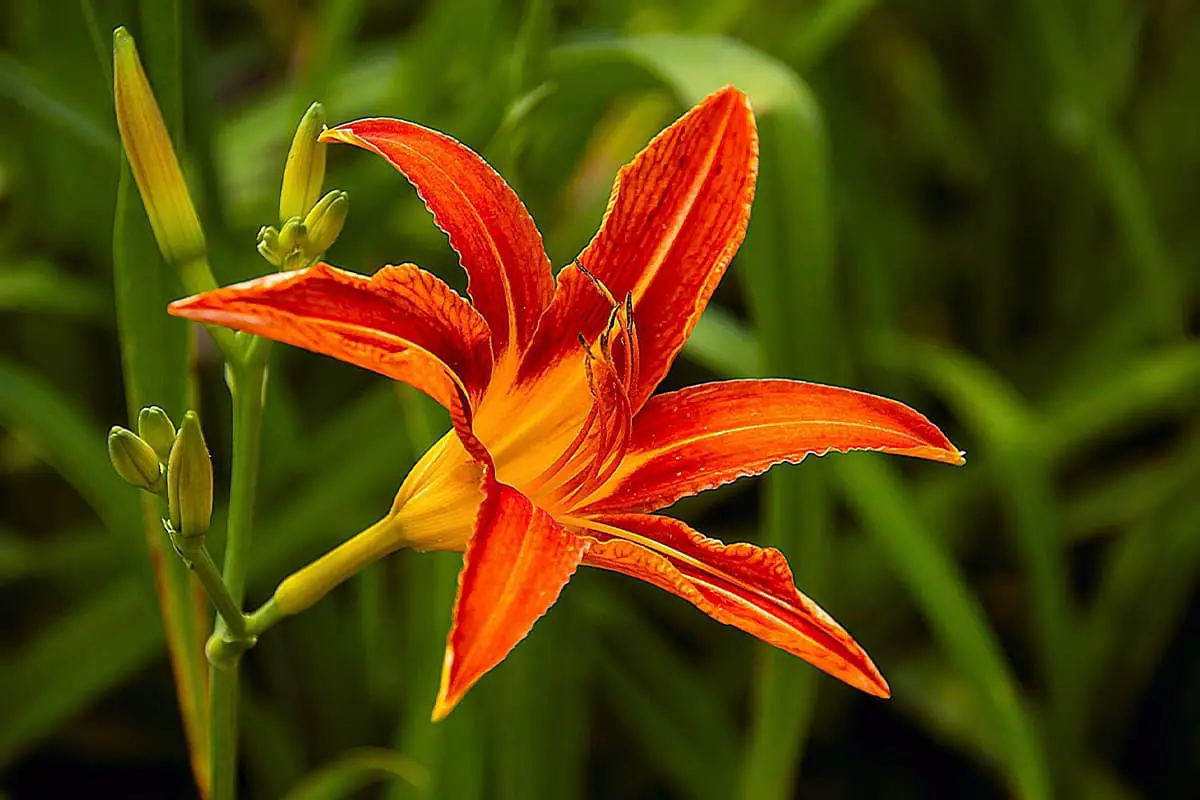
The Daylily, scientifically known as Hemerocallis fulva, is a perennial herbaceous plant of the lily family. It possesses a short rhizome and thick spindle-shaped fleshy roots.
There are many alternative names for this plant, including “Golden Needle”, “Forget-Me-Not”, “Suitable for Men”, “Heals Sorrow”, “Deer Arrow”, etc.
When consumed, it’s often called “Golden Needle”. The leaves are flat and long, and contain a trace amount of toxin from the rhizome, making them unfit for direct consumption.
The flower is tubular, similar to a lily, with a long green stalk that sprouts during the blooming period. The plant produces winged seeds. It’s commonly cultivated nationwide, and can be found growing wild in provinces south of the Qinling Mountains.
Although Daylilies are originally from China, there has been limited improvement over a long period. After the 1930s, some American botanical gardens and horticulture enthusiasts collected Daylily plants from China and Japan for hybrid breeding.
Now, there are over ten thousand varieties, becoming an important ornamental and cut flower. It is also the most diverse type within the lily family.
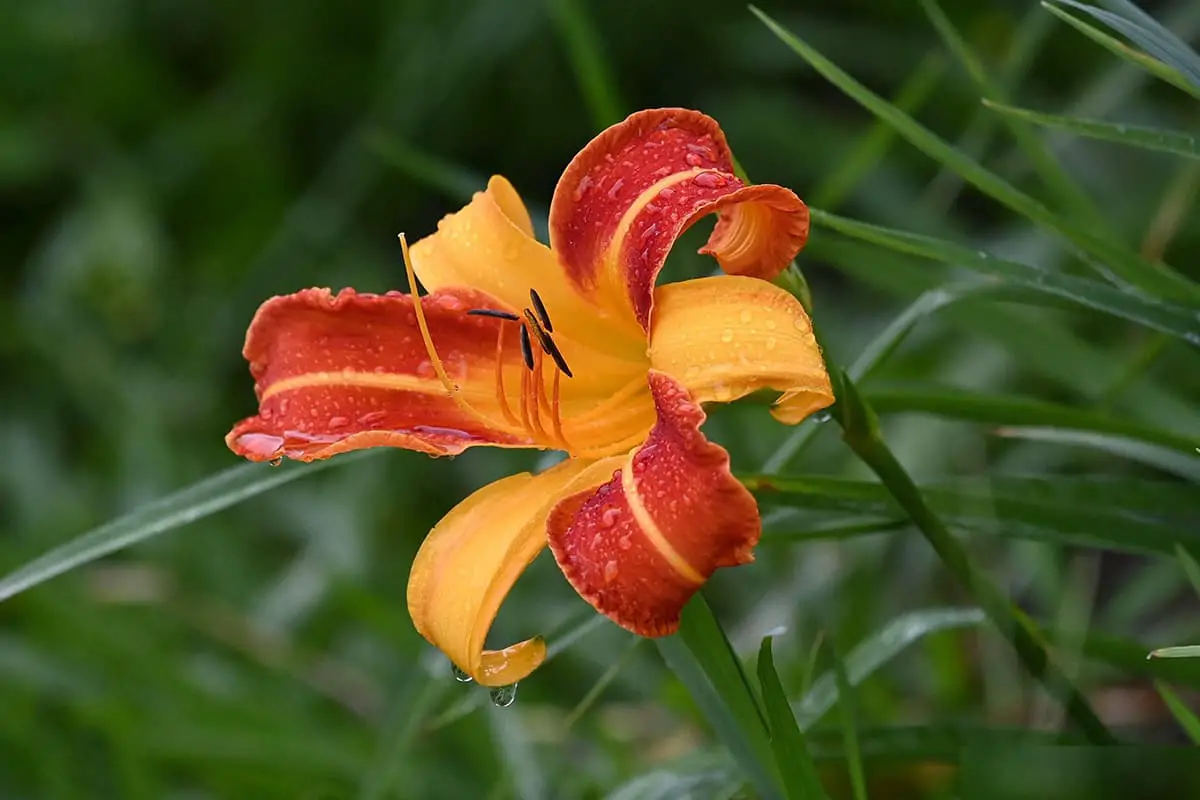
There are several varieties of daylilies, including yellow daylilies, yellow flowers, large-bract daylilies, and more.
Also known as golden needle vegetable, the yellow daylily has leaves of deep green, long and thin, typically ranging from 30 to 60 centimeters in length.
Its flowers bloom into a funnel shape, presenting a golden yellow color. The stalks are about 9 centimeters long, and the buds are edible and known as yellow flowers.
This variety of daylily has wider leaves, usually about 75 centimeters long. Its inflorescence can bear up to 30 colorful flowers, with the lower bracts appearing triangular. This variety is highly ornamental and is cultivated all over China, which is also its native land.
This variety of daylily has leaves that range in length from 30 to 45 centimeters. Its inflorescence yields 2 to 4 yellow, fragrant flowers. The petal length is between 8 and 10 centimeters. The large-bract daylilies bloom en masse in July, presenting a spectacular sight.
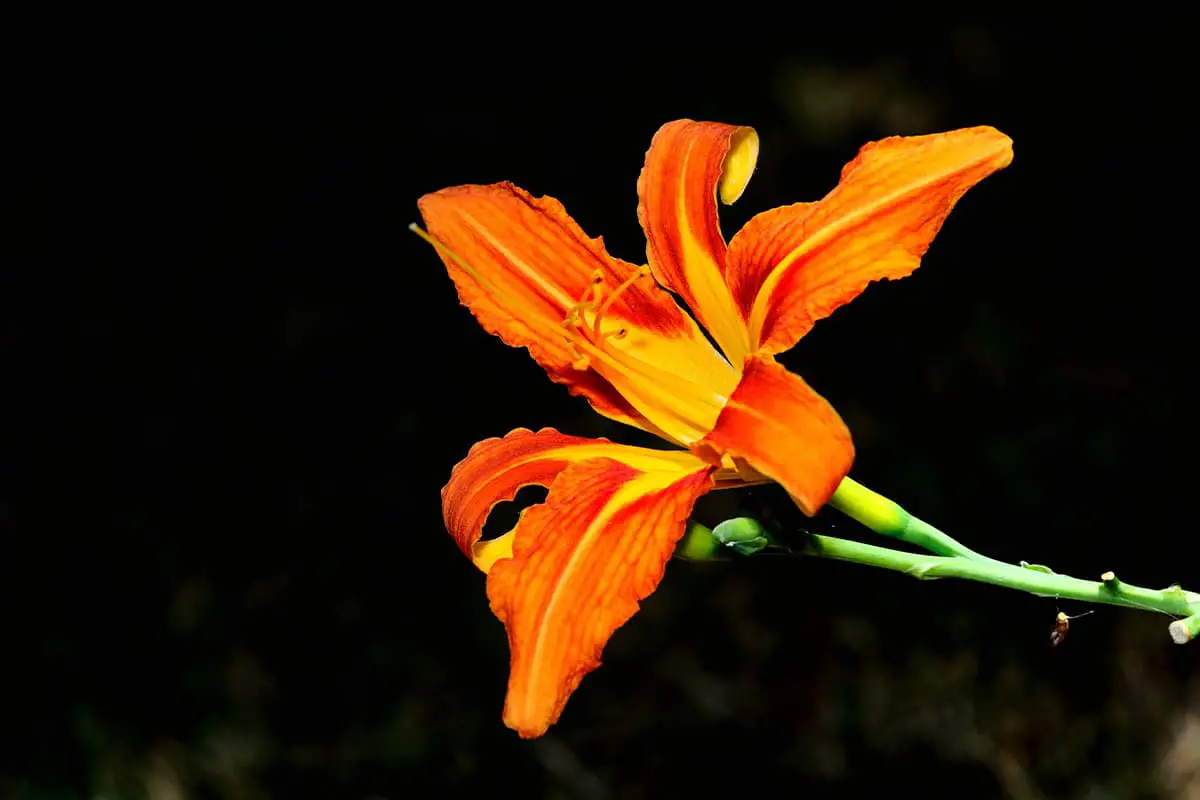
Different from other varieties, Tong’s daylily blooms into apricot-yellow, short funnel-shaped flowers with a rich fragrance.
The flower stalks are about 120 centimeters high, with about 12 flowers at the tip. This ornamental variety is suitable for planting in courtyards and provides excellent decorative effect.
The Z300 daylily typically stands 30 to 35 centimeters tall, blooms from May to October in a vibrant red color. This hardy variety adapts well to different soil types and has disease and pest resistance. It can survive even in winter temperatures of -30°C, making it an excellent daylily variety.
The orange daylily blooms into orange flowers from May to October. The plant is usually 30 to 35 centimeters tall. This light-loving plant requires good lighting for cultivation. Loosely textured and well-aerated soil is advisable for the growth of its root system.
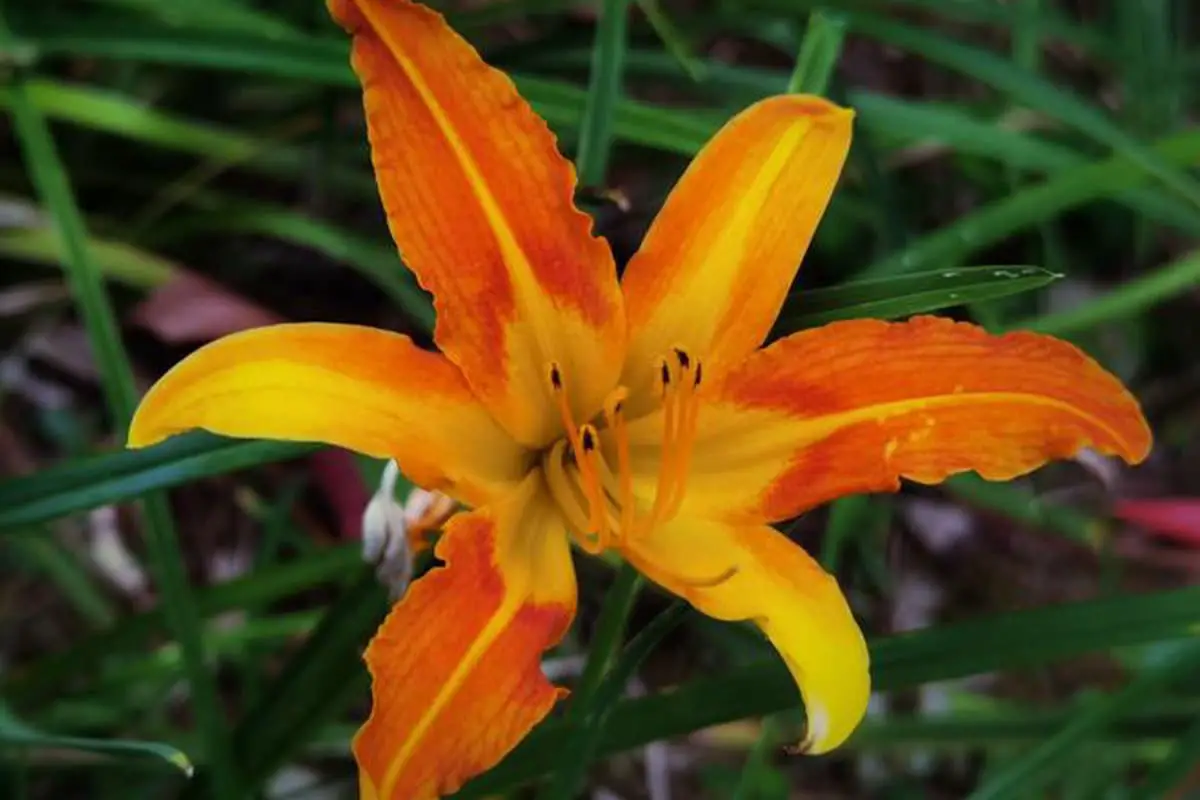
The small yellow flower variety of daylily has a thin root system and usually grows in grasslands or slopes below an altitude of 2300 meters.
It generally blooms 1 to 2 flowers at the tip, rarely 3, and the flowers are light yellow and very vibrant. It is commonly found in eastern Inner Mongolia, Shaanxi, and eastern Gansu.
The Haier Van daylily, originally from the Netherlands, was introduced by the Beijing Botanical Garden. It reaches a height of about 30 cm, with flower petals approximately 10 cm in diameter.
It can bloom 7 to 8 flowers at its tip, with the petal tips slightly curved outward. The flowers are very beautiful, often used in gardens and various types of flower beds for aesthetic purposes.
The Red Pirate daylily, as the name suggests, has red flowers. The entire plant is hairless, and the rhizome is comparatively short. The flowering period of the Red Pirate daylily is from May to October. This variety, with a long flowering period, can generally bloom 10 to 15 flowers at its tip.
This plant is hardy, cold-resistant, and can overwinter outdoors in northern China. It is adaptable, preferring moist conditions but also drought-tolerant, and thrives in both sunlight and partial shade.
It’s not picky about soil, but prefers rich humus, well-drained moist soil. It can grow at altitudes of 300 to 2,500 meters.
It is native to China, Siberia, Japan, and Southeast Asia.
This perennial herb has a short, thick rhizome and fleshy fibrous roots, most of which swell into narrow spindle shapes. Leaves are formed at the base, are linear-lanceolate, 30 to 60cm long and about 2.5cm wide, with the underside covered in white powder.
In summer, it produces large orange flowers on stalks taller than the leaves, reaching over 1m in height; the inflorescence is terminal and conical, with 6 to 12 flowers, each on a stalk about 1cm long, with small lanceolate bracts; the flowers are 7 to 12cm long, the perianth base is short and funnel-shaped, reaching up to 2.5cm, the perianth is made up of 6 pieces, spreading outward and curling back, the outer 3 pieces are 1 to 2cm wide, the inner 3 pieces reach 2.5cm wide, with slightly wavy edges; there are 6 stamens, the filaments are long, attached to the throat of the perianth; the ovary is superior, with a slender style.
Soil
Daylilies are strong growers and adaptable, not particular about soil. They can grow in dry, humid, and barren soils, but may not develop well and produce small and few flowers. They prefer rich humus, well-drained moist soil.
Light
Daylilies like light and tolerate semi-shade. For potted plants, apart from needing some shade in summer, they can be exposed to full sunlight in other seasons.
Sufficient light helps the plant accumulate nutrients for future growth and flowering. For ground planting, daylilies can be sown in shaded areas.
Temperature
The most suitable temperature for daylilies to grow is between 15 and 25℃. In winter, potted daylilies can be moved indoors for care. If the indoor heating temperature is high, daylilies can still grow slowly.
There’s no need to worry about ground-planted daylilies in winter, their root system won’t freeze and they can regrow the following spring.
Watering
Spring and autumn are the daylily’s peak growing seasons. Keep the pot soil moist and water thoroughly when the surface of the soil turns white and dry.
In summer, when the temperature is high, spray water frequently around the plant to increase humidity.
In winter, when the temperature is low, you can feel the weight of the pot soil, and water thoroughly when it feels significantly lighter.
Fertilizer
When planting daylilies, you can mix base fertilizer, such as chicken manure and cake fertilizer, into the soil at the bottom of the pot.
During the vigorous growth period of daylilies in spring, you can apply balanced liquid fertilizer with nitrogen, phosphorus, and potassium. During the bud formation period of daylilies, you can apply phosphorus and potassium fertilizer to promote flowering.
Soil Cover
Ground-planted daylilies tend to be left to grow naturally. In autumn, as the temperature gradually decreases, the leaves of the daylilies on the ground will wither one after another.
However, the root system of the daylilies won’t freeze, and they can sprout again the next spring. The root system of the daylilies grows vigorously and moves towards the surface of the ground every year.
Therefore, at the turn of each autumn and winter, it’s necessary to cover the daylilies with a layer of soil.
Propagate primarily by division. Use seeding for breeding. Division should be carried out after leaf wilting or before spring sprouting. Dig up the rootstock, cut off the dead roots and excessive fibrous roots, and then divide.
After dividing, it can be done again after 4 to 5 years. The divided seedlings can bloom within the same year. It is advisable to sow seeds in autumn, and seedlings generally appear about 4 weeks after sowing.
If seeds harvested in summer and autumn are sown immediately, seedlings will appear in about 20 days. Seedlings grown from seeds will bloom after 2 years of cultivation.
Common diseases of daylilies include leaf spot, leaf wilt, rust, anthracnose, and stem wilt. Major pests are red spider mites, aphids, thrips, and leaf miner flies.
To prevent and control diseases and pests: Start with agricultural prevention. After the daylilies are harvested, the above-ground parts die off immediately.
Cut off and remove them from the field to reduce bacteria and insect sources. Fertilize and winter-cultivate daylilies to enhance their disease resistance. Renew and invigorate old plants in a timely manner, and choose disease-resistant varieties.
Apply pesticides in a timely manner. Use a 75% solution of the fungicide Daconil diluted 800 times for disease control, and a 3000 times diluted solution of the insecticide Imidacloprid for pest control.
Medicinal Value
Main functions: It has heat-clearing, diuretic, blood-cooling and hemostatic properties. It is used to treat mumps, jaundice, cystitis, hematuria, urinary issues, lack of breast milk, menstrual disorders, nosebleeds, and rectal bleeding. It is used externally to treat mastitis.
It promotes urination and cools the blood. It is used to treat edema, urinary issues, gonorrhea, leukorrhea, jaundice, nosebleeds, rectal bleeding, uterine bleeding, and breast abscesses.
Toxicity
Hemerocallis roots are highly toxic to hosts, causing pathological changes in mice, mainly manifesting as softening and loss of myelin sheaths in the brain, spinal cord, and optic nerve fibers.
The gray matter is generally less affected. In addition, there are varying degrees of turbidity in liver and kidney cells, and congestion or patchy hemorrhage in the lungs.
Symptoms of poisoning in rabbits and dogs include dilated pupils, loss of light reflex, blindness, hind limb paralysis, and urinary retention leading to death.
When rabbits are poisoned by Hemerocallis roots, proteinuria occurs, but without bilirubin, serum transaminase is normal, indicating that the kidneys are mainly damaged, but not the liver.
The abnormal glucose metabolism can be seen from the presence of glucosuria and reduced glucose tolerance.
The toxicity of Hemerocallis is mainly concentrated in the roots, and its toxicity varies greatly depending on the place of origin. Heating above 60°C can reduce or even completely destroy its toxicity.
Hemerocallis roots have a strong accumulation effect in the body. Animals infected with schistosomiasis have a lower tolerance to Hemerocallis roots than uninfected ones.
Soaking in rice water does not reduce the toxicity of the drug, but Coptis chinensis and Phellodendron amurense can partially neutralize its toxicity.
Ornamental Value
The flowers are bright and easy to cultivate, with early spring germination and clusters of green leaves that are very beautiful. It is often planted in clusters in gardens or along roadsides. Hemerocallis is tolerant of semi-shade and can be used as ground cover in sparse forests.
Other Values
Before the advent of modern chemical dyes, Hemerocallis was a commonly used dye. In addition, Hemerocallis is very sensitive to fluorine.
When the air is polluted by fluorine, the tips of Hemerocallis leaves turn reddish-brown, so it is often used as an indicator plant to monitor whether the environment is polluted by fluorine.
China’s Mother Flower
Long before carnations became a symbol of motherly love, there was a mother flower in our country, which is the Hemerocallis flower.
Hemerocallis Flower Language
The flower language of Hemerocallis is very rich. One of the flower languages is the forgetfulness of love, which implies forgetting previous emotions and feelings.
Another flower language is hidden emotions, implying not easily revealing one’s emotions. Hemerocallis is also known as the forget-me-not grass, whose flower language is to let go of worries, implying forgetting unhappy and unpleasant things before.
Hemerocallis is China’s mother flower, the flower’s implication is “I will always love you, mother,” symbolizing great maternal love.

Peggie was once a high school mathematics teacher, but she set aside her chalkboard and textbooks to follow her lifelong passion for flowers. After years of dedication and learning, she not only established a thriving flower shop but also founded this blog, “Flowers Library”. If you have any questions or wish to learn more about flowers, feel free to contact Peggie.
 English
  العربية
  Bahasa Indonesia
  Deutsch
  Français
  Italiano
  Nederlands
  Português
  Русский
  日本語
日本語