600+ Types of Flowers A To Z (With Names and Pictures)
Types Of Flowers By Names (A-Z) Types Of Flowers By Color Types Of Flowers By Season Types Of Flowers By Blooming Time 600+ Types of Flowers No. Flower Name No.…

The Helianthus annuus, is a variety of potted ornamental sunflowers. Its appearance is endearing and cute, hence it is also referred to as the Beautiful Sunflower or the Golden Bear.
This dwarf ornamental variety, native to North America, typically grows to a height of 30-50 centimeters. Its flowers resemble the sun, with vibrant colors and densely packed golden petals.
The full and round shape of the flower is reminiscent of the lovable Winnie-the-Pooh, making it highly appreciated for its aesthetic value.
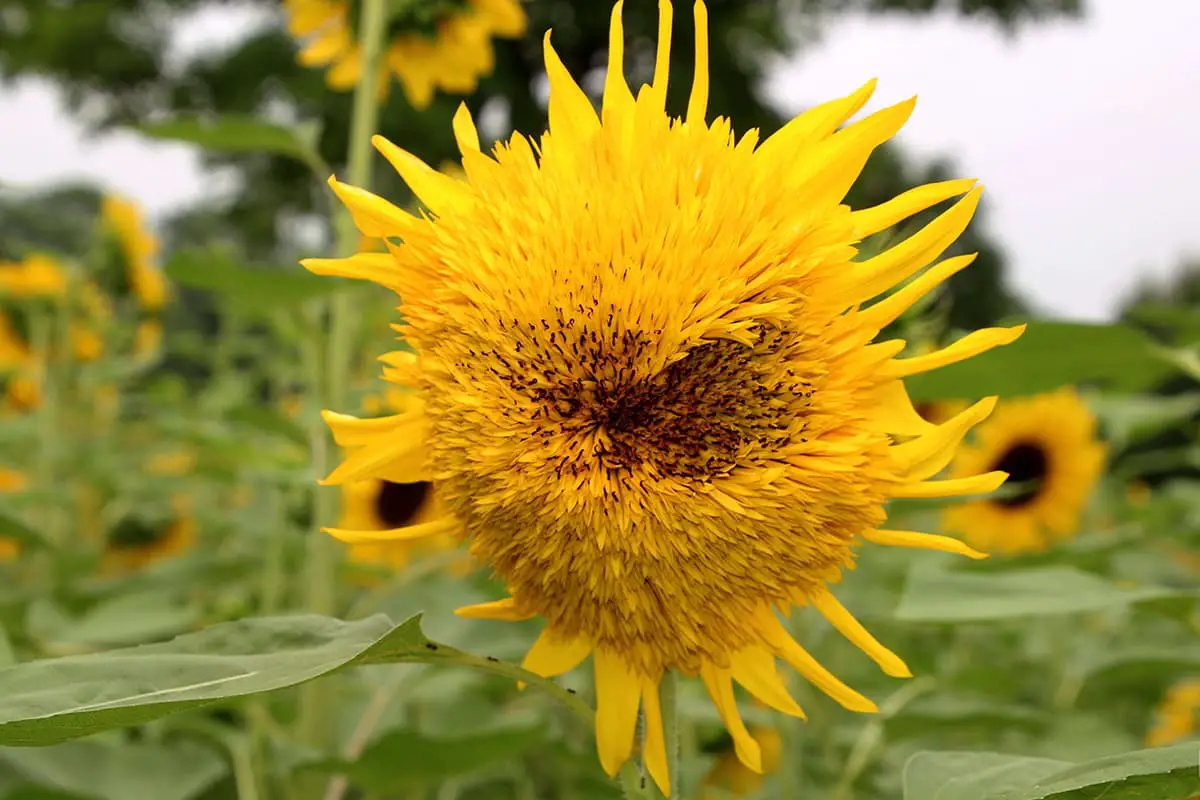
When people think of sunflowers, they often picture golden petals and a large seed-filled disk. But have you ever seen a sunflower that looks like Winnie-the-Pooh?
After years of hard work, horticulturists have cultivated this adorable sunflower, known as the Teddy Bear Sunflower.
Unlike common sunflowers that can grow up to 2-3 meters, this variety only grows to 30-50 centimeters. Each flower has densely packed golden petals, with a full and round shape that resembles the charming Winnie-the-Pooh.
The Teddy Bear ornamental sunflower, also known as the Beautiful Sunflower, is an annual herbaceous plant of the sunflower family, originally from North America.
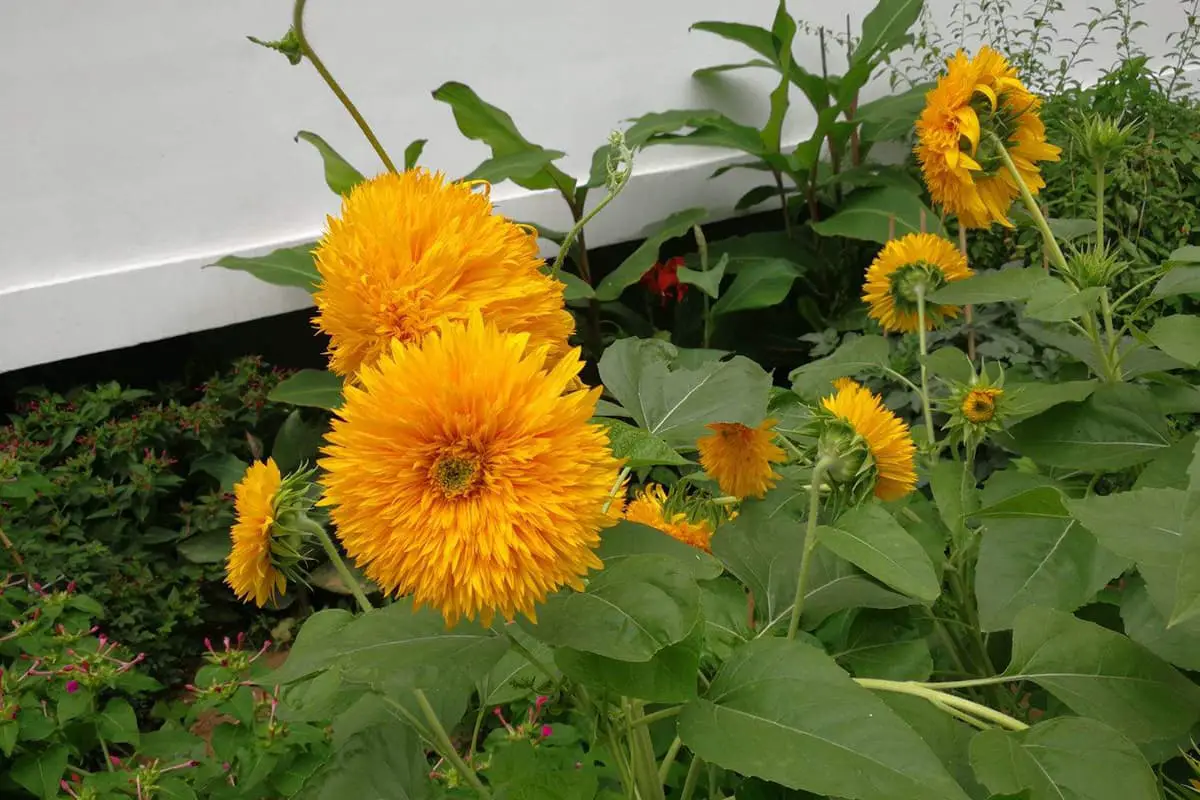
Its flowers, shaped like the sun, are bright and vibrant, simple yet natural, and hold substantial ornamental value. These ornamental sunflowers serve as innovative potted plants and are used in beautifying courtyards and gardens.
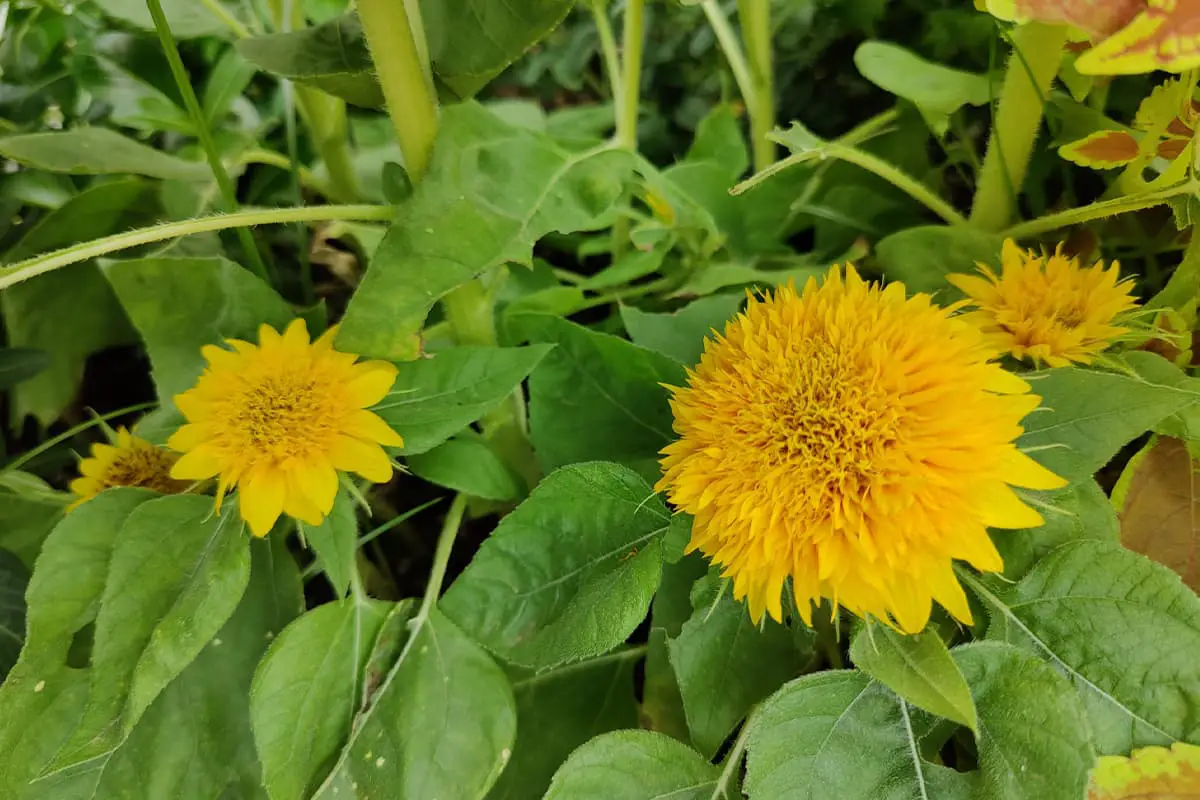
They also serve as a new type of cut flower plant, gradually becoming a fashionable, elegant ornamental flower and a new highlight in the market.
China has recently started importing ornamental sunflowers, with many places holding themed exhibitions, which are greatly loved by consumers.
Internationally, ornamental sunflowers are well-received. Although the ornamental sunflower market in China started late, it has great potential.
The ornamental sunflower, native to Panama, thrives in warm, slightly dry environments with abundant sunlight. The optimal growth temperature for ornamental sunflowers is 21-27°C during the day and 10-16°C at night.
A temperature difference of 8-10°C is most beneficial for stem and leaf growth. If the early spring temperature is too low, the plant’s growth will be slow, directly affecting the flowering time.
If the temperature exceeds 30°C during the growth period and the temperature difference is small, the stems and leaves tend to grow excessively and the flowering period shortens.
When grown outdoors, the root system is well-developed and drought-resistant. Watering in spring is minimal, and more water is needed only when the early summer temperature rises and water evaporation is high.
For potted ornamental sunflowers, with their large plant to pot ratio, it’s important to water them regularly during their growth period. Otherwise, the leaves can easily dehydrate and wilt.
However, they should not be overly moist as excessive humidity can cause the base leaves to turn yellow.
Ornamental sunflowers are photophilic plants that require plenty of sunlight throughout their growth and development period. Healthy stems and leaves, bright flower colors, and glossy ray flowers are the results of sufficient sunlight.
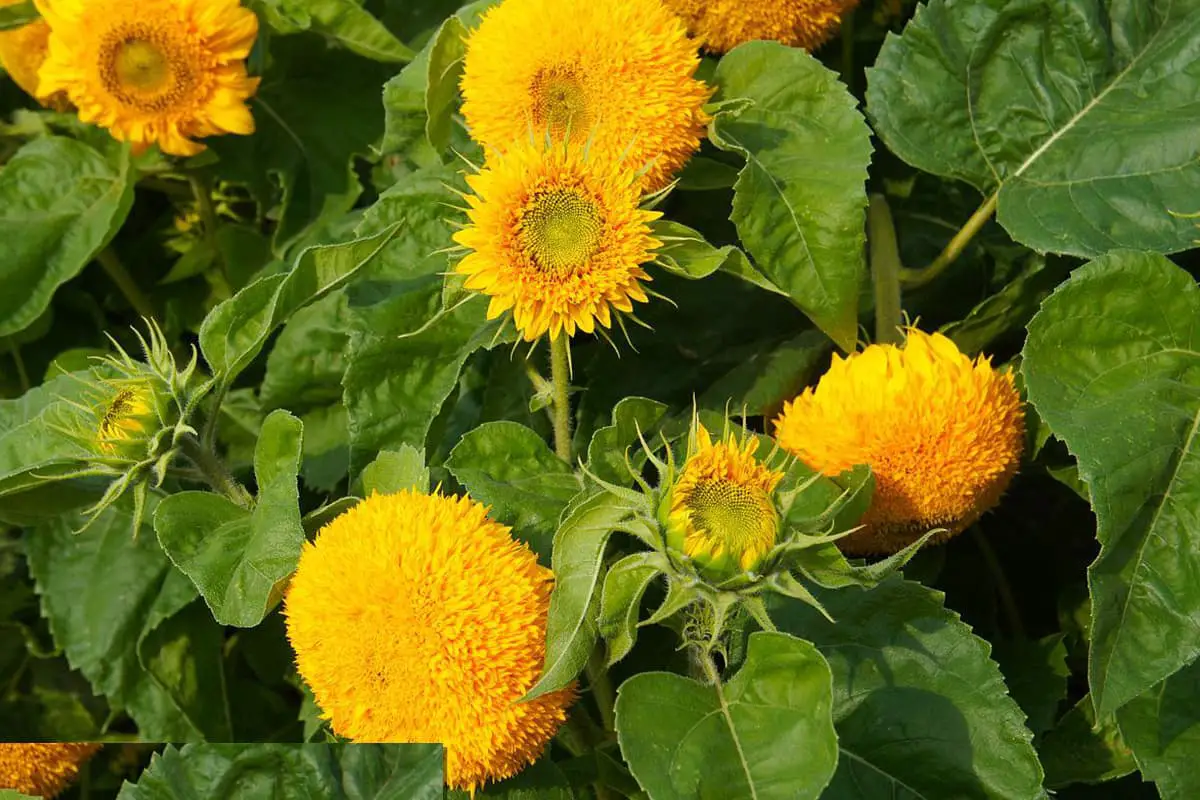
If they grow in a semi-shaded environment for a prolonged period or during continuous rainy weather, the stem won’t be upright, and the leaves will be soft, drooping, and yellow-green. The flower disk will be small and irregular.
The soil should be loose and fertile loamy soil. The mixed soil of cultivation soil, leaf mold soil, and coarse sand is suitable for potted plants.
Ornamental sunflowers should be planted in pots sized 10–15 cm, depending on the size of the above-ground crown. Fertilize once every ten days during the growth period, or use “Flower Friend,” a specially formulated 15-15-30 pot plant fertilizer.
If you’re planting in a flower bed for display, you can pinch out the tips once to encourage branching, which can result in four to five flowers. For potted plants, it is best to avoid branching to focus on a single flower.
For tall varieties, after 20 days of germination, you can spray the leaves with a 0.25%-0.4% paclobutrazol solution to control plant height.
Outdoor-grown sunflowers, with longer sunlight exposure, tend to flower slightly earlier; while those grown indoors in winter, with shorter sunlight exposure, flower later.
Double-flowered varieties are less likely to bear fruit, and artificial pollination is needed during flowering to increase the fruiting rate.
The main method of propagation is through sowing. Seeds can be sown year-round as needed. If flowers are needed in May, sow in February or March; if in October, sow in August.
Sunflower seeds are large, with 25-50 seeds per gram, and the optimal germination temperature is 21-24°C. In open fields, pit sowing is common, while in seedling trays, spot sowing is used.
Germination usually occurs 7-10 days after sowing, with a germination rate of 80%-90%. For instance, potted sunflowers take 50-60 days to flower from sowing.
The main threats to ornamental sunflowers are powdery mildew and black spot disease. Apart from preventive spraying with Bordeaux mixture, you can also spray with a 500 times diluted solution of 50% tebuconazole wettable powder at the initial stage of disease.
Pest problems include thrips and red spider mites, which can be controlled by spraying with a 1000 times diluted solution of 40% Oxymatrine emulsion.

Peggie was once a high school mathematics teacher, but she set aside her chalkboard and textbooks to follow her lifelong passion for flowers. After years of dedication and learning, she not only established a thriving flower shop but also founded this blog, “Flowers Library”. If you have any questions or wish to learn more about flowers, feel free to contact Peggie.
 English
  العربية
  Bahasa Indonesia
  Deutsch
  Français
  Italiano
  Nederlands
  Português
  Русский
  日本語
日本語