600+ Types of Flowers A To Z (With Names and Pictures)
Types Of Flowers By Names (A-Z) Types Of Flowers By Color Types Of Flowers By Season Types Of Flowers By Blooming Time 600+ Types of Flowers No. Flower Name No.…

The grape hyacinth is a perennial herbaceous flower, introduced from Europe, that serves as an excellent groundcover plant.
Despite its name, it actually belongs to the Lily family and is also known as blue bottle, grape lily, and bell flower, among others. It grows to a height of 15-30cm and has an underground bulb covered in a white skin.
The flower stem emerges from the leaf cluster and is cylindrical, about 15cm long, and densely populated with many small, bell-like flowers that hang down. The flowers are purple, blue, or white at the top, and there are also white, flesh-colored, light blue, and double-flowered varieties.
Its flower clusters are dignified, its flowers beautiful, and its colors dazzling, making it one of the most eye-catching flowers in the garden.
Purple Grape (Cantat) – A purple variety with tall plants, it produces purple-blue, grape-like clusters of flowers with white tips, creating a stunning blue and white contrast.
Heavenly Blue – A purple variety, this plant is shorter and produces sky-blue, grape-like flowers that resemble a cluster of ripe grapes, elegant and beautiful.
Valerie Finis – A purple variety, this plant produces densely clustered, light blue flowers with a hint of silver reflection, creating a dreamlike color.
Neglectum – A purple variety, this plant’s flowers start off sky blue and then turn deep purple-blue, creating a two-color cluster. The flower tips are ringed with white, providing a striking color contrast.
White Grape (Album) – A white variety, this plant is short and produces white flowers that cluster densely like grapes, and it’s very fragrant.
White Beauty – A white variety, this plant has linear, flesh-like leaves and produces pure white, grape-like flowers that cluster densely. The contrast with the deep green flower stem and leaves is striking.
The grape hyacinth enjoys warm, cool climates, and can tolerate shade. It grows best in loose, fertile, well-drained sandy soil at temperatures between 15℃ and 30℃. It goes dormant in the summer and the leaves remain green in the winter.
It is quite frost-resistant, with only the leaf tips turning yellow in the Beijing area. Originally from central Europe, specifically France, Germany, and southern Poland, it was later introduced to northern China and is cultivated in Hebei, Jiangsu, Sichuan, and other provinces.
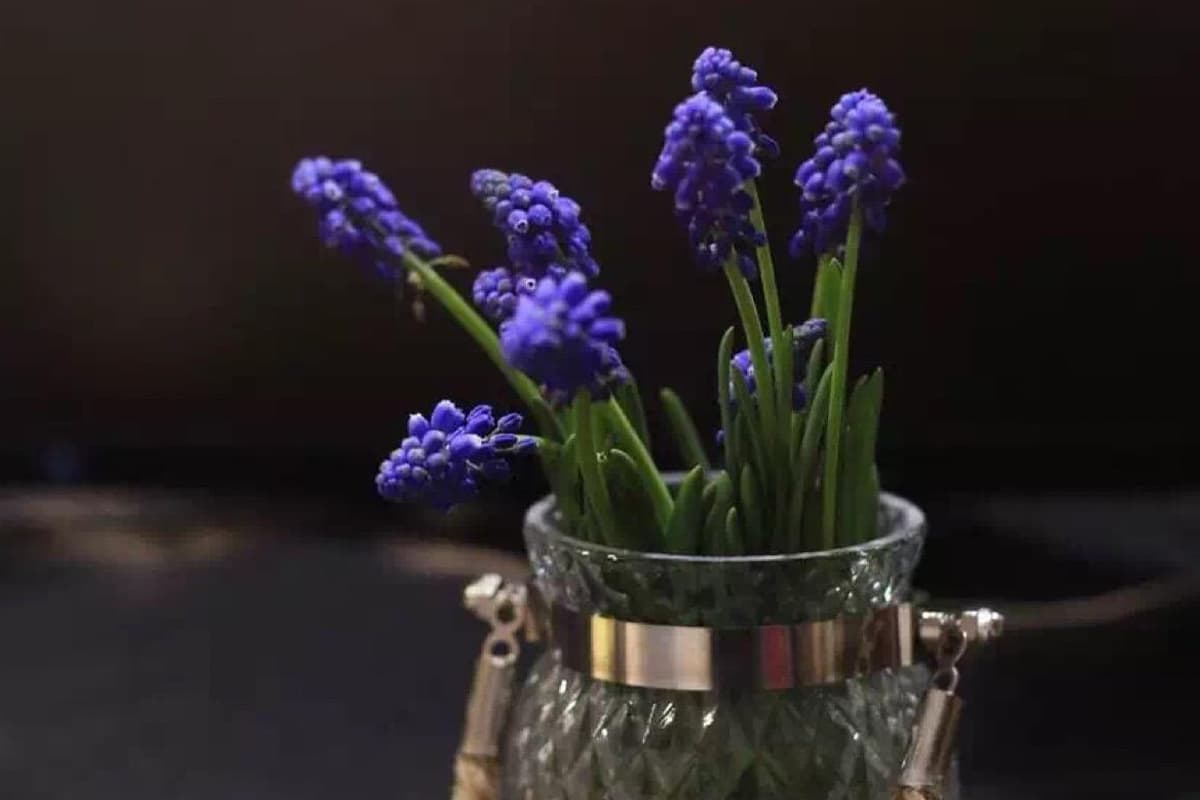
This perennial herb has base-situated linear leaves that are slightly fleshy and dark green, often with inward-rolling edges, about 20cm long. The plant grows 15~30cm tall and has an underground bulb covered in a white skin, 1~3cm in diameter and about 1.5cm in height.
The flowers bloom from March to May. The flower stem emerges from the leaf cluster and is cylindrical, about 15cm long, and densely populated with many small, bell-like flowers that hang down. The flowers are greenish-purple, light blue, white, etc.
The flowers are mostly densely populated and hang down, the corolla is small and the top is tightly constricted, the flowers are blue or white at the top, and there are also white, flesh-colored, light blue, and double-flowered varieties.
You can choose to import bulbs for cultivation in the autumn and winter. The soil should be leafy or sandy, and the soil moisture should be maintained after planting.
Once the leaves have grown, you can apply a diluted solution of nitrogen, phosphorus, and potassium to promote development. When the flower buds grow out in the spring, move them to a place with 60%-70% sunlight to encourage rapid stem growth.
Grape hyacinths are adaptable and easy to manage, can be transplanted at any time, and are also suitable for winter forced cultivation.
Grape hyacinths can be used as undergrowth groundcover, as well as for edging flower beds or arranging flower borders, adding a unique charm.
Grape hyacinths prefer warm, cool climates, are tolerant of light and semi-shade, require humus-rich, loose, fertile, well-drained soil, and are also quite frost-resistant.
In northern China, only the leaf tips wilt partially above ground in winter, and they can winter outdoors.
Because grape hyacinths are short and have bright colors, a long flowering period, and a long green leaf period, they are excellent groundcover plants for gardening.
They are often used as groundcover under sparse forests or for mass planting, strip planting, and edging in flower beds and lawns, and are also used in rock gardens for group planting and for potting at home, which has a good ornamental effect.
After buying the bulbs, plant them in a suitable size flower pot. For aesthetic purposes, several plants can be planted in one pot. The soil should be loose and breathable sandy soil or ordinary flower cultivation soil, or you could use ceramic particles, stones, and other soil-free media for cultivation.
After planting, water thoroughly and place in a sunny location for maintenance, water regularly, and do not let the soil dry out.
After the flower cluster sprouts, move it to a semi-shady location so that the flower stem can grow quickly. During the cultivation process, the temperature should be maintained at 15℃ to 20℃.
As the bulb stores plenty of nutrients that can satisfy its flowering needs, it usually does not need to be fertilized during cultivation.
However, for larger, more colorful flowers, you can spray a solution of 0.5% potassium dihydrogen phosphate on the plants every 10 days or so. Move the plant to a cool, shady location when it blooms to extend the flowering period.
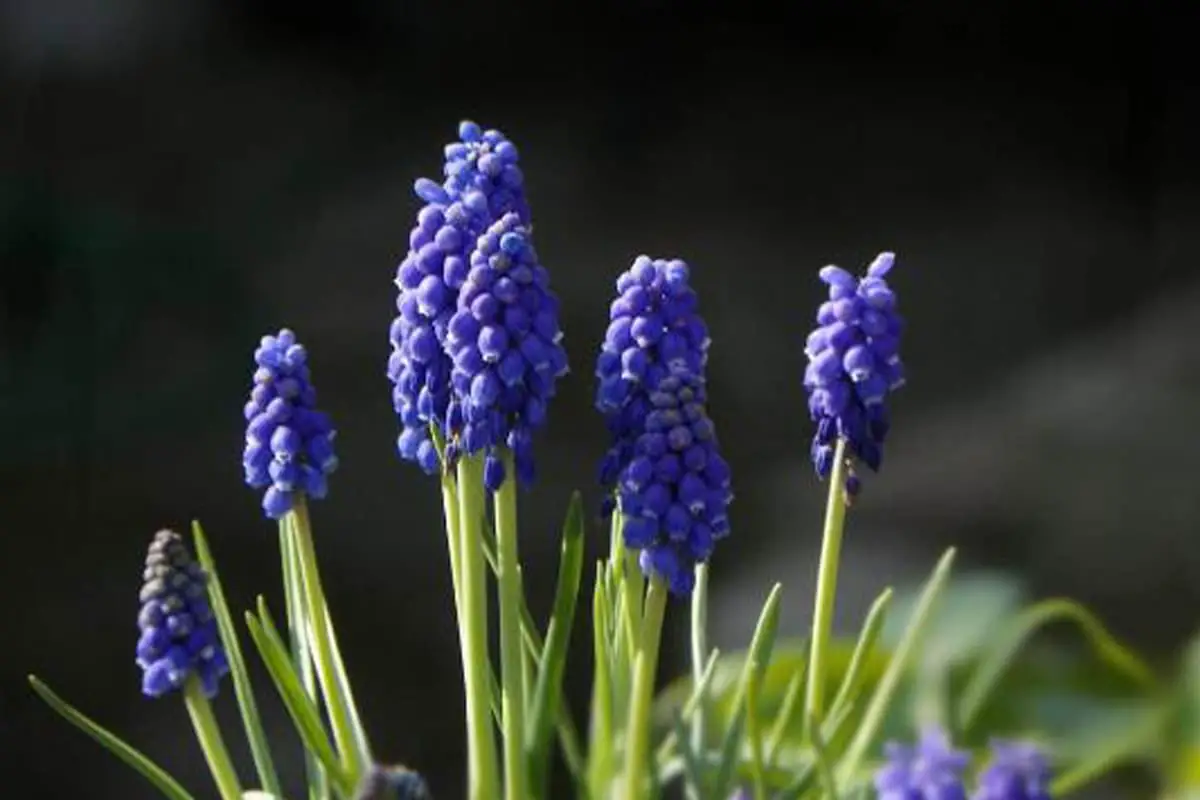
First, choose a Bogu rack that fits the size and style of your concept. Next, depending on the size of the space within the Bogu rack, select a suitable small pot, with the most common being a small purple clay pot. Then, choose several bulbs with flower buds that have been broken off from 10 or 20 main bulbs.
Based on the concept and the size and height of the space within the Bogu rack, carve the leaves and flower stems with varying degrees of intensity. The carving method is the same as that of a normal daffodil bonsai, often involving heavy carving.
The maintenance method is basically the same as that of a regular daffodil bonsai. The only difference is that the temperature of the maintenance location should be slightly lower.
The average daytime temperature should be around 10°C, with the lowest nighttime temperature around 4°C. In the Beijing area, after about 45 days of water maintenance, the plant can bloom.
Preliminary styling has already been done during the maintenance process. When some of the flower buds begin to open, arrange the leaves, flowers, and root system according to your concept.
Trim overly dense or poorly grown leaves and adjust the position of the flowers as needed. Remove the degreased cotton covering the roots to expose the white root system.
The grape hyacinth enjoys light but can tolerate semi-shade. It requires soil that is rich in humus, loose, fertile, and well-drained. It also has strong cold tolerance. Generally, propagation is done by seeding or dividing small bulbs.
1. Yellow rot disease causes watery lesions around the leaf veins of affected plants, which later turn yellow or brown. The affected bulbs are filled with yellow mucus and rot.
Prevention method:
① Select healthy bulbs.
② Disinfect the ground with formalin before planting.
③ Spray with a 50% mancozeb solution diluted 1,000 times when the disease occurs.
2. Scab disease invades through the bulbs. Affected leaves show yellow stripes or spots.
Prevention method:
① Choose healthy, full, disease-free bulbs.
② Before planting, disinfect the soil with 0.2% of the soil weight of pentachloronitrobenzene, mixing it thoroughly with the soil before planting.
③ Remove and burn or deeply bury diseased plants as soon as they are discovered.
The grape hyacinth is a very decorative perennial flower. It has a low, neat plant structure, dignified flower arrangement, beautiful flower shape, and vibrant colors.
Set against glossy, fresh green leaves, it exudes tranquillity and elegance, making it a famous perennial flower that blooms in early spring.
The most eye-catching aspect of the grape hyacinth in the garden is its pure blue color. It can be densely grown in large patches or used as a blending material for other bulbous flowers.
Blue grape hyacinths densely planted among tulips of various colors, white daffodils, and yellow fritillaries can naturally form a unified landscape.
Ground cover plants should be low-growing, able to cover the ground, easy to maintain, and have decorative leaves, flowers, and fruits. Modern garden ground cover has a trend towards colorization and beautification, and flowering ground cover is an important choice.
Due to its small plant size, early flowering period, and long blooming time, the grape hyacinth can be continuously planted for more than one year without digging up. It is a good undergrowth flower and is most suitable for planting under trees and on slopes.
Thus, it can be widely used as a ground cover plant.
Grape hyacinth can be used for mass planting on lawns, as strips and edging. It is also used in rock gardens for dotted cluster planting, and as a pot plant for home decoration, it also has a good ornamental effect.
In addition, the grape hyacinth is a shade-tolerant perennial flower that can be widely used in places with weaker light, such as under elevated bridges, on shady slopes, under large trees, etc., and it has a good performance effect.
Peggie was once a high school mathematics teacher, but she set aside her chalkboard and textbooks to follow her lifelong passion for flowers. After years of dedication and learning, she not only established a thriving flower shop but also founded this blog, “Flowers Library”. If you have any questions or wish to learn more about flowers, feel free to contact Peggie.
 English
  العربية
  Bahasa Indonesia
  Deutsch
  Français
  Italiano
  Nederlands
  Português
  Русский
  日本語
日本語